Product Description
CE approval, 1 side manual release and dual chain drive cylinders.
FEATURES
- CE approval.
- 4,000Kg (9,000LBS.) lifting capacity.
- Single-point lock release by manual and 24V low voltage operation.
- Durable chain drive cylinder in each column carries with anti-surge valves.
- Standard with 4 two-stage lifting arms.
- Screw-up rubber pads with min height 95mm (3 3/4″).
- Standard with high limit switch.
- Standard with curtain inside column and foot guard.
- 1920mm (75 9/16″) lifting height suitable for various operators.
- Automatic arms restraints.
- Professional powder coating.
TECHNICAL DATA
| Model | Lifting Capacity | Lifting Time | Lifting Height | Minimum Height | Total Height | Width Between Columns | Total Width | Gross Weight | Motor Power |
| ON-7224D | 4,000kgs (9,000LBS) | ≤55S | 1920mm (75 9/16″) |
95mm (3 3 /4″) |
2824mm (111 3/16″) |
2850mm (112 1/4″) |
3410mm (134 1/4″) | 595kgs (1,318LBS) | 2.2KW (3HP) |
STRENGTHS:
- The adapter is ultra-thin design, the minimum height from the ground is 95mm(3 3/4″), which is more suitable for the maintenance and lifting work of low-chassis vehicles.
- The cover plate is ultra-thin design, the height from the ground is only 33mm(1 5/16″), the vehicle is easier to pass;
- The inner pulley of the column is installed on the side of the oil cylinder. Even if the retaining ring falls off, the oil cylinder is only 10mm(3/8″) from the shaft end, which can effectively prevent the pulley from coming out.
- The main structural parts are welded by robot with good welding consistency, high strength and beautiful welding seam.
- Structural parts are sprayed with imported powder, using imported spraying equipment spraying, high temperature curing, can ensure strong adhesion, bright color and beautiful.
DIMENSION:
=====================================================================================================
Seamless Laser Cutting
- High Accuracy and Precision Cuts
- Causes No Damage Or Warping, Even to Thin Materials
- Higher Sheet Utilization with Less Waste & Low Power Consumption
Robotic Welding Technology
- Seamless Appearance
- High Strength
Powder Coating
- Imported Powder and Sprayers
- High Adhesion
- Clear Powdering Effect
- Aesthetically Smooth Appearance.
Packing and Shipping Examples
2 post lift and 4 post lift are steel frame packed while scissor lifts are packing in ply-wood boxes with steel outlines. The control console are packed in ply-wood boxes.Strong packing guarantees the delivery in perfect condition into your hand.
Standardization is in Our Heart while Certifications are for your Eyes.
Getting Closer to You
FAQ
1. Why should I choose EOUNICE car lift?
- 20 years of techniques research+TUV, CE, ISO9001, CCPC certifications
- 60,000m² lift production plant
- Professional cost-effective 50+ automatic machines & production lines
- Top quality raw materials from the finest plants
- Competitive prices with higher quality
- Own factory with stable supply and target for long term cooperation
- Treat n respect customer as good friends, no matter where they come from.
2. How safe are EOUNICE post car lift?
CHINAMFG car lifts have been tested and CE certified for safety . They also meet the American and Australian Standard.
3. Are EOUNICE car lifts designed for commercial use?
All of our lifts can be used in commercial applications without any problems.
4. Do you offer any custom designs?
Sure, EOUNICE provides OEM/ODM services. We can build the molds and fixtures and produce according to your samples or technical drawings.
5. How about your delivery time?
Generally, it will take 10 to 20 days after receiving your advance payment. The specific delivery time depends on the items and the quantity of your order.
6.Does my lift come with the necessary anchor bolts and/or hardware to mount it to the floor?
All EOUNICE lifts are shipped with the necessary anchors required for mounting the unit to your floor.
7.What is the ceiling height required for a EOUNICE lift?
The required ceiling height depends on the lift model, as well as the intended vehicle. Please refer to the product specification page for each product for further details. Or contact us for advice.
8.Are car lifts available in different voltages?
Other (unlisted) voltages may be available CHINAMFG request. Voltage options vary between models.
9.Do car lifts require maintenance?
A simple monthly checklist is perhaps the most you’ll do on a regular basis, aside from common-sense visual inspections you’ll do every time you lift and lower your vehicles. Cables need to be maintained, as do hydraulic systems.
/* March 10, 2571 17:59:20 */!function(){function s(e,r){var a,o={};try{e&&e.split(“,”).forEach(function(e,t){e&&(a=e.match(/(.*?):(.*)$/))&&1
| Type: | Double Cylinder Hydraulic Lift |
|---|---|
| Lifting Capacity: | 4T |
| Driving Type: | Hydraulic |
| Certification: | CE |
| Driving Motor Number of Mechanical Lift: | 1 |
| Condition: | New |
| Customization: |
Available
|
|
|---|
Can lift cylinders be used in material handling and conveyor systems?
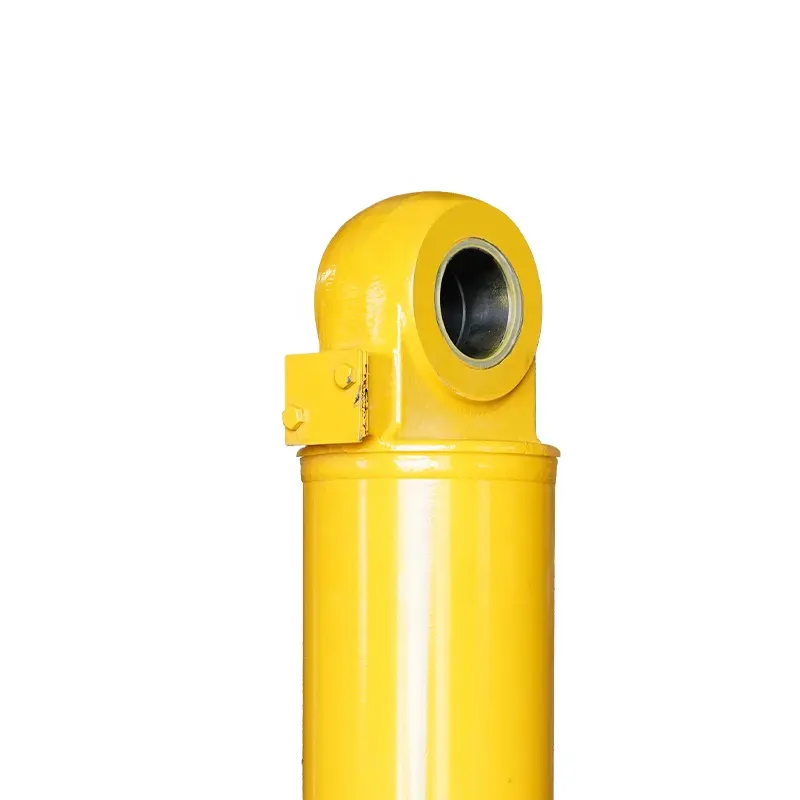
Yes, lift cylinders can be used in material handling and conveyor systems. Here’s an explanation of their utilization in these applications:
Material handling and conveyor systems are commonly used in industries such as manufacturing, logistics, and warehousing to efficiently transport and handle various types of goods and materials. Lift cylinders play a vital role in these systems by providing lifting and positioning capabilities.
In material handling systems, lift cylinders are often employed to lift and lower heavy loads, such as pallets, crates, or machinery components. They are integrated into lifting mechanisms, such as scissor lifts or vertical lifts, to elevate the materials to the desired height for further processing or transfer. The lift cylinders generate the necessary force to lift the loads, ensuring smooth and controlled vertical movement.
Conveyor systems, on the other hand, utilize a series of belts, rollers, or chains to transport materials along a predetermined path. Lift cylinders can be incorporated into conveyor systems to facilitate the vertical movement of the materials. For example, lift cylinders can be used to raise or lower sections of the conveyor to accommodate changes in elevation or facilitate the transfer of materials between different conveyor levels.
One of the advantages of using lift cylinders in material handling and conveyor systems is their ability to provide precise and controlled positioning. By adjusting the hydraulic pressure or flow rate, operators can easily control the lifting speed and accurately position the materials at specific locations along the conveyor or within the material handling system.
Lift cylinders used in material handling and conveyor systems are designed to handle heavy loads and withstand rigorous operating conditions. They are typically constructed with robust materials and incorporate features such as seals and bearings to ensure durability and reliability.
In addition, lift cylinders may incorporate safety features such as overload protection or emergency stop mechanisms to enhance the safety of the material handling and conveyor systems. These safety measures help prevent accidents or damage caused by excessive loads or unexpected events.
In summary, lift cylinders are well-suited for use in material handling and conveyor systems, providing reliable lifting and positioning capabilities. Their ability to handle heavy loads, provide precise control, and incorporate safety features makes them integral components in these applications.
How does a lift cylinder handle variations in cylinder stroke length?
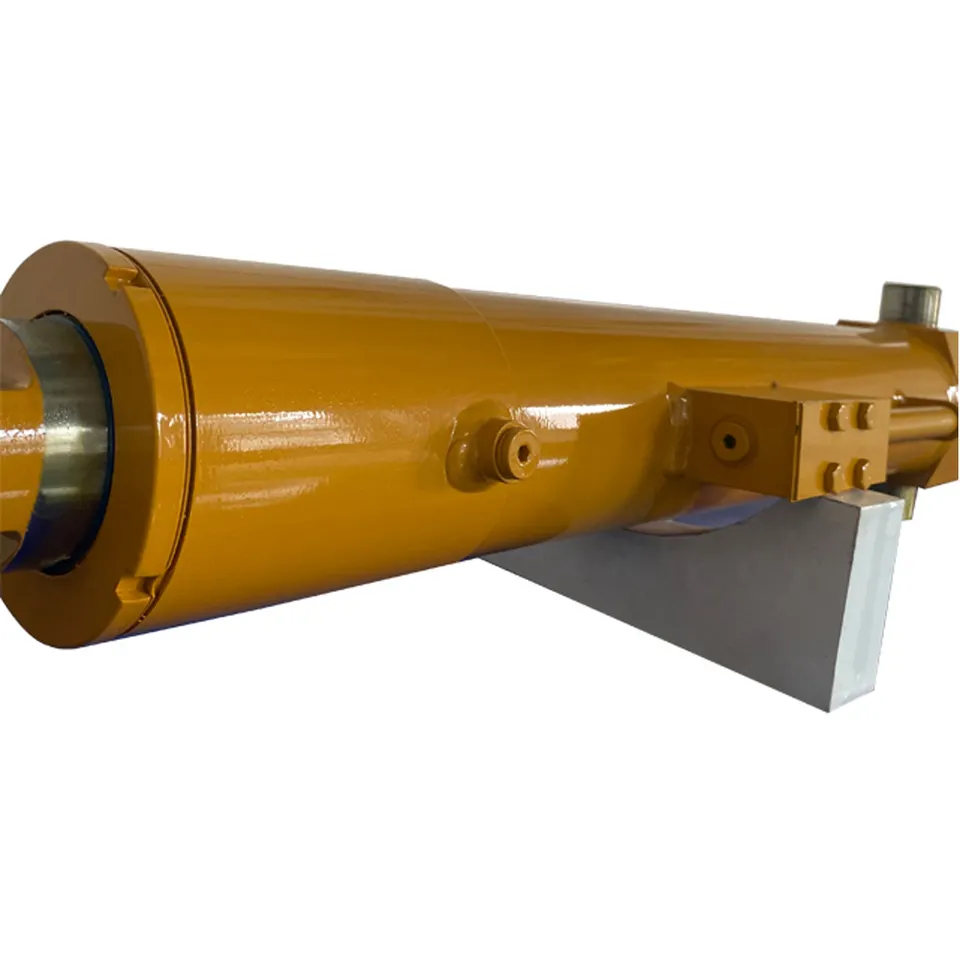
A lift cylinder is designed to handle variations in cylinder stroke length through its adjustable rod or piston. The stroke length refers to the distance the cylinder can extend or retract, and it can be adjusted to meet specific requirements in different applications.
In hydraulic lift cylinders, the stroke length can be modified by adjusting the position of the rod or piston within the cylinder. This adjustment is typically achieved by adding or removing spacers or by using adjustable stops. By changing the effective length of the cylinder, the stroke can be increased or decreased accordingly.
The adjustment of the stroke length allows the lift cylinder to accommodate different operational needs. For example, in material handling applications, where varying load sizes are encountered, the stroke length can be adjusted to ensure that the cylinder extends or retracts precisely to the required position. This flexibility enables the lift cylinder to handle a wide range of loads and adapt to different lifting or pushing scenarios.
In addition to adjusting the stroke length, lift cylinders often incorporate position feedback mechanisms. These mechanisms, such as linear transducers or position sensors, provide real-time feedback on the actual position of the cylinder. By monitoring the position, the control system can ensure accurate and precise control over the cylinder’s movement, regardless of the stroke length.
The ability to handle variations in cylinder stroke length is crucial in many industrial applications. It allows for adaptability, efficiency, and improved performance in tasks such as material handling, assembly, and automation. By adjusting the stroke length, lift cylinders can optimize their operation, ensuring that the required force and movement are achieved consistently.
In summary, lift cylinders handle variations in cylinder stroke length through adjustable rods or pistons. This adjustment capability, combined with position feedback mechanisms, enables precise control and adaptability in different applications. By accommodating different stroke lengths, lift cylinders can effectively meet the specific requirements of a wide range of industrial tasks.
What are the key components of a lift cylinder?
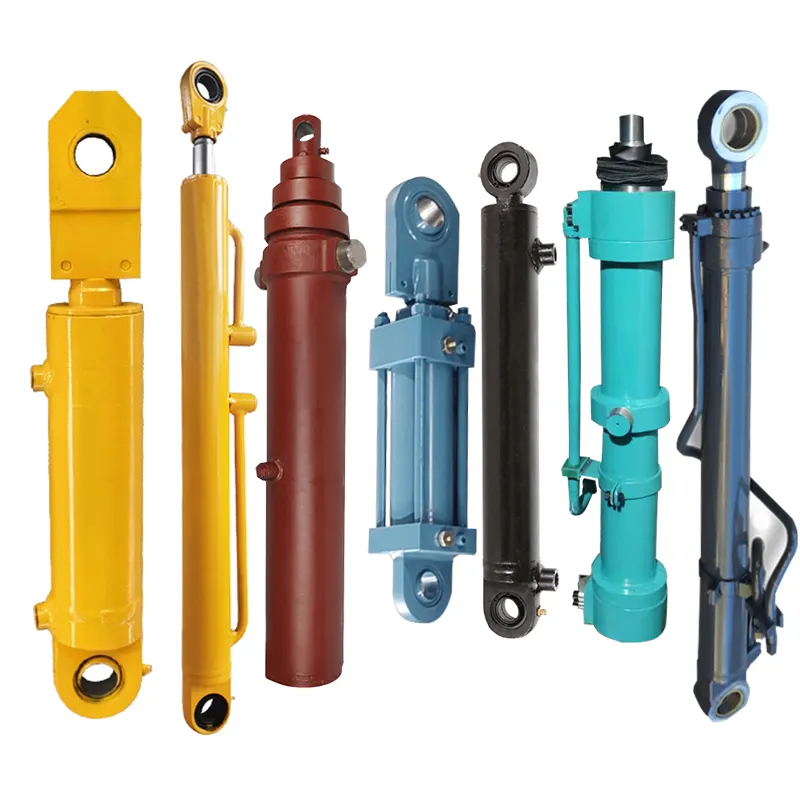
A lift cylinder, also known as a hydraulic lift cylinder or hydraulic lifting cylinder, consists of several key components that work together to enable its functionality. Here’s an explanation of the key components of a lift cylinder:
1. Cylinder Barrel:
The cylinder barrel is a cylindrical hollow tube that forms the main body of the lift cylinder. It provides the housing for the other components and contains the hydraulic fluid, allowing it to flow in and out of the cylinder.
2. Piston:
The piston is a cylindrical component that separates the cylinder barrel into two chambers. It is typically made of metal and has a precise fit within the cylinder barrel. The piston’s movement within the cylinder barrel is crucial for generating the lifting force.
3. Rod:
The rod, also known as the piston rod or plunger rod, is attached to the piston and extends from the cylinder barrel. It serves as a connection point for the load or the mechanism being lifted. The rod transfers the lifting force generated by the piston to the load.
4. Seals:
Seals are essential components that prevent hydraulic fluid leakage and maintain the integrity of the hydraulic system. They are located between the cylinder barrel and the piston, as well as around the rod. Seals ensure that the hydraulic fluid remains contained within the cylinder and prevent external contaminants from entering the system.
5. Hydraulic Fluid:
Hydraulic fluid, such as oil or synthetic fluid, is the medium used to transmit force within the lift cylinder. It is stored within the cylinder barrel and flows in and out of the cylinder to generate the necessary pressure for lifting and lowering operations.
6. Control Valve:
A control valve is a crucial component that regulates the flow of hydraulic fluid into and out of the lift cylinder. It determines the direction and amount of fluid entering the cylinder, allowing for precise control of the lifting and lowering operations. The control valve is typically operated by the operator or controlled automatically in hydraulic systems.
These key components work together to enable the operation of the lift cylinder. When hydraulic fluid is supplied to the appropriate chamber of the cylinder, it applies pressure on the piston, causing it to move and extend or retract the rod. This movement generates the lifting or lowering force required for a specific application.


editor by CX 2024-01-17