Description
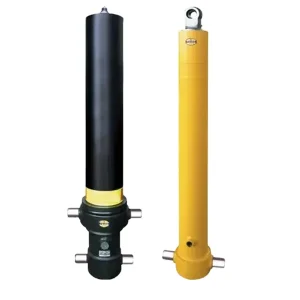
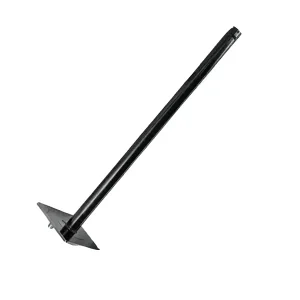
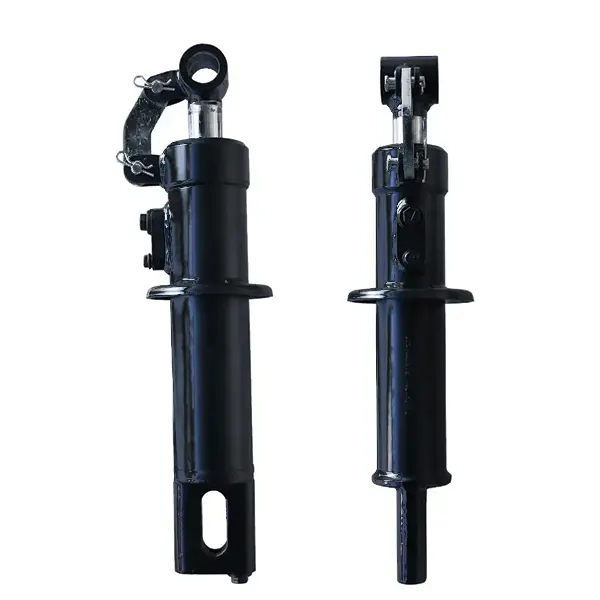
Main and auxiliary lifting spring cylinders are indispensable for no tillage machines, offering robust hydraulic solutions with specifications including cylinder diameters from 35mm to 90mm, rod diameters from 25mm to 40mm, and strokes ranging from 145mm to 250mm, ensuring seamless adaptation to various equipment models and preventing common compatibility issues. These parameters allow for tailored selection based on machine power and field conditions, such as in Midwest US no-till farming, where residue management demands high load capacity and stability; manufactured with premium, corrosion-resistant materials, they provide extended service life, reduced energy loss through low-friction designs, and straightforward integration to optimize soil.
Specifications of Lifting Spring Cylinders
| Specification/Model | Cylinder Diameter (mm) | Rod Diameter (mm) | Stroke (mm) | Installation Distance (mm) | Remarks (Application) |
|---|---|---|---|---|---|
| HSG70/36×195-165 | 70 | 36 | 195 | 165 | Main oil cylinder |
| HSG60/36×195-165 | 60 | 36 | 195 | 165 | Auxiliary oil cylinder |
| HSG80/38×200-165 | 80 | 38 | 200 | 165 | Main oil cylinder |
| HSG70/38×200-165 | 70 | 38 | 200 | 165 | Auxiliary oil cylinder |
| HSG90/40×200-155 | 90 | 40 | 200 | 155 | Main oil cylinder |
| HSG80/40×200-155 | 80 | 40 | 200 | 155 | Auxiliary oil cylinder |
| HSG70/36×145-392.5 | 70 | 36 | 145 | 392.5 | Main cylinder (spring-assisted for balanced lift) |
| HSG60/36×145-392.5 | 60 | 36 | 145 | 392.5 | Auxiliary oil cylinder (spring) |
| HSG40/25×250-417 | 40 | 25 | 250 | 417 | Bi-directional scriber cylinder (for precise marking) |
| TGI-E30x155-285 | 35 | 30 | 155 | 285 | Unidirectional scriber cylinder (for soil alignment) |
*Other sizes can be customized;
All parameters rigorously tested for durability in agricultural settings;
Meeting ISO/TS16949 standards.
Key Advantages in Agricultural Use
The advantages of these hydraulic lifting cylinders extend beyond basic functionality. Their robust construction, incorporating corrosion-resistant coatings and high-tensile steel, extends service life by over 20% compared to standard models, as supported by industry standards. This durability is crucial in no-till farming in the Midwest US, where exposure to moisture and dust can accelerate wear. Additionally, the spring-assisted design in models like HSG70/36×145-392.5 reduces shock loads, improving machine longevity and operator comfort.
From a performance standpoint, these cylinders offer impressive load capacities, supporting up to several tons depending on the model, which empowers farmers to manage larger implements efficiently. The low-friction hydraulic design minimizes energy loss, potentially reducing fuel consumption by 15% during operations. In summary, these features—durability, load handling, and efficiency—combine to provide a comprehensive solution that addresses key pain points in no tillage machines hydraulic cylinders applications, ensuring sustained productivity.
Working Principle Analysis
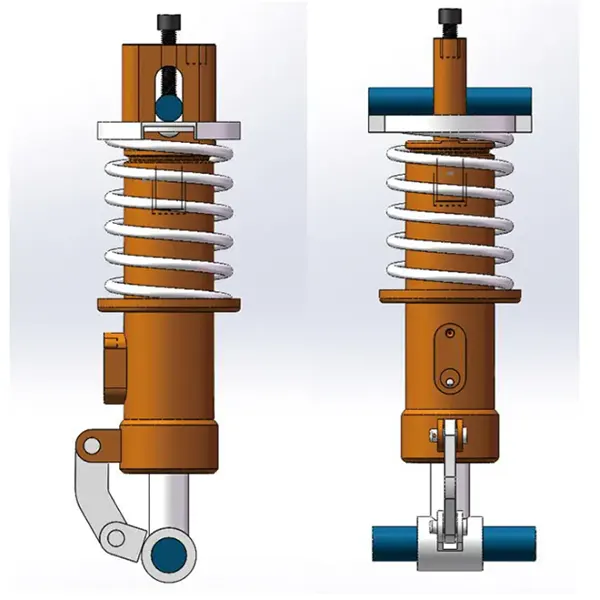
The working principle of the main and auxiliary lifting spring cylinders revolves around hydraulic fluid dynamics integrated with mechanical spring assistance. At its core, the main cylinder converts pressurized hydraulic oil into linear force via a piston-rod assembly. When oil enters the cylinder base, it pushes the piston upward, extending the rod to lift the no-tillage machine’s implements. Conversely, releasing pressure allows the rod to retract, aided by the internal spring for controlled lowering.
Auxiliary cylinders complement this by providing balanced support, preventing lateral tilting during uneven field traverses common in no-till farming in the Midwest US terrains. The spring mechanism absorbs vibrations, ensuring smooth operation even at high speeds. This principle is grounded in Pascal’s law, where pressure applied to the confined fluid is transmitted equally, enabling precise control over lifting heights.
In practice, the system operates in stages: initial pressurization for lift, maintenance of position via valve controls, and spring-assisted return for energy efficiency. This total process—from fluid entry to mechanical output—minimizes operational disruptions, making these cylinders indispensable for no tillage machines’ lifting mechanisms. Professionals appreciate this reliability, as it reduces soil disturbance while optimizing crop placement.
Application Scenarios and Industry Adaptability
Classification by Power and Size
Main and auxiliary lifting spring cylinders adapt to various power levels and sizes in no tillage machines. Small-scale models (e.g., 35-60mm diameters) suit compact equipment for vegetable no-till farming, where precision is key in confined spaces. Larger variants (70-90mm) handle high-power tractors in grain production, supporting extensive fields in the Midwest US. This classification ensures adaptability, with power ratings aligning to machine horsepower for optimal performance.
In terms of size, compact cylinders fit portable no-till drills, while extended-stroke models integrate into trailed seeders for broader coverage. Applications span from initial soil preparation to post-harvest residue management, reducing erosion by 30% in conservation tillage. Overall, this categorization—from small to large—provides tailored solutions, enhancing efficiency across agricultural scales.
Material-Based Classification and Uses
Materials define the cylinders’ suitability for different environments. Standard high-strength steel models excel in dry, abrasive conditions, offering cost-effective durability for general no-till operations. Stainless steel variants, with enhanced corrosion resistance, are preferred in humid or coastal regions, extending lifespan in moisture-prone Midwest US winters.
Uses vary: steel cylinders for heavy-duty lifting in corn no-till planting, where residue buildup demands robust force; stainless for vegetable farming in irrigated fields, preventing rust-related failures. This material diversity ensures longevity, with proper selection potentially halving maintenance needs. In essence, choosing based on material—from steel for economy to stainless for resilience—optimizes performance in diverse no tillage scenarios.

Maintenance and Troubleshooting
Routine Maintenance Procedures
Maintenance of hydraulic spring cylinders in agricultural settings follows a structured regimen to preserve performance. Start with visual inspections every 1 operating week: check for leaks, rod scratches, or seal wear. Clean the rod and exterior with mild solvents to remove dirt, preventing ingress that could contaminate fluid.
Lubrication is key—apply approved hydraulic oil to fittings quarterly, ensuring compatibility with system specs to avoid viscosity issues. Replace seals every 1 month or at signs of cracking, using OEM parts for fit.
In total, this maintenance—from inspections to replacements—sustains efficiency, reducing downtime in no-till farming.
Common Faults and Solutions
Troubleshooting begins with symptom identification. If the cylinder fails to extend, low pressure may be the cause: inspect the pump and filters, replacing clogged elements. For uneven lifting, check auxiliary spring tension, adjusting via calibrated tools.
Leaking seals require immediate attention: drain fluid, disassemble, and install new seals, reassembling with torque specs. Preventive measures, like using filtered oil, can cut faults by 30%. This methodical approach resolves issues effectively, maintaining no tillage machines’ hydraulic cylinders.
Product Development Trends
As of 2025, trends in hydraulic lifting spring cylinders for no tillage machines emphasize sustainability and automation. Market reports indicate a 4.6% CAGR through 2034, driven by energy-efficient designs that reduce emissions. Innovations include smart sensors for real-time monitoring, integrating AI for predictive maintenance, and aligning with 70% of new farm equipment featuring automation.
Materials advance toward eco-friendly composites, enhancing durability while lowering weight. In the Midwest US, trends focus on residue-handling enhancements, with cylinders incorporating variable stroke controls for adaptive lifting. Overall, these developments—from efficiency to intelligence—position these components as pivotal in future no-till agriculture.
Test Equipment:
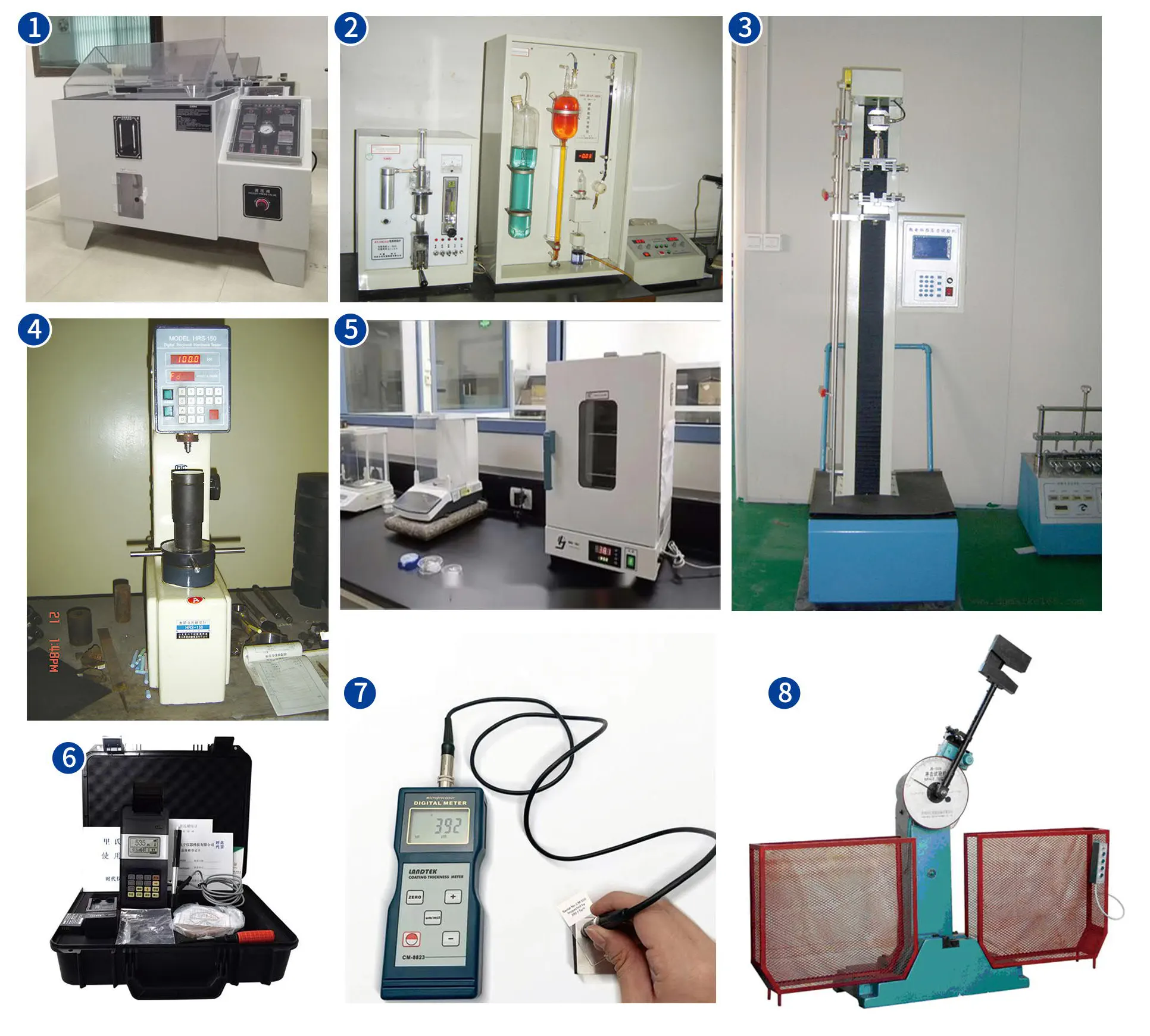
Equipment Name:
1: Salt Spray Test Chamber
2: Chemical Analysis
3: Tensile Testing Machine
4: Rockwell Hardness Tester
5: Cleanliness Testing Machine
6: TH110 Rebound Hardness Tester
7: Coating Thickness Gauge
8: Pendulum Impact Test
Frequently Asked Questions (FAQs)
What Are Main and Auxiliary Lifting Spring Cylinders?
Main and auxiliary lifting spring cylinders are hydraulic actuators integral to no tillage machines, providing force for elevating implements. The main unit handles primary loads, while the auxiliary ensures balance, incorporating springs for shock absorption. In no-till farming in the Midwest US, they minimize soil disturbance, promoting conservation.
Why Choose Hydraulic Lifting Cylinders for No-Till Equipment?
These cylinders offer reliability in residue-heavy fields, reducing compaction and enhancing yields. Their spring-assisted return improves energy efficiency, crucial for sustainable practices amid rising fuel costs.
When to Use Lifting Spring Cylinders in Agricultural Settings?
Deploy during planting seasons in no-till systems, especially in variable Midwest US weather, to adjust implements dynamically. Ideal for operations exceeding 100 acres, where precision prevents crop damage.
Where Are No-Tillage Machines’ Hydraulic Cylinders Most Effective?
Primarily in regions like the Midwest US, with loamy soils benefiting from reduced tillage. Applications extend to global conservation areas, optimizing performance in diverse climates.
How Do Lifting Spring Cylinders Work in No Tillage Applications?
Through hydraulic pressure and spring mechanics, they extend/retract rods for lifting, controlled via machine valves.
Do you offer product customization services?
Yes, we provide comprehensive customization services, including adjustments to dimensions, materials, and specifications based on customer-supplied drawings or samples. Our engineering team will evaluate requirements within 48 hours and deliver a detailed quote, ensuring customized products meet international standards such as ISO.
What is the delivery time for products?
Standard products are typically shipped within 7-15 business days after order confirmation, while customized orders may require 15-30 business days, depending on complexity and volume. We prioritize urgent orders and offer real-time tracking to guarantee timely delivery.
How do you ensure safe packaging for products during transit?
All products are packaged professionally with shock-resistant foam, inner wooden crates, and waterproof outer layers, adhering to international shipping standards. We commit to packaging that withstands long-distance impacts and environmental variations, with insurance options available to cover potential damage.
What payment methods do you accept?
We support multiple secure payment methods, including bank transfers, credit cards, PayPal, and letters of credit (L/C). All transactions are processed through encrypted channels for fund security, with flexible installment options to accommodate diverse customer needs.
How can I obtain technical support if there is an issue with the product?
Customers can contact our technical department via email or phone, and we commit to responding within 24 hours. Support includes fault diagnosis, repair guidance, and remote consultation to assist in swiftly resolving issues and resuming normal operations.
Customer Reviews
⭐⭐⭐⭐⭐ A****n, Operations Director at Elevate Tech Corp., Canada
The shipment was impressively swift, arriving well before the estimated date, which minimized downtime on our site. Its sturdy construction has held up remarkably in rigorous lifting scenarios, boosting our team’s productivity.
⭐⭐⭐⭐⭐ E****a, Equipment Specialist at HighAccess Builders, UK
Support staff were highly professional and provided detailed guidance during setup, making the process straightforward. We’ve experienced consistent performance in extension and retraction, ideal for our elevated construction projects.
⭐⭐⭐⭐⭐ J****s, Project Manager at LiftPro Industries, Australia
Packaging ensured everything arrived in perfect condition without any issues. The enhanced safety features have proven invaluable in high-altitude operations, contributing to smoother daily workflows.
⭐⭐⭐⭐⭐ F****k, Maintenance Engineer at SkyReach Services, Germany
Exceptional value considering the premium materials and reliability over extended use. Pre-sale inquiries were handled with expertise and speed, reflecting a client-focused approach.
⭐⭐⭐⭐⭐ P****l, Site Supervisor at Vertical Lift Solutions, India
Durability in challenging environments has exceeded expectations after months of operation. Logistics were seamless, with clear tracking and on-time delivery that kept our schedule intact.