Product Description
Densen customized Farm Equipment Hydraulic Lift Cylinder Double Action Small Agri Cylinder
product description:
1. Seals kit: From USA, durable and hard-wearing with long service life.
2. Heat treatment: Quenching&Tempering which makes the piston rod super high hardness.
3. Cleaning: Ultrasonic cleaning.
4. Cutting: High precision provided by automatic roller cutting machine.
5. Testing: Ultrasonic detector, spectrograph, CMM, metallography, chrome thickness tester.
6. Advantage: Simple structure & reliable work, easy maintenance & diverse connecting ways.
7. Plan: Different manufacturing plans for different customers.
8. MOQ: 10 PCS of hydraulic cylinders ram
9. Lead time: 10~30 days depends on quantity & whether customized.
10. Warranty: Change a new 1 and we pay for the air freight in 3 years warranty time.
1.Descriptions of Chrome Plated Shaft
| Size | 25.4~100mm |
| Length | 0.2m~2m |
| Material | 45#DIN CK45/JIS 45C |
| Tolerance | ISO f7 |
| Chrome Thickness | 25~30micron |
| Hardness of The Chrome Layer | 45~50HRC |
| Roughness | Ra0.4micron |
| Straightness | 0.2/1000mm |
| Yield Strength | ≥320Mpa |
| Tensile Strength | ≥580Mpa |
| Elongation | ≥15% |
| Supply Condition | 1.Hard chrome plated |
| 2.Induction hardened | |
| 3.Quenched&Tempered | |
| 4.Induction hardened with Q&T |
2.Chemical Composition
| Material | C% | Mn% | Si% | S% | P% | V% | Cr% |
| CK45 | 0.42-0.50 | 0.50-0.80 | 0.04 | 0.035 | 0.035 | ||
| ST52 | 0.22 | 1.60 | 0.55 | 0.035 | 0.04 | ||
| ST37 | 0.17 | 1.60 | 0.55 | 0.04 | 0.04 | ||
| 20MnV6 | 0.16-0.22 | 1.30-1.70 | 0.10-0.50 | 0.035 | 0.035 | 0.10-0.20 | |
| 42CrMo4 | 0.38-0.45 | 0.60-0.90 | 0.15-0.40 | 0.03 | 0.03 | 0.90-1.20 | |
| 40Cr | 0.37-0.45 | 0.50-0.80 | 0.17-0.37 | 0.08-1.10 |
3.Mechanical Properties
| Material | T.S N/MM² | Y.S N/MM² | E%(MIN) | Condition |
| CK45 | 610 | 355 | 15 | Normalized |
| CK45 | 800 | 630 | 20 | Q+T |
| ST52 | 500 | 355 | 22 | Normalized |
| 20MnV6 | 750 | 590 | 12 | Normalized |
| 42CrMo4 | 980 | 850 | 14 | Q+T |
| 40Cr | 1000 | 800 | 10 | Q+T |
Declaration:
Products shown herein are made to the requirements of specific customers and are illustrative of the types of manufacturing capabilities available within CHINAMFG group of companies.
Our policy is that none of these products will be sold to 3rd parties without written consent of the customers to whom the tooling, design and specifications belong.
Company Information
HangZhou New CHINAMFG Casting and Forging Company is the sales company of HangZhou CHINAMFG Group of Companies. Features of New CHINAMFG simply summarized as below:
1. Trusted supplier of steel, iron & non-ferrous components;
2. Extensive documented quality program in place.
3. Castings, forgings, stampings, machining, welding & fabrication services.
4. 9 related factories, over 50 joint-venture sub-contractors.
5. 25+ years of manufacturing experiences, 10+ years of exporting experience
6. 100% of products sold to overseas customers.
7. 50% of customer base is forturne 500 companies.
3rd Party Inspection
3rd Party Inspection:
New Densen worked as 3rd party inspection center besides its sister factories or sub-contractors’ self inspection, Offers process inspection, random inspection and before delivedry inspection services for material, mechanical, inside defects, dimentional, pressure, load, balance, surface treatment, visual inspection and test. Weekly project follow-up report together with pictures and videos, full quality inspection documentation available.
New CHINAMFG also designed as 3rd party inspection representative for several customers when their products made by other suppliers.
Application:
Contact us:
/* January 22, 2571 19:08:37 */!function(){function s(e,r){var a,o={};try{e&&e.split(“,”).forEach(function(e,t){e&&(a=e.match(/(.*?):(.*)$/))&&1
| Type: | Clay Dry Sand |
|---|---|
| Casting Method: | Thermal Gravity Casting |
| Sand Core Type: | Resin Sand Core |
| Application: | Instrument Accessories |
| Machining: | CNC Machining |
| Material: | Steel |
| Samples: |
US$ 30/kg
1 kg(Min.Order) | |
|---|
| Customization: |
Available
|
|
|---|
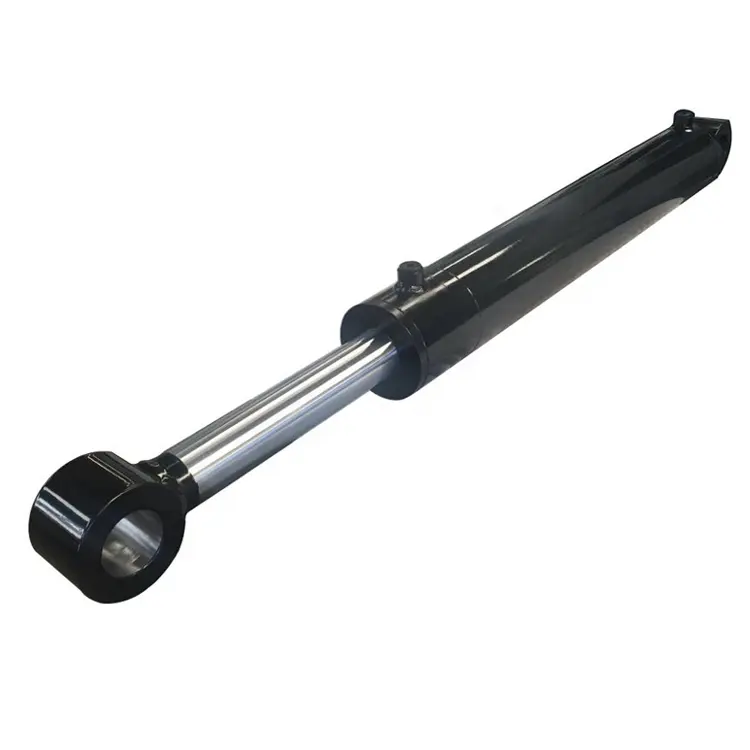
How does a lift cylinder contribute to energy-efficient lifting?
A lift cylinder plays a significant role in promoting energy-efficient lifting operations. Here’s an explanation of how lift cylinders contribute to energy efficiency:
1. Hydraulic System Efficiency:
Lift cylinders are commonly used in hydraulic systems, which are known for their high efficiency. Hydraulic systems utilize pressurized fluid to transmit power, allowing for smooth and controlled lifting operations. The hydraulic fluid is circulated within the system, and the lift cylinder converts the pressure of the fluid into mechanical force to lift the load. Compared to other mechanical lifting mechanisms, hydraulic systems, including lift cylinders, experience minimal energy loss due to their efficient power transmission.
2. Power-to-Weight Ratio:
Lift cylinders are designed to have a high power-to-weight ratio. This means that they can generate a substantial lifting force relative to their weight. By utilizing lightweight yet durable materials and optimizing the design, lift cylinders can effectively lift heavy loads while minimizing the amount of energy required. The efficient power-to-weight ratio contributes to energy efficiency by reducing the overall power consumption during lifting operations.
3. Load-Specific Design:
Lift cylinders are often engineered to match the specific load requirements of lifting applications. By customizing the design parameters, such as bore size, stroke length, and operating pressure, lift cylinders can be optimized for the intended load capacities and lifting tasks. This load-specific design ensures that the lift cylinder operates at its optimal efficiency, minimizing energy waste and maximizing the lifting performance.
4. Regenerative Systems:
In certain lifting applications, lift cylinders can be integrated into regenerative systems. Regenerative systems capture and store energy that would otherwise be dissipated as heat during the lowering phase of the lifting operation. This stored energy can then be reused to assist in the subsequent lifting process, reducing the overall energy consumption. Regenerative systems enhance energy efficiency by utilizing the otherwise wasted energy to partially power the lifting operation.
5. Control Systems:
Advanced control systems can be implemented in conjunction with lift cylinders to optimize energy efficiency. These control systems, such as proportional valves or variable-speed drives, allow for precise control of the lifting process. By adjusting the flow rate or speed of the hydraulic fluid, operators can match the power output of the lift cylinder to the specific load requirements, minimizing energy waste and improving overall efficiency.
6. Maintenance and Optimization:
Regular maintenance and optimization of lift cylinders are essential for maintaining energy efficiency. Proper lubrication, seal replacements, and overall system inspections help ensure that the lift cylinder operates at its peak performance. By identifying and addressing any issues or inefficiencies, maintenance practices contribute to energy-efficient lifting operations.
In summary, lift cylinders contribute to energy-efficient lifting through hydraulic system efficiency, a high power-to-weight ratio, load-specific design, regenerative systems, control systems, and proper maintenance. By utilizing these features and practices, lift cylinders help minimize energy consumption and enhance overall lifting efficiency.
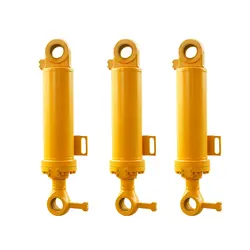
How Does a Lift Cylinder Handle Variations in Cylinder Mounting and Configuration?
A lift cylinder is designed to handle variations in cylinder mounting and configuration, allowing for flexibility in different application scenarios. The construction and features of lift cylinders enable them to adapt to different mounting orientations and accommodate variations in configuration. Here’s a detailed explanation of how a lift cylinder handles variations in cylinder mounting and configuration:
- Mounting Flexibility:
- Adjustable Stroke Length:
- Modular Design:
- Flexible Mounting Accessories:
- Customization Options:
- Compliance with Industry Standards:
Lift cylinders are engineered to provide mounting flexibility, allowing them to be installed in various orientations and positions. They can be mounted vertically, horizontally, or at inclined angles, depending on the specific requirements of the application. Lift cylinders often feature versatile end caps, mounting brackets, or clevis mounts that can be adjusted or rotated to accommodate different mounting orientations. This flexibility enables lift cylinders to fit into different equipment designs and configurations.
Stroke length refers to the distance the piston rod of a lift cylinder extends or retracts during operation. Lift cylinders are designed with adjustable stroke length capabilities, which allow for customization according to specific mounting and configuration requirements. By adjusting the stroke length, the lift cylinder can accommodate variations in the available space or the desired range of motion. This adjustability ensures that the cylinder can be properly installed and operate effectively within the given constraints.
Many lift cylinders feature a modular design, allowing for easy customization and adaptation to different mounting and configuration needs. Modular lift cylinders consist of separate components that can be assembled or disassembled, providing flexibility in terms of length, rod diameter, mounting options, and other specifications. These modular components can be combined or replaced to match specific equipment requirements. The modular design enables lift cylinders to handle variations in mounting and configuration, making them versatile and adaptable for different applications.
Lift cylinders are often accompanied by a range of mounting accessories and attachments that enhance their adaptability. These accessories include clevis brackets, trunnion mounts, spherical bearings, pivot pins, and other connection components. These mounting accessories offer multiple options for securely attaching the lift cylinder to the equipment or machinery. They provide flexibility in terms of positioning, alignment, and angle adjustment, enabling the lift cylinder to accommodate variations in cylinder mounting and configuration.
Lift cylinder manufacturers often offer customization options to meet specific mounting and configuration requirements. This customization may involve modifications to the cylinder’s dimensions, mounting interfaces, rod ends, or other design aspects. By working closely with the manufacturer, equipment designers and engineers can ensure that the lift cylinder is tailored to fit the unique mounting and configuration needs of their application. Customization options allow for precise integration of the lift cylinder, ensuring optimal performance and compatibility.
Lift cylinders adhere to industry standards and guidelines, ensuring compatibility with commonly used mounting and configuration practices. These standards establish criteria for cylinder dimensions, mounting hole patterns, rod end dimensions, and other specifications. By complying with these standards, lift cylinders ensure that they can be easily integrated into various equipment designs and configurations without requiring significant modifications or adaptations.
The combination of mounting flexibility, adjustable stroke length, modular design, flexible mounting accessories, customization options, and compliance with industry standards enables lift cylinders to handle variations in cylinder mounting and configuration. This adaptability allows lift cylinders to be effectively utilized in a wide range of applications, accommodating different equipment designs and requirements.
Can lift cylinders be used for both lifting and lowering applications?
Yes, lift cylinders are designed to be versatile and can be used for both lifting and lowering applications. Here’s an explanation of how lift cylinders are utilized for both lifting and lowering:
Lift cylinders are a type of hydraulic cylinder that converts fluid pressure into linear motion. They consist of a cylinder barrel, a piston, a rod, and seals. When hydraulic fluid is pressurized and directed into the cylinder, it exerts force on the piston, causing it to move in a linear direction.
Lifting Applications:
In lifting applications, the lift cylinder extends to raise or lift a load. As hydraulic fluid is pumped into the cylinder, the pressure increases, pushing the piston and rod outward. This extension of the cylinder generates the necessary force to lift the load. The lifting capacity of the cylinder depends on its design, including the diameter of the piston and the pressure rating of the system.
Lowering Applications:
For lowering applications, the lift cylinder retracts to lower the load. By controlling the flow of hydraulic fluid out of the cylinder, the pressure is reduced, allowing the weight of the load to push the piston and rod back into the cylinder. This controlled retraction enables smooth and controlled lowering of the load.
Lift cylinders are commonly used in various industries and applications where controlled vertical motion is required. Examples include lifting platforms, scissor lifts, dump trucks, hydraulic elevators, and material handling equipment. The ability to perform both lifting and lowering actions makes lift cylinders highly versatile and adaptable to different operational needs.
In summary, lift cylinders can be utilized for both lifting and lowering applications. By controlling the flow of hydraulic fluid, these cylinders can extend to lift a load and retract to lower it, offering flexibility and efficiency in a wide range of industries and equipment.


editor by CX 2024-04-04