Product Description
Product description:
Junfu is famous brand in front-end cylinders, offering an extensive catalogue from 5 to 100 tons with bespoke solutions. Designed for rear-end tippers and tippers trailers, CHINAMFG brand front-end telescopic cylinders are known for their durability, reliability in all conditions and value for money. We believe in delivering a solution that can rapidly and successfully meet your requirements in demanding industries such as transportation, construction and mining. With high payload and longer service intervals for increased operating time, CHINAMFG brand front-end cylinders are also environmentally friendly solutions with lower oil & fuel consumption.
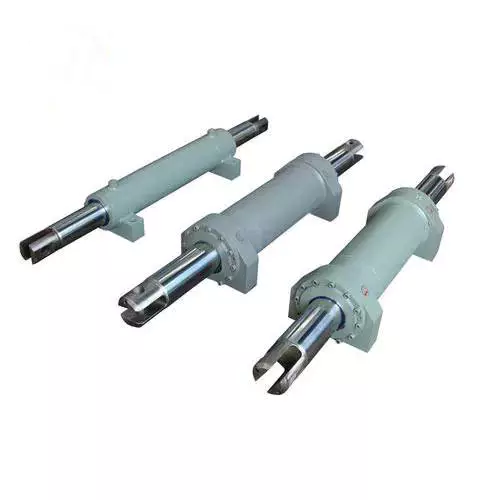
FC telescopic front-end(front mounting) cylinders are primarily designed for straight headboard dump trucks with a capacity range of over 100 tons tipping weight. Our trunnion type FC cylinder is lightweight, strong, maintenance free and offers the most added stability to the tipper. The CHINAMFG brand FC tipping cylinders have earned reputation for their reliability and value for money over many years.
Designed for Dump Truck applications, FC series cylinder with 3-7 stages is capable of lifting more weight which in return allows trucks to be equipped with smaller cylinders reducing space and saving weight. This CHINAMFG series cylinder is mostly used in combination with a Straight Headboard Type and Trunnion Type Body Connection.
The hydraulic system including hydraulic oil tank, gear pump, lift valve, air control valve and limit valve, oil pipe and joints.
Product Details
| series | model |
L1 |
L2 |
L3 |
L4 |
L5 |
L6 |
ΦA |
Pipe joint |
Applicable cargo box length(mm) |
Overhang length(mm) |
Lifting angle |
Lifting weight(Kg) |
Fuel tank selection |
|
1 3 7 |
3TG-F137*3830 |
200 |
65 |
360 |
60 |
325 |
1585 |
Φ60 |
G1 |
4700-5300 |
800 |
47-52° |
43 |
80 |
|
4TG-F137*3830 |
200 |
65 |
360 |
60 |
325 |
1270 |
Φ60 |
G1 |
4700-5300 |
800 |
47-52° |
31 |
80 |
|
|
4TG-F137*4280 |
200 |
65 |
360 |
60 |
325 |
1390 |
Φ60 |
G1 |
5300-6000 |
800 |
47-52° |
36 |
80 |
|
|
4TG-F137*4800 |
200 |
65 |
360 |
60 |
325 |
1510 |
Φ60 |
G1 |
5800-6500 |
800 |
47-52° |
36 |
80 |
|
|
1 5 7 |
4TG-F157*4280 |
245 |
65 |
360 |
60 |
325 |
1385 |
Φ60 |
G1 |
5300-5800 |
800 |
47-52° |
53 |
80 |
|
4TG-F157*4800 |
245 |
65 |
360 |
60 |
325 |
1505 |
Φ60 |
G1 |
5800-6500 |
800 |
47-52° |
53 |
100 |
|
|
4TG-F157*5100 |
245 |
65 |
360 |
60 |
325 |
1580 |
Φ60 |
G1 |
6200-6800 |
800 |
47-52° |
58 |
100 |
|
|
4TG-F157*5390 |
245 |
65 |
360 |
60 |
325 |
1655 |
Φ60 |
G1 |
6600-7200 |
800 |
47-52° |
58 |
100 |
|
|
5TG-F157*4050 |
245 |
65 |
360 |
60 |
325 |
1125 |
Φ60 |
G1 |
5000-5500 |
800 |
47-52° |
46 |
80 |
|
|
5TG-F157*4280 |
245 |
65 |
360 |
60 |
325 |
1165 |
Φ60 |
G1 |
5300-6000 |
800 |
47-52° |
46 |
80 |
|
|
5TG-F157*4800 |
245 |
65 |
360 |
60 |
325 |
1265 |
Φ60 |
G1 |
5800-6500 |
800 |
47-52° |
49 |
80 |
|
|
5TG-F157*5100 |
245 |
65 |
360 |
60 |
325 |
1340 |
Φ60 |
G1 |
6200-6800 |
800 |
47-52° |
49 |
80 |
|
|
5TG-F157*5390 |
245 |
65 |
360 |
60 |
325 |
1385 |
Φ60 |
G1 |
6600-7200 |
800 |
47-52° |
49 |
80 |
|
|
1 7 9 |
4TG-F179*4600 |
245 |
65 |
360 |
65 |
325 |
1455 |
Φ60 |
G1 |
5600-6300 |
800 |
47-52° |
66 |
120 |
|
4TG-F179*4800 |
245 |
65 |
360 |
65 |
325 |
1505 |
Φ60 |
G1 |
5800-6500 |
800 |
47-52° |
66 |
120 |
|
|
4TG-F179*5100 |
245 |
65 |
360 |
65 |
325 |
1580 |
Φ60 |
G1 |
6200-6800 |
800 |
47-52° |
70 |
120 |
|
|
4TG-F179*5390 |
245 |
65 |
360 |
65 |
325 |
1655 |
Φ60 |
G1 |
6600-7200 |
800 |
47-52° |
70 |
120 |
|
|
4TG-F179*5780 |
245 |
65 |
360 |
65 |
325 |
1750 |
Φ60 |
G1 |
7200-8000 |
1000 |
47-52° |
70 |
135 |
|
|
6TG-F179*5780 |
245 |
65 |
360 |
65 |
325 |
1270 |
Φ60 |
G1 |
7200-8000 |
1000 |
47-52° |
49 |
120 |
|
|
2 0 2 |
4TG-F202*5390 |
280 |
65 |
360 |
65 |
325 |
1675 |
Φ65 |
G1 |
6600-7200 |
800 |
47-52° |
92 |
165 |
|
4TG-F202*5780 |
280 |
65 |
360 |
65 |
325 |
1770 |
Φ65 |
G1 |
7200-8000 |
1000 |
47-52° |
96 |
165 |
|
|
4TG-F202*6180 |
280 |
65 |
360 |
65 |
325 |
1870 |
Φ65 |
G1 |
8000-8500 |
1000 |
47-52° |
96 |
185 |
|
|
5TG-F202*7200 |
280 |
65 |
360 |
65 |
325 |
1770 |
Φ65 |
G1 |
8700-9500 |
1000 |
47-52° |
88 |
185 |
Note: The above product models are our company’s regular product models. Customers are requested to choose regular products as much as possible, which can improve the delivery time and service quality.
Workshop with advanced equipment:
Exhibition:
Certificates: ISO9001, IATF 16949:2016, CE,etc.
FAQ:
Q1: How about your cylinders compared with HYVA cylinder ?
Our cylinders can replace HYVA cylinder well, with same technical details and mounting sizes
Q2: What’s your cylinder’s advantages ?
The cylinders are manufactured by advanced equipments and made under strictly quality control processing.
The steel is quenched and tempered 27SiMn steel and all raw materials are good quality from world famous companies.
Competitive price!
Q3: When your company be established ?
Our company be established in 2002, professional manufacturer of hydraulic cylinders more than 20 years.
We had passed IATF 16949:2016 Quality control system, ISO9001, CE,etc.
Q4: How about the delivery time ?
7-15 days approximately.
Q5: How about the cylinder’s quality gurantee ?
One year.
| Certification: | CE, ISO9001, IATF 16949:2016, SGS |
|---|---|
| Pressure: | High Pressure |
| Work Temperature: | Normal Temperature |
| Acting Way: | Single Acting |
| Working Method: | Straight Trip |
| Adjusted Form: | Switching Type |
| Customization: |
Available
|
|
|---|
How do manufacturers ensure the durability and reliability of hydraulic cylinders?
Manufacturers employ various strategies and techniques to ensure the durability and reliability of hydraulic cylinders. These measures are crucial as hydraulic cylinders are often subjected to demanding operating conditions and heavy loads. To ensure their longevity and dependable performance, manufacturers focus on the following aspects:
1. High-Quality Materials:
– Manufacturers use high-quality materials in the construction of hydraulic cylinders. Components such as cylinder barrels, piston rods, seals, and bearings are made from materials that possess excellent strength, corrosion resistance, and wear resistance properties. Common materials used include high-grade steel alloys, chrome-plated rods, and specialized coatings. The selection of appropriate materials ensures that hydraulic cylinders can withstand the stresses, pressures, and environmental conditions they encounter during operation.
2. Robust Design:
– Hydraulic cylinders are designed to withstand high loads and harsh operating conditions. Manufacturers use computer-aided design (CAD) software and finite element analysis (FEA) techniques to optimize the cylinder’s structural integrity and performance. The design includes factors such as proper wall thickness, reinforcement in critical areas, and appropriate sizing of components. Robust design practices ensure that hydraulic cylinders can withstand the forces and stresses they encounter, preventing premature failure and ensuring durability.
3. Quality Manufacturing Processes:
– Manufacturers follow stringent quality control measures during the manufacturing processes of hydraulic cylinders. These processes include precision machining, welding, heat treatment, and surface finishing. Skilled technicians and advanced machinery are employed to ensure dimensional accuracy, proper fitment of components, and overall quality. By adhering to strict manufacturing processes and quality standards, manufacturers can produce hydraulic cylinders with consistent performance and reliability.
4. Sealing Technology:
– The sealing system of hydraulic cylinders is critical for their durability and reliability. Manufacturers utilize advanced sealing technologies such as lip seals, O-rings, and composite seals to prevent fluid leakage and ingress of contaminants. Properly designed and high-quality seals ensure that hydraulic cylinders can maintain their performance over extended periods. Seals are tested for their compatibility with the hydraulic fluid, pressure resistance, and resilience to environmental factors such as temperature and humidity.
5. Performance Testing:
– Manufacturers subject hydraulic cylinders to rigorous performance testing to validate their durability and reliability. These tests simulate real-world operating conditions and evaluate factors such as load capacity, pressure resistance, fatigue life, and leakage. Performance testing helps identify any design flaws or weaknesses in the hydraulic cylinder and allows manufacturers to make necessary improvements. By conducting thorough performance testing, manufacturers can ensure that hydraulic cylinders meet or exceed the required performance standards.
6. Compliance with Industry Standards:
– Manufacturers adhere to industry standards and regulations to ensure the durability and reliability of hydraulic cylinders. These standards, such as ISO 6020/6022 and NFPA T3.6.7, provide guidelines for design, manufacturing, and performance requirements. By following these standards, manufacturers ensure that hydraulic cylinders are designed and built to meet specific quality and safety criteria. Compliance with industry standards helps establish a baseline for durability and reliability and instills confidence in the performance of hydraulic cylinders.
7. Regular Maintenance and Service:
– Manufacturers provide recommendations for regular maintenance and service of hydraulic cylinders. This includes guidelines for lubrication, inspection of components, and replacement of wear parts such as seals and bearings. Following the manufacturer’s maintenance guidelines helps ensure the long-term durability and reliability of hydraulic cylinders. Regular maintenance also allows for the early detection of potential issues, preventing major failures and extending the service life of the hydraulic cylinders.
8. Customer Support and Warranty:
– Manufacturers provide customer support and warranty services to address any issues that arise with hydraulic cylinders. They offer technical assistance, troubleshooting guidance, and replacement of defective components. The warranty ensures that customers receive reliable and durable hydraulic cylinders and provides recourse in case of any manufacturing defects or premature failures. Strong customer support and warranty policies reflect the manufacturer’s commitment to the durability and reliability of their products.
In summary, manufacturers ensure the durability and reliability of hydraulic cylinders through the use of high-quality materials, robust design practices, stringent manufacturing processes, advanced sealing technology, thorough performance testing, compliance with industry standards, regular maintenance guidelines, and customer support with warranty services. By focusing on these aspects, manufacturers can produce hydraulic cylinders that can withstand demanding conditions, provide long service life, and deliver reliable performance in various applications.
Ensuring Consistent Force Output for Repetitive Tasks with Hydraulic Cylinders
Hydraulic cylinders are designed to ensure consistent force output for repetitive tasks. This consistency is essential for maintaining precise control, achieving uniform results, and optimizing the performance of hydraulic systems. Let’s explore how hydraulic cylinders achieve consistent force output for repetitive tasks:
- Design and Manufacturing Standards: Hydraulic cylinders are manufactured to meet strict design and manufacturing standards. These standards ensure that the cylinders are built with precision and accuracy, enabling them to deliver consistent force output. The components, such as the piston, cylinder barrel, seals, and valves, are engineered to work together harmoniously, minimizing variations in force generation.
- Pressure Regulation: Hydraulic systems incorporate pressure regulation mechanisms to maintain a constant pressure level. Pressure relief valves, pressure regulators, and pressure-compensated pumps help maintain a consistent hydraulic pressure throughout the system. By regulating the pressure, hydraulic cylinders receive a consistent supply of pressurized fluid, resulting in consistent force output for repetitive tasks.
- Flow Control: Flow control valves are utilized in hydraulic systems to manage the flow rate of hydraulic fluid. These valves regulate the speed at which the fluid enters and exits the hydraulic cylinder, influencing the force output. By controlling the flow rate, hydraulic cylinders can achieve consistent force output for repetitive tasks. This is particularly important when it comes to tasks that require precise and uniform force application.
- Effective Seal Performance: Sealing systems play a crucial role in hydraulic cylinders by preventing fluid leakage and maintaining pressure integrity. High-quality seals and proper installation ensure effective sealing throughout the cylinder’s operation. By minimizing internal leakage, hydraulic cylinders can maintain consistent force output, even during repetitive tasks.
- Maintenance and Inspection: Regular maintenance and inspection of hydraulic cylinders are essential for ensuring consistent force output. By following maintenance schedules, replacing worn-out components, and monitoring cylinder performance, any potential issues that could affect force consistency can be identified and addressed promptly. This proactive approach helps maintain the reliability and performance of hydraulic cylinders over time.
In summary, hydraulic cylinders employ various mechanisms to ensure consistent force output for repetitive tasks. Adherence to design and manufacturing standards, pressure regulation, flow control, effective seal performance, and regular maintenance all contribute to achieving consistent force output. By maintaining precision, minimizing variations, and addressing potential issues, hydraulic cylinders provide reliable and consistent force generation, facilitating the successful completion of repetitive tasks in various applications.
How do hydraulic cylinders contribute to the efficiency of heavy machinery like excavators?
Hydraulic cylinders play a crucial role in enhancing the efficiency and performance of heavy machinery, such as excavators. These powerful hydraulic actuators enable excavators to perform various tasks efficiently and effectively. Here’s a detailed explanation of how hydraulic cylinders contribute to the efficiency of heavy machinery like excavators:
1. Force and Power:
– Hydraulic cylinders provide the necessary force and power required for the excavation process. They convert hydraulic energy from the hydraulic fluid into linear mechanical force, allowing the excavator to exert significant pushing and pulling forces. The force generated by hydraulic cylinders enables the digging arm or boom of the excavator to penetrate and break through tough materials, such as soil, rocks, or concrete, with ease and efficiency.
2. Precise Control:
– Hydraulic cylinders offer precise control over the movement of excavator components. By regulating the flow of hydraulic fluid to the cylinders, operators can control the speed, direction, and positioning of the excavator’s arm, boom, bucket, and other attachments. This precise control allows operators to perform delicate operations, such as fine grading or precise material placement, with accuracy and efficiency.
3. Versatility and Adaptability:
– Hydraulic cylinders enable excavators to perform a wide range of tasks by facilitating the quick and easy interchangeability of attachments. Excavators can be equipped with various specialized attachments, including buckets, breakers, grapples, and augers, which can be efficiently connected and disconnected using hydraulic cylinders. This versatility and adaptability enhance the efficiency of excavators by enabling them to tackle different tasks without the need for extensive manual adjustments or downtime.
4. Increased Productivity:
– The power and control provided by hydraulic cylinders significantly increase the productivity of excavators. Excavators equipped with hydraulic cylinders can complete tasks more quickly and efficiently compared to manual or mechanically-driven machinery. The precise control over movements allows for faster cycle times, reduced idle time, and improved overall productivity on the worksite.
5. Enhanced Digging and Lifting Capabilities:
– Hydraulic cylinders enable excavators to perform digging and lifting operations with enhanced capabilities. The force generated by hydraulic cylinders allows excavators to dig deeper and lift heavier loads compared to other types of machinery. This increased digging and lifting capacity contributes to the efficiency of excavators by reducing the number of passes required to complete a task and improving overall productivity.
6. Durability and Reliability:
– Hydraulic cylinders are designed to withstand heavy loads, challenging operating conditions, and frequent use. They are built with robust materials, such as high-strength steel, and undergo stringent quality control measures during manufacturing. The durability and reliability of hydraulic cylinders ensure that excavators can operate efficiently even in demanding environments, minimizing downtime and maximizing productivity.
7. Energy Efficiency:
– Hydraulic systems, including hydraulic cylinders, are known for their energy efficiency. Hydraulic cylinders can deliver high force outputs while consuming relatively low amounts of hydraulic fluid. This energy efficiency translates to lower fuel consumption and reduced operating costs for excavators. The efficient use of hydraulic power contributes to the overall efficiency and sustainability of heavy machinery operations.
8. Safety:
– Hydraulic cylinders play a vital role in ensuring the safety of excavator operations. They provide controlled and predictable movements, reducing the risk of sudden or uncontrolled motions. The precise control offered by hydraulic cylinders allows operators to perform tasks safely and accurately, minimizing the chances of accidents or damage to the machinery or surrounding environment.
Overall, hydraulic cylinders are essential components that significantly contribute to the efficiency of heavy machinery like excavators. By providing force, precise control, versatility, increased productivity, enhanced capabilities, durability, energy efficiency, and safety, hydraulic cylinders enable excavators to perform a wide range of tasks efficiently and effectively in various industries, including construction, mining, and landscaping.


editor by CX 2023-11-15