Product Description
Hydraulic Actuator -Hydraulic Telescopic Cylinder for Truck
1. Company Information
Found 1995,w are 1 of the biggest hydraulic cylinder manufacturer in China, specialized in design, R & D and manufacturing of hydraulic machinery products etc, with its annual production capaciy of 2 square meters.There are 700 sets of mnufacturing equipment .
Product Description
2. hydraulic telescopic cylinder for dump truck drawing and parameter
FC type
| ITEM | MODEL NO. | # of Stages | Largest Moving Stage Diameter(mm) | stroke(mm) | the largest sleeve OD(mm) | mounting distance(mm) |
| 1 | WTHY FC-3-110-3205 | 3 | 110 | 3205 | 168 | 343 |
| 2 | WTHY FC-3-110-3460 | 3 | 110 | 3460 | 168 | 343 |
| 3 | WTHY FC-3-129-2980 | 3 | 129 | 2980 | 218 | 343 |
| 4 | WTHY FC-3-129-3205 | 3 | 129 | 3205 | 218 | 343 |
| 5 | WTHY FC-3-129-3460 | 3 | 129 | 3460 | 218 | 343 |
| 6 | WTHY FC-3-129-3880 | 3 | 129 | 3880 | 218 | 343 |
| 7 | WTHY FC-3-129-4270 | 3 | 129 | 4270 | 218 | 343 |
| 8 | WTHY FC-4-129-4280 | 4 | 129 | 4280 | 218 | 343 |
| 9 | WTHY FC-4-129-4280 | 4 | 129 | 4280 | 218 | 343 |
| 10 | WTHY FC-4-129-5180 | 4 | 129 | 5180 | 218 | 343 |
| 11 | WTHY FC-3-149-4270 | 3 | 149 | 4270 | 244 | 343 |
| 12 | WTHY FC-4-149-3680 | 4 | 149 | 3680 | 218 | 343 |
| 13 | WTHY FC-4-149-3980 | 4 | 149 | 3980 | 218 | 343 |
| 14 | WTHY FC-4-149-4280 | 4 | 149 | 4280 | 244 | 343 |
| 15 | WTHY FC-4-149-4620 | 4 | 149 | 4620 | 244 | 343 |
| 16 | WTHY FC-4-149-4940 | 4 | 149 | 4940 | 244 | 343 |
| 17 | WTHY FC-4-149-5180 | 4 | 149 | 5180 | 244 | 343 |
| 18 | WTHY FC-4-149-5460 | 4 | 149 | 5460 | 244 | 343 |
| 19 | WTHY FC-4-169-4280 | 4 | 169 | 4280 | 244 | 343 |
| 20 | WTHY FC-4-169-4620 | 4 | 169 | 4620 | 244 | 343 |
| 21 | WTHY FC-4-169-4940 | 4 | 169 | 4940 | 244 | 343 |
| 22 | WTHY FC-4-169-5180 | 4 | 169 | 5180 | 244 | 343 |
| 23 | WTHY FC-4-169-5460 | 4 | 169 | 5460 | 244 | 343 |
| 24 | WTHY FC-5-169-5355 | 5 | 169 | 5355 | 244 | 343 |
| 25 | WTHY FC-5-169-5780 | 5 | 169 | 5780 | 244 | 343 |
| 26 | WTHY FC-5-169-6180 | 5 | 169 | 6180 | 244 | 343 |
| 27 | WTHY FC-5-169-6830 | 5 | 169 | 6830 | 244 | 343 |
| 28 | WTHY FC-5-169-7130 | 5 | 169 | 7130 | 244 | 343 |
| 29 | WTHY FC-5-169-7630 | 5 | 169 | 7630 | 244 | 343 |
| 30 | WTHY FC-5-169-8130 | 5 | 169 | 8130 | 244 | 343 |
| 31 | WTHY FC-5-169-9030 | 5 | 169 | 9030 | 244 | 343 |
| 32 | WTHY FC-5-169-9530 | 5 | 169 | 9530 | 244 | 343 |
| 33 | WTHY FC-4-191-5460 | 4 | 191 | 5460 | 274 | 343 |
| 34 | WTHY FC-5-191-5780 | 5 | 191 | 5780 | 274 | 343 |
| 35 | WTHY FC-5-191-6180 | 5 | 191 | 6180 | 274 | 343 |
| 36 | WTHY FC-5-191-7130 | 5 | 191 | 7130 | 274 | 343 |
| 37 | WTHY FC-5-191-7630 | 5 | 191 | 7630 | 274 | 343 |
| 38 | WTHY FC-5-191-8130 | 5 | 191 | 8130 | 274 | 343 |
| 39 | WTHY FC-5-191-9030 | 5 | 191 | 9030 | 274 | 343 |
| 40 | WTHY FC-5-191-9530 | 5 | 191 | 9530 | 274 | 343 |
| 41 | WTHY FC-5-214-7610 | 5 | 214 | 7610 | 274 | 343 |
| 42 | WTHY FC-5-214-9030 | 5 | 214 | 9030 | 274 | 343 |
FE type
| ITEM | MODLE NO. | # of Stages | Largest Moving Stage Diameter(mm) | stroke(mm) | mounting distance(mm) |
| 1 | WTHY FE-3-110-3205 | 3 | 110 | 3205 | 1449 |
| 2 | WTHY FE-3-110-3460 | 3 | 110 | 3460 | 1609 |
| 3 | WTHY FE-3-129-3460 | 3 | 129 | 3460 | 1449 |
| 4 | WTHY FE-3-129-3880 | 3 | 129 | 3880 | 1609 |
| 5 | WTHY FE-3-149-2900 | 3 | 149 | 2900 | 1320 |
| 6 | WTHY FE-3-149-3200 | 3 | 149 | 3200 | 1420 |
| 7 | WTHY FE-3-149-3500 | 3 | 149 | 3500 | 1520 |
| 8 | WTHY FE-3-149-3880 | 3 | 149 | 3880 | 1644 |
| 9 | WTHY FE-4-149-4280 | 4 | 149 | 4280 | 1450 |
| 10 | WTHY FE-4-149-4940 | 4 | 149 | 4940 | 1529 |
| 11 | WTHY FE-4-149-4620 | 4 | 149 | 4620 | 1484 |
| 12 | WTHY FE-4-169-4280 | 4 | 169 | 4280 | 1394 |
| 13 | WTHY FE-4-169-4450 | 4 | 169 | 4450 | 1437 |
| 14 | WTHY FE-4-169-4620 | 4 | 169 | 4620 | 1479 |
| 15 | WTHY FE-4-169-4940 | 4 | 169 | 4940 | 1529 |
| 16 | WTHY FE-4-169-5000 | 4 | 169 | 5000 | 1574 |
| 17 | WTHY FE-4-169-5180 | 4 | 169 | 5180 | 1604 |
| 18 | WTHY FE-5-169-5355 | 5 | 169 | 5355 | 1394 |
| 19 | WTHY FE-5-169-5780 | 5 | 169 | 5780 | 1559 |
| 20 | WTHY FE-5-169-6180 | 5 | 169 | 6180 | 1527 |
| 21 | WTHY FE-5-169-6480 | 5 | 169 | 6480 | 1604 |
| 22 | WTHY FE-5-169-6830 | 5 | 169 | 6830 | 1674 |
| 23 | WTHY FE-5-169-7130 | 5 | 169 | 7130 | 1769 |
| 24 | WTHY FE-5-191-6180 | 5 | 191 | 6180 | 1527 |
| 25 | WTHY FE-5-191-9030 | 5 | 191 | 9030 | 2177 |
| 26 | WTHY FE-6-191-7420 | 6 | 191 | 7420 | 1677 |
| 27 | WTHY FE-5-214-6830 | 5 | 214 | 6830 | 1662 |
| 28 | WTHY FE-5-214-7130 | 5 | 214 | 7130 | 1722 |
3. hydraulic telescopic cylinder for dump truck produce line
700 sets manufacturing equipment,such as cold drawing production line ,heat treatment production line ,surface treatment production line,testing equipment,various digital-control machining equipment,gantry style linear electroplating production line.
4. hydraulic telescopic cylinder for dump truck quality guarantee system
Program before Delivery
1). Trial Operation Test
2). Start-up Pressure Test
3). Pressure-Tight Test
4). Leak Test
5). Full Stroke Test
6). Buffer Test
7). Testing the Effect of Limit
8). Load Efficiency Test
9). Reliability Test
Every piece of hydraulic cylinder are tested and will send out only after they are pasted the each test.
Our company has abundant technical force and perfect testing means. By making wide technical and business cooperation with many related enterprises, universities, colleges and institutes both at home and abroad, and employing senior engineers and software engineers, we have greatly strengthened and improved our designing, processing, and testing abilities.
5. After-service
1).Pre-sale service: Keep communicating with the truck manufacturers , including selection of product model , design of hydraulic system, test of performance and analysis of the accident. Once the problems occur, we will solve them immediately together with truck manufacturers .
2).The sale service: Provide training and technical support for users.
3).After-sale service: Solve the problem firstly, then analyse responsibility ; Replace the system components immediately if any need.
4). 24 hours telephone service hotline.
6.Exhibition and partner
7. FAQ
Q1:What’s the brand name of your products ?
A:Generally,we use our own brand “WTJX”,OEM is also available as required.
Q2:Hydraulic cylinder internal leakage?
A: There are 3 main reasons causing internal leakage :Overload,polishing is not well controlled,bad seal kits.As is known to all,vehicles in China are often overload,our products all designed to bear the overload power.We have numerical control machine to assure the polish processing .And we use the imported seals to meet customers’ demands.
Q3:Does your piston rod get ruptured easily?
A: Hard chrome plating quenched and tempered 45# steel for piston rod to assure sufficient hardness and toughness.
Q4:Is your design reasonable? What about your product safe coefficient?
A:We have R&D team with abundant design experience. We also established production, education, and research cooperation with universities . Rest assured.
Q5:What about the quality feedback of your products?
A: Guarantee the quality from the raw material. We have cold drawing production line and nickel-chrome electroplating production line , so we can produce cold-drawing pipe and hard-chrome pipe used for hydraulic cylinder. !!!
WE HAVE NEVER RECEIVED EVEN ONCE QUALITY COMPLAINT FOR MANY YEARS OF INTERNATIONAL TRADE.
Q6:Is the sample free?
A:Yes.In our acceptable range, we can offer a sample by charging freight. And we will return the fee after you place bulk order.
Q7:How about the delivery time?
A: Over 700 sets advanced equipments to meet customer’s large demand in short delivery time.Generally ,it’s 20 days.
Q8:What ‘s the after-service?
A:If the quality can’t meet your requirement ,we will pay all your lost and offer technical support to solve your problem!!!
| Material: | Steel |
|---|---|
| Usage: | Truck |
| Structure: | General Cylinder |
| Power: | Hydraulic |
| Standard: | Standard, Nonstandard |
| Place of Origin: | Shandong, China |
| Customization: |
Available
|
|
|---|
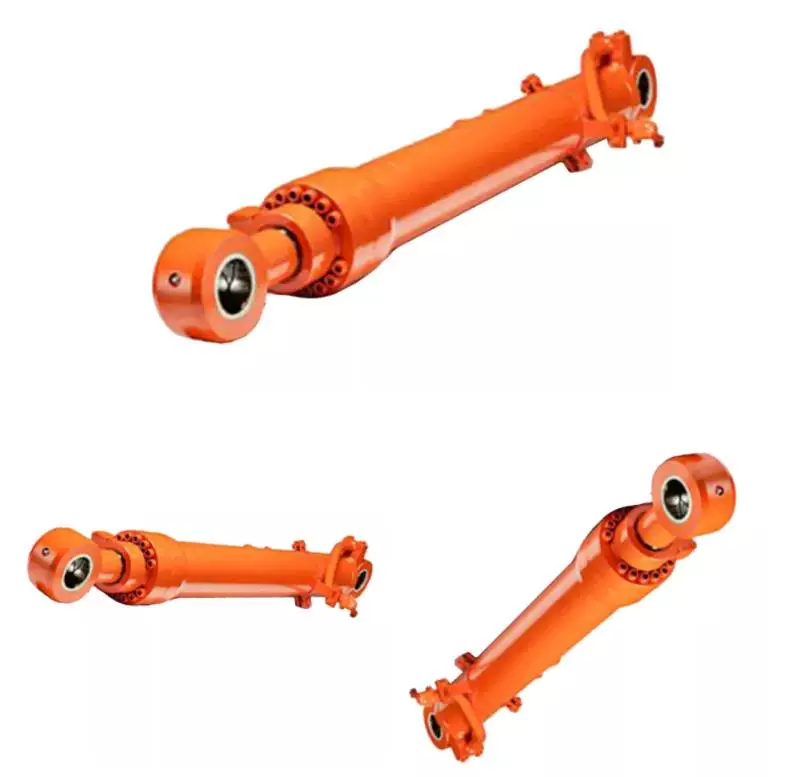
How do hydraulic cylinders handle the challenges of minimizing friction and wear?
Hydraulic cylinders employ several mechanisms and techniques to effectively minimize friction and wear, ensuring optimal performance and longevity. Minimizing friction and wear is crucial for hydraulic cylinders as it helps to maintain efficiency, reduce energy consumption, and prevent premature failure. Here’s a detailed explanation of how hydraulic cylinders handle the challenges of minimizing friction and wear:
1. Lubrication:
– Proper lubrication is essential for minimizing friction and wear in hydraulic cylinders. Lubricating fluids, such as hydraulic oils, are used to create a thin film between moving surfaces, reducing direct metal-to-metal contact. This lubricating film acts as a protective barrier, reducing friction and preventing wear. Regular maintenance practices include monitoring and maintaining the appropriate lubricant levels to ensure optimal lubrication and minimize frictional losses.
2. Surface Finishes:
– The surface finishes of components in hydraulic cylinders play a crucial role in minimizing friction and wear. Smoother surface finishes, achieved through precision machining, grinding, or the application of specialized coatings, reduce surface roughness and frictional resistance. By minimizing surface irregularities, the risk of wear and friction-induced damage is significantly reduced, resulting in improved efficiency and extended component life.
3. High-Quality Sealing Systems:
– Well-designed and high-quality sealing systems are crucial for minimizing friction and wear in hydraulic cylinders. Seals prevent fluid leakage and contamination while maintaining proper lubrication. Advanced sealing materials, such as polyurethane or composite materials, offer excellent wear resistance and low friction characteristics. Optimal seal design and proper installation ensure effective sealing, minimizing friction and wear between the piston and cylinder bore.
4. Proper Alignment and Clearances:
– Hydraulic cylinders must be properly aligned and have appropriate clearances to minimize friction and wear. Misalignment or excessive clearances can result in increased friction and uneven wear, leading to premature failure. Proper installation, alignment, and maintenance practices, including regular inspection and adjustment of clearances, help ensure smooth and even movement of the piston within the cylinder, reducing friction and wear.
5. Filtration and Contamination Control:
– Effective filtration and contamination control are essential for minimizing friction and wear in hydraulic cylinders. Contaminants, such as particles or moisture, can act as abrasive agents, accelerating wear and increasing friction. By implementing robust filtration systems and proper maintenance practices, hydraulic systems can prevent the ingress of contaminants, ensuring clean and properly lubricated components. Clean hydraulic fluids help minimize wear and friction, contributing to improved performance and longevity.
6. Material Selection:
– The selection of appropriate materials for hydraulic cylinder components is crucial in minimizing friction and wear. Components subject to high frictional forces, such as pistons and cylinder bores, can be made from materials with excellent wear resistance, such as hardened steel or composite materials. Additionally, selecting materials with low coefficients of friction helps reduce frictional losses. Proper material selection ensures durability and minimized wear in critical components of hydraulic cylinders.
7. Maintenance and Regular Inspection:
– Regular maintenance and inspection practices are vital for identifying and addressing potential issues that could lead to increased friction and wear in hydraulic cylinders. Scheduled maintenance includes lubrication checks, seal inspections, and monitoring of clearances. By promptly detecting and rectifying any signs of wear or misalignment, hydraulic cylinders can be kept in optimal condition, minimizing friction and wear throughout their operational lifespan.
In summary, hydraulic cylinders employ various strategies to handle the challenges of minimizing friction and wear. These include proper lubrication, employing suitable surface finishes, utilizing high-quality sealing systems, ensuring proper alignment and clearances, implementing effective filtration and contamination control measures, selecting appropriate materials, and conducting regular maintenance and inspections. By implementing these practices, hydraulic cylinders can minimize friction and wear, ensuring smooth and efficient operation while extending the overall lifespan of the system.
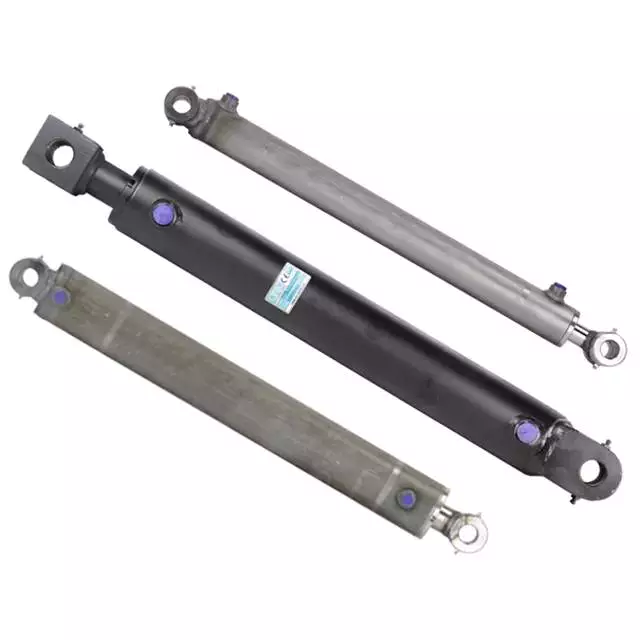
What considerations are important when selecting hydraulic cylinders for mobile equipment?
To select hydraulic cylinders for mobile equipment, several important considerations need to be taken into account. Here are the key factors to consider:
- Load Capacity: Determine the maximum load or force that the hydraulic cylinder will need to support. This includes both the static load and any dynamic or shock loads that may be encountered during operation.
- Stroke Length: Consider the required stroke length, which is the distance the hydraulic cylinder can extend and retract. Ensure that the stroke length is sufficient for the specific application and range of motion needed.
- Operating Pressure: Determine the maximum operating pressure required for the hydraulic system. This will depend on the load and the specific application. Select a hydraulic cylinder with a pressure rating that exceeds the maximum operating pressure to ensure safety and durability.
- Mounting Style: Consider the available space and the mounting requirements of the mobile equipment. Hydraulic cylinders come in various mounting styles, such as flange, trunnion, clevis, and pivot, among others. Choose a mounting style that is compatible with the equipment and provides the necessary support and stability.
- Size and Weight: Take into account the physical dimensions and weight of the hydraulic cylinder. Ensure that it can fit within the available space and that the equipment can support its weight without compromising performance or safety.
- Speed and Precision: Evaluate the required speed and precision of the hydraulic cylinder’s movement. Different cylinder designs and configurations can affect the speed and accuracy of motion. Consider factors such as cylinder bore size, rod diameter, and the presence of cushioning or dampening features.
- Environmental Factors: Assess the operating environment of the mobile equipment. Consider factors such as temperature extremes, exposure to moisture, dust, and chemicals. Select hydraulic cylinders with appropriate seals and coatings that can withstand the environmental conditions and prevent corrosion or damage.
- Reliability and Maintenance: Consider the reliability and maintenance requirements of the hydraulic cylinders. Look for reputable manufacturers that provide high-quality products with a proven track record. Evaluate factors such as expected service life, availability of spare parts, and ease of maintenance.
- Cost: Finally, consider the cost of the hydraulic cylinders, including the initial purchase price, installation costs, and long-term maintenance expenses. While it is essential to find a cost-effective solution, prioritize quality and performance to ensure safe and efficient operation.
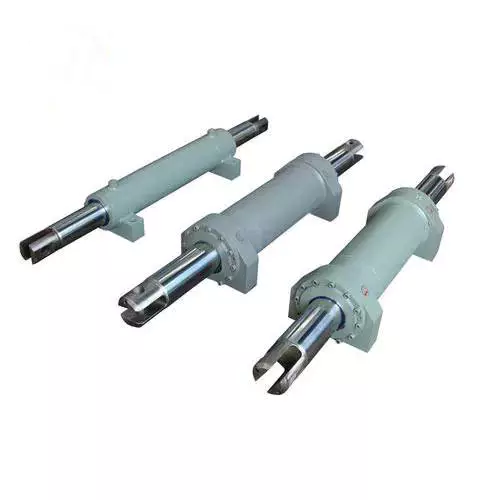
How do hydraulic cylinders ensure precise and controlled movement in equipment?
Hydraulic cylinders are widely used in various equipment and machinery to provide precise and controlled movement. They utilize hydraulic fluid and mechanical components to achieve accurate positioning, smooth operation, and reliable control. Here’s a detailed explanation of how hydraulic cylinders ensure precise and controlled movement in equipment:
1. Hydraulic Principle:
– Hydraulic cylinders operate based on Pascal’s law, which states that pressure exerted on a fluid is transmitted equally in all directions. The hydraulic fluid is contained within the cylinder, and when pressure is applied, it acts on the piston, generating force. By controlling the pressure and flow of hydraulic fluid, the movement of the cylinder can be precisely regulated, allowing for accurate and controlled motion.
2. Force and Load Management:
– Hydraulic cylinders are designed to handle specific loads and forces. The force generated by the hydraulic cylinder depends on the hydraulic pressure and the surface area of the piston. By adjusting the pressure, the force output can be controlled. This allows for precise management of the load and ensures that the cylinder can handle the required force without exerting excessive or insufficient force. Proper load management contributes to the precise and controlled movement of the equipment.
3. Control Valves:
– Control valves play a crucial role in regulating the flow and direction of hydraulic fluid within the cylinder. These valves allow operators to control the extension and retraction of the cylinder, adjust the speed of movement, and stop or hold the cylinder at any desired position. By manipulating the control valves, precise and controlled movement can be achieved, enabling operators to position equipment accurately and perform specific tasks with precision.
4. Flow Control:
– Hydraulic cylinders incorporate flow control valves to manage the rate of hydraulic fluid flow. These valves control the speed of the cylinder’s extension and retraction, allowing for smooth and controlled movement. By adjusting the flow rate, operators can precisely control the speed of the cylinder, ensuring that it moves at the desired rate without sudden or erratic movements. Flow control contributes to the overall precision and control of the equipment’s movement.
5. Position Sensing:
– To ensure precise movement, hydraulic cylinders can be equipped with position sensing devices such as linear transducers or proximity sensors. These sensors provide feedback on the position of the cylinder, allowing for accurate position control and closed-loop control systems. By continuously monitoring the position, the equipment’s movement can be controlled with high accuracy, enabling precise positioning and operation.
6. Proportional Control:
– Advanced hydraulic systems utilize proportional control technology, which allows for precise and fine-tuned control of the hydraulic cylinder’s movement. Proportional valves, often operated by electronic control systems, provide variable flow rates and pressure adjustments. This technology enables precise control of speed, force, and position, resulting in highly accurate and controlled movement of the equipment.
7. Cushioning and Damping:
– Hydraulic cylinders can incorporate cushioning and damping mechanisms to ensure smooth and controlled movement at the end of the stroke. Cushioning features, such as adjustable cushions or shock absorbers, reduce the impact and decelerate the cylinder before reaching the end of the stroke. This prevents abrupt stops and minimizes vibrations, contributing to precise and controlled movement.
8. Load Compensation:
– Some hydraulic systems utilize load compensation mechanisms to maintain precise movement even when the load varies. Load-sensing systems monitor the load demand and adjust the hydraulic pressure and flow accordingly to meet that demand. This compensation ensures that the equipment’s movement remains accurate and controlled, regardless of changes in the applied load.
In summary, hydraulic cylinders ensure precise and controlled movement in equipment through the application of hydraulic principles, force and load management, control valves, flow control, position sensing, proportional control, cushioning and damping mechanisms, and load compensation. These features and technologies allow operators to achieve accurate positioning, smooth operation, and reliable control, enabling equipment to perform tasks with precision and efficiency. The combination of hydraulic power and careful design considerations ensures that hydraulic cylinders deliver precise and controlled movement in a wide range of industrial applications.


editor by CX 2023-10-16