Product Description
Product Description
A: Product Description
| Commodity Name | double acting hydraulic cylinder, hydraulic cylinder |
| Suitable Model | construction machinery |
| Original | ZheJiang , China |
| Warranty | One year |
| Min of quantity | 1 piece |
| Packing | standard export wooden box or as your require |
| Time of Shipment | Usual 30-60days. Different according the quantity of order. |
| Port of Delivery | HangZhou, China |
Product Parameters
CATALOGUE OF HYDRAULIC CYLINDERS
| NO. | MACHINERY NAME | CYLINDER MODEL | TUBE(mm) | ROD(mm) | STROKE LENGTH(mm) | LOCATING DISTANCE(mm) | WORKING PRESSURE(Mpa) |
| 1 | CANE HARVESTER | 40-22-108 | 40 | 22 | 108 | 352 | 16 |
| 2 | CANE HARVESTER | 40-43-180 | 40 | 43 | 180 | 295 | 16.5 |
| 3 | CANE HARVESTER | 50-25-165 | 50 | 25 | 165 | 440 | 16 |
| 4 | CANE HARVESTER | 63-40-733 | 63 | 40 | 733 | 1120 | 16 |
| 5 | CANE HARVESTER | 75-40-250 | 75 | 40 | 250 | 521 | 16.5 |
| 6 | CANE HARVESTER | 83-60-140 | 83 | 60 | 140 | 525 | 16 |
| 7 | COMBINE HARVESTER | 32-18-123 | 32 | 18 | 123 | 313 | 16 |
| 8 | COMBINE HARVESTER | 50-25-87 | 50 | 25 | 87 | 265 | 16 |
| 9 | COMBINE HARVESTER | 50-25-126 | 50 | 25 | 126 | 816 | 16 |
| 10 | COMBINE HARVESTER | 83-60-150 | 83 | 60 | 150 | 625 | 16 |
| 11 | CORN HARVESTER | 40-22-200 | 40 | 22 | 200 | 367 | 16 |
| 12 | CORN HARVESTER | 40-35-270 | 40 | 35 | 270 | 640 | 16 |
| 13 | CORN HARVESTER | 45-25-200 | 45 | 25 | 200 | 430 | 16 |
| 14 | CORN HARVESTER | 50-25-220 | 50 | 25 | 220 | 439 | 16 |
| 15 | CORN HARVESTER | 50-28-210 | 50 | 28 | 210 | 490 | 16 |
| 16 | CORN HARVESTER | 52-35-190 | 52 | 35 | 190 | 350 | 16 |
| 17 | CORN HARVESTER | 55-35-270 | 55 | 35 | 270 | 739 | 16 |
| 18 | CORN HARVESTER | 55-35-780 | 55 | 35 | 780 | 1030 | 16 |
| 19 | CORN HARVESTER | 55-45-160 | 55 | 45 | 160 | 279 | 16 |
| 20 | CORN HARVESTER | 63-35-621 | 63 | 35 | 621.5 | 1066 | 16 |
| 21 | CORN HARVESTER | 63-45-950 | 63 | 45 | 950 | 1310 | 16 |
| 22 | CORN HARVESTER | 68-50-255 | 68 | 50 | 255 | 764 | 16 |
| 23 | CORN HARVESTER | 75-45-916 | 75 | 45 | 916 | 1320 | 16 |
| 24 | CORN HARVESTER | 25-180 | / | 25 | 180 | 340 | 16 |
| 25 | CORN HARVESTER | 45-185 | / | 45 | 185 | 300 | 16 |
| 26 | CORN HARVESTER | 45-280 | / | 45 | 280 | 795 | 16 |
| 27 | CORN HARVESTER | 45-360 | / | 45 | 360 | 520 | 16 |
| 28 | CORN HARVESTER | 50-155 | / | 50 | 155 | 405 | 16 |
| 29 | CORN HARVESTER | 50-215 | 50 | 215 | 467 | 16 | |
| 30 | CORN HARVESTER | 60-210 | 60 | 210 | 1130 | 16 |
Seals: Hallite, Parker, Merkel, etc.
Painting: anti rust painting
Certificate: ISO9001,SGS, CE, BV, TUV
Shaft diameter: 15mm to 600mm
Model number: double acting or single acting
Stage: Up to 5 level
Process: CNC Lathe Machining, CNC Cleaning Machining Robot welding, Milling
Testing Equipment: digital ultrasonic flow detector, ZEISS metallurgical microscope, ultrasonic thickness gauge, CAAM, Projector, Pin Gauge, etc
Application: Agricultural, Industrial, Engineer, Construction etc
Keyword: Double Acting Telescopic Hydraulic Cylinder,
After Warranty Service: Online support, Video technical support
Color: blue, red, yellow, green,grey, black, or Client’s Request
Size: Custom
MOQ: 1
Lead time: 30~40days
Customization: customized logo, customized package (min. Order 1 piece)
Shipping: sea freight, land freight, express, air freight
Protection: On-time dispatch is guaranteed
Supply Ability Supply Ability 3000 Pieces per Month
*We can customize and design according to your needs
*We can also produce according to your drawings
*If you need any hydraulic cylinder, please feel free to contact us
Our service/certifications
—CE Certificate of Quality Checked
—Adopt ISO Certificate of Quality Management System
—BV Certificate of Main Products Line verification
—Fast Delivery
—After-sales Service
—24 Hours, 7 Days on-line Service
Company Profile
KENDE is a leading global designer, manufacturer and marketer of hydraulic cylinder,cab, oil tank, counterweight, boom, arm, bucket, chassis, outrigger, pipe, hose, fitting, valve block, tyre, wheel,and other parts. Products are widely used in construction, mining, crane, material handing, automobile, truck, transportation, oil and gas, farm and garden equipment and so on .
We supply a wide range of parts for excavators, loaders, drills, dumpers, forklifts, tractors, trailers, harvestors, cars, buses, trucks and so on. Our products are focused on improved efficiency and life of the machineries and equipments.
Founded in January of 2015, we have become a big group till now which has 3 factories in asia to supply a wide range of products and service for the global customers.
We have the most advanced production equipments and specialized R &D center to assure the highest quality products to customers.
Our vision statement is “Science and technology first, Always with a grateful heart, Walk the world by virtue, Struggle for a better future”
FAQ
1)>. How about your delivery time?
: Generally, it will take 30 to 60 days after receiving your advance payment. The specific delivery time depends on the items and the quantity of your order.
2)>. What is your terms of price?
: EXW, FOB, CFR, CIF, DDU.
3)> . What is your terms of payment?
: T/T 50% as deposit, and 50% before delivery. We’ll show you the photos of the products and packages before you pay the balance.
4)> . Can you supply a sample freely?
: Sorry, we only can produce the sample with the cost price for you.
5)> Can you produce according to the samples?
: Yes, we can produce by your samples or technical drawings. We can build the molds and fixtures.
6)>. What is your sample policy?
: We can supply the sample if we have ready parts in stock, but the customers have to pay the sample cost and the courier cost.
7)>. Do you test all your goods before delivery?
: Yes, we have 100% test before delivery
8)>: How do you make our business long-term and good relationship?
:1. We keep good quality and competitive price to ensure our customers benefit ;
2. We respect every customer as our friend and we sincerely do business and make friends with them, no matter where they come from.
| Certification: | CE, TUV, SGS, BV |
|---|---|
| Pressure: | High Pressure Low Pressure Medium Pressure |
| Work Temperature: | High Temperature Low Temperature Normal Temperat |
| Acting Way: | Double Acting Single Acting |
| Working Method: | Straight Trip |
| Adjusted Form: | Regulated Type |
| Customization: |
Available
|
|
|---|
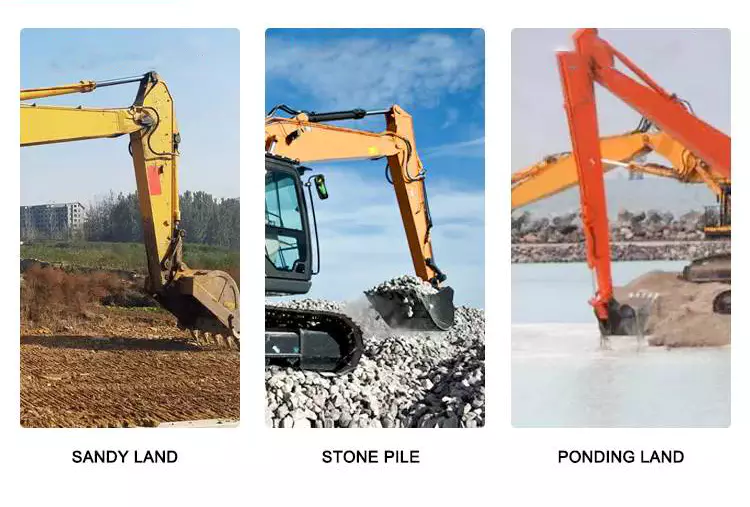
What advancements in hydraulic cylinder technology have improved sealing and reliability?
Advancements in hydraulic cylinder technology have continuously contributed to improving sealing and reliability in hydraulic systems. These advancements aim to address common challenges such as leakage, wear, and failure of seals, ensuring optimal performance and longevity. Here are several key advancements that have significantly improved sealing and reliability in hydraulic cylinders:
1. High-Performance Sealing Materials:
– The development of advanced sealing materials has greatly improved the sealing capabilities of hydraulic cylinders. Traditional sealing materials like rubber have been replaced or enhanced with high-performance materials such as polyurethane, PTFE (polytetrafluoroethylene), and various composite materials. These materials offer superior resistance to wear, temperature, and chemical degradation, resulting in improved sealing performance and extended seal life.
2. Enhanced Seal Designs:
– Advancements in seal designs have focused on improving sealing efficiency and reliability. Innovative seal profiles, such as lip seals, wipers, and scrapers, have been developed to optimize fluid retention and prevent contamination. These designs provide better sealing performance, minimizing the risk of fluid leakage and maintaining system integrity. Additionally, improved seal geometries and manufacturing techniques ensure tighter tolerances, reducing the potential for seal failure due to misalignment or extrusion.
3. Integrated Seal and Bearing Systems:
– Hydraulic cylinders now incorporate integrated seal and bearing systems, where the sealing elements also serve as bearing surfaces. This design approach reduces the number of components and potential failure points, improving overall reliability. By integrating seals and bearings, the risk of seal damage or displacement due to excessive loads or misalignment is minimized, resulting in enhanced sealing performance and increased reliability.
4. Advanced Coatings and Surface Treatments:
– The application of advanced coatings and surface treatments to hydraulic cylinder components has significantly improved sealing and reliability. Coatings such as chrome plating or ceramic coatings enhance surface hardness, wear resistance, and corrosion resistance. These surface treatments provide a smoother and more durable surface for seals to operate against, reducing friction and improving sealing performance. Moreover, specialized coatings can also provide self-lubricating properties, reducing the need for additional lubrication and enhancing reliability.
5. Sealing System Monitoring and Diagnostic Technologies:
– The integration of monitoring and diagnostic technologies in hydraulic systems has revolutionized seal performance and reliability. Sensors and monitoring systems can detect and alert operators to potential seal failures or leaks before they escalate. Real-time monitoring of pressure, temperature, and seal performance parameters allows for proactive maintenance and early intervention, preventing costly downtime and ensuring optimal sealing and reliability.
6. Computational Modeling and Simulation:
– Computational modeling and simulation techniques have played a significant role in advancing hydraulic cylinder sealing and reliability. These tools enable engineers to analyze and optimize seal designs, fluid flow dynamics, and contact stresses. By simulating various operating conditions, potential issues such as seal extrusion, wear, or leakage can be identified and mitigated early in the design phase, resulting in improved sealing performance and enhanced reliability.
7. Systematic Maintenance Practices:
– Advances in hydraulic cylinder technology have also emphasized the importance of systematic maintenance practices to ensure sealing and overall system reliability. Regular inspection, lubrication, and replacement of seals, as well as routine system flushing and filtration, help prevent premature seal failure and optimize sealing performance. Implementing preventive maintenance schedules and adhering to recommended service intervals contribute to extended seal life and enhanced reliability.
In summary, advancements in hydraulic cylinder technology have led to significant improvements in sealing and reliability. High-performance sealing materials, enhanced seal designs, integrated seal and bearing systems, advanced coatings and surface treatments, sealing system monitoring and diagnostics, computational modeling and simulation, and systematic maintenance practices have all played key roles in achieving optimal sealing performance and increased reliability. These advancements have resulted in more efficient and dependable hydraulic systems, minimizing leakage, wear, and failure of seals, and ultimately improving the overall performance and longevity of hydraulic cylinders in diverse applications.
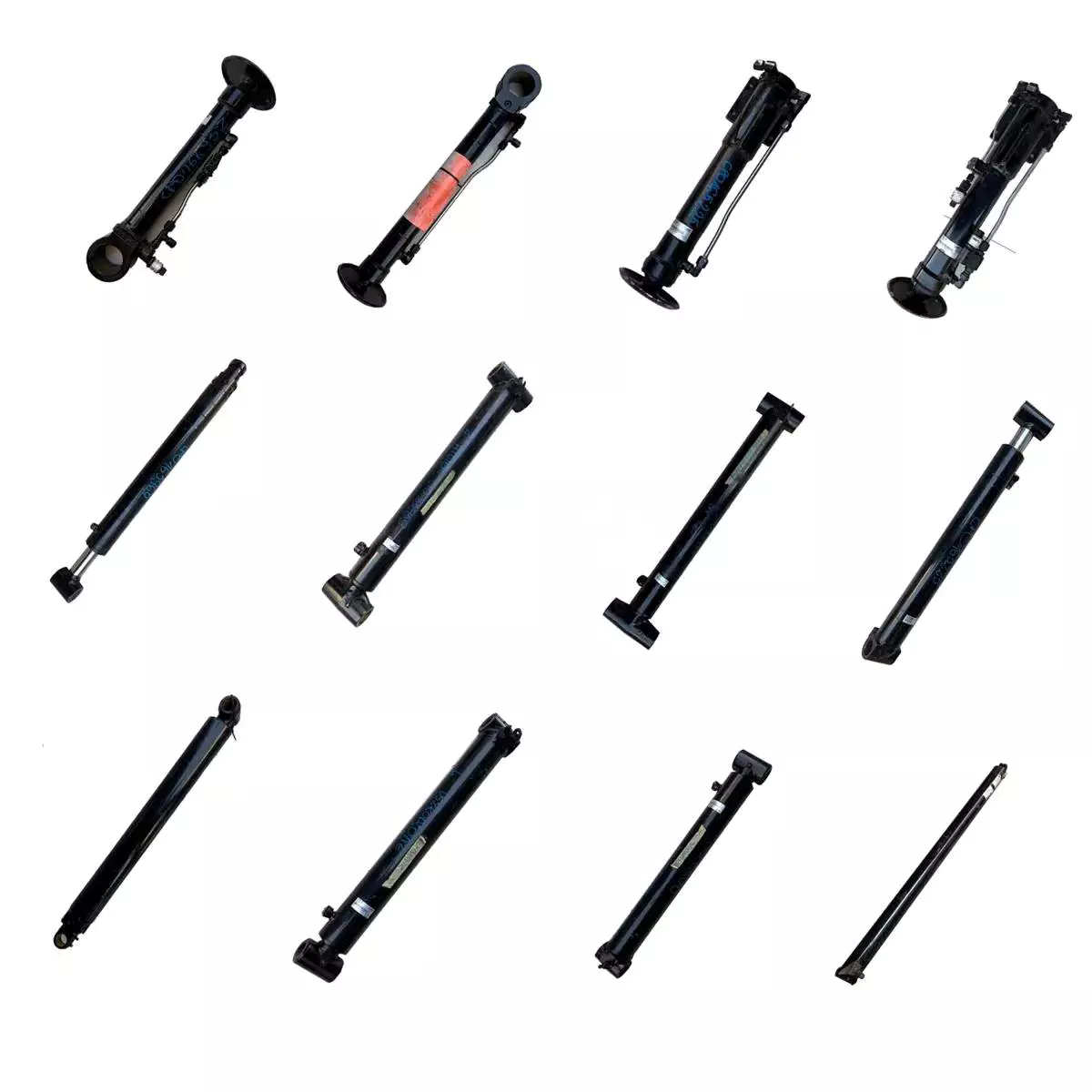
Ensuring Controlled and Safe Force Application in Heavy Machinery with Hydraulic Cylinders
Hydraulic cylinders play a critical role in heavy machinery by ensuring controlled and safe force application. The ability to exert and control high forces is essential for heavy machinery operations, such as lifting, pressing, pushing, or pulling heavy loads. Let’s explore how hydraulic cylinders ensure controlled and safe force application in heavy machinery:
- Force Control: Hydraulic cylinders provide precise force control capabilities. The hydraulic system’s pressure can be adjusted to regulate the force exerted by the cylinder. This control allows operators to apply the necessary force for a specific task while ensuring it remains within safe limits. By accurately controlling the force, hydraulic cylinders help prevent excessive force that could damage the machinery or compromise the safety of the operation.
- Load Balancing: In heavy machinery, multiple hydraulic cylinders are often used in conjunction to distribute and balance the applied force. By using multiple cylinders, the load can be evenly distributed across the machinery, minimizing stress concentrations and ensuring controlled force application. This load balancing approach enhances the stability and safety of the machinery, preventing uneven loading that could lead to structural issues or instability.
- Safety Valves: Hydraulic systems in heavy machinery are equipped with safety valves to protect against excessive force or overloading. Safety valves are designed to release hydraulic fluid from the cylinder when the force exceeds a predetermined threshold. This prevents the force from reaching dangerous levels, safeguarding the machinery and preventing potential accidents or damage. Safety valves provide an additional layer of safety and ensure controlled force application even in unexpected circumstances.
- Pressure Relief Systems: Hydraulic cylinders incorporate pressure relief systems to further enhance safety. These systems are designed to relieve excess pressure in the hydraulic system, which could occur due to factors such as thermal expansion or system malfunctions. By relieving excess pressure, the pressure relief systems prevent sudden and uncontrolled force surges, maintaining safe and controlled force application in heavy machinery.
- Structural Integrity: Hydraulic cylinders are designed to withstand the high forces and loads associated with heavy machinery applications. The cylinders are constructed using robust materials, such as high-strength steel, and undergo rigorous testing to ensure their structural integrity. This ensures that the cylinders can safely handle the forces applied during heavy machinery operations without experiencing failures or deformations that could compromise the safety and controlled force application.
In summary, hydraulic cylinders ensure controlled and safe force application in heavy machinery through force control, load balancing, safety valves, pressure relief systems, and robust structural design. These features and design considerations enable operators to exert the necessary force while maintaining safety and preventing excessive loads or force surges. By incorporating hydraulic cylinders into heavy machinery, manufacturers can achieve controlled force application, enhance operational safety, and protect the machinery from damage or failure.
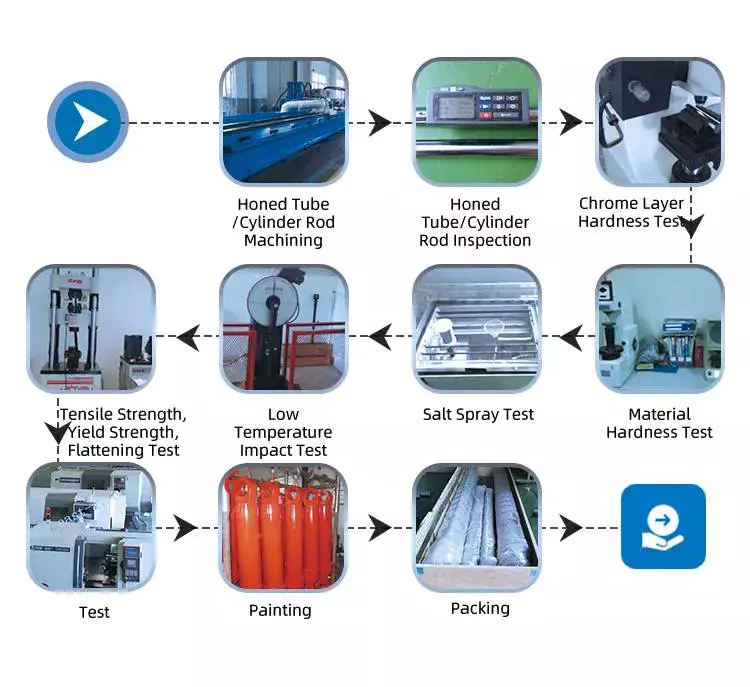
How do manufacturers ensure the quality and compatibility of hydraulic cylinders?
Manufacturers employ various measures to ensure the quality and compatibility of hydraulic cylinders, ensuring that they meet industry standards, performance requirements, and the specific needs of their customers. Here’s a detailed explanation of the methods and practices used by manufacturers to ensure the quality and compatibility of hydraulic cylinders:
1. Design and Engineering:
– Manufacturers employ skilled engineers and designers who have expertise in hydraulic systems and cylinder design. They use advanced design software and tools to create hydraulic cylinders that meet the desired specifications and performance requirements. Through careful analysis and simulation, manufacturers can ensure that the cylinders are designed to function optimally and provide the necessary force, stroke length, and reliability.
2. Material Selection:
– High-quality materials are crucial for the durability, performance, and compatibility of hydraulic cylinders. Manufacturers carefully select materials such as steel or other alloys based on their strength, corrosion resistance, and suitability for hydraulic applications. They source materials from reputable suppliers and perform quality checks to ensure that the materials meet the required standards and specifications.
3. Quality Control:
– Manufacturers implement robust quality control processes throughout the production of hydraulic cylinders. This includes rigorous inspections and tests at various stages of manufacturing, from raw material inspection to final assembly. Quality control personnel perform dimensional checks, surface finish inspections, and functional tests to verify that the cylinders meet the specified tolerances, performance criteria, and compatibility requirements.
4. Testing and Validation:
– Hydraulic cylinders undergo testing and validation procedures to ensure their performance, reliability, and compatibility. Manufacturers conduct various tests, such as pressure testing, leakage testing, load testing, and endurance testing. These tests simulate real-world operating conditions and verify that the cylinders can withstand the expected loads, pressures, and environmental factors. Additionally, manufacturers may perform compatibility testing to ensure that the cylinders can integrate seamlessly with other hydraulic system components.
5. Compliance with Standards:
– Manufacturers adhere to industry standards and regulations to ensure the quality and compatibility of hydraulic cylinders. They follow standards such as ISO 9001 for quality management systems and ISO 6020/2 or ISO 6022 for hydraulic cylinders. Compliance with these standards ensures that the manufacturing processes, quality control measures, and product performance meet internationally recognized benchmarks.
6. Certification and Accreditation:
– Manufacturers may obtain certifications and accreditations from recognized organizations to demonstrate their commitment to quality and compatibility. Certifications such as ISO certifications or third-party certifications provide assurance to customers that the hydraulic cylinders have undergone rigorous evaluations and meet specific quality and compatibility standards.
7. Customer Collaboration:
– Manufacturers actively engage with customers to understand their specific requirements and ensure compatibility. They work closely with customers to gather application-specific details, such as operating conditions, load requirements, and environmental factors. This collaborative approach allows manufacturers to customize hydraulic cylinders and provide solutions that are perfectly matched to the customer’s needs, ensuring compatibility and optimal performance.
8. Continuous Improvement:
– Manufacturers are committed to continuous improvement in their processes and products. They invest in research and development to incorporate the latest technologies, materials, and manufacturing techniques. By staying updated with industry advancements, manufacturers can enhance the quality, performance, and compatibility of their hydraulic cylinders over time.
By implementing effective design and engineering practices, selecting high-quality materials, conducting rigorous quality control, testing and validation procedures, complying with industry standards, obtaining certifications, collaborating with customers, and embracing continuous improvement, manufacturers ensure the quality and compatibility of hydraulic cylinders. These measures help to deliver reliable, high-performance cylinders that meet the diverse needs of industries and applications.

editor by CX 2023-11-16