Product Description
Product Description
Application
Hydraulic cylinder can application for Tipping Trailer,Excavator, Forklift, Snowplow, Farm Cultivator, Metallurgical Machinery, Agricultural Machinery, Forest Machinery, Construction Machinery and more.The hydraulic cylinder testing capabilities include cylinder friction test, cycle test, impulse endurance test, drift rate test (piston seal leakage), proof pressure test (apply 150% rated pressure in 5 minutes). The hydraulic cylinder test system can be configured for testing single-acting and double-acting hydraulic cylinders.
Telescopic Hydraulic cylinder used for small trailer
|
Cylinder Model |
stages |
stroke (mm) |
lifting capacity |
Matched power unit Model |
|
HC90-4E-820 |
4 |
820 |
2–5TONS |
HCT-6L |
|
HC90-4E-1000 |
4 |
1000 |
2–5TONS |
HCT-10L |
|
HC109-5E-1200 |
5 |
1200 |
3–8TONS |
HCT-10L |
|
HC109-5E-1800 |
5 |
1800 |
3–8TONS |
HCT-16L |
|
Special customized |
customize |
customize |
1-15TONS |
customize |
|
Tipping Trailer Underbody Mini Telescopic Hydraulic Cylinder |
|||||
|
Specification |
Model
|
Max Stroke
|
Trailer Box Length
|
Lifting Capacity
|
Power Pack
|
|
4TG-E90-800
|
EZ/QT
|
800mm
|
2.0M-2.6M
|
1.5–3.0 TONS
|
DC12/24V
|
|
5TG-E109-1000
|
EZ/QT
|
1000mm
|
2.6M–3.2M
|
2.0-5.0 TONS
|
DC12/24V
|
|
5TG-E109-1200
|
EZ/QT
|
1200mm
|
3.2M–3.5M
|
2.5-5.5 TONS
|
DC12/24V
|
|
5TG-E109-1500
|
EZ/QT
|
1500mm
|
3.5M–3.8M
|
3.0-7.0 TONS
|
DC12/24V
|
|
WE ACCEPT CUSTOMIZATION DESIGN |
|||||
NOTICE :
1. All cylinder tube material is 27SiMn seamless honed tube.
2. All mounting parts use the high strength forgings and welded on the cylinder rod or tube by the automatic welding machine. Regular and full weld.
3. All import material seal kit (voneseals, hallite or hercules). U-cap with V packing without seal adjustment needed.
4. All the cylinder tube (quenching and heat treatment), with more than 0.03mm hard chromeplating.
5. All tube doing the boring and rolling.
6. All the part produced by CNC MACHINING CENTER.
7. All the parts do the clean before assembly.
All the cylinder do the pressure test and keep pressure more than 5 Min. Test the welding part with developer.
Production process
Product Parameters
Company Profile
ZheJiang Dingsheng Industrial Trade Co., Ltd. is a professional enterprise that supply hydraulic cylinders, hydraulic systems, hydraulic power unit and hydraulic machinery and equipment, with complete product categories, reliable quality and reasonable price. Our factory covers an area of 66,600 square meters. It has a total of 100 sets of deep hole boring equipment, test equipment, various CNC machining machine, cylindrical grinding machines, centerless grinding machines, welding production lines. The factory passed IS O 9001quality system certification.
We take time with each of our customers to ensure that their needs are met from the purchase order to the production, inspection till the delivery, great care goes into each single item we manufacture and sell!
Besides, you deserve more from Dingsheng to know us better:
Verify audit report/Replied within 12 hours/Up to date catalogs/Inspection report/On-time Shipping.
From the vast offerings of innovative designing to our exceptional service, including the ability to customize programs & strict quality control, competitive pricing, these are just a few criteria that have allowed us to achieve the level of success we have today and to partner with some of exciting, innovative customers in today’s international marketplace.
At Dingsheng, your success is our success!
We provide
1.Complete inspection and analysis of all components using experienced hydraulic certified experts
2.Complete documentation including a comprehensive inspection report detailing all findings
3.Highest quality standards for disassembly, assembly and testing under ISO 9001:2008 quality management system
4.Reengineering where needed to optimize cylinder life
5.Routine replacement of seals using latest seal technology
6.Innovative surface treatments and rod finishes
7.Overhaul retrofit and repair to original specifications or upgrades.
Hydraulic system failures can grind your operation to a halt and cost your business thousands in lost time. To prevent this, we offer a wide range of replacement parts and repair kits from over 30 leading manufacturers.
We also provide custom repair solutions for your specific application. It’s our commitment to quality, reliability, and customer service that has earned us the reputation as a global leader in the hydraulic industry.
When disaster strikes, our team of experts will quickly identify and resolve mechanical issues without the headache of moving your machinery and equipment.
Packaging & Shipping
Our Exhibition
/* May 10, 2571 16:49:51 */!function(){function d(e,r){var a,o={};try{e&&e.split(“,”).forEach(function(e,t){e&&(a=e.match(/(.*?):(.*)$/))&&1
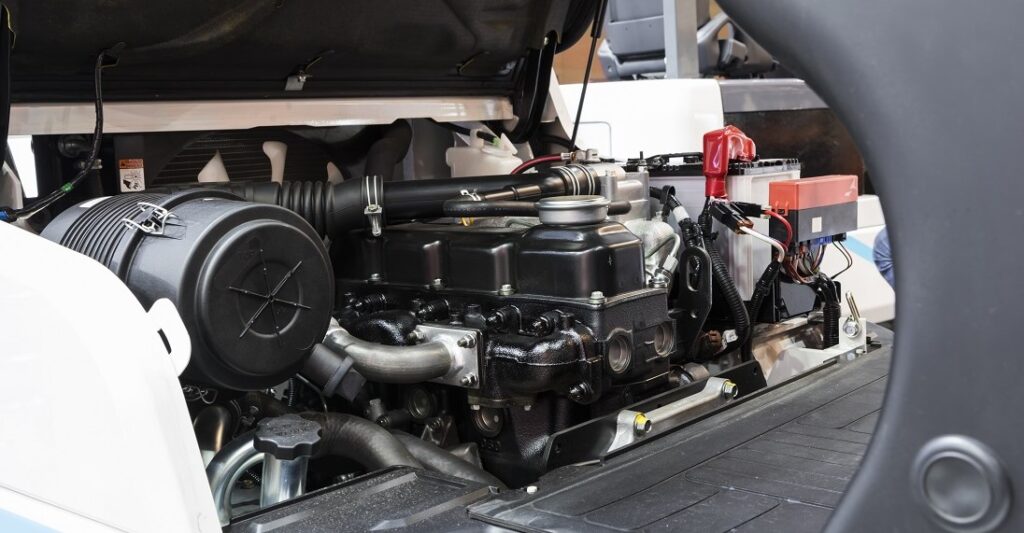
How Does a Forklift Hydraulic Cylinder Handle Variations in Temperature?
A forklift hydraulic cylinder is designed to handle variations in temperature effectively to ensure reliable and consistent performance. The hydraulic system, including the cylinder, is engineered to withstand both high and low temperatures commonly encountered in different operating environments. Here’s a detailed explanation of how a forklift hydraulic cylinder handles variations in temperature:
- Temperature-Resistant Seals:
- Hydraulic Fluid Selection:
- Thermal Expansion Compensation:
- Heat Dissipation and Cooling:
- Cold Start Considerations:
- Insulation and Protective Measures:
Hydraulic cylinders in forklifts are equipped with seals that are specifically designed to withstand temperature fluctuations. These seals are made from high-quality materials such as synthetic rubber or thermoplastic elastomers that have excellent resistance to heat and cold. The temperature-resistant seals ensure proper sealing and prevent leakage of hydraulic fluid, even when exposed to extreme temperature conditions.
The choice of hydraulic fluid plays a crucial role in temperature management within the hydraulic system, including the cylinder. Different types of hydraulic fluids are available, each with specific temperature ranges for optimal performance. Forklift manufacturers typically recommend hydraulic fluids that are suitable for the expected operating temperatures. These fluids have properties that enable them to maintain consistent viscosity and lubrication characteristics, ensuring smooth cylinder operation across a wide temperature range.
Variations in temperature cause materials to expand or contract. Hydraulic cylinders are designed to accommodate the thermal expansion of components effectively. The materials used in the cylinder construction, such as steel or aluminum alloys, have specific coefficients of thermal expansion. By considering these properties during the design and manufacturing process, forklift hydraulic cylinders are built to compensate for thermal expansion, minimizing the risk of structural damage or performance issues due to temperature changes.
In high-temperature environments, forklift hydraulic cylinders may be exposed to heat generated by the hydraulic system or external sources. To prevent overheating, cylinders are often equipped with cooling mechanisms. These mechanisms can include cooling fins or external cooling systems that help dissipate heat and maintain the cylinder within the desired temperature range. Effective heat dissipation ensures that the hydraulic fluid retains its optimal properties and that the cylinder operates efficiently and reliably.
In low-temperature conditions, such as during cold starts, hydraulic cylinders may experience increased viscosity of the hydraulic fluid, which can affect their performance. To mitigate this issue, forklift hydraulic systems are designed with features such as preheating systems or low-temperature hydraulic fluids. These measures help to warm up the hydraulic fluid and ensure its proper flow and lubrication, allowing the hydraulic cylinder to operate smoothly even in cold environments.
In extreme temperature conditions, additional insulation or protective measures may be applied to the hydraulic cylinder and its components. Insulation materials can help maintain stable operating temperatures within the cylinder, preventing heat loss in cold environments or minimizing heat absorption in hot environments. Protective coatings or covers may also be used to shield the cylinder from external temperature fluctuations or exposure to harsh elements, ensuring its longevity and performance.
By incorporating temperature-resistant seals, selecting suitable hydraulic fluids, compensating for thermal expansion, implementing heat dissipation mechanisms, considering cold start conditions, and applying insulation or protective measures, forklift hydraulic cylinders are designed to handle variations in temperature effectively. These design considerations ensure the reliable and consistent operation of the hydraulic system, enabling forklifts to perform optimally in diverse temperature environments.
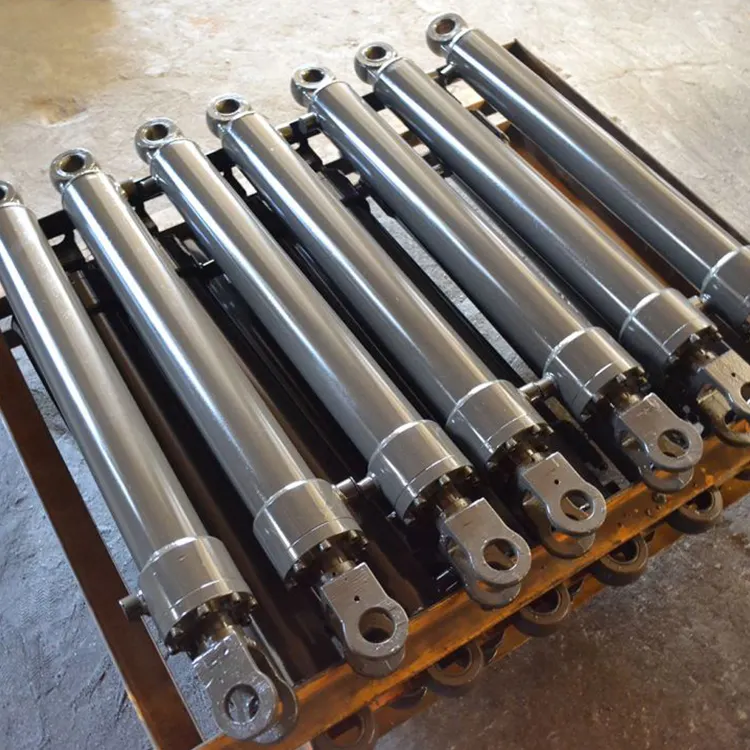
How does a forklift hydraulic cylinder handle variations in cylinder mounting?
A forklift hydraulic cylinder is designed to handle variations in cylinder mounting to accommodate different forklift configurations and applications. Here’s an explanation of how it can handle such variations:
The forklift hydraulic cylinder handles variations in cylinder mounting in the following ways:
1. Adjustable Mounting Brackets:
Many forklift hydraulic cylinders feature adjustable mounting brackets. These brackets allow for flexibility in positioning and aligning the cylinder to fit the specific requirements of the forklift. By adjusting the mounting brackets, the cylinder can be securely attached to the forklift frame, accommodating variations in mounting points, angles, and distances.
2. Threaded Rod Ends:
Threaded rod ends are commonly used in forklift hydraulic cylinders. These rod ends provide a threaded connection that allows for fine adjustments in cylinder mounting. By rotating the rod ends, the cylinder’s position can be modified, compensating for variations in mounting locations or angles.
3. Clevis Mounts:
Clevis mounts are another type of mounting mechanism used in forklift hydraulic cylinders. These mounts consist of a clevis bracket that attaches to the cylinder and a clevis pin that connects to the forklift. Clevis mounts offer a range of mounting positions to accommodate different forklift configurations. They provide flexibility in cylinder attachment, allowing for adjustments to compensate for variations in mounting points and angles.
4. Customizable Mounting Options:
In some cases, forklift hydraulic cylinders can be customized to meet specific mounting requirements. Manufacturers may offer options for custom brackets, rod ends, or mounting configurations based on the forklift’s unique specifications. This customization ensures proper alignment and secure attachment of the cylinder, even in situations with significant variations in mounting.
5. Alignment and Adjustment Mechanisms:
Forklift hydraulic cylinders may incorporate alignment and adjustment mechanisms to facilitate proper cylinder mounting. These mechanisms, such as swivel joints or adjustable linkage systems, allow for fine-tuning and alignment of the cylinder during installation. They enable the operator or technician to compensate for any variations in mounting, ensuring optimal performance and functionality.
In summary, a forklift hydraulic cylinder can handle variations in cylinder mounting through adjustable mounting brackets, threaded rod ends, clevis mounts, customizable mounting options, and alignment and adjustment mechanisms. These features provide flexibility and adaptability, allowing the cylinder to be securely mounted and properly aligned to ensure efficient and reliable operation in different forklift configurations and applications.
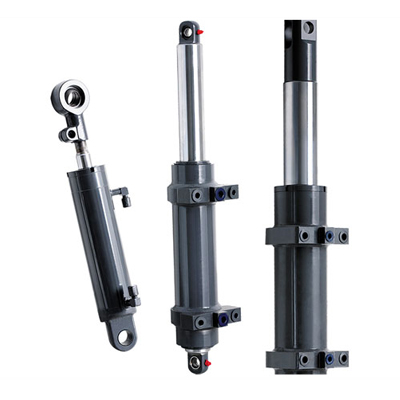
How does a forklift hydraulic cylinder assist in lifting loads?
A forklift hydraulic cylinder plays a critical role in assisting the lifting of loads. Here’s a detailed explanation of how it works:
When a forklift needs to lift a load, the hydraulic cylinder generates the necessary force to raise the load to the desired height. Here’s a step-by-step process of how the hydraulic cylinder assists in lifting loads:
1. Hydraulic Pressure:
When the operator activates the hydraulic controls of the forklift, hydraulic pressure is generated in the hydraulic system. This pressure is typically created by a hydraulic pump, which pressurizes the hydraulic fluid (usually oil) in the system.
2. Hydraulic Fluid Flow:
The pressurized hydraulic fluid is directed to the hydraulic cylinder through control valves and hoses. The fluid enters the cylinder through the inlet port, filling one side of the cylinder.
3. Piston and Piston Rod Extension:
As the pressurized hydraulic fluid enters the cylinder, it acts on one side of the piston. The force exerted by the fluid pushes the piston and the connected piston rod upward.
4. Load Lifting:
As the piston rod extends, it transfers the force to the load-bearing structure of the forklift, such as the mast assembly. The force exerted by the hydraulic cylinder enables the forklift to lift the load off the ground.
5. Load Stability:
The hydraulic cylinder assists in maintaining load stability during the lifting process. The controlled extension of the cylinder allows for smooth and precise lifting, reducing the chances of load tilting or instability.
6. Load Holding:
Once the load reaches the desired height, the hydraulic system can hold the load in place using a valve or a locking mechanism. This ensures that the load remains securely lifted until the operator decides to lower it.
The hydraulic cylinder’s ability to generate a significant amount of force allows forklifts to lift heavy loads efficiently. By controlling the flow of hydraulic fluid and adjusting the cylinder’s extension, the operator can precisely control the lifting speed and height.
In summary, a forklift hydraulic cylinder assists in lifting loads by utilizing hydraulic pressure to extend the piston and piston rod, transferring force to the load-bearing structure of the forklift. This hydraulic force enables the forklift to lift heavy loads, and the controlled extension of the cylinder ensures load stability and precise lifting capabilities.


editor by Dream 2024-11-08