
Agricultural Machinery & Field Hauling Series · Monograph XV
Telescopic Bed Lift Cylinders for Agricultural Field Transport Vehicles
Agricultural field transport vehicles—including off-road dump carts, grain trailers, root-crop haulers, and field utility trailers—operate across unpaved, rutted, and waterlogged terrain. During high-capacity harvest unloading, these vehicles elevate heavy, unevenly distributed payloads under severe mud and water exposure. This 2500+ word engineering analysis examines the structural mechanics, material science, and fluid power reliability of multi-stage welded telescopic bed lift cylinders. We analyze tipping kinematics on soft ground, 42CrMo alloy steel heat treatment kinetics, the root causes of stage sleeve bending and gland oil leakage, and advanced multi-stage sealing configurations designed to survive aggressive agricultural field conditions.
Stage Bending Prevention
Mud Slurry Seal Protection
Engineering Specifications Matrix for Agricultural Bed Lift Cylinders
The following engineering parameters establish the structural, metallurgical, sealing, and operational standards required for single-acting and double-acting multi-stage telescopic bed lift cylinders deployed in agricultural field transport equipment.
| Engineering Parameter | Field Transport Vehicle Specification Standard |
|---|---|
| Equipment Category & Application | Agricultural Equipment / Off-Road Field Transport Vehicles & Dump Carts |
| Subsystem Motion Profile | Transport Bed/Box Tipping System / Multi-Stage Linear Extension |
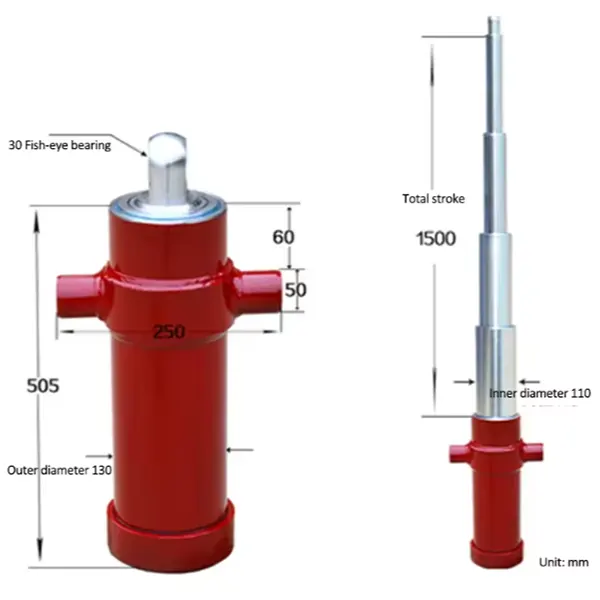
| Hydraulic Cylinder Name | Multi-Stage Telescopic Bed Lift Cylinder (3 to 5 Stage Sleeves) |
| Action Mode & Structural Type | Single-Acting (Hydraulic Extension / Gravity Retract) or Double-Acting (Powered Retract) |
| Manufacturing Construction | Full-Penetration Welded Base Housing & Trunnion Collars (AWS D1.1 Verified) |
| Material System Metallurgy | 42CrMo High-Strength Alloy Steel (Quenched & Tempered Seamless Tubing) |
| Surface Finish & Plating | Micro-Cracked Hard Chrome Plating (30–40 μm) / HRC 58–62 Induction Hardened Outer Case |
| Environmental Rating Class | Heavy Payload + Corrosive Muddy Water + Organic Fertilizer Slurry + Severe Uneven Ground |
| Working Conditions Profile | Tipping Heavy Field Crops (Grain, Potatoes, Sugar Beets, Silage) on Soft Sloped Terrain |
| Primary Failure Mitigated | Telescopic Stage Sleeve Permanent Bending / Buckling & Inter-Stage Gland Oil Leakage |
| Recommended Engineering Keypoints | Heavy-Wall 42CrMo Sleeves + Extended Guide Overlap + Multi-Lip Mud Wiper Seal Array |
| Nominal Operating Pressure | 18.0 MPa to 25.0 MPa (180 – 250 Bar) Continuous Working Relief Pressure |
Field Transport Bed Kinematics and Multi-Stage Lifting Mechanics
Agricultural field transport vehicles play an indispensable role during intensive harvest cycles. Operating directly alongside combine harvesters, forage harvesters, and potato diggers, these specialized transport carts receive harvested crops directly in the field and haul payloads ranging from 10 to over 35 metric tons to field-edge stockpiles, grain pits, or transfer trailers.
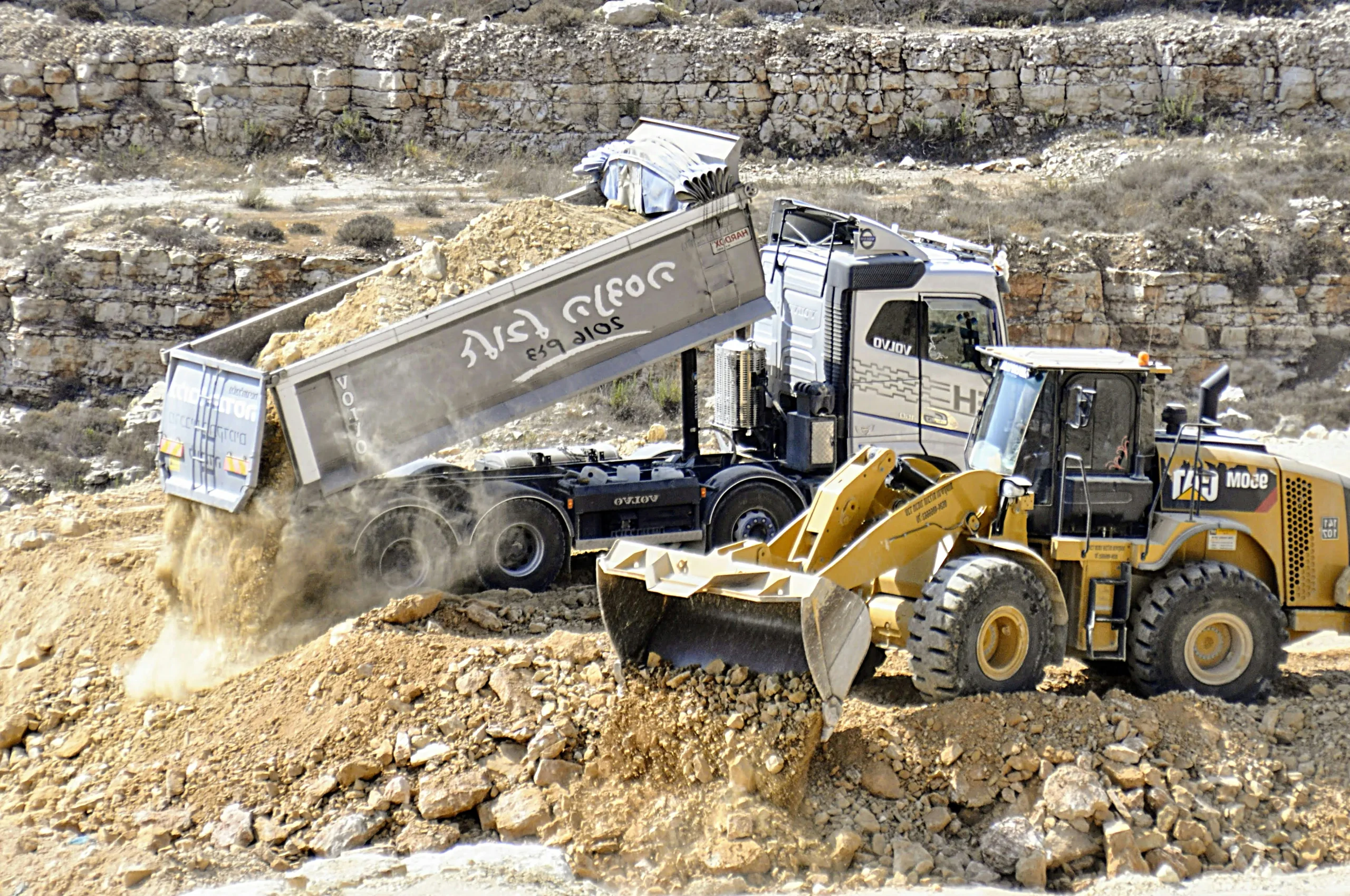
To elevate the heavy steel transport bed to a steep discharge angle (typically 45 to 52 degrees) while maintaining a low center of gravity and low mounting height under the frame during road transport, agricultural equipment manufacturers deploy multi-stage telescopic hydraulic lift cylinders. Positioned beneath the front header or mid-trunnion section of the box, these multi-stage cylinders provide long extension strokes within a compact retracted mounting length.
Single-Acting vs. Double-Acting Telescopic Actuation Trade-Offs
Selecting the appropriate action mode for an agricultural field transport cylinder involves balancing hydraulic circuit simplicity against positive operational control in soft field conditions:
- ▸
Single-Acting Telescopic Configuration: Hydraulic fluid pressure pushes the stage sleeves outward sequentially to raise the transport bed. Retraction relies entirely on the gravitational weight of the empty box pushing fluid back into the reservoir. While single-acting designs require simpler hydraulic plumbing, sticky crops (such as wet sugar beets or muddy manure) can stick to one side of the raised box, causing slow or asymmetrical retraction. - ▸
Double-Acting Telescopic Configuration: Features hydraulic power in both extension and retraction directions. Hydraulic fluid supplied to internal annulus return channels forces the stage sleeves to pull back under power. This positive retraction overcomes sticky crop drag and prevents wind gust flutter when lowering lightweight high-volume silage boxes in open fields.
Sequential Area Reduction and Hydraulic Thrust Equations
In a telescopic cylinder, extension sequence is governed by effective surface area. Hydraulic fluid acts simultaneously on all retracted stage bases. Because the largest stage sleeve features the greatest cross-sectional area, it generates the highest initial force and extends first, followed by smaller stages in order of decreasing diameter.
The hydraulic thrust force Fthrust(i) developed at stage i is defined as:
Where Phyd is line pressure and Dstage(i) is the outer diameter of stage sleeve i. As each stage reaches its full stroke limit, active cross-sectional area drops step-wise. Fortunately, this force reduction aligns with tipping geometry: as the transport box rotates upward on its rear hinge pins, the moment arm distance between the crop payload center of gravity and the rear pivot decreases, reducing the required lifting torque.
Root Cause Failure Analysis: Stage Bending and Inter-Stage Oil Leakage
In agricultural field transport, telescopic bed lift cylinders operate under unforgiving conditions. Unlike highway dump trucks that unload on level concrete or asphalt ramps, farm transport carts frequently tip high-volume crop loads on soft soil, farmyard mud, or sloping hillsides. Under these conditions, the two dominant failure modes encountered are Stage Sleeve Permanent Bending and Inter-Stage Gland Oil Leakage.
1. Mechanics of Dynamic Side-Bending on Soft Unlevel Ground
When a field transport vehicle attempts to dump 25 tons of wet silage on a 5-degree field slope, the wheels on the downhill side sink several inches into soft topsoil. This tilting causes the entire box weight vector to shift laterally relative to the vehicle chassis.
As the multi-stage cylinder extends to its full height (reaching stroke lengths of 3,500 mm to 5,500 mm), the nested tubular stage sleeves act as a slender, stepped cantilever beam. The lateral offset of the payload weight introduces a severe bending moment Mbending across the fully extended stage joints:
Where Wpayload is crop weight, θslope is ground inclination angle, and Lextended is total extension length. If the stage sleeves are manufactured from standard carbon steel with insufficient yield strength or thin tube wall thickness, the combined axial compression stress and lateral bending stress exceed the material yield point (σy), causing permanent curved deformation (stage sleeve bowing).
2. Stage Ovalization and Inter-Stage Gland Oil Blowout
Stage sleeve bending directly triggers internal gland seal breakdown. When a high bending moment acts across a stage junction, it crushes the internal guide wear bands on one side, forcing the circular cross-section of the outer parent sleeve to distort into an ellipse (ovalization).
This oval distortion creates a crescent-shaped radial gap on the opposite side of the gland seal. High-pressure hydraulic fluid (Phyd ≥ 20.0 MPa) jets through this widened clearance gap, eroding the polyurethane seal lip and causing external oil spraying across the vehicle frame.
3. Mud Slurry and Organic Contaminant Ingress
Agricultural transport vehicles operate constantly in mud, standing field water, and organic slurry. Wet mud thrown up by tractor tires splatters directly onto the polished outer surfaces of the extended stage sleeves. If standard single-lip rubber wipers are used, wet soil abrasive particles pass through the wiper lip during single-acting retraction, scoring the hard chrome plating and cutting deep axial leak channels into the main gland seals.
Dynamic Slope Bending
Tipping heavy agricultural loads on uneven field ground creates massive lateral side loads, bending slender telescopic stage sleeves beyond their elastic recovery limits.
Barrel Ovalization Leakage
Severe side-bending distorts tubular stage sleeves into an oval shape, widening clearance gaps behind gland seals and allowing high-pressure oil to spray out.
Mud Slurry Abrasion
Field mud and abrasive soil particles bypass inadequate scrapers during retraction, scratching hard chrome plating and cutting gland seal lips.
Structural Metallurgy: The Superiority of 42CrMo Steel
Preventing stage sleeve bending under severe off-road tipping loads requires high structural yield strength and resistance to fatigue deformation. Standard structural carbon steels (such as Q235B or AISI 1020) and basic low-alloy steels (such as Q345B) offer yield strengths around 235 to 345 MPa, making them susceptible to permanent bending when a heavy farm cart tips on soft, sloped ground.
High-performance agricultural telescopic cylinders deploy “42CrMo high-strength alloy steel” (conforming to GB/T 3077, equivalent to AISI 4140 / 42CrMo4 under EN 10083-3 standards) for all tubular stage sleeves, base housings, and trunnion collars.
Quenching and Tempering Thermal Processing Kinetics
Seamless 42CrMo stage tubes undergo full Quenching and Tempering (Q&T) heat treatment. Tubes are heated to 850°C – 880°C for complete austenitization, polymer-quenched to convert the microstructure into fine martensite, and tempered at 560°C – 620°C to achieve tempered martensite.
This heat treatment raises the core yield strength (σ0.2) to over 850 MPa and ultimate tensile strength (σb) to over 1000 MPa—more than double the yield capability of standard Q345 structural steel. High yield strength enables 42CrMo stage tubes to flex elastically under extreme side loads during sloped unloading and return to perfect straightness without permanent set.
Micro-Cracked Hard Chrome Plating for Mud Corrosion Protection
The outer surface of every 42CrMo stage sleeve is precision centerless ground to Ra ≤ 0.2 μm and electroplated with a 30 μm to 40 μm thick layer of hard chromium. The plating process is controlled to produce a dense micro-cracked pattern (400 to 600 micro-cracks per linear centimeter).
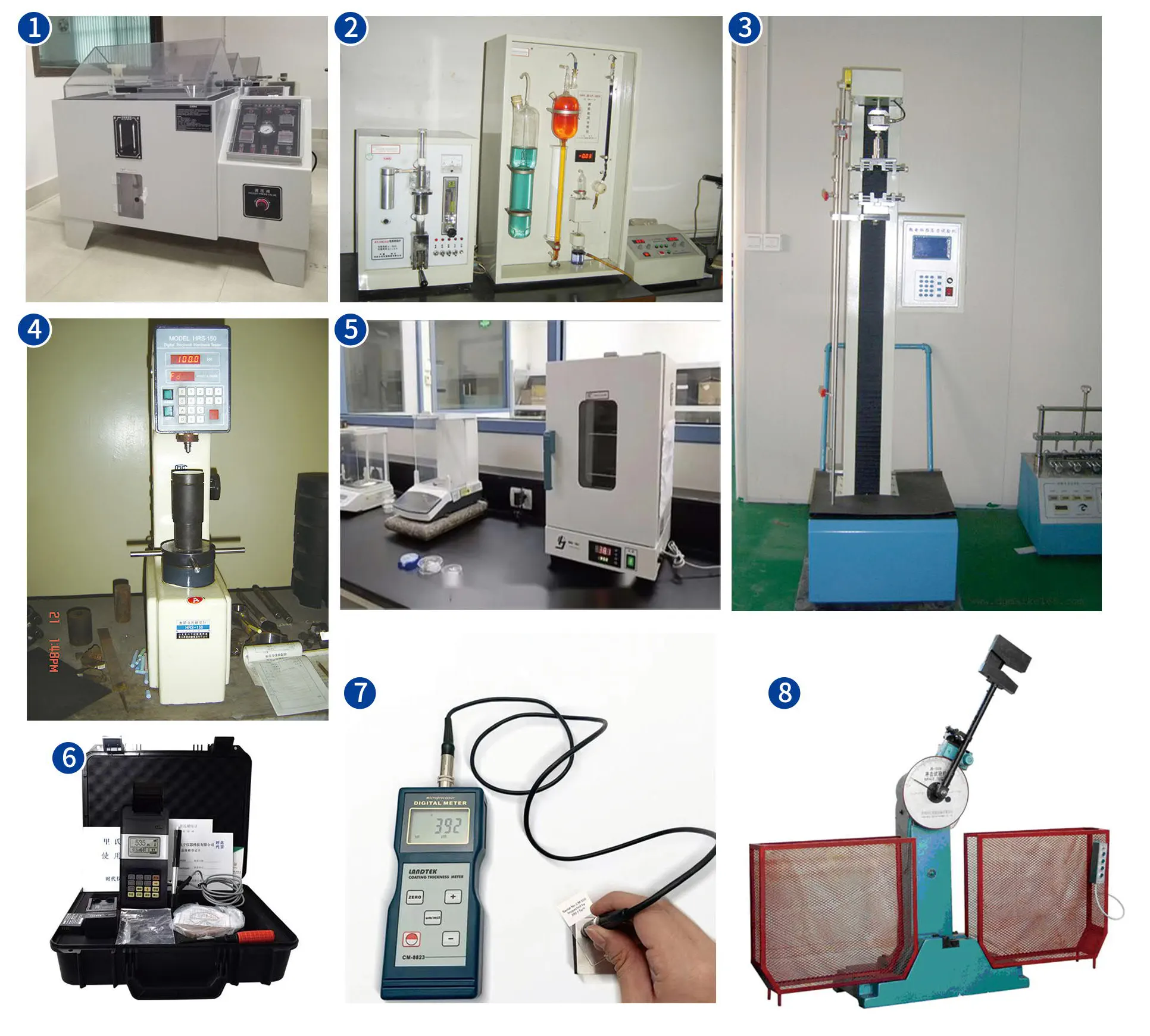
These micro-fissures retain hydraulic fluid via capillary action, maintaining a continuous lubricating film across stage surfaces during operation. Plated 42CrMo sleeves pass 96-hour neutral salt spray corrosion testing in accordance with ISO 9227 standards, preventing rust formation when transport carts are stored outdoors during wet winter months.
| Steel Material Grade | Yield Strength (σ0.2) | Tensile Strength (σb) | Charpy Impact Energy (-20°C) |
|---|---|---|---|
| Q235B (Standard Carbon Steel) | ≥ 235 MPa | 370 – 500 MPa | ≤ 20 J @ +20°C |
| Q345D (Low-Alloy Steel) | ≥ 345 MPa | 470 – 630 MPa | ≥ 34 J @ -20°C |
| 42CrMo Alloy Steel (Q&T) | ≥ 850 MPa | ≥ 1000 MPa | ≥ 45 J @ -20°C |
Recommended Configuration: High-Strength Multi-Stage Telescopic Architecture
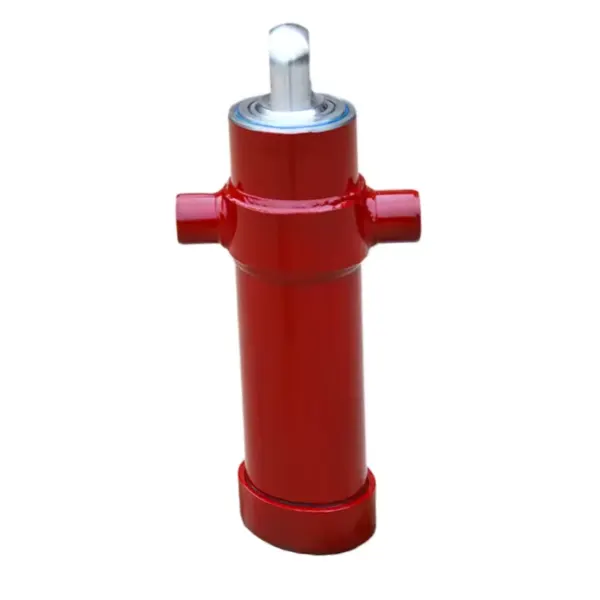
Eliminating stage bending and inter-stage oil leakage on agricultural field transport vehicles requires specifying an engineered “High-Strength Multi-Stage Telescopic Cylinder Configuration”. This design integrates heavy-wall 42CrMo stage sleeves, extended guide overlaps, and a multi-lip mud slurry sealing package.
1. Thick-Wall Stage Sleeve Engineering and Overlap Ratios
To prevent elastic barrel ovalization under side loads, stage sleeve wall thickness twall is optimized according to Lamé’s thick-wall equations, maintaining a wall ratio (K = Doutside / Dinside ≥ 1.25). Furthermore, the internal guide overlap length between adjacent stage sleeves at full extension is extended to Loverlap ≥ 1.8 × Dstage.
Increasing guide overlap lowers contact stress across internal wear rings, preventing localized stage binding and maintaining structural alignment during uneven crop dumping.
2. Multi-Stage Wear-Resistant Sealing Package
Every stage junction gland features an advanced multi-component seal array designed specifically for agricultural field environments:
- ▸
Fabric-Reinforced Multi-Lip Vee-Packing Stack: Serves as the primary pressure barrier. Rubber-impregnated fabric lips conform under hydraulic pressure, maintaining a tight seal even if stage sleeves experience minor radial flexure under side load. - ▸
PEEK / Nylon 66 Anti-Extrusion Back-Up Rings: Installed behind primary seals to bridge clearance gaps under pressure spikes up to 25.0 MPa, preventing soft seal heel extrusion nibbling. - ▸
Heavy Dual-Lip Metal-Cased Mud Scraper: Positioned at the outermost gland face. A polyurethane scraper ring housed in a steel shell scrapes away dried field mud, straw fibers, and manure slurry before stage sleeves retract into parent tubes. - ▸
Bronze-Filled PTFE Wear Guide Bands: Centrifugally cast bronze-filled PTFE guide bands guide stage movement and absorb lateral side loads without scoring the hard-chromed stage surfaces.
Specifying a robust multi-stage telescopic hydraulic lift cylinder engineered with 42CrMo steel and mud-resistant seals eliminates stage bending and oil leaks in heavy field transport equipment.
Preventive Maintenance, Fluid Hygiene, and Diagnostic SOP
Maintaining fluid power reliability during intense harvest seasons requires strict oil hygiene and systematic diagnostic protocols. Because telescopic cylinders cycle large oil volumes during crop tipping, field dust and moisture must be prevented from entering the main reservoir.
ISO Cleanliness Target and Air Bleeding Protocol
Hydraulic oil in agricultural field transport systems should be maintained to an ISO 4406 cleanliness code of 18/16/13 or cleaner. Contaminated oil accelerates wear on stage seals and tractor control valve spools. Trapped air inside multi-stage telescopic cylinders must be bled periodically via top vent plugs; compressed air causes erratic stage movement and violent box bouncing during unloading.
Step-by-Step Diagnostic SOP for Stage Bending & Leakage
When oil weeping or binding occurs during transport box elevation, field technicians can execute this diagnostic SOP:
1. Stage Straightness & Alignment Check
Fully extend the telescopic cylinder with an empty box and secure safety prop stands. Place a precision steel straightedge along the length of each extended 42CrMo stage sleeve. Any gap exceeding 1.0 mm over a 1,000 mm span indicates permanent stage bending requiring sleeve replacement.
2. Inter-Stage Gland Seal Leakage Test
Wipe all stage gland faces clean of mud. Pressurize the cylinder to full extension. If oil streams out of a specific stage gland, the internal Vee-packing stack or anti-extrusion ring is damaged and requires immediate replacement.
Frequently Asked Questions: Agricultural Bed Lift Cylinder Engineering
What causes stage sleeve bending on farm dump cart hydraulic cylinders during field unloading?
Stage sleeve bending on agricultural bed lift cylinders is caused by severe lateral side loads generated when tipping heavy crop loads on soft, unlevel ground or field slopes. As the wheels on one side sink into soft mud, the weight of the elevated transport box shifts off-center. This side moment bends the extended slender stage sleeves. If the stage tubes are made from standard low-yield carbon steel, the combined stress exceeds the yield point, resulting in permanent sleeve bending.
How does 42CrMo alloy steel prevent telescopic bed lift cylinder failure in heavy agricultural transport?
42CrMo alloy steel delivers a core yield strength exceeding 850 MPa following quenching and tempering—more than double the yield strength of standard Q345 or carbon steel tubing. This high yield strength allows extended telescopic stage sleeves to flex elastically under severe side bending loads on uneven field ground and return to perfect straightness without undergoing permanent deformation or binding.
Should I choose a single-acting or double-acting multi-stage cylinder for an off-road agricultural dump hauler?
Single-acting multi-stage cylinders offer simple hydraulic plumbing and rely on box weight for gravity retraction, making them cost-effective for standard grain trailers. However, for high-volume forage carts handling sticky materials like wet silage or manure, a double-acting multi-stage cylinder is recommended. Double-acting cylinders provide powered hydraulic retraction, overcoming sticky material drag and ensuring fast, positive bed lowering on soft field ground.
How do multi-stage wear seals prevent oil leaks in muddy, wet harvest environments?
Multi-stage wear seal packages combine fabric-reinforced Vee-packing stacks, PEEK anti-extrusion rings, and heavy metal-cased dual-lip mud scrapers. The metal-cased scraper aggressively wipes away dried mud, straw fibers, and field slurry from extended stage surfaces before retraction. Meanwhile, PEEK anti-extrusion rings bridge clearance gaps under pressure spikes, preventing soft seal heels from extruding and eliminating oil leaks.
Strategic Procurement and Total Cost of Ownership
For farm transport equipment manufacturers, agricultural dealers, and large fleet operators, cylinder failures during short, time-sensitive harvest windows cause costly delays in crop hauling. Sourcing low-cost telescopic cylinders built with thin-walled carbon steel tubes or basic single-lip rubber scrapers often leads to repeated stage bending, oil leaks, and high long-term maintenance costs.
Equipment procurement teams can evaluate technical options across mobile agricultural machinery hydraulic cylinder options to verify material certifications, wall thickness specifications, and seal package designs. Equipping field transport carts with heavy-duty hydraulic lift cylinders engineered with 42CrMo alloy steel, hard chrome plating, and mud-resistant multi-stage seal packages ensures reliable field operation and lower total operating costs across seasons.
Upgrade Your Field Transport Vehicles with High-Strength Power
Eliminate stage sleeve bending on soft ground, prevent mud slurry oil leaks, and maintain reliable crop tipping efficiency during peak harvest seasons. Explore our complete series of single-acting and double-acting, 42CrMo multi-stage telescopic lift cylinders engineered for agricultural field transport equipment.














