Product Description
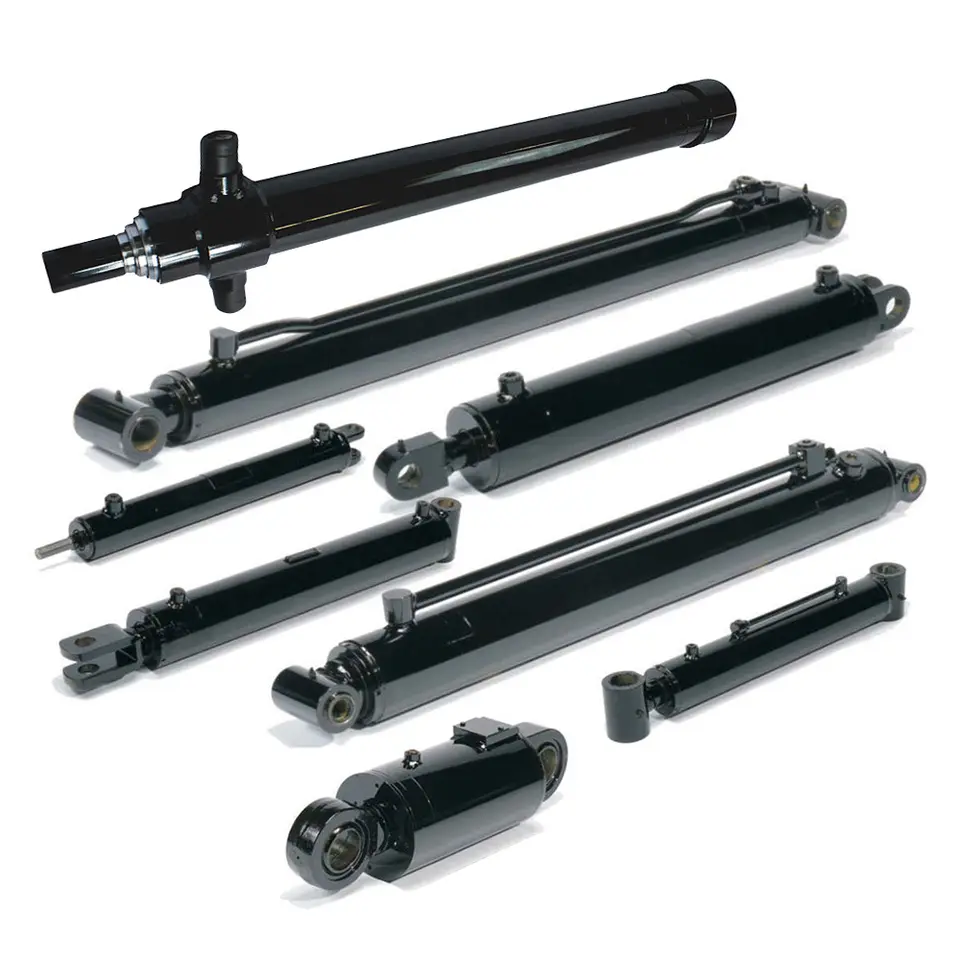
Products Description
|
Product Name |
HSG Series Hydraulic Cylinder |
|||
|
Work Press |
7/14/16/21/31.5MPa 37.5/63MPa Can be Customized |
|||
|
Material |
Aluminum,Cast Iron,45mnb Steel,Stainless Steel |
|||
|
Bore Size |
40mm–320mm,Customizable |
|||
|
Shaft Diameter |
20mm–220mm,Customizable |
|||
|
Stroke Length |
30mm–14100mm,Customizable |
|||
|
Rod Surface Hardness |
HRC48-54 |
|||
|
Paint Color |
Black,Yellow,Blue,Brown,Customizable |
|||
|
Mounting |
Earring,Flange,Clevis.Foot,Trunnion,Customizable |
|||
|
Warrenty |
1 Year |
|||
|
MOQ |
1 Piece |
|||
|
Delivery Time |
7-15 Days,Also depands on specific demands |
|||
|
Certification |
ISO9001,CE |
|||
Company Profile
QIANGLIN HYDRAULIC MACHINERY CO., LTD
| QiangLin is a professional hydraulic equipment manufacturer, mainly engaged in hydraulic system design, manufacture, installation, transformation, sales, and technical services. Our manufacturing facilities are certified to the ISO 9001 standard. We are an approved supplier to many equipment manufacturers in China. We are also partners with many customers from America, Canada, Australia, Germany, England, and other European Countries. Product quality, shorter delivery time, and customer satisfaction are our long-term commitments to our CHINAMFG customers. Hope to be your partner. |
FAQ:
Q1: Are you a trading company or a manufacturer?
A: We have our own factory.
Q2: Are you able to make Non-standard or customized products?
A: Yes, we can.
Q3: How long is your delivery time?
A: Normally, the delivery time is 7 days if we have stock, 15-30 working days if we don’t. but it
also depends on the product
requirements and quantity.
Q4: Do you provide samples? are the samples free or not?
A: Yes, we can provide samples, but they are not free of charge.
Q5: What are your payment terms?
A: 30% deposit T/T or Irrevocable L/C at sight, If you have any questions, please feel free to
contact us.
Q6: What are your After-sales services?
A: Before shipment, Each individual product will be strictly inspected on our factory QC Process
System. In addition, We have a
Customer Service team to respond to customers’ questions within 12 hours. Being helpful in
solving customers’ problems is always our goal. /* March 10, 2571 17:59:20 */!function(){function s(e,r){var a,o={};try{e&&e.split(“,”).forEach(function(e,t){e&&(a=e.match(/(.*?):(.*)$/))&&1
| Certification: | CE, ISO9001 |
|---|---|
| Pressure: | High Pressure |
| Work Temperature: | Normal Temperature |
| Customization: |
Available
|
|
|---|
.shipping-cost-tm .tm-status-off{background: none;padding:0;color: #1470cc}
|
Shipping Cost:
Estimated freight per unit. |
about shipping cost and estimated delivery time. |
|---|
| Payment Method: |
|
|---|---|
|
Initial Payment Full Payment |
| Currency: | US$ |
|---|
| Return&refunds: | You can apply for a refund up to 30 days after receipt of the products. |
|---|
How does a forklift hydraulic cylinder handle variations in fluid pressure?
A forklift hydraulic cylinder is designed to handle variations in fluid pressure and maintain consistent performance. Here’s an explanation of how it accomplishes this:
The hydraulic cylinder’s ability to handle variations in fluid pressure is primarily attributed to its internal design and the use of various components:
1. Cylinder Construction:
The cylinder barrel, which houses the piston and seals, is designed to withstand high-pressure conditions. It is typically made of durable materials such as high-strength steel to ensure structural integrity and prevent leakage or deformation.
2. Sealing Mechanisms:
The hydraulic cylinder incorporates seals at key points to prevent fluid leakage and maintain pressure. These seals, typically made of rubber or other elastomeric materials, create a tight barrier between the piston and cylinder barrel. They are designed to withstand variations in pressure and provide reliable sealing performance.
3. Pressure Relief Mechanisms:
In situations where there are sudden increases in fluid pressure, hydraulic cylinders may be equipped with pressure relief mechanisms. These mechanisms allow excess pressure to be released, preventing damage to the cylinder or other hydraulic system components. Pressure relief valves or similar devices are commonly used for this purpose.
4. Hydraulic Fluid Properties:
The hydraulic fluid itself plays a role in handling pressure variations. The fluid is carefully selected based on its viscosity, stability, and ability to withstand pressure changes. It is essential to use hydraulic fluids that are specifically formulated for the operating conditions and pressure requirements of the forklift hydraulic system.
5. Control Valves:
The forklift’s hydraulic system includes control valves that regulate the flow and direction of hydraulic fluid. These valves allow the operator to control the pressure and flow rate within the hydraulic cylinder, ensuring safe and efficient operation even during pressure variations.
By incorporating these design elements and components, a forklift hydraulic cylinder can effectively handle variations in fluid pressure. The robust cylinder construction, sealing mechanisms, pressure relief mechanisms, appropriate hydraulic fluid selection, and control valves work together to maintain consistent performance and prevent any adverse effects caused by pressure fluctuations.
In summary, a forklift hydraulic cylinder is specifically designed to handle variations in fluid pressure. Through its construction, sealing mechanisms, pressure relief mechanisms, hydraulic fluid properties, and control valves, the cylinder ensures reliable and consistent performance even under changing pressure conditions.
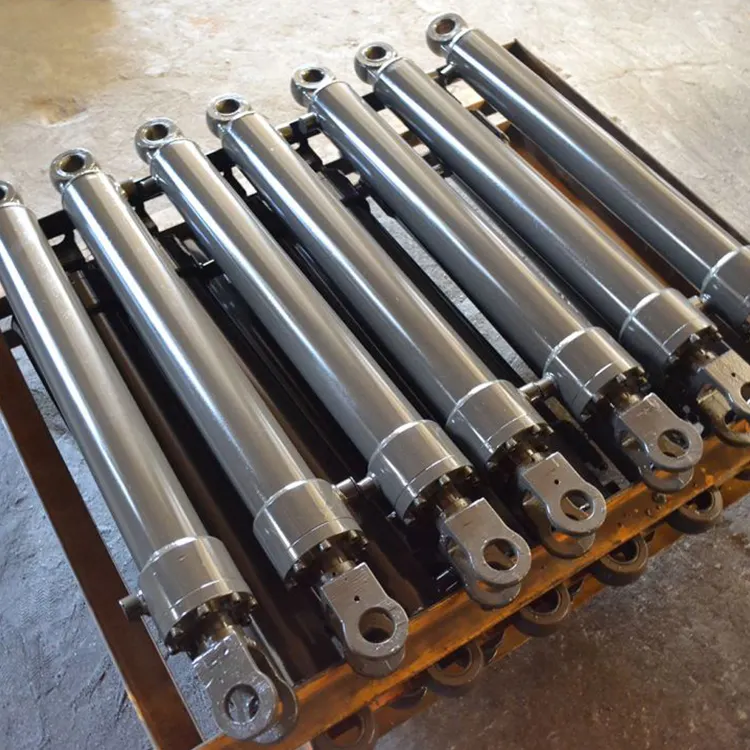
How does a forklift hydraulic cylinder handle variations in cylinder mounting?
A forklift hydraulic cylinder is designed to handle variations in cylinder mounting to accommodate different forklift configurations and applications. Here’s an explanation of how it can handle such variations:
The forklift hydraulic cylinder handles variations in cylinder mounting in the following ways:
1. Adjustable Mounting Brackets:
Many forklift hydraulic cylinders feature adjustable mounting brackets. These brackets allow for flexibility in positioning and aligning the cylinder to fit the specific requirements of the forklift. By adjusting the mounting brackets, the cylinder can be securely attached to the forklift frame, accommodating variations in mounting points, angles, and distances.
2. Threaded Rod Ends:
Threaded rod ends are commonly used in forklift hydraulic cylinders. These rod ends provide a threaded connection that allows for fine adjustments in cylinder mounting. By rotating the rod ends, the cylinder’s position can be modified, compensating for variations in mounting locations or angles.
3. Clevis Mounts:
Clevis mounts are another type of mounting mechanism used in forklift hydraulic cylinders. These mounts consist of a clevis bracket that attaches to the cylinder and a clevis pin that connects to the forklift. Clevis mounts offer a range of mounting positions to accommodate different forklift configurations. They provide flexibility in cylinder attachment, allowing for adjustments to compensate for variations in mounting points and angles.
4. Customizable Mounting Options:
In some cases, forklift hydraulic cylinders can be customized to meet specific mounting requirements. Manufacturers may offer options for custom brackets, rod ends, or mounting configurations based on the forklift’s unique specifications. This customization ensures proper alignment and secure attachment of the cylinder, even in situations with significant variations in mounting.
5. Alignment and Adjustment Mechanisms:
Forklift hydraulic cylinders may incorporate alignment and adjustment mechanisms to facilitate proper cylinder mounting. These mechanisms, such as swivel joints or adjustable linkage systems, allow for fine-tuning and alignment of the cylinder during installation. They enable the operator or technician to compensate for any variations in mounting, ensuring optimal performance and functionality.
In summary, a forklift hydraulic cylinder can handle variations in cylinder mounting through adjustable mounting brackets, threaded rod ends, clevis mounts, customizable mounting options, and alignment and adjustment mechanisms. These features provide flexibility and adaptability, allowing the cylinder to be securely mounted and properly aligned to ensure efficient and reliable operation in different forklift configurations and applications.
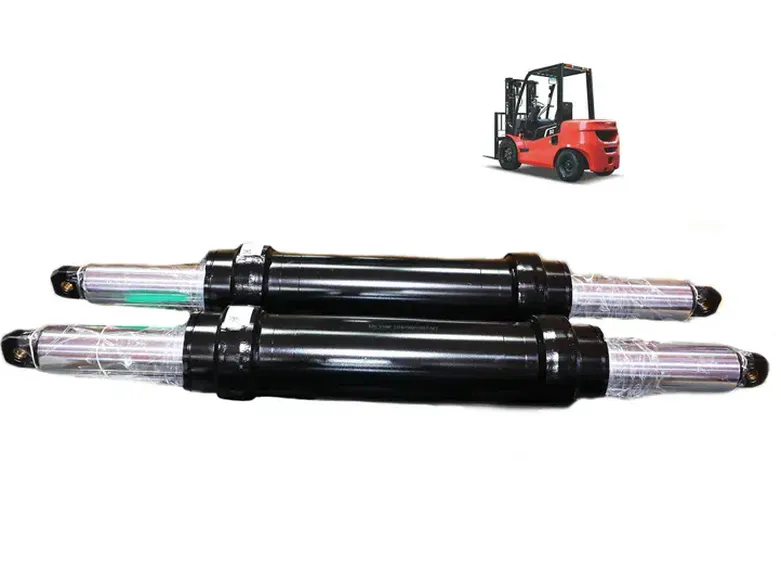
How Does a Forklift Hydraulic Cylinder Handle Variations in Load Weight?
A forklift hydraulic cylinder is designed to handle variations in load weight by utilizing the principles of hydraulic pressure and force. The hydraulic system of a forklift, including the hydraulic cylinder, employs a closed-loop system that allows for efficient and precise handling of different load weights. Here’s how a forklift hydraulic cylinder handles variations in load weight:
- Hydraulic Pressure:
- Force Balance:
- Load Sensing Valves:
- Controlled Lowering:
- Stability and Balance:
The hydraulic cylinder in a forklift operates based on the principle of hydraulic pressure. The forklift’s hydraulic system includes a hydraulic pump that pressurizes the hydraulic fluid, typically hydraulic oil. When the forklift operator activates the controls to lift a load, the pressurized hydraulic fluid is directed to the hydraulic cylinder. The high-pressure fluid exerts force on the piston inside the cylinder, creating an upward force that lifts the load.
The hydraulic cylinder is designed to maintain a force balance between the load weight and the hydraulic pressure. As the load weight increases, the hydraulic system compensates by adjusting the hydraulic pressure accordingly. The hydraulic pump supplies more pressurized fluid to the cylinder, allowing the cylinder to generate the required force to lift the heavier load. This force balance ensures that the forklift can handle variations in load weight effectively.
Modern forklifts often incorporate load sensing valves in their hydraulic systems to further optimize load handling. Load sensing valves continuously monitor the load weight and adjust the hydraulic pressure accordingly. These valves sense the force exerted on the hydraulic cylinder and regulate the pressure to match the load weight. When a heavier load is detected, the load sensing valve signals the hydraulic pump to increase the pressure, ensuring the necessary force is applied to lift the load safely and efficiently.
In addition to handling variations in load weight when lifting, forklift hydraulic cylinders also ensure controlled and safe lowering of the load. The hydraulic system uses various control valves and mechanisms to regulate the flow of hydraulic fluid during lowering. This allows for precise and gradual lowering of the load, regardless of its weight. The operator can control the descent speed using the forklift’s controls, ensuring smooth and safe handling of the load during the lowering process.
While the hydraulic cylinder plays a crucial role in handling variations in load weight, maintaining stability and balance is equally important. Forklifts are designed with a stable base and a counterweight at the rear to provide balance and prevent tipping. The hydraulic system, including the cylinder, works in conjunction with the forklift’s overall design to maintain stability and ensure safe operation, especially when dealing with uneven or shifting loads.
In summary, a forklift hydraulic cylinder handles variations in load weight by utilizing hydraulic pressure, force balance, load sensing valves, and controlled lowering mechanisms. These components and systems work together to ensure that the hydraulic cylinder can lift and lower loads of different weights safely and efficiently. The ability to adapt to varying load weights is essential for the versatility and effectiveness of forklifts in various material handling applications.


editor by CX 2024-02-04