Product Description
This cylinder is strong and durable with a buffer inside the cylinder. It has a strong ability to withstand shock loading. With the skeleton dustproof ring, it can well resist the pollution, especially suitable for the situation of high pollution and high impact.
| Model | Bore Diameter (mm) |
Rod Diameter (mm) |
Stroke (mm) |
Nominal Pressure (bar) |
| HSG125/90*40-00 | 125 | 90 | 40 | 200 |
| Type: | Clamp Cylinder |
|---|---|
| Application: | Trucks, Forklift, Crane, Loader, Road Machinery |
| Nominal Pressure: | 200 Bar |
| Stroke: | 40 mm |
| Certificate: | ISO9001:2008 |
| Warranty: | 1 Year |
| Customization: |
Available
|
|
|---|
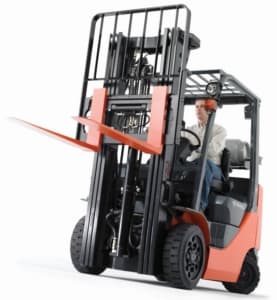
Can Hydraulic Cylinders be Used in Forklift Attachments?
Yes, hydraulic cylinders can be used in forklift attachments to enhance their functionality and expand their capabilities. Forklift attachments are auxiliary devices that can be mounted to the forks or carriage of a forklift to perform specific material handling tasks. The addition of hydraulic cylinders to these attachments offers several advantages and enables a wide range of applications. Here’s a detailed explanation of how hydraulic cylinders can be used in forklift attachments:
- Improved Lifting and Tilting:
- Extended Reach and Telescoping:
- Rotational Movement:
- Specialized Handling:
- Quick Attachment Changes:
Hydraulic cylinders can be incorporated into forklift attachments to provide enhanced lifting and tilting capabilities. For example, attachments such as fork positioners, side shifters, or paper roll clamps can utilize hydraulic cylinders to adjust the position of the forks or arms, allowing for efficient handling of different load sizes or configurations. The hydraulic cylinders enable precise control over the movement, enabling operators to lift, tilt, or adjust the position of the attachment as needed to optimize material handling operations.
Hydraulic cylinders can be employed in telescopic attachments for forklifts, enabling extended reach capabilities. Telescopic attachments consist of multiple sections that can be extended or retracted using hydraulic cylinders. By extending or retracting the sections, the attachment can reach deeper into racks, containers, or other storage areas, allowing forklifts to handle materials that are situated further away or at greater heights. This extension and retraction feature enhances the versatility of the forklift and enables efficient material handling in various environments.
Some forklift attachments, such as rotators or clamps, require rotational movement to handle loads effectively. Hydraulic cylinders can be integrated into these attachments to provide the necessary rotational capabilities. By utilizing hydraulic power, the attachment can rotate the load in either direction, allowing for precise positioning or transferring of goods. The inclusion of hydraulic cylinders enables controlled and smooth rotation, enhancing the efficiency and safety of material handling operations.
Hydraulic cylinders can be utilized in various specialized forklift attachments designed for specific material handling applications. Examples include attachments for handling drums, barrels, coils, or bales. These attachments often require unique lifting, clamping, or squeezing mechanisms, which can be achieved by incorporating hydraulic cylinders. The hydraulic cylinders provide the necessary force and control to handle specialized loads safely and efficiently, expanding the capabilities of the forklift in specific industries or tasks.
Hydraulic cylinders can facilitate quick and easy attachment changes on forklifts. Some forklifts are equipped with hydraulic quick-coupler systems that allow attachments to be rapidly connected or disconnected using hydraulic power. The hydraulic cylinders in the quick-coupler system enable a secure and efficient attachment change process, reducing downtime and improving productivity. This feature is particularly beneficial in applications where different attachments are frequently used, allowing forklifts to adapt to diverse material handling requirements swiftly.
The integration of hydraulic cylinders in forklift attachments provides numerous benefits, including improved lifting and tilting capabilities, extended reach and telescoping features, rotational movement, specialized handling options, and quick attachment changes. These advantages enhance the versatility, efficiency, and adaptability of forklifts, allowing them to handle a wide range of materials and perform specialized tasks in various industries.
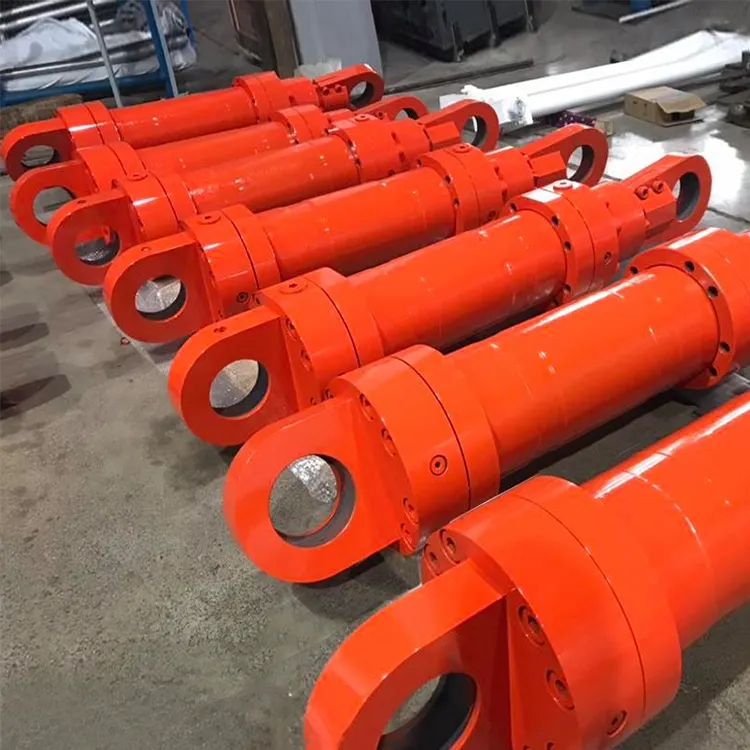
How does a forklift hydraulic cylinder contribute to load tilt control?
A forklift hydraulic cylinder plays a significant role in load tilt control, allowing for precise adjustment and manipulation of the load angle. Here’s an explanation of how the hydraulic cylinder contributes to load tilt control:
The forklift hydraulic cylinder contributes to load tilt control in the following ways:
1. Tilt Angle Adjustment:
The hydraulic cylinder is responsible for controlling the tilt angle of the forklift’s mast and forks. By extending or retracting the hydraulic cylinder, the operator can adjust the tilt angle of the load. This adjustment enables the forklift to safely handle loads of different shapes, sizes, and weights, ensuring optimal stability during transport and stacking operations.
2. Smooth and Controlled Movement:
The hydraulic cylinder provides smooth and controlled movement during load tilting. The hydraulic system, consisting of the cylinder and hydraulic fluid, allows for precise control of the cylinder’s extension and retraction speed. This controlled movement ensures that the load tilt is gradual, minimizing the risk of sudden shifts or instability that could lead to accidents or damage to the load.
3. Load Stabilization:
Load tilt control is essential for load stabilization. The hydraulic cylinder allows the operator to adjust the tilt angle to ensure proper weight distribution and balance of the load. By tilting the load in the desired direction, the forklift can securely hold and transport the load without compromising stability. This contributes to safe and efficient material handling operations.
4. Precise Positioning:
The hydraulic cylinder enables precise positioning of the load during tilting. By fine-tuning the extension or retraction of the cylinder, the operator can achieve the desired tilt angle with accuracy. This precise positioning is particularly important when dealing with fragile or sensitive loads that require careful handling to prevent damage.
5. Operator Control:
The forklift operator has control over the hydraulic cylinder, allowing them to adjust the load tilt as needed. The operator can use hydraulic controls within the forklift’s cabin to extend or retract the cylinder, thereby adjusting the load tilt angle. This control provides flexibility and adaptability in various material handling scenarios.
In summary, a forklift hydraulic cylinder contributes to load tilt control by allowing for tilt angle adjustment, providing smooth and controlled movement, ensuring load stabilization, enabling precise positioning, and giving the operator control over load tilt adjustments. These features enhance safety, stability, and efficiency during material handling operations, ensuring that loads are securely transported and properly positioned.
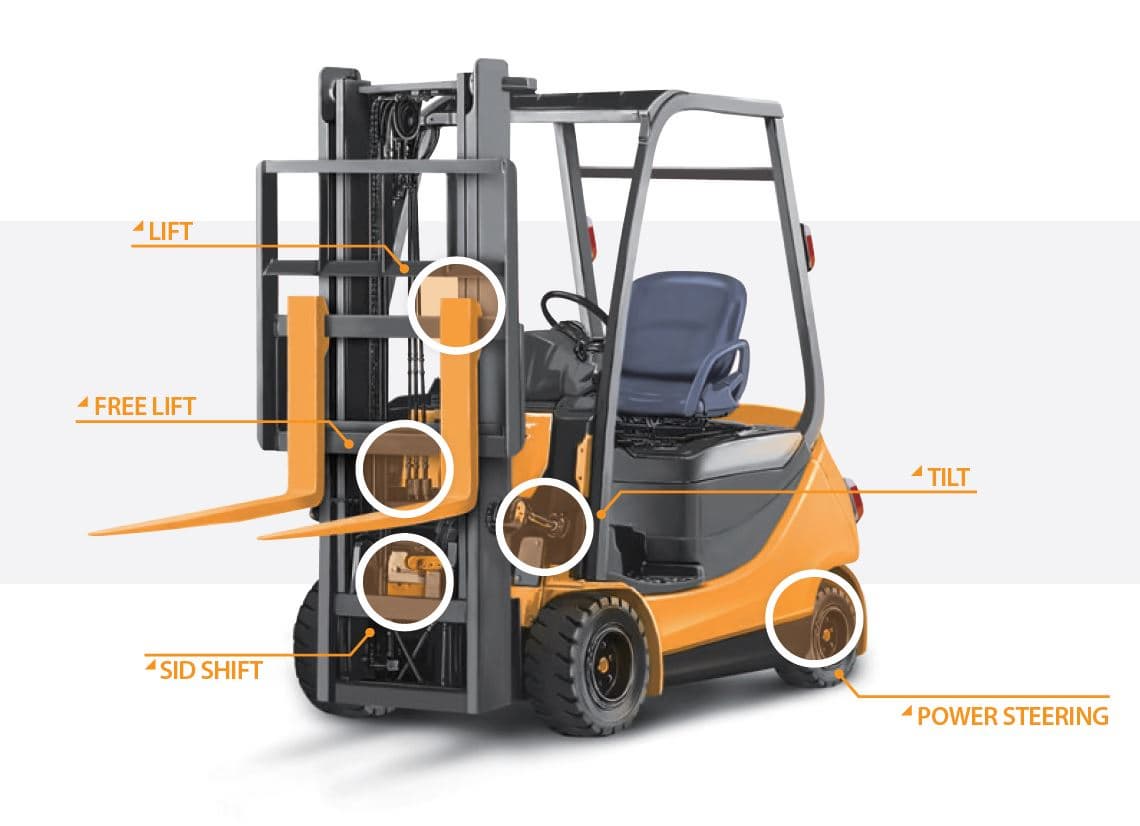
What is a forklift hydraulic cylinder and how does it work?
A forklift hydraulic cylinder is a crucial component in the hydraulic system of a forklift. It is responsible for generating the force required to lift and lower the load. Here’s a detailed explanation of its function and operation:
Function:
A forklift hydraulic cylinder is designed to convert hydraulic pressure into linear force. It consists of a cylindrical barrel, a piston, piston rod, seals, and ports for hydraulic fluid entry and exit. The cylinder is usually mounted vertically within the forklift’s mast assembly.
Operation:
The hydraulic cylinder operates based on the principle of Pascal’s law, which states that when pressure is applied to a fluid in an enclosed system, the pressure is transmitted equally in all directions.
When the operator activates the forklift’s hydraulic control, hydraulic fluid (usually oil) is pressurized and directed into the cylinder through the inlet port. The pressurized fluid enters one side of the cylinder, pushing the piston and piston rod upwards.
As the piston rod extends, it applies force to the load-bearing structure of the forklift, such as the mast or the lifting mechanism. This force enables the forklift to lift heavy loads to the desired height.
Conversely, when the operator releases the hydraulic control, the hydraulic fluid is allowed to exit the cylinder through the outlet port. The fluid flows back into the hydraulic reservoir, and the weight of the load or a counterbalance system helps lower the piston and piston rod.
The hydraulic cylinder’s movement is controlled by the operator through the forklift’s hydraulic control system, which regulates the flow of hydraulic fluid into and out of the cylinder. By adjusting the flow rate and direction, the operator can control the speed and direction of the cylinder’s extension and retraction.
The seals within the hydraulic cylinder prevent fluid leakage and ensure efficient operation. They help maintain the pressure inside the cylinder, allowing the hydraulic system to generate the necessary force consistently.
In summary, a forklift hydraulic cylinder is a hydraulic device that converts hydraulic pressure into linear force. It operates based on Pascal’s law, using pressurized hydraulic fluid to extend and retract the piston rod, enabling the forklift to lift and lower heavy loads.


editor by CX 2023-10-18