Product Description
Hydraulic cylinder(FE)
| Effective diameter | Number of stages | Stroke | Max working pressure |
| 110-214 mm | 3-6 | 3100-9530 mm | 150-250 Bar |
HangZhou Chengfeiyue hydraulic Machinery Co., LTD focuses on the production and development of hydraulic system. We mainly produce lift valves, limit valves, pneumatic control valve, gear pumps and A complete set of hydraulic system components. Our company is located in Industrial Park, HangZhou City, ZheJiang Province.
Production Process
Our company now has advanced excellent imported horizontal processing center and vertical processing center, also advanced cathodic electrophoretic coating production line and other precision manufacturing equipment have been introduced. We have cylindricity tester, hardness tester, thread tester, simulation vehicle hydraulic system test bench and other advanced laboratory, inspection equipment.
It has different processing workshops, including Rough machining,Finish machining,Pneumatic valve, limit valve processing zone,Centerless grinding machine,Cleaning machine ,Electrophoretic workshop,Assembly shop,Quality check,Testbed,etc.
Enterprise Certificate
Our company management team, research and development team and production team. Our team has rich experience in the development and manufacturing of complete hydraulic systems and strict quality management system (ISO9001:2015 and ISO/TS16949:2009 International Quality Management System Certification)
Our enterprise spirit is “work earnestly and be honest”. Take science and technology as the guide, take innovation as the soul, seek development by quality, and try our best to build famous brands in the world.
FAQ
How could I get a sample?
Before we received the first order, please afford the sample cost and express fee. We will return the sample cost back to you within your first order.
Sample time?
Existing items: Within 15 days.
Whether you could make our brand on your products?
Yes. We can print your Logo on both the products and the packages if you can meet our MOQ.
| Certification: | GS, CE, ISO9001 |
|---|---|
| Pressure: | High Pressure |
| Work Temperature: | Normal Temperature |
| Samples: |
US$ 500/Pieces
1 Pieces(Min.Order) | Order Sample |
|---|
| Customization: |
Available
|
|
|---|
.shipping-cost-tm .tm-status-off{background: none;padding:0;color: #1470cc}
| Shipping Cost:
Estimated freight per unit. |
about shipping cost and estimated delivery time. |
|---|
| Payment Method: |
|
|---|---|
|
Initial Payment Full Payment |
| Currency: | US$ |
|---|
| Return&refunds: | You can apply for a refund up to 30 days after receipt of the products. |
|---|
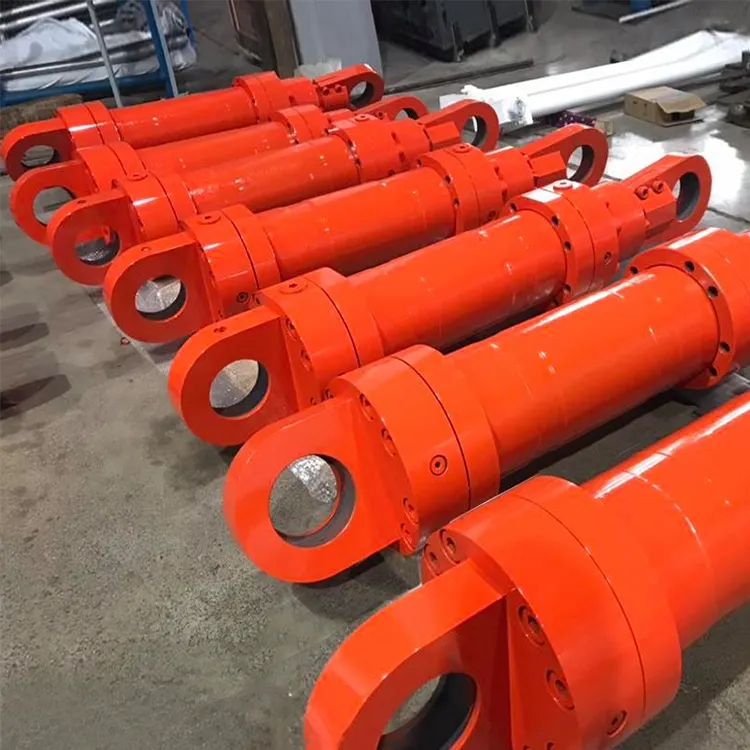
How does a forklift hydraulic cylinder handle variations in cylinder size?
A forklift hydraulic cylinder is designed to handle variations in cylinder size and accommodate different lifting capacities. Here’s an explanation of how it achieves this:
The hydraulic cylinder’s ability to handle variations in cylinder size is primarily dependent on its design and the following factors:
1. Piston Diameter:
The piston diameter of the hydraulic cylinder determines the lifting force it can generate. Forklift hydraulic cylinders are designed with different piston diameters to accommodate various load capacities. Larger piston diameters provide higher lifting capacities, while smaller diameters are suitable for lighter loads. The cylinder is designed and manufactured to match the required lifting capacity based on the forklift’s specifications.
2. Cylinder Construction:
The hydraulic cylinder is constructed to withstand the forces exerted during lifting operations. The materials used in its construction, such as high-strength steel, are selected based on the anticipated load capacities. The cylinder’s structural integrity ensures that it can handle the stress and pressure exerted during lifting, regardless of the cylinder size.
3. Hydraulic System Pressure:
The hydraulic system pressure plays a crucial role in determining the lifting capacity of the cylinder. By increasing or decreasing the pressure of the hydraulic fluid, the lifting force generated by the cylinder can be adjusted. The forklift’s hydraulic system is designed to provide sufficient pressure to match the lifting requirements of different cylinder sizes.
4. Control Valves and Flow:
The forklift’s hydraulic system incorporates control valves that regulate the flow of hydraulic fluid to the cylinder. These valves allow the operator to control the speed and force of the cylinder’s extension and retraction. By adjusting the flow rate, the lifting capacity can be tailored to suit the specific cylinder size and the load being lifted.
5. Sealing Mechanisms:
The hydraulic cylinder incorporates seals to prevent fluid leakage and maintain pressure. These seals, designed to accommodate different cylinder sizes, ensure a proper seal between the piston and cylinder barrel. They are selected based on the specific requirements of the cylinder size to maintain optimal performance and prevent leakage.
In summary, a forklift hydraulic cylinder handles variations in cylinder size by incorporating design elements such as piston diameter, appropriate construction materials, hydraulic system pressure, control valves, and sealing mechanisms. These factors work together to ensure that the cylinder can generate the required lifting force and withstand the forces exerted during lifting operations, regardless of the cylinder size.
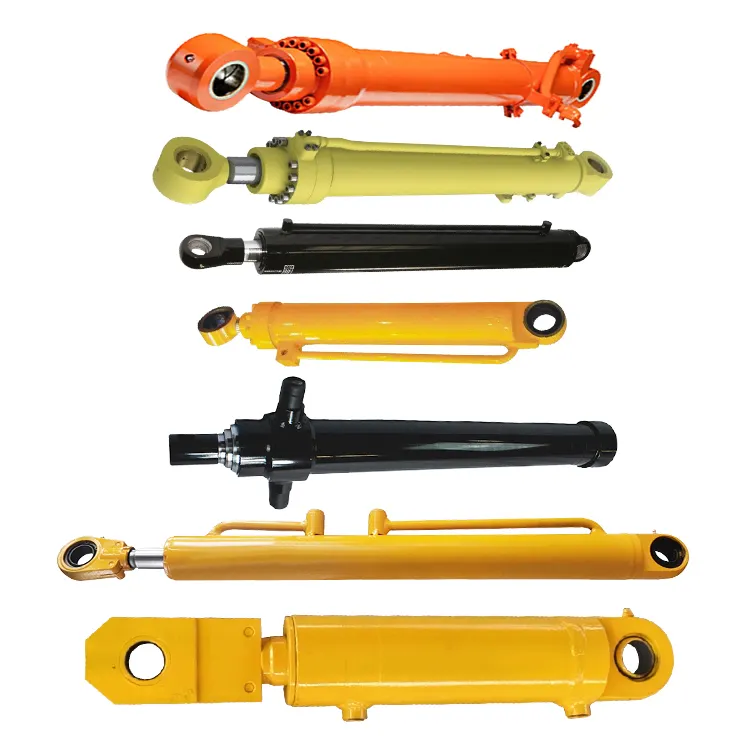
How does a forklift hydraulic cylinder contribute to load handling precision?
A forklift hydraulic cylinder plays a significant role in achieving precise load handling. Here’s an explanation of how it contributes to load handling precision:
The hydraulic cylinder contributes to load handling precision in the following ways:
1. Controlled Lifting and Lowering:
The hydraulic cylinder enables controlled lifting and lowering of the forks or attachment. By adjusting the hydraulic pressure and flow, the operator can smoothly and precisely raise or lower the load. This control allows for accurate positioning of the forks and precise handling of the load, minimizing the risk of damage or accidents.
2. Variable Speed Control:
Forklift hydraulic cylinders offer variable speed control during lift and tilt operations. The operator can adjust the hydraulic flow rate to control the speed at which the forks or attachment move. This variable speed control allows for fine adjustments and precise positioning of the load, even in delicate or sensitive handling situations.
3. Load Balancing:
The hydraulic cylinder contributes to load balancing, which is crucial for precise load handling. By adjusting the extension or retraction of the cylinder, the operator can maintain a proper balance between the load and the forklift. This balance ensures stability and control during lifting, lowering, and transport, enhancing load handling precision.
4. Fork Positioning:
Hydraulic cylinders are responsible for controlling the positioning of the forks or attachment. By extending or retracting the cylinders, the operator can adjust the horizontal position of the forks, aligning them with the load or pallet. This precise fork positioning allows for accurate entry into pallets or containers, ensuring efficient load handling.
5. Attachment Control:
In forklifts with specialized attachments, hydraulic cylinders contribute to precise control of the attachment’s movements. Whether it’s a side shift, fork positioner, or rotating attachment, the hydraulic cylinder enables accurate adjustments and alignment of the attachment to the load. This precise attachment control enhances load handling precision, especially when dealing with unique or challenging load configurations.
In summary, a forklift hydraulic cylinder contributes to load handling precision through controlled lifting and lowering, variable speed control, load balancing, fork positioning, and attachment control. These factors work together to provide operators with the ability to handle loads with accuracy, control, and efficiency.
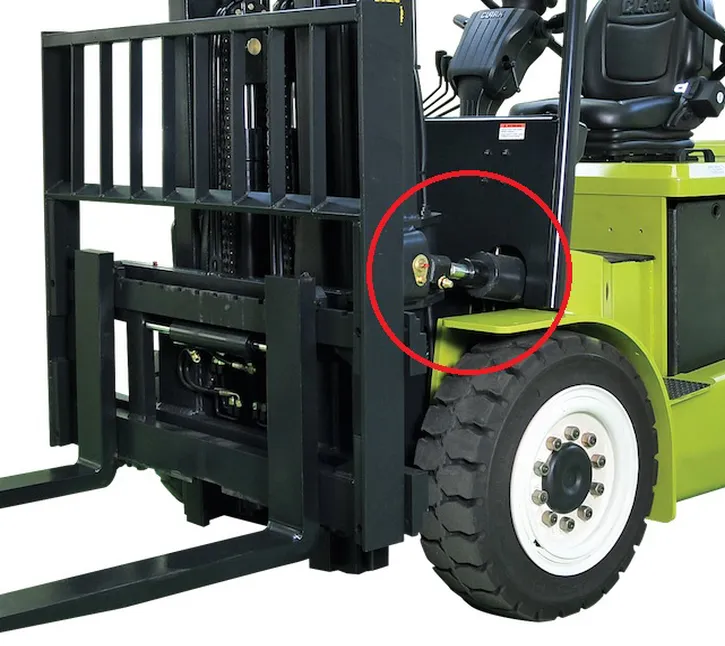
How Does a Forklift Hydraulic Cylinder Handle Variations in Lift Height?
A forklift hydraulic cylinder is responsible for raising and lowering the forks or lifting platform, allowing the forklift to handle loads at different heights. It handles variations in lift height through a combination of design features and hydraulic principles. Here’s a detailed explanation of how a forklift hydraulic cylinder handles variations in lift height:
1. Piston and Cylinder Design:
The hydraulic cylinder consists of a piston and a cylinder, which are sealed together to form a closed hydraulic system. The piston is connected to the forks or lifting platform, while the cylinder is fixed to the forklift frame. The design of the piston and cylinder allows for smooth movement and effective transfer of hydraulic pressure to generate lifting force.
2. Hydraulic Fluid and Pressure:
The hydraulic cylinder operates on the principle of Pascal’s Law, which states that when pressure is applied to a fluid in a closed system, it is transmitted equally in all directions. In the case of a forklift hydraulic cylinder, hydraulic fluid is used as the medium to transmit pressure. When hydraulic fluid is pumped into the cylinder, it creates pressure on the piston, causing it to move upward and lift the forks or lifting platform.
3. Cross-Sectional Area and Force:
The cross-sectional area of the piston within the hydraulic cylinder determines the force that can be exerted. A larger piston area can generate a greater lifting force. By varying the diameter of the piston, forklift manufacturers can adjust the lifting capacity and handle variations in lift height. Forklifts designed for heavier loads typically have larger piston areas to generate the necessary lifting force.
4. Valves and Controls:
The hydraulic system of a forklift includes valves and controls that regulate the flow of hydraulic fluid to the cylinder. These valves, such as control valves and relief valves, allow for precise control of the lifting operation. By adjusting the valves, operators can control the speed of ascent and descent, enabling smooth and controlled variations in lift height.
5. Telescopic Cylinders:
In some forklift designs, especially those used for high-reach applications, telescopic cylinders are employed. Telescopic cylinders consist of several nested stages that extend and retract, providing increased lift height. These cylinders allow for a compact design when retracted while offering extended reach when fully extended. Telescopic cylinders enable forklifts to handle variations in lift height without compromising stability or requiring excessively long cylinder strokes.
6. Stability and Counterbalancing:
Handling variations in lift height requires maintaining forklift stability. Forklifts are designed with counterweight systems to balance the load and prevent tipping. The hydraulic cylinder’s operation is coordinated with the counterweight system, ensuring that the center of gravity remains within safe limits during lifting and lowering operations. This counterbalancing helps maintain stability even when handling loads at different heights.
Through careful design, hydraulic principles, and the integration of valves and controls, a forklift hydraulic cylinder effectively handles variations in lift height. The combination of hydraulic pressure, piston and cylinder design, control mechanisms, and counterbalancing ensures precise and controlled lifting operations, allowing forklifts to safely handle loads at different heights as required in various material handling applications.


editor by CX 2023-11-09