Product Description
- Product Information
- Application
- Our Products
|
HangZhou GD Machinery CO.,LTD. |
|
|
Product |
|
|
tie rod hydraulic cylinder, welded hydraulic cylinder, telescopic cylinders cylinder, flange type hydraulic cylinder, hydraulic cylinder with valve function, hydraulic power unit, Hydraulic manifold block, pneumatic fitting, |
|
|
Material |
Tube – Cold Drawn Precision seamless Tubing Mounts – Trunnion with angular Swivels |
|
Application |
Agriculture, Concrete & Asphalt, Cranes, Fire & Rescue, Forestry & Logging,Mining & Rock Crushing,Oil & Gas, Snow & Ice Control,Waste Management and Material Recycling Industry , Engineering Equipment, Special Vehicle |
|
Feature |
1.High quality with a reasonable price 2.ISO9001-2008 3.Customized specification are accepted |
|
Payment |
T/T;L/C, Paypal |
|
Port |
HangZhou ,China |
|
Quotation |
According to the specific request |
|
MOQ |
According to the product |
|
Packaging |
metal case;plywood case;carton or as requirement |
|
Delivery time |
30days upon receipt of 30% deposit; or upon receipt of relevant L/C; |
- Working Process
- Packing and Shipping
- Company Information
HangZhou GD Machinery is specialized to offer high precision all kind of hydraulic valves and hydraulic cylinder.we also have some hydraulic valve from CHINAMFG brand aboard
With a wide range, good quality ,reasonable price,our products are extensively used in the industries of construction machinery,machine tool,plastic machinery,vehicle. mining equipment,metallurgy,shipyard,food machinery,agricultural machinery,and other industries.
Our products are widely recognized and trusted by users and can meet continuously changing economic and social needs.
Welcome new and old customers to contact us for future business. we will offer you good quality and best price.
- Company Show
- Our Service
1. Sample service: samples will be provided according to customer’s instruction.
2. Customized services: a variety of cylinders can be customized according to customer demand.
3. Warranty service: In case of quality problems under 1 year warranty period, free replacement will be made for customer.
- FAQ
Q: Do you accept OEM manufacturing?
A: Yes! We do accept OEM manufacturing. We will quote you the exact price and make the exact cylinder according to your specification and drawing.
Q: Can we design our own package or print our own logo?
A: Yes! Package and logo will be made acording to your requirements.
Q: Could we get small quantity samples?
A: Yes! We understand the quality test is important and we are glad to make the sample for you. The MOQ is 1pcs.
Q: How long is the production time?
A: Generally the production time is 30 days.
Q: What is your payment term?
A: For sample payment, generally 100% T/T payment in advance, west union, paypal.
For order payment, generally is 30% T/T in advance, 70% balance before shipment. If you require the different payment term, let us negotiate it together.
/* January 22, 2571 19:08:37 */!function(){function s(e,r){var a,o={};try{e&&e.split(“,”).forEach(function(e,t){e&&(a=e.match(/(.*?):(.*)$/))&&1
| Certification: | ISO9001 |
|---|---|
| Pressure: | Medium Pressure |
| Work Temperature: | Normal Temperature |
| Samples: |
US$ 150/Piece
1 Piece(Min.Order) | Order Sample |
|---|
| Customization: |
Available
|
|
|---|
.shipping-cost-tm .tm-status-off{background: none;padding:0;color: #1470cc}
| Shipping Cost:
Estimated freight per unit. |
about shipping cost and estimated delivery time. |
|---|
| Payment Method: |
|
|---|---|
|
Initial Payment Full Payment |
| Currency: | US$ |
|---|
| Return&refunds: | You can apply for a refund up to 30 days after receipt of the products. |
|---|
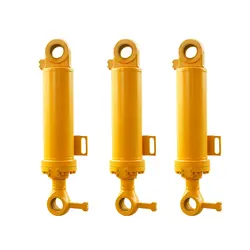
How does a lift cylinder contribute to smooth and controlled lifting motion?
A lift cylinder plays a crucial role in ensuring smooth and controlled lifting motion in various applications. Here’s an explanation of how a lift cylinder contributes to this:
1. Hydraulic Operation:
A lift cylinder typically operates using hydraulic power. Hydraulic systems utilize pressurized fluid to generate force and motion. The lift cylinder is connected to the hydraulic system, and when the hydraulic fluid is pressurized, it exerts force on the piston inside the cylinder. This force causes the cylinder to extend or retract, enabling the lifting motion. The hydraulic operation of the lift cylinder provides a smooth and consistent force, resulting in a controlled and precise lifting motion.
2. Synchronization:
In some applications, multiple lift cylinders are used together to achieve synchronized lifting. These cylinders work in tandem, ensuring that the lifting force is evenly distributed and that the load remains level throughout the lifting process. The synchronization of lift cylinders contributes to a smooth and balanced lifting motion, reducing the risk of tilting or instability.
3. Control Valves:
Lift cylinders are often equipped with control valves that allow operators to control the flow and pressure of the hydraulic fluid. By adjusting these control valves, operators can regulate the speed and force of the lifting motion. This provides precise control over the lifting process, allowing for smooth and controlled movements tailored to the specific requirements of the application.
4. Damping and Cushioning:
Some lift cylinders incorporate damping and cushioning mechanisms to further enhance the smoothness and control of the lifting motion. These mechanisms help absorb shocks and vibrations, preventing sudden jolts or jerky movements during the lifting process. Damping and cushioning features contribute to a more comfortable and controlled lifting experience, particularly when dealing with delicate or sensitive loads.
5. Load Capacities:
Lift cylinders are designed to handle specific load capacities based on their size, construction, and specifications. By selecting the appropriate lift cylinder for the intended load, operators can ensure that the lifting motion remains smooth and controlled. Overloading or underloading the lift cylinder can lead to instability or uneven lifting, affecting the overall smoothness and control of the motion.
In summary, a lift cylinder contributes to smooth and controlled lifting motion through its hydraulic operation, synchronization (if applicable), the use of control valves, damping and cushioning mechanisms, and appropriate load capacities. These factors work together to provide reliable and precise lifting, enhancing safety and efficiency in various applications.
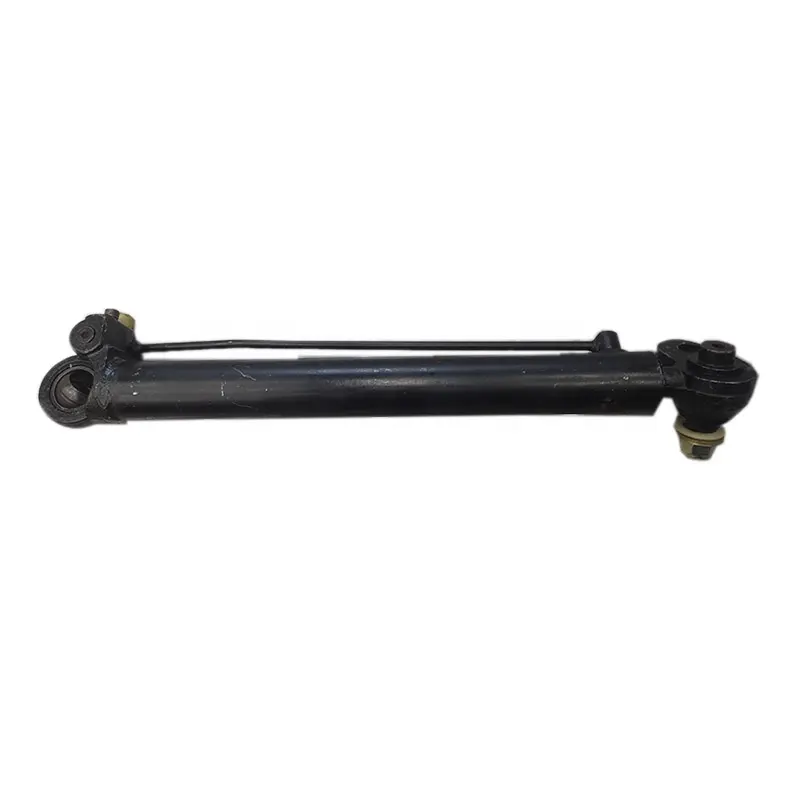
Can lift cylinders be used in agricultural machinery and equipment?
Yes, lift cylinders are commonly used in agricultural machinery and equipment. Here’s an explanation of their utilization in this context:
Agricultural machinery and equipment often require lifting capabilities to perform various tasks such as loading, lifting, and adjusting components. Lift cylinders provide the necessary force and control to accomplish these operations effectively.
1. Tractors and Loaders:
Lift cylinders are extensively used in agricultural tractors and loaders. These cylinders are typically integrated into the hydraulic systems of the equipment and are responsible for lifting and lowering front-end attachments, such as buckets, forks, or blades. By extending and retracting the lift cylinders, operators can control the height and position of the attachments, enabling efficient material handling, loading, and leveling tasks.
2. Harvesting and Threshing Equipment:
In harvesting and threshing equipment, lift cylinders are employed to adjust and control the height of components such as headers, cutter bars, or platforms. These cylinders enable operators to adapt to different crop heights and ground conditions, ensuring optimal harvesting performance. By utilizing lift cylinders, agricultural machinery can effectively navigate uneven terrain and maintain consistent cutting or harvesting heights.
3. Sprayers and Spreaders:
Lift cylinders are also utilized in agricultural sprayers and spreaders. These cylinders are responsible for raising and lowering the booms or spreading mechanisms. By adjusting the lift cylinders, operators can control the application height or spreading width, ensuring precise and uniform coverage of fertilizers, pesticides, or seeds.
4. Irrigation Systems:
In irrigation systems, lift cylinders are used to control the height and position of irrigation equipment such as sprinklers or pivots. These cylinders allow for efficient adjustment of the irrigation components to ensure optimal water distribution across agricultural fields.
5. Implements and Attachments:
Lift cylinders are widely employed in various agricultural implements and attachments, including plows, harrows, cultivators, and seed drills. These cylinders facilitate the lifting and lowering of the implements, allowing for depth adjustments, ground clearance, and transport modes. Lift cylinders enhance the versatility and functionality of agricultural equipment, enabling farmers to efficiently perform a wide range of field operations.
In summary, lift cylinders have significant applications in agricultural machinery and equipment. They contribute to the lifting, lowering, and positioning tasks required for efficient material handling, leveling, harvesting, spreading, and irrigation operations. By utilizing lift cylinders, agricultural equipment becomes more versatile, productive, and adaptable to the specific needs of farmers and agricultural practices.
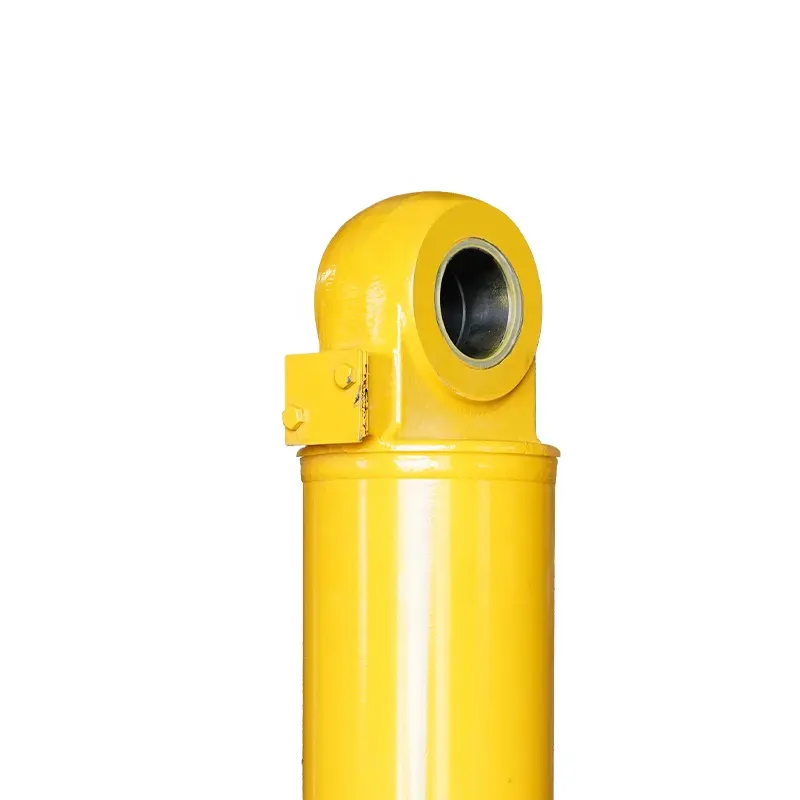
How does a lift cylinder differ from other types of hydraulic cylinders?
A lift cylinder, also known as a hydraulic lift cylinder or hydraulic lifting cylinder, has some distinct characteristics that set it apart from other types of hydraulic cylinders. Here’s an explanation of how a lift cylinder differs from other hydraulic cylinders:
While hydraulic cylinders come in various types and designs, including single-acting, double-acting, telescopic, and differential, a lift cylinder typically refers to a double-acting cylinder. Here are some key differences:
1. Double-Acting Design:
A lift cylinder is generally designed as a double-acting cylinder, meaning it can generate force in both the extension and retraction strokes. This allows for bidirectional movement and greater flexibility in lifting and lowering operations. In contrast, some other types of hydraulic cylinders, such as single-acting cylinders, generate force in only one direction.
2. Linear Motion:
The primary function of a lift cylinder is to provide linear motion for lifting and lowering loads. It is specifically designed to generate vertical movement, making it suitable for applications that require vertical displacement, such as hydraulic lifts, scissor lifts, and elevating platforms.
3. Load Capacity:
Due to their design and intended use, lift cylinders are typically designed to handle heavier loads compared to other types of hydraulic cylinders. They are engineered to provide high lifting capacities and withstand the forces associated with lifting heavy objects.
4. Control Valve Configuration:
Lift cylinders often require specialized control valve configurations to regulate their operation. This is because precise control is crucial in lifting and lowering operations, especially in applications where safety and accuracy are paramount, such as in hydraulic lifts or elevators.
5. Application-Specific:
While other types of hydraulic cylinders have diverse applications across various industries, lift cylinders are commonly used in specific applications that require vertical lifting and lowering. They are frequently employed in hydraulic lifts, scissor lifts, material handling equipment, and other vertical motion systems.
6. Construction and Mounting:
Lift cylinders may have specific construction features and mounting options to accommodate their application requirements. For example, they may include features like safety locks, cushioning mechanisms, or specialized mounting brackets to ensure secure and efficient operation in lifting applications.
In summary, a lift cylinder differs from other types of hydraulic cylinders in terms of its double-acting design, focus on linear motion for lifting and lowering, higher load capacity, specialized control valve configuration, application-specific usage, and construction features tailored for lifting applications. These distinctions make lift cylinders well-suited for vertical motion systems and applications that require reliable and precise lifting operations.


editor by CX 2024-03-05