Product Description
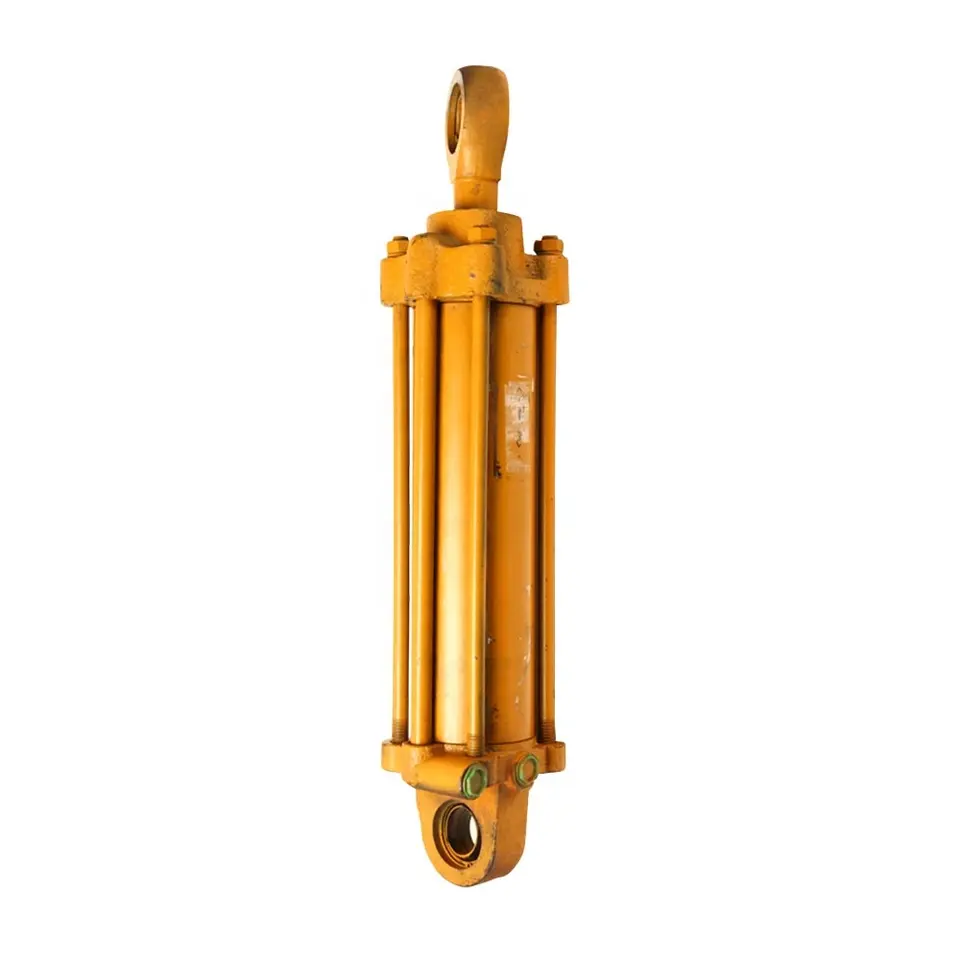
Multi stage dump truck lift hydraulic cylinder manufacturer China
| Model | Rated Press(Mpa) | Lift capacity(T) | Weight(KG) | Oil Port | Oil Volume(L) |
| FE 4TG-F169*4620-1479 | 20 | 51-83 | 206 | 1″SAE | 78 |
| FE 4TG-F169*5180-1604 | 20 | 50-83 | 227 | 1″SAE | 88 |
| FE 5TG-F169*5355-1394 | 20 | 35-66 | 212 | 1″SAE | 80 |
| FE 5TG-F169*5780-1559 | 20 | 34-60 | 224 | 1″SAE | 87 |
| FE 5TG-F169*6180-1559 | 20 | 34-58 | 236 | 1″SAE | 93 |
| FE 5TG-F169*6480-1604 | 20 | 34-56 | 247 | 1″SAE | 97 |
| FE 5TG-F191*6180-1527 | 20 | 49-84 | 281 | 1″SAE | 122 |
| FE 5TG-F214*7130-1722 | 20 | 60-84 | 380 | 1″SAE | 188 |
| Cylinder Tube O.D. | 131mm-242mm |
| Operating Pressure | 16Mpa-20Mpa |
| Numbers of Stage | 3, 4, 5, 6 |
| Largest Moving Stage Diameter | 110mm-214mm |
| Stroke | 2900mm-9030mm |
| Closed Length | 1320mm-2177mm |
| Extended Length | 4220mm-11207mm |
| Plunger Mount Thickness | 42mm-52mm |
| Warranty Period | 14 months after date of production |
| Piston rod head radius | 53-62mm |
| Oil Port | G1/1”SAE |
| Cardinal Axi | 60mm-65mm |
| Port Size | 50mm-60mm |
Company Introduction:
ZheJiang CHINAMFG hydraulic co., ltd. sets up in 1994, is a specialized custom hydraulic cylinder for tipper truck manufacturing enterpirise which takes up with design, manufacturer, sell hydraulic products. The company covers an area of 180,000 square meters, with 500 emplayees in it. There are 700 sets of manufacturing equipments, such as cold drawing production lines, surface treatment production line, boring and rolling production line, various of digital-control machining and testing equipment.
>Professional manufacturer& supplier of Hydraulic Cylinders for more than 20 years;
>Hydraulic Cylinders Certification ISO9001:2008, SGS, TS16949, RoHS, CNAS Certification;
>Experience in export North America, Australia, Asia, Middle East, Africa;
>Hydraulic Cylinders can be Make according to client’s requirements;
>The Hydraulic Cylinders can be used for Dump Truck, Tipper Truck, Trailer, Agricultural Machinery, Engineering Machinery, Garbage Truck, Landing Platform etc;
>We are the supplier of Sinotruk, CNHTC, CIMC, Wuzheng, Beiben Truck, Baic Group, FOTON, HOWO, JAC, ZheJiang Hyundai, Xihu (West Lake) Dis.n, ZheJiang Automobile, most of famous truck manufacturing and refitting company use our telescopic cylinder as first choice.
Exhibitions& Customers:
>We are the supplier of Sinotruk, CNHTC, CIMC, Wuzheng, Beiben Truck, Baic Group, FOTON, HOWO, JAC, ZheJiang Hyundai, Xihu (West Lake) Dis.n, ZheJiang Automobile, most of famous truck manufacturing and refitting company use our telescopic cylinder as first choice.
>We attended each Bauma exhibition, the world grade fair for construction equipments, building material machines, mining machines and earn much more opportunity to extend our business to oversea market.
Quality Control:
>All specification is designed by professional engineer.
>All material is high quality-Seal kits were purchased from USA, Japan, UK and Sweden.
>All material is processed by skilled workers and advanced CNC lathe
>All cylinders are 100% tested before package to ensure every cylinder is qualified for its purpose
>Package is air cushion film for each cylinder and steel case for all cylinders to ensure goods can arrive at customer safely
>One year warranty and long time track service is offered to solve any problems you meet after sale.
Certificated:
Guarantee and after sale service:
>7 x 24 hours technical support through email
>Goods will be delivered safely on time
>One year guarantee after destination port arrival
>Life long time track service
FAQ:
Q1. What are the same aspects of your cylinder with CHINAMFG cylinder?
A: Same inside structure.
Same outside dimension and same mounting sizes. It can be interchangeable with Hyva’s
Q2. Compared with CHINAMFG cylinder, what are your cylinder advantages?
A: 1. Rod are chrome plated.
2. Tubes are quenched and tempered.
3. Tube inner hole goes through deephole boring machine processing. Surface roughness is 0.4Ra
and circular degree is 0.571.
4. Good quality yet lower price.
Q3: Are you a manufacture or a trade company?
A: Manufacture, we are the leader manufacturer of hydraulic industry in China with 20 years’ experience and technology accumulation. With strong technical team we could solve any annoyance of you.
Q4: Do you have quality control system?
A: Yes, The quality management system introduced is: ISO/TS 16949:2009-certified by NQA and IATF cert.
Q5: How can i get a booklet and buy a cylinder from you?
A: Very easy! Just leave me a message or email or call me directly, let me know you are interesting in our products. I will talk with you for the details soon!
Q6: Can you tell me the price for the cylinder?
A: 1. Please advice the drawing with technical requirement.
2. Please advice the model No. after you check our booklet.
3. Please advice the tipping capacity, number of stages, closed length, mounting type and size.
4. Please also help advice the quantities, this is very important.
Q7: Do your products come with a warranty?
A: Yes, we have 1 year warranty. In this year, if the quality problem we will free repair for you.
Q8: Hydraulic cylinder internal leakage?
A: 3 main reasons causing internal leakage: Overload, polishing bad controlled, cheap seal kits. As is known to all, vehicles in China are often overloaded, our products all designed to bear the overload power. Advanced equipment could assure the polish processing. And we use the imported/TOP brand seals to meet customers’ requirement.
Q9: What about the quality feedback of your products?
A: WE HAVE NEVER RECEIVED EVEN ONCE QUALITY COMPLAINT FOR MANY YEARS OF INTERNATIONAL BUSINESS.
Q10: Can you help me to install or recommend what kind of hydraulic cylinder or power pack should I use for specific machine?
A: Yes, we have 25 experienced engineers who are always ready to help you. If you do not know what kind of hydraulic cylinders should be used in your machine, please just contact us, our engineers will design the exact products match your need.
Q11: What is the delivery time?
A: Within 15 days for samples.
15-30 days for bulk production, which is depend on quality, production process and so on.
Q12: What is your main payment term?
A: T/T, L/C, D/A, D/P either is available.
/* March 10, 2571 17:59:20 */!function(){function s(e,r){var a,o={};try{e&&e.split(“,”).forEach(function(e,t){e&&(a=e.match(/(.*?):(.*)$/))&&1
| Material: | Stainless Steel |
|---|---|
| Usage: | Automation and Control |
| Structure: | Telescopic Cylinder |
| Power: | Hydraulic |
| Standard: | Standard, ISO/Ts16949, ABS, API |
| Pressure Direction: | Single-acting Cylinder |
| Customization: |
Available
|
|
|---|
How does a lift cylinder handle variations in fluid pressure and flow rate?
A lift cylinder is designed to handle variations in fluid pressure and flow rate in order to ensure smooth and controlled operation. Here’s an explanation of how lift cylinders handle these variations:
1. Fluid Pressure:
Lift cylinders are typically part of a hydraulic system that utilizes pressurized fluid to generate the necessary force for lifting. The lift cylinder is designed to withstand varying fluid pressure levels. When the fluid pressure is increased, the lift cylinder can handle the additional force exerted on its piston. Conversely, when the fluid pressure decreases, the lift cylinder adjusts accordingly and maintains its functionality.
2. Flow Rate:
The flow rate of hydraulic fluid determines the speed at which the lift cylinder extends or retracts. Lift cylinders are designed to accommodate variations in flow rate. By controlling the flow rate of the hydraulic fluid through the use of control valves or flow control devices, operators can adjust the speed of the lift cylinder’s movement. This allows for precise and controlled lifting operations.
3. Control Valves:
Control valves are an integral part of the hydraulic system that regulates the fluid pressure and flow rate. Lift cylinders are often equipped with control valves that enable operators to control the movement of the cylinder by adjusting the pressure and flow of the hydraulic fluid. These valves can be manually operated or automated, providing flexibility in handling variations in fluid pressure and flow rate.
4. Cylinder Design:
Lift cylinders are designed to be robust and durable, capable of withstanding variations in fluid pressure and flow rate. The cylinder’s construction and materials are selected to ensure optimal performance under different operating conditions. Seals and other components within the lift cylinder are designed to maintain their functionality and prevent leakage, even when subjected to changes in fluid pressure and flow rate.
5. Fluid Control Systems:
In more advanced lift cylinder systems, fluid control systems may be employed to handle variations in fluid pressure and flow rate. These systems can include pressure relief valves, flow control valves, or proportional valves. Pressure relief valves protect the lift cylinder and the hydraulic system from excessive pressure, while flow control valves regulate the flow rate of the hydraulic fluid. Proportional valves provide precise control over both pressure and flow, allowing for fine-tuning of the lift cylinder’s movement.
In summary, lift cylinders are designed to handle variations in fluid pressure and flow rate to ensure smooth and controlled lifting operations. With the use of control valves, robust cylinder design, and fluid control systems, lift cylinders can adapt to changes in fluid pressure and flow rate, providing reliable and efficient performance.
Can lift cylinders be used in manufacturing and production machinery?
Yes, lift cylinders are commonly used in manufacturing and production machinery. Lift cylinders, also known as hydraulic cylinders, are devices that generate linear force and motion through the use of pressurized hydraulic fluid. They are widely employed in various industrial applications for lifting, pushing, pulling, and holding heavy loads.
In manufacturing and production machinery, lift cylinders play a crucial role in providing controlled movement and force for a wide range of tasks. Here are some examples of how lift cylinders are used:
- Material Handling: Lift cylinders are utilized in machinery such as forklifts, cranes, and material handling equipment to lift and transport heavy objects. They allow for precise positioning and movement of loads, improving efficiency and safety in material handling operations.
- Assembly and Automation: Lift cylinders are integrated into assembly lines and automated machinery to perform tasks like part insertion, pressing, and clamping. They provide the necessary force and motion required for assembling components or joining parts together.
- Presses and Punching Machines: Lift cylinders are employed in presses and punching machines to exert force for bending, forming, and shaping materials. These cylinders ensure accurate and consistent results in metalworking processes.
- Industrial Robots: Lift cylinders are used in robotic systems to enable lifting and manipulation of objects. They facilitate the controlled movement of robot arms and end-effectors, allowing robots to perform tasks such as pick-and-place operations, welding, and painting.
Lift cylinders offer several advantages in manufacturing and production machinery. They provide high force capabilities, precise control over movement, compact design, and the ability to operate in various orientations. Furthermore, their hydraulic nature allows for smooth and gradual acceleration and deceleration, reducing the risk of damage to the machinery or the materials being handled.
In conclusion, lift cylinders are extensively utilized in manufacturing and production machinery across different industries. Their versatility, reliability, and ability to generate controlled linear force make them essential components in a wide range of industrial applications.
Can you explain the role of hydraulic fluid in a lift cylinder?
Hydraulic fluid plays a crucial role in the operation of a lift cylinder. It serves as the medium through which force is transmitted to generate motion and provide lifting or lowering capabilities. Here’s an explanation of the role of hydraulic fluid in a lift cylinder:
1. Transmission of Force:
Hydraulic fluid acts as a medium for transmitting force within the lift cylinder. When pressurized, the hydraulic fluid applies force on the piston, which then transfers that force to the load through the rod. The force exerted by the hydraulic fluid is transmitted equally in all directions due to Pascal’s law, allowing for effective lifting or lowering of heavy loads.
2. Energy Transfer:
Hydraulic fluid is responsible for transferring energy within the hydraulic system. The hydraulic fluid is pressurized by a pump, which converts mechanical energy into hydraulic energy. This pressurized fluid carries the energy to the lift cylinder, where it is converted back into mechanical energy to perform the lifting or lowering action. The ability of hydraulic fluid to store and transmit energy efficiently makes it ideal for power transmission in hydraulic systems.
3. Lubrication and Cooling:
Hydraulic fluid serves as a lubricant within the lift cylinder to reduce friction and wear between moving parts, such as the piston and the cylinder barrel. This lubrication helps to enhance the longevity and smooth operation of the cylinder components. Additionally, the hydraulic fluid also aids in cooling the system by absorbing heat generated during operation, preventing overheating and ensuring optimal performance.
4. Sealing and Contamination Control:
Hydraulic fluid plays a critical role in sealing the lift cylinder and preventing leakage. It works in conjunction with seals located between the piston and cylinder barrel, as well as around the rod, to create a tight and secure hydraulic system. The hydraulic fluid also helps to control contamination by keeping external contaminants, such as dirt and debris, from entering the cylinder and affecting its performance.
5. System Efficiency:
The properties of hydraulic fluid, such as its viscosity and flow characteristics, directly impact the efficiency of the lift cylinder system. The choice of the appropriate hydraulic fluid ensures smooth and efficient operation, minimizing energy losses and maximizing system performance.
In summary, hydraulic fluid plays a vital role in a lift cylinder by transmitting force, transferring energy, lubricating and cooling the system, sealing against leaks, controlling contamination, and contributing to system efficiency. It enables the lift cylinder to generate the necessary force and motion to lift or lower heavy loads, while also ensuring the smooth and reliable operation of the hydraulic system.


editor by CX 2024-01-30