Product Description
Company Profile
ZheJiang CHINAMFG Machinery Manufacturing Co., Ltd. is a national high-tech enterprise and manufacturer of hydraulic devices special for large-scale heavy-duty jacking and lifting field. Integrating system design, product R & D, production, marketing and import & export, CHINAMFG provides a full range of high quality hydraulic tools and professional comprehensive solutions for customers.
Relying on advanced scientific technology in Europe and America and gathering elite talents at home and abroad, CHINAMFG focuses on solving major engineering problems in the fields of heavy load, precise control, multi-logic actions, multi-point control, etc.
After more than 20 years development, CHINAMFG has established a rigorous production and operation system and a perfect quality control system. Through continuous innovations, serialized products and solutions are gradually formed in the fields of multi-point synchronous lifting,pushing,hoisting, translation, tensioning, weighing of asymmetric large components, space posture adjustment, and intelligent walking of large equipment and components. CHINAMFG has won praise from domestic and foreign customers for its high-quality products and excellent services. At present, KIET’s business has spread to more than 100 countries and regions in the world, covering roads and bridges, construction, petrochemicals, metallurgy, power, mining, ships, offshore engineering field.
Adhering to the core concept of “Ingenuity for manufacturing, service for the world”, CHINAMFG continues to expand scientific research strength, forge ahead, strive for first-class, and provide customers with safe, reliable and efficient equipment and service.
Product Description
Introduction
The ultra-thin hydraulic cylinder is used in the synchronous lifting of highway bridge to replace the rubber bearing, and in the docking operation of machinery, turbine, heavy structure and so on.
Features
Max. Working pressure: 700bar
Single acting, load return
Lightweight, small size, large bearing capacity, easy to operate.
High strength alloy materials and the cylinder surface special
coating, ensure the long service life of cylinder.
Optional extension coupler and base plate, applicable to a variety of work conditions.
Single-stage plunger, very small closed height, used in confined spaces.
Tilting plunger, ± 3 ° deviation correction capacity
Low friction and high strength combination seal
3/8″-18NPT coupler and dust cap included on all models
Detailed Photos
Product Parameters
| MODEL | CAPACITY (T) |
MAX. WORKING PRESSURE (MPA) |
STROKE (MM) |
CLOSED HEIGHT (MM) |
EFFECTIVE AREA (CM²) |
OIL CAPACITY (CM³) |
OUTSIDE DIAMETER (MM) |
WEIGHT (KG) |
| KET-SLM-3515 | 35 | 70 | 15 | 35 | 50.2 | 75 | 150 | 5 |
| KET-SLM-7015 | 70 | 70 | 15 | 35 | 103.8 | 156 | 185 | 7.5 |
| KET-SLM-10015 | 100 | 70 | 15 | 41 | 153.8 | 231 | 210 | 11.2 |
Packaging & Shipping
Certifications
/* May 10, 2571 16:49:51 */!function(){function d(e,r){var a,o={};try{e&&e.split(“,”).forEach(function(e,t){e&&(a=e.match(/(.*?):(.*)$/))&&1
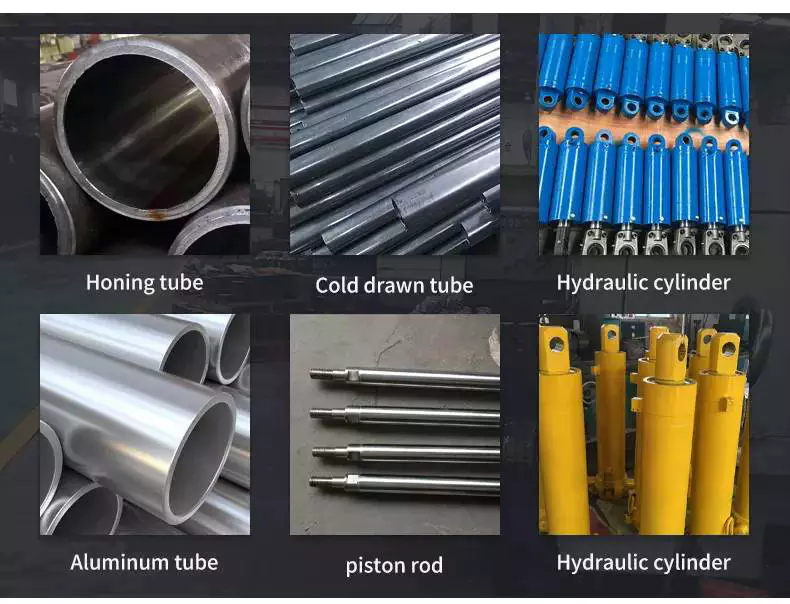
How do hydraulic cylinders contribute to the overall cost-effectiveness of industrial processes?
Hydraulic cylinders play a crucial role in enhancing the overall cost-effectiveness of industrial processes. They offer several advantages and contribute to increased productivity, improved efficiency, reduced maintenance costs, and enhanced operational performance. Here’s a detailed explanation of how hydraulic cylinders contribute to the cost-effectiveness of industrial processes:
1. High Power Density:
– Hydraulic cylinders provide a high power-to-weight ratio, allowing them to generate substantial force in a compact design. This power density enables the use of smaller and lighter equipment, reducing material and manufacturing costs, and increasing the efficiency of industrial processes.
2. Precise Force and Position Control:
– Hydraulic cylinders offer precise force and position control, allowing for accurate movement and positioning of machinery or workpieces. This level of control enhances process efficiency, reduces material waste, and improves overall product quality. Precise force control also minimizes the risk of equipment damage, further reducing maintenance and repair costs.
3. High Load Handling Capacity:
– Hydraulic cylinders are known for their ability to handle high loads. They can exert significant force, making them suitable for heavy-duty industrial applications. By efficiently handling heavy loads, hydraulic cylinders contribute to increased productivity and throughput, reducing the need for additional equipment and streamlining industrial processes.
4. Flexibility and Versatility:
– Hydraulic cylinders offer a high degree of flexibility and versatility in industrial processes. They can be easily integrated into various types of machinery and equipment, allowing for diverse applications. This adaptability reduces the need for specialized equipment, resulting in cost savings and increased operational efficiency.
5. Energy Efficiency:
– Hydraulic systems, including hydraulic cylinders, can be designed to operate with high energy efficiency. By utilizing efficient hydraulic circuit designs, advanced control systems, and energy recovery mechanisms, hydraulic cylinders minimize energy waste and reduce operational costs. Energy-efficient hydraulic systems also contribute to a more sustainable and environmentally friendly industrial operation.
6. Durability and Longevity:
– Hydraulic cylinders are built to withstand demanding industrial environments and heavy usage. They are constructed with robust materials and undergo stringent quality control measures to ensure durability and longevity. Their ability to withstand harsh conditions and repetitive motion reduces the need for frequent replacements, minimizing downtime and maintenance costs.
7. Reduced Maintenance Requirements:
– Hydraulic cylinders require relatively low maintenance compared to other types of actuators. Properly designed hydraulic systems with efficient filtration and contamination control mechanisms can prevent damage to the cylinders and extend their service life. Reduced maintenance requirements result in lower downtime, decreased labor costs, and improved cost-effectiveness of industrial processes.
8. System Integration and Automation:
– Hydraulic cylinders can be seamlessly integrated into automated industrial processes. By incorporating hydraulic cylinders into automated systems, tasks can be performed with precision and repeatability, reducing human error and optimizing efficiency. Automation also allows for continuous operation, increasing productivity and overall cost-effectiveness.
9. Cost-Effective Replacement:
– In situations where hydraulic cylinders require replacement or repair, the cost-effectiveness of the process is still maintained. Hydraulic cylinders are typically modular in design, allowing for easy replacement of individual components or complete units. This modularity reduces downtime and associated costs, as only the affected components need to be replaced, rather than the entire system.
In summary, hydraulic cylinders contribute to the overall cost-effectiveness of industrial processes through their high power density, precise control capabilities, high load handling capacity, flexibility, energy efficiency, durability, reduced maintenance requirements, system integration, and cost-effective replacement options. Their ability to enhance productivity, efficiency, and operational performance while minimizing maintenance and downtime costs makes hydraulic cylinders a valuable component in various industrial applications.
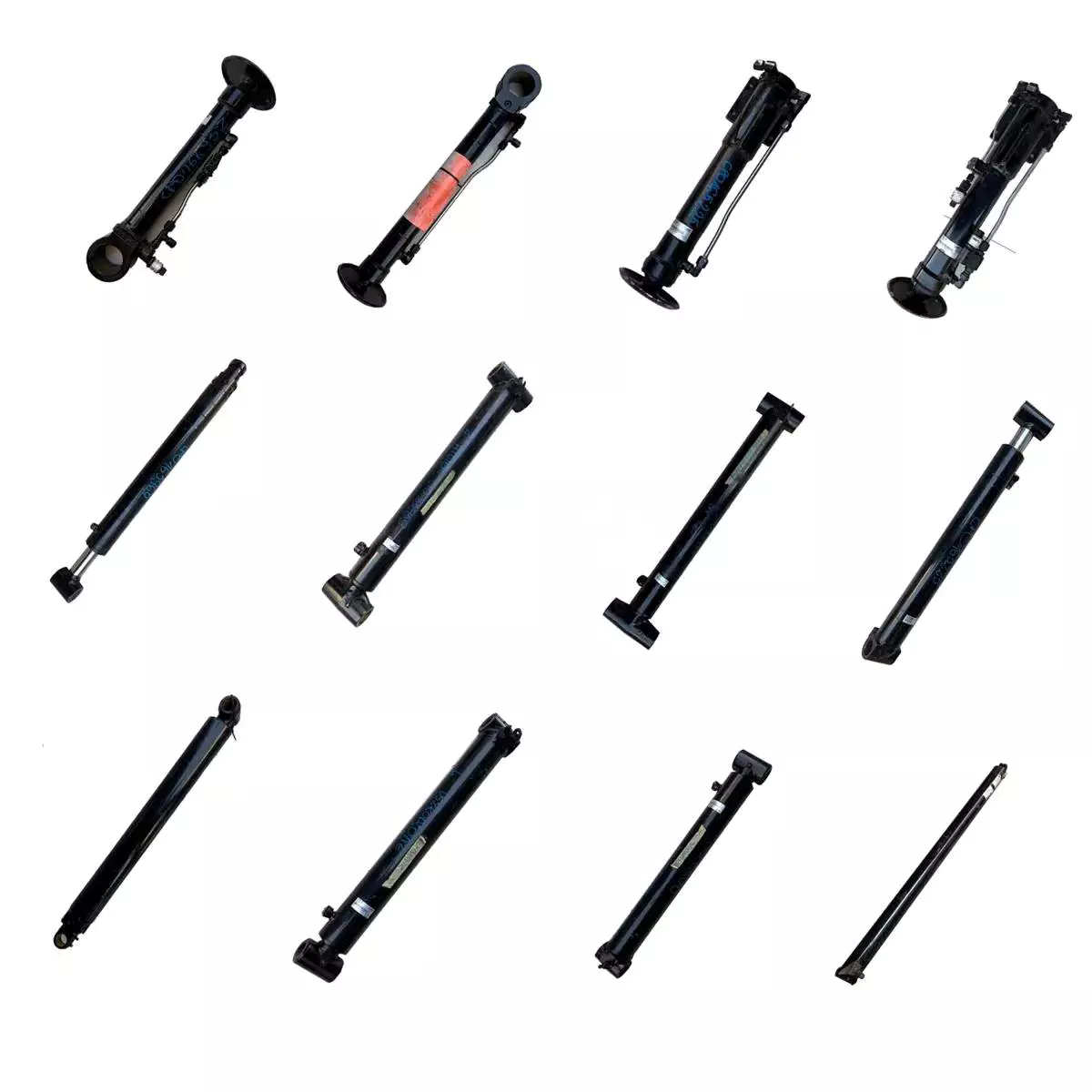
Ensuring Controlled and Safe Force Application in Heavy Machinery with Hydraulic Cylinders
Hydraulic cylinders play a critical role in heavy machinery by ensuring controlled and safe force application. The ability to exert and control high forces is essential for heavy machinery operations, such as lifting, pressing, pushing, or pulling heavy loads. Let’s explore how hydraulic cylinders ensure controlled and safe force application in heavy machinery:
- Force Control: Hydraulic cylinders provide precise force control capabilities. The hydraulic system’s pressure can be adjusted to regulate the force exerted by the cylinder. This control allows operators to apply the necessary force for a specific task while ensuring it remains within safe limits. By accurately controlling the force, hydraulic cylinders help prevent excessive force that could damage the machinery or compromise the safety of the operation.
- Load Balancing: In heavy machinery, multiple hydraulic cylinders are often used in conjunction to distribute and balance the applied force. By using multiple cylinders, the load can be evenly distributed across the machinery, minimizing stress concentrations and ensuring controlled force application. This load balancing approach enhances the stability and safety of the machinery, preventing uneven loading that could lead to structural issues or instability.
- Safety Valves: Hydraulic systems in heavy machinery are equipped with safety valves to protect against excessive force or overloading. Safety valves are designed to release hydraulic fluid from the cylinder when the force exceeds a predetermined threshold. This prevents the force from reaching dangerous levels, safeguarding the machinery and preventing potential accidents or damage. Safety valves provide an additional layer of safety and ensure controlled force application even in unexpected circumstances.
- Pressure Relief Systems: Hydraulic cylinders incorporate pressure relief systems to further enhance safety. These systems are designed to relieve excess pressure in the hydraulic system, which could occur due to factors such as thermal expansion or system malfunctions. By relieving excess pressure, the pressure relief systems prevent sudden and uncontrolled force surges, maintaining safe and controlled force application in heavy machinery.
- Structural Integrity: Hydraulic cylinders are designed to withstand the high forces and loads associated with heavy machinery applications. The cylinders are constructed using robust materials, such as high-strength steel, and undergo rigorous testing to ensure their structural integrity. This ensures that the cylinders can safely handle the forces applied during heavy machinery operations without experiencing failures or deformations that could compromise the safety and controlled force application.
In summary, hydraulic cylinders ensure controlled and safe force application in heavy machinery through force control, load balancing, safety valves, pressure relief systems, and robust structural design. These features and design considerations enable operators to exert the necessary force while maintaining safety and preventing excessive loads or force surges. By incorporating hydraulic cylinders into heavy machinery, manufacturers can achieve controlled force application, enhance operational safety, and protect the machinery from damage or failure.
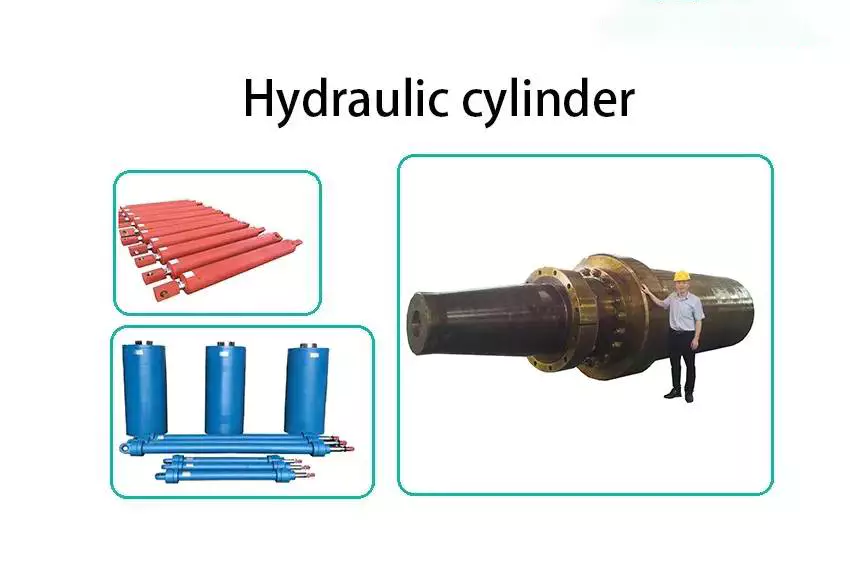
Can you explain the role and significance of hydraulic cylinders in machinery?
Hydraulic cylinders play a crucial role in machinery across various industries. They are essential components that provide controlled and powerful linear motion, enabling the operation of heavy equipment and facilitating numerous tasks. The role and significance of hydraulic cylinders in machinery can be explained in detail as follows:
Role of Hydraulic Cylinders:
– Conversion of Hydraulic Energy: Hydraulic cylinders convert hydraulic energy, typically in the form of pressurized hydraulic fluid, into linear force and motion. This conversion allows machinery to perform tasks such as lifting, pushing, pulling, clamping, tilting, and controlling various mechanisms.
– Generation of Linear Motion: Hydraulic cylinders generate linear motion by utilizing the principles of Pascal’s law. When hydraulic fluid is directed into one side of the cylinder, it applies pressure on the piston, resulting in linear movement of the piston and the attached piston rod. This linear motion can be used to actuate other components within the machinery or directly perform the required task.
– Force Generation: Hydraulic cylinders are capable of generating high forces due to the hydraulic pressure applied to the piston. The force output of a hydraulic cylinder depends on the surface area of the piston and the pressure of the hydraulic fluid. This force allows machinery to exert significant power for lifting heavy loads, applying pressure, or overcoming resistance.
– Precise Control: Hydraulic cylinders offer precise control over the linear motion and force exerted. By regulating the flow of hydraulic fluid, the speed and direction of the cylinder’s movement can be accurately adjusted. This level of control is crucial in machinery that requires precise positioning, delicate movements, or synchronization of multiple cylinders.
– Integration with Hydraulic Systems: Hydraulic cylinders are integral parts of hydraulic systems used in machinery. They work in conjunction with hydraulic pumps, valves, and actuators to create a complete hydraulic circuit. This integration allows for efficient power transmission, control, and coordination of various machine functions.
Significance of Hydraulic Cylinders:
– Heavy Equipment Operation: Hydraulic cylinders are vital in heavy machinery used in construction, mining, agriculture, material handling, and other industries. They enable the lifting and movement of heavy loads, the operation of attachments, and the performance of tasks that require high force and precision.
– Versatility and Adaptability: Hydraulic cylinders are versatile components that can be designed and tailored to meet specific machinery requirements. They can be integrated into various types of equipment and customized based on factors such as force capacity, stroke length, speed, and mounting options. This adaptability makes hydraulic cylinders suitable for diverse applications.
– Durability and Reliability: Hydraulic cylinders are built to withstand rigorous operating conditions, including high pressures, heavy loads, and continuous use. They are designed with robust materials, precise machining, and effective sealing systems to ensure durability and reliability over extended periods of operation.
– Safety and Load Control: Hydraulic cylinders provide safe and controlled operation in machinery. They offer overload protection mechanisms, such as relief valves, to prevent damage caused by excessive force or pressure. Additionally, hydraulic cylinders allow for precise load control, minimizing the risk of accidents during lifting, lowering, or positioning of heavy loads.
– Compact Design: Hydraulic cylinders offer a high power-to-size ratio, allowing for compact machinery design. Their relatively small size compared to the forces they can generate makes them suitable for applications where space is limited or weight restrictions apply.
– Energy Efficiency: Hydraulic cylinders contribute to energy efficiency in machinery. The use of hydraulic systems allows for the transfer of power over long distances without significant power losses. Additionally, hydraulic cylinders can incorporate energy-saving features such as load-sensing technology and regenerative circuits, reducing energy consumption.
Overall, hydraulic cylinders play a vital role in machinery by providing controlled and powerful linear motion. Their significance lies in their ability to convert hydraulic energy, generate high forces, offer precise control, integrate with hydraulic systems, and facilitate the operation of heavy equipment across various industries. Hydraulic cylinders contribute to increased productivity, safety, and efficiency in machinery applications, making them indispensable components in modern-day engineering.
<img src="https://img.jiansujichilun.com/img/hydrauliccylinders/hydrauliccylinders-l1.webp" alt="China Hot selling Slm Series Ultra-Thin Hydraulic Cylinder with Great quality “><img src="https://img.jiansujichilun.com/img/hydrauliccylinders/hydrauliccylinders-l2.webp" alt="China Hot selling Slm Series Ultra-Thin Hydraulic Cylinder with Great quality “>
editor by Dream 2024-10-10