Product Description
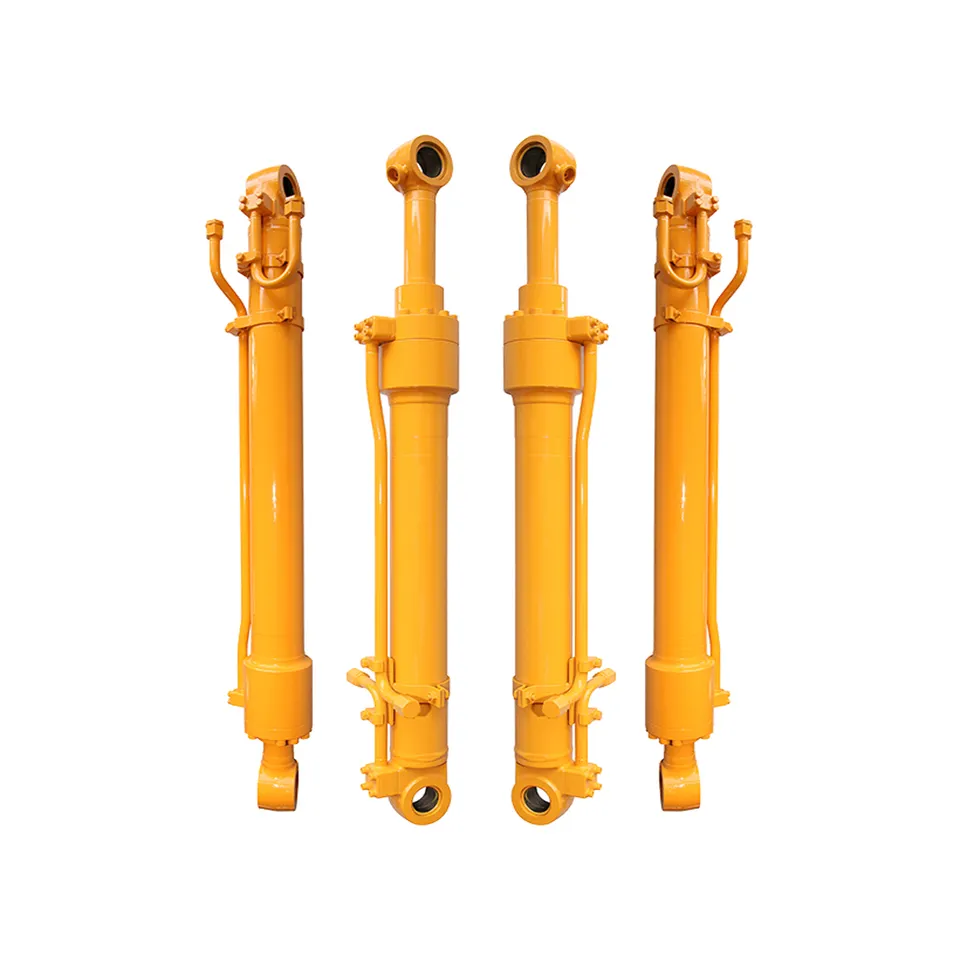
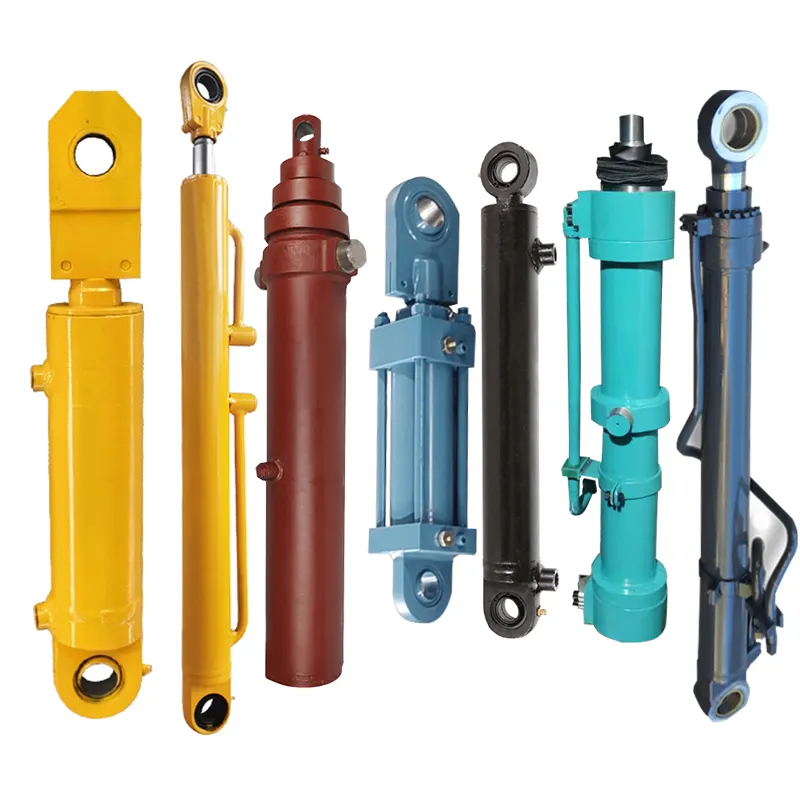
Double Action Hydraulic Lift RAM Cylinder
Product Description:
Widely used in equipment for Engineering, Coal&mine, Agriculture and Environmental sanitation
Double Action Hydraulic Lift RAM Cylinder used in engineering has high requirements for security performance, as it works frequently with large shock and vibration, so the requirements of reliability is high. Limit working condition bear large lateral load, so it has higher requirements for hardness and wear resistance.
Product Display:
Specifications:
| Item | Specifications |
| Product Name | Double Action Hydraulic Lift RAM Cylinder |
| Certificate: | CE, ISO9001 |
| Packaging | metal case;plywood case;carton or as requirement |
| MOQ | According to products |
| Brand | GLIT or customer’s logo |
| Service | OEM & ODM |
| Piston Rod | Chrome or nickel plated,ground & polished piston rod |
| Seal Type | Parker,NOK, Hallite or as customer’s requirement |
| Tube | High tensile cold drawn tube, precision honed for extended seal life |
| Delivery Time | Based on order quantity. normally 15-30 days. |
| Price Advantage | Competitive factory price with guaranteed quality |
| Business Type | Manufacturer & Exporter |
Mounting Method:
Our Factory:
Inspection Process:
| Inspection Type | Inspection Standard |
| Raw Material Inspection | Before storage, QC takes the measurement of the raw materials. |
| Process Material Inspection | During the production, QCs conduct a random inspection. Before the hydraulic cylinder parts transferred to the next process, QCs takes inspection. |
| Final Function Testing | All the hydraulic cylinders take hydraulic function test |
Packing & Delivery:
Appliactions:
Application: Mobile Cranes, Trailer, excavator, log splitter, hydraulic press, garbage compactor,
lift platform, dock leveler
About US:
HangZhou GLORIA INDUSTRIAL TECH Co., Ltd. is specializing in the production of various types of hydraulic cylinders as well as cylinder barrel, piston cylinder and other cylinder accessories.
As a highly specialized manufacturer of hydraulic cylinders, CHINAMFG provides design optimization solutions and reliable products to many customers at home and abroad. No matter in construction machinery, railway bridge machinery, port ship machinery, metallurgy and mining machinery, oil and light industry machinery, special vehicles and other industries, GLIT can provide various standard and non-standard hydraulic cylinder design optimization schemes and products according to users’ requirements, and provide integrated services for perfection and quality.
If possible, when contact with us, please apply information as below
|
Bore |
Rod |
Stroke |
Work Pressure |
Mounting |
Work environment |
|
|
|
|
|
|
|
Or you can offer us your sketch diagram or photos so that we could understand you exactly meaning, help us avoid mistakes.
And if you have samples, we can manufacture according to your samples after sending to us.
Welcome to our factory if you have any time.
Your satisfaction is our biggest motivation.
Now, you can contact with us for any question or inquiry.
FAQ:
1, What does your company do?
A: we are a supplier of high quality hydraulic products including Hydraulic Cylinder, Hydraulic Motor, Hydraulic Power Pack, Hydraulic station and other Hydraulic components.
2, Are you a manufacture or a trading company?
A: We are a manufacturer.
3, What certificate do you have?
A: All our factories are ISO certificated. And our main suppliers of materials and parts are with CE, RoHS, CSA and UL certificates.
4, How long is your delivery time?
A: The delivery time depends on different products and quantity. The cylinder usually need about 45-60 days and the Motor need about 20-30 days.
5, Can you make parts as customer’s requirement or drawing?
A: Yes, we can OEM for you as your drawings. Our engineer also can give you professional support for technical suggestions.
6, What kind of payment terms do you accept?
A: We prefer T/T through bank. 40% when order is confirmed and 60% before shipment. L/C is also acceptable for amount over 20,000USD.
9, What is your warranty policy?
A: All our products are warranted for 1 full year from date of delivery against defects in materials and workmanship. This warranty does not cover parts that are worn out through the course of normal operation or are damaged through negligence. We serious remind that unclean hydraulic oil will definitely cause damage to your Hydraulic components. And this damage is not included in the warranty range. So we strongly suggest you to use new clean oil or make sure the system oil are clean when using our parts
| Certification: | GS, CE, ISO9001 |
|---|---|
| Pressure: | Medium Pressure |
| Work Temperature: | 6.7-31.5 MPa |
| Acting Way: | Double Acting |
| Working Method: | Straight Trip |
| Adjusted Form: | Regulated Type |
| Samples: |
US$ 1/Piece
1 Piece(Min.Order) | |
|---|
| Customization: |
Available
|
|
|---|
What are the advantages of using lift cylinders in material handling?
Using lift cylinders in material handling offers several advantages that enhance efficiency, productivity, and safety. Here are some key advantages of using lift cylinders:
1. Lifting Capacity:
Lift cylinders are designed to provide substantial lifting capacity. They can handle heavy loads and are available in various sizes and configurations to accommodate different weight requirements. This allows for efficient lifting and moving of materials, reducing the need for manual labor or multiple lifting mechanisms.
2. Precise Control:
Lift cylinders offer precise control over the lifting and lowering operations. By regulating the flow and pressure of hydraulic fluid, operators can achieve accurate positioning and controlled movements. This level of control ensures safe and precise material handling, preventing damage to the load and the surrounding environment.
3. Smooth and Stable Operation:
Lift cylinders provide smooth and stable operation during lifting and lowering processes. The hydraulic system minimizes jerking or sudden movements, ensuring a controlled and stable lifting experience. This stability is crucial when handling fragile or delicate materials that require careful maneuvering.
4. Flexibility:
Lift cylinders offer flexibility in terms of their application and adaptability to different material handling scenarios. They can be integrated into various types of equipment, such as forklifts, cranes, or material handling platforms. This versatility allows for efficient material handling across different industries and environments.
5. Space Efficiency:
Compared to other lifting mechanisms, lift cylinders are relatively compact, which makes them suitable for applications where space is limited. The vertical movement of the cylinder allows for efficient use of vertical space, optimizing storage capacity and workspace utilization.
6. Durability and Longevity:
Lift cylinders are built to withstand rigorous and demanding material handling operations. They are constructed with sturdy materials and designed to withstand heavy loads, repetitive motions, and harsh working conditions. Proper maintenance and care can ensure their longevity, providing reliable performance over an extended period.
7. Safety:
Lift cylinders prioritize safety during material handling operations. They incorporate safety features such as pressure relief valves, load holding devices, and fail-safe mechanisms to prevent accidents or uncontrolled movements. These safety features help protect operators, bystanders, and the materials being lifted.
8. Reduced Manual Labor:
Using lift cylinders in material handling reduces the reliance on manual labor for lifting heavy loads. This improves productivity, reduces the risk of injuries associated with manual lifting, and allows operators to focus on other essential tasks, enhancing overall operational efficiency.
In summary, the advantages of using lift cylinders in material handling include high lifting capacity, precise control, smooth and stable operation, flexibility in application, space efficiency, durability, safety features, and reduced reliance on manual labor. These advantages contribute to improved efficiency, productivity, and safety in material handling operations.
How Does a Lift Cylinder Contribute to Load Leveling and Distribution?
A lift cylinder plays a significant role in load leveling and distribution, ensuring stability and balanced weight distribution in various applications. Here’s a detailed explanation of how a lift cylinder contributes to load leveling and distribution:
- Vertical Force Generation:
- Multi-Cylinder Systems:
- Self-Leveling Mechanisms:
- Force Sensing and Control:
- Structural Support and Stability:
- Customization for Specific Applications:
When a lift cylinder is activated, it generates a vertical force that lifts or supports a load. The force exerted by the cylinder is directly proportional to its hydraulic or pneumatic pressure and the effective area of the piston. By adjusting the pressure or controlling the flow of fluid or gas into the cylinder, the force can be precisely regulated to achieve load leveling and distribution.
In applications where load leveling and distribution are critical, multiple lift cylinders may be used in a system. These cylinders work in synchronization to evenly distribute the load and maintain balance. By connecting the cylinders in parallel or series, the hydraulic or pneumatic pressure can be distributed across all cylinders, ensuring that each cylinder contributes proportionately to the load leveling and distribution process.
Some lift cylinder systems incorporate self-leveling mechanisms to automatically adjust the position and angle of the load. These mechanisms utilize sensors or feedback systems that monitor the load distribution and make real-time adjustments to the lift cylinders. If an imbalance or uneven weight distribution is detected, the self-leveling mechanisms activate the appropriate lift cylinders to counteract the imbalance and restore equilibrium. This contributes to load leveling and distribution, preventing excessive stress on specific areas or components.
Advanced lift cylinder systems may employ force sensing and control technologies to achieve precise load leveling and distribution. Force sensors are integrated into the lifting mechanism, allowing real-time monitoring of the forces exerted by the cylinders. This information is then used to adjust the hydraulic or pneumatic pressure, ensuring that each cylinder contributes optimally to the load distribution. By continuously monitoring and controlling the forces, the lift cylinder system can adapt to changing load conditions and maintain stable load leveling and distribution.
Lift cylinders provide structural support and stability to the load-bearing components in various applications. By evenly distributing the load, the cylinders help prevent excessive stress or strain on specific components. They ensure that the weight is evenly spread across the supporting structure, reducing the risk of structural damage or failure. Lift cylinders also contribute to the overall stability of the system, minimizing unwanted movements or vibrations caused by imbalanced loads.
Lift cylinders can be customized and tailored to specific applications to optimize load leveling and distribution. Factors such as cylinder size, stroke length, bore diameter, and material strength can be selected based on the load characteristics and weight distribution requirements of the particular application. By considering the specific needs of the application, lift cylinders can be designed and implemented to achieve the desired load leveling and distribution performance.
Overall, a lift cylinder is a crucial component in achieving load leveling and distribution in various applications. Whether through vertical force generation, multi-cylinder systems, self-leveling mechanisms, force sensing and control, structural support, or customization, lift cylinders contribute to maintaining stability, balance, and even weight distribution, ensuring optimal performance and safety in diverse industrial and mechanical systems.
Can lift cylinders be used for both lifting and lowering applications?
Yes, lift cylinders are designed to be versatile and can be used for both lifting and lowering applications. Here’s an explanation of how lift cylinders are utilized for both lifting and lowering:
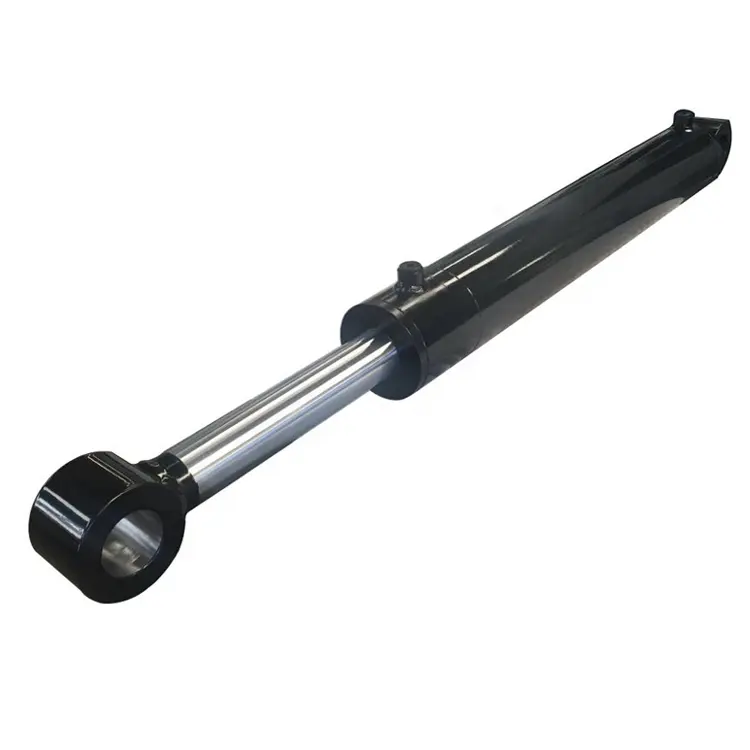
Lift cylinders are a type of hydraulic cylinder that converts fluid pressure into linear motion. They consist of a cylinder barrel, a piston, a rod, and seals. When hydraulic fluid is pressurized and directed into the cylinder, it exerts force on the piston, causing it to move in a linear direction.
Lifting Applications:
In lifting applications, the lift cylinder extends to raise or lift a load. As hydraulic fluid is pumped into the cylinder, the pressure increases, pushing the piston and rod outward. This extension of the cylinder generates the necessary force to lift the load. The lifting capacity of the cylinder depends on its design, including the diameter of the piston and the pressure rating of the system.
Lowering Applications:
For lowering applications, the lift cylinder retracts to lower the load. By controlling the flow of hydraulic fluid out of the cylinder, the pressure is reduced, allowing the weight of the load to push the piston and rod back into the cylinder. This controlled retraction enables smooth and controlled lowering of the load.
Lift cylinders are commonly used in various industries and applications where controlled vertical motion is required. Examples include lifting platforms, scissor lifts, dump trucks, hydraulic elevators, and material handling equipment. The ability to perform both lifting and lowering actions makes lift cylinders highly versatile and adaptable to different operational needs.
In summary, lift cylinders can be utilized for both lifting and lowering applications. By controlling the flow of hydraulic fluid, these cylinders can extend to lift a load and retract to lower it, offering flexibility and efficiency in a wide range of industries and equipment.


editor by CX 2023-11-17