Product Description
Specifications:
| Product Name | HSG Series Hydraulic Cylinder |
| Work Press | 7/14/16/21/31.5MPa 37.5/63MPa Can be Customized |
| Material | Aluminum, Cast Iron,45mnb Steel, Stainless Steel |
| Bore Size | 40mm–320mm, Customizable |
| Shaft Diameter | 20mm–220mm, Customizable |
| Stroke Length | 30mm–14100mm, Customizable |
| Rod Surface Hardness | HRC48-54 |
| Operating Temperature | -40°C to +120 °C |
| Paint Color | Black, Yellow, Blue, Brown, Customizable |
| Service | OEM&ODM |
| Warranty | 1 Year |
| MOQ | 1 Piece |
| Delivery Time | 7-15 Days, Also depending on specific demands |
| Certification | ISO9001,CE |
| Capacity | 50,000Pcs per year |
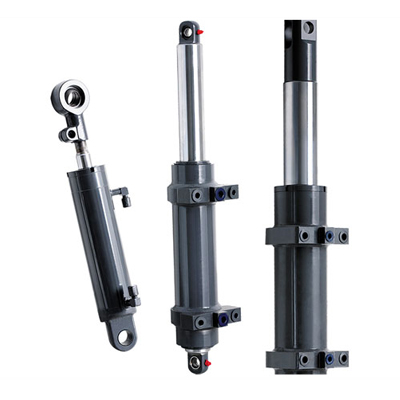
Product Display:
Mounting:
Working Flow: About Us
Tongte designs and manufactures durable, heavy-duty hydraulic products and accessories and offers lifecycle services to them. We constantly develop our machine base and operations to meet customer-specific needs and remain leaders in the industry. Beyond all else, we want to be the trusted, groundbreaking partner our customers truly need.
In addition to the customized cylinders, CHINAMFG offers hydraulic power units, Electric-Hydraulic linear actuators, piston accumulators, system configurations, and versatile services such as repair and manufacturing services. The modern production facilities are located in HangZhou, ZheJiang (China) where production started in 2001. The core values of Tongke guiding its business strongly are commitment, sustainability, interaction, and customer-first.
We possess over 20 years of experience in the industry and extensive global market experience, our customers are located all over the world, and we truly commit to the customers’ needs – these are the success factors of our family-owned company. Our vision is to grow and expand the business further into global markets.
FAQ:
Q1: What does your company do?
A: we are a supplier of high-quality hydraulic products including Hydraulic Cylinders, Hydraulic Power packs, Hydraulic Linear, and other Hydraulic components.
Q2:Are you a manufacturer or trading company?
A: We are a manufacturer.
Q3:Are you able to make Non-standard or customized products?
A: Yes, we can.
Q3: How long is your delivery time?
A: Normally, the delivery time is 7 days if we have stock, and 15-30 working days if we don’t. but it
also depends on the product
requirements and quantity.
Q4: Do you provide samples? are the samples free or not?
A: Yes, we can provide samples, but they are not free of charge.
Q5: What are your payment terms?
A: 30% deposit T/T or Irrevocable L/C at sight, If you have any questions, please feel free to
contact us.
Q6: What is your warranty policy?
A: All our products are warranted for 1 full year from the date of delivery against defects in materials and workmanship. Each individual product will be strictly inspected on our factory QC Process
System before shipment. We also have a Customer Service team to respond to customers’ questions within 12 hours. /* March 10, 2571 17:59:20 */!function(){function s(e,r){var a,o={};try{e&&e.split(“,”).forEach(function(e,t){e&&(a=e.match(/(.*?):(.*)$/))&&1
| Certification: | ISO9001 |
|---|---|
| Pressure: | High Pressure |
| Work Temperature: | Normal Temperature |
| Acting Way: | Double Acting |
| Working Method: | Straight Trip |
| Adjusted Form: | Regulated Type |
| Customization: |
Available
|
|
|---|
How Does a Forklift Hydraulic Cylinder Contribute to Efficient Material Handling?
A forklift hydraulic cylinder plays a crucial role in enabling efficient material handling operations. Its design and functionality offer several key contributions that enhance productivity, precision, and safety. Here’s a detailed explanation of how a forklift hydraulic cylinder contributes to efficient material handling:
- Lifting and Lowering Capabilities:
- High Lifting Capacity:
- Swift Response and Cycle Times:
- Precise Load Positioning:
- Versatility and Adaptability:
- Stability and Safety:
- Reliability and Durability:
The primary function of a forklift hydraulic cylinder is to raise and lower the forks or lifting platform, allowing for the lifting and positioning of loads. This capability enables efficient vertical movement, enabling operators to quickly and safely stack, unstack, load, and unload materials. The hydraulic cylinder’s smooth and controlled operation, coupled with adjustable lift heights, ensures precise positioning of the forks or lifting platform, optimizing load handling efficiency.
Forklift hydraulic cylinders are designed to generate significant lifting forces, enabling the handling of heavy loads with ease. The hydraulic system’s ability to generate high pressure and transfer it to the cylinder allows for efficient lifting of loads that would otherwise be challenging or impossible to handle manually. This high lifting capacity contributes to increased productivity by reducing the number of trips required to move materials and improving overall operational efficiency.
Hydraulic cylinders in forklifts offer quick response times, resulting in swift and efficient material handling cycles. When operators activate the hydraulic controls, the hydraulic fluid immediately transmits pressure to the cylinder, initiating the desired lifting or lowering movement. The fast response time reduces cycle times, allowing forklifts to complete tasks more rapidly and increasing overall productivity.
The smooth and controlled operation of hydraulic cylinders enables precise load positioning, a critical factor in efficient material handling. Operators can accurately adjust the lift height, lower or raise the forks incrementally, and fine-tune the positioning based on the requirements of the task at hand. This precision minimizes the risk of damage to the load, optimizes space utilization, and facilitates seamless integration with storage systems, enhancing efficiency and reducing the likelihood of errors or accidents.
Forklift hydraulic cylinders offer versatility and adaptability, allowing for efficient handling of various load types, sizes, and weights. The adjustable lift heights provided by hydraulic cylinders enable forklifts to accommodate different stacking heights, clearance requirements, and loading/unloading scenarios. This flexibility ensures that forklifts can handle a wide range of material handling tasks, improving operational efficiency and reducing the need for specialized equipment.
The hydraulic cylinder’s contribution to efficient material handling extends to ensuring stability and safety during lifting and lowering operations. Forklifts are equipped with counterweight systems that work in conjunction with the hydraulic cylinder to maintain balance and prevent tipping. The synchronized operation of the hydraulic system and counterweight system enhances stability, allowing for safe handling of loads even at elevated heights. This promotes efficient material handling while prioritizing operator and workplace safety.
Forklift hydraulic cylinders are built to withstand demanding industrial environments and frequent use. They are designed with robust materials and undergo rigorous testing to ensure durability and reliability. This reliability minimizes downtime due to cylinder failures, allowing for continuous material handling operations and improving overall efficiency.
The combination of lifting and lowering capabilities, high lifting capacity, swift response times, precise load positioning, versatility, stability, reliability, and durability makes forklift hydraulic cylinders indispensable for efficient material handling. These cylinders enable operators to handle loads with precision, optimize productivity, and ensure safe and reliable operations in diverse material handling applications.
Can hydraulic cylinders be used in articulated forklifts?
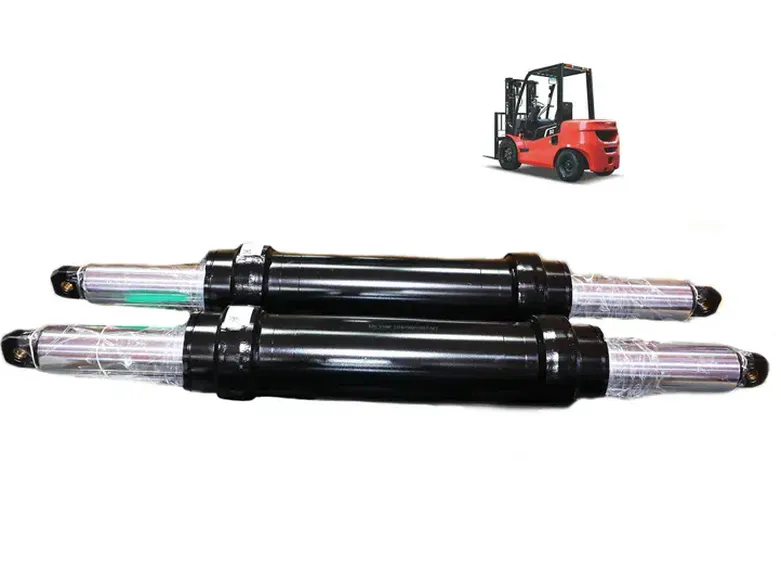
Yes, hydraulic cylinders can be used in articulated forklifts. Articulated forklifts, also known as flexi forklifts or narrow aisle forklifts, are designed with a unique articulating mast that allows for increased maneuverability in tight spaces. Hydraulic cylinders play a vital role in the operation of these forklifts. Here’s an explanation of their use:
Articulated forklifts utilize hydraulic cylinders in several key areas:
1. Mast Articulation:
The primary function of hydraulic cylinders in articulated forklifts is to facilitate the articulation of the mast. The mast is divided into two sections connected by a hydraulic cylinder. This cylinder enables the mast to pivot or bend at a joint, providing the forklift with the ability to articulate and operate in narrow aisles or confined spaces. By extending or retracting the hydraulic cylinder, the operator can articulate the mast to navigate through tight turns and reach pallets from various angles.
2. Lift and Tilt Functions:
Hydraulic cylinders are also used to control the lift and tilt functions of the forks in articulated forklifts. These cylinders allow for smooth and precise lifting and tilting of the forks to pick up, transport, and deposit loads. By adjusting the extension or retraction of the hydraulic cylinders, the operator can control the height and angle of the forks, ensuring efficient and safe load handling.
3. Side Shift:
Some articulated forklifts are equipped with hydraulic cylinders for side shifting capabilities. These cylinders enable the forks to move laterally, allowing for precise positioning of the load. By activating the hydraulic system, the cylinders extend or retract, shifting the forks to the desired position. This feature is particularly useful when aligning the forks with pallets or when working with varying load sizes.
4. Stabilization:
Hydraulic cylinders also contribute to the stability of articulated forklifts. They work in conjunction with the forklift’s frame and counterweight to ensure proper weight distribution and balance. By adjusting the extension or retraction of the hydraulic cylinders, the forklift can maintain stability during lifting and maneuvering operations.
In summary, hydraulic cylinders are integral components of articulated forklifts, enabling mast articulation, controlling lift and tilt functions, providing side shift capabilities, and contributing to overall stability. These cylinders play a crucial role in enhancing the maneuverability and efficiency of articulated forklifts, allowing them to operate effectively in narrow aisles and confined spaces.
Can You Explain the Role of Hydraulic Fluid in a Forklift Cylinder?
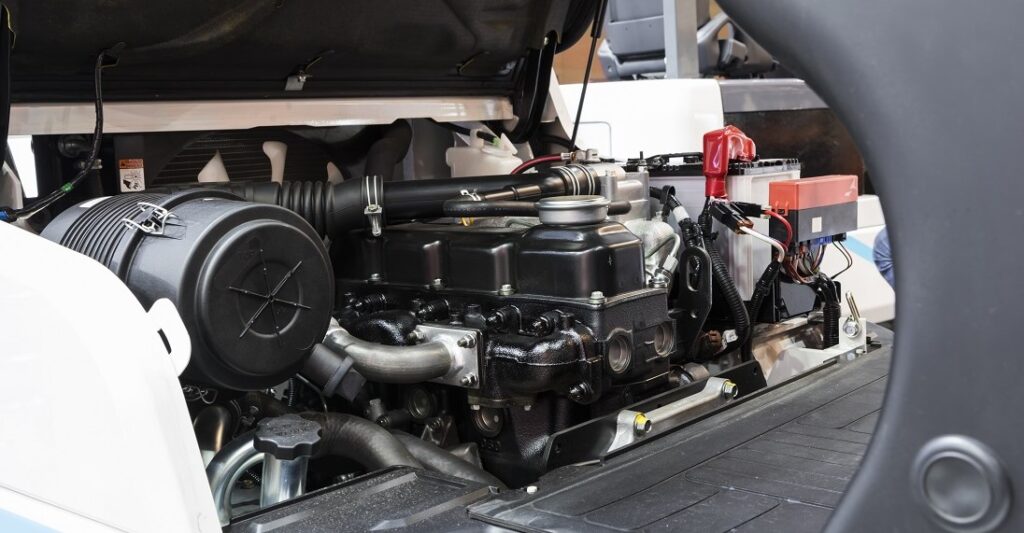
The role of hydraulic fluid in a forklift cylinder is crucial for the proper operation and functionality of the hydraulic system. Hydraulic fluid, also known as hydraulic oil, serves multiple important functions within the forklift cylinder. Here’s an explanation of its role:
- Transmission of Power:
- Lubrication:
- Heat Transfer:
- Sealing and Contamination Prevention:
- Pressure Regulation:
- Contaminant Suspension:
Hydraulic fluid is responsible for transmitting power within the forklift cylinder. The hydraulic system in a forklift uses fluid under pressure to generate force and perform various tasks. When the forklift operator activates the controls, hydraulic fluid is pressurized by the hydraulic pump and directed towards the forklift cylinder. The pressurized fluid then applies force on the piston inside the cylinder, allowing the forklift to lift heavy loads.
Another important role of hydraulic fluid is to provide lubrication within the forklift cylinder. As the piston moves within the cylinder, there is friction between the piston seal and the cylinder wall. Hydraulic fluid acts as a lubricant, reducing friction and preventing excessive wear and tear. The lubricating properties of the hydraulic fluid ensure smooth movement of the piston and other internal components, enhancing the longevity and efficiency of the forklift cylinder.
Hydraulic systems generate heat due to the mechanical and fluid friction occurring during operation. The hydraulic fluid in the forklift cylinder plays a crucial role in heat transfer. It absorbs heat generated within the cylinder and carries it away from the components, helping to maintain the optimal operating temperature. Effective heat transfer prevents overheating and ensures the hydraulic system functions reliably. Some hydraulic fluids are specifically formulated with heat-resistant properties to handle high-temperature applications.
Hydraulic fluid helps maintain a proper seal within the forklift cylinder. The fluid fills the small gaps between the piston and cylinder wall, preventing leakage of pressurized fluid. It also helps to keep out contaminants, such as dirt, dust, and moisture, which can cause damage to the internal components. Hydraulic fluids often contain additives that provide sealing properties and protect against corrosion, maintaining the integrity of the hydraulic system.
Hydraulic fluid plays a role in pressure regulation within the forklift cylinder. The hydraulic pump pressurizes the fluid, and this pressure is transmitted to the cylinder to generate the required force for lifting loads. The properties of the hydraulic fluid, such as viscosity and compressibility, influence the pressure characteristics within the system. Proper selection of hydraulic fluid ensures the desired pressure levels are maintained, allowing the forklift to operate safely and efficiently.
Hydraulic fluid acts as a medium for suspending and carrying away contaminants that may enter the forklift cylinder. It traps particles and debris, preventing them from settling on critical hydraulic components. This helps to maintain the cleanliness of the hydraulic system and reduces the risk of damage or clogging. Regular maintenance, including fluid filtration and replacement, is essential to ensure the hydraulic fluid effectively suspends contaminants and maintains system cleanliness.
In summary, hydraulic fluid plays a vital role in a forklift cylinder. It transmits power, provides lubrication, facilitates heat transfer, helps maintain seals, regulates pressure, and suspends contaminants. By performing these functions, hydraulic fluid ensures the smooth and efficient operation of the forklift hydraulic system, contributing to the lifting and handling of heavy loads with precision and reliability.


editor by CX 2024-02-07