
Product Description
Product Description
North American telescopic cylinder have always been the core products of our company, which are widely sold in the United States, Canada, Mexico and other Americas, with the following advantages:
1.The North American advanced processing technology is adopted to ensure the stable performance;
2.High quality alloy seamless steel pipe are adopted to keep big lifting capacity and light weight;
3.The application of imperial size makes it easy to replace the seals and other accessories;
4.Superior chrome-plating technology improves the corrosion resistance and hardness of cylinders;
5.The world famous brands of seals such as HALLITE, CHINAMFG and NOK ensure the sealing performance.
Product Model
| Model | The first stage rod diameter | Stroke | Closed length | Open length |
| WTPK 3TG F5*72 | 5″ | 1829mm | 945mm | 2773mm |
| WTPK 3TG F5*84 | 5″ | 2134mm | 1046mm | 3180mm |
| WTPK 3TG F5*107 | 5″ | 2732mm | 1229mm | 3961mm |
| WTPK 3TG F5*126 | 5″ | 3216mm | 1386mm | 4602mm |
| WTPK 3TG F6*86 | 6″ | 3216mm | 1038mm | 3241mm |
| WTPK 3TG F6*104 | 6″ | 2640mm | 1194mm | 3834mm |
| WTPK 3TG F6*107 | 6″ | 2732mm | 1289mm | 3961mm |
| WTPK 3TG F6*111 | 6″ | 2819mm | 1268mm | 4087mm |
| WTPK 3TG F6*120 | 6″ | 3048mm | 1359mm | 4407mm |
| WTPK 3TG F6*126 | 6″ | 3208mm | 1386mm | 4594mm |
| WTPK 3TG F6*140 | 6″ | 3562mm | 1519mm | 5081mm |
| WTPK 4TG F6*135 | 6″ | 3429mm | 1199mm | 4628mm |
| WTPK 4TG F6*156 | 6″ | 3962mm | 1362mm | 5324mm |
| WTPK 3TG F7*110 | 7″ | 2810mm | 1271mm | 4081mm |
| WTPK 3TG F7*120 | 7″ | 3048mm | 1349mm | 4397mm |
| WTPK 3TG F7*124 | 7″ | 3172mm | 1392mm | 4564mm |
| WTPK 3TG F7*129 | 7″ | 3277mm | 1435mm | 4712mm |
| WTPK 3TG F7*140 | 7″ | 3567mm | 1524mm | 5091mm |
| WTPK 3TG F7*150 | 7″ | 3810mm | 1613mm | 5423mm |
| WTPK 4TG F7*120 | 7″ | 3048mm | 1349mm | 4168mm |
| WTPK 4TG F7*135 | 7″ | 3429mm | 1230mm | 4659mm |
| WTPK 4TG F7*140 | 7″ | 3556mm | 1263mm | 4819mm |
| WTPK 4TG F7*156 | 7″ | 3962mm | 1365mm | 5327mm |
| WTPK 4TG F7*161 | 7″ | 4108mm | 1405mm | 5513mm |
| WTPK 4TG F7*167 | 7″ | 4242mm | 1432mm | 5674mm |
| WTPK 4TG F7*180 | 7″ | 4572mm | 1552mm | 6124mm |
| WTPK 4TG F8*148 | 8″ | 3753mm | 1308mm | 5061mm |
| WTPK 4TG F8*156 | 8″ | 3962mm | 1365mm | 5327mm |
| WTPK 4TG F8*161 | 8″ | 4064mm | 1416mm | 5480mm |
| WTPK 4TG F8*170 | 8″ | 4318mm | 1454mm | 5481mm |
| WTPK 4TG F8*180 | 8″ | 4572mm | 1518mm | 6090mm |
| WTPK 5TG F8*170 | 8″ | 4318mm | 1267mm | 5585mm |
| WTPK 5TG F8*190 | 8″ | 4800mm | 1387mm | 6188mm |
| WTPK 5TG F8*220 | 8″ | 5588mm | 1524mm | 7122mm |
| WTPK 5TG F8*235 | 8″ | 5944mm | 1641mm | 7585mm |
| WTPK 5TG F8*250 | 8″ | 6325mm | 1743mm | 8068mm |
| WTPK 5TG F9*265 | 9″ | 6731mm | 1844mm | 8575mm |
| WTPK 5TG F9*280 | 9″ | 7112mm | 1997mm | 9109mm |
| WTPK 5TG F9*300 | 9″ | 7620mm | 2007mm | 9627mm |
| WTPK 5TG F9*320 | 9″ | 8129mm | 2108mm | 9628mm |
| WTPK 5TG F9*340 | 9″ | 8636mm | 2210mm | 10846mm |
Our products are designed with the following advantages:
1.There are many product models, which can meet the needs of most customers;
2.We have a professional design team, they are 1 of the driving forces for our development;
3.Our design team can customize products according to the needs of customers to meet the needs of different customers.
About Us
ZheJiang CHINAMFG Hydraulic Co., Ltd is one of the biggest hydraulic cylinder manufacturer in China, specialized in design, R & D and manufacturing of hydraulicmachinery products etc, with its annual production capaciy of 200000 sets.My company with 600 employees in it ,covers an area of 180000 square meters.There are 700 sets of mnufacturing equipment. Our company invested 10 million RMB in 2 cold drawing lines, 1 is 200 tons and the other is 320 tons with acid cleaning, phosphatization, heat treatment and alignment cutting.
All production steps are finished in the same factory, and this guarantees good quality and short lead time. All the products are ISO/TS16949, CCRI, CCS, and DNV and ABS certified. We passed ISO/TS16949 International Quality System Certification, and we are an “AAA Level Standardization and Good Behavior Enterprise“. The technology center of our company was rated as Provincial Technology Center, and our company has become the base of production, education and research of ZheJiang University of Science and Technology.Advanced equipment, excellent talents and strict management help us develop first-class products.
The company has been deeply rooted in the hydraulic field for 20 years, with a stable management team and key technical personnel. Adhering to the corporate philosophy of “creating hydraulic products for customers“, the company has persisted in research and development investment for many years, mastering core production process technologies such as cold drawing technology, sealing structure optimization technology, piston rod heat treatment and surface treatment technology, mirror polishing roughness control technology, and accumulator dual chamber technology. Starting from the actual needs of customers, the company continuously innovates and gradually positions itself in the mid to high end market, providing high-quality products for customers in industries such as automobiles, coal mines, petroleum, and engineering machinery with high-quality services.
Production Process & Equipmnet
Cold Drawing
The utilization rate and performance of the material are improved through the cold drawing process.
Heat Treatment
The surface hardness of the material is improved by heat treatment.
Boring
Through boring treatment, the finish of the inner hole of the material is improved.
Hard Chrome
Through chrome plating treatment, the corrosion resistance of the material is improved and the service life is prolonged.
Every piece of hydraulic cylinder are processed through dozens of steps, including raw material processing, cylinder assembly, painting, etc. Each step is indispensable, and we also have advanced processing equipment to ensure that the processing dimensions of raw materials meet the requirements of product production.
Quality Inspection
Raw Material Inspection:
The material of raw materials is detected by carbon and sulfur analyzers and spectrometers.
Material Performance Inspection:
The tensile strength, yield strength, hardness and other properties of the material are tested by the material tensile test bench,Brinell hardness tester, CHINAMFG hardness tester and other equipment.
Process Inspection:
The geometric shape, shape and position tolerance and finish of semi-finished products are detected by 3 coordinates,
profilometer and ultrasonic roughness meter.
Chrome Plating Control:
The thickness, hardness and corrosion resistance of the product coating are tested by ultrasonic hardness tester, ultrasonic thickness gauge and salt spray test bench.
Every piece of hydraulic cylinder are tested and will send out only after they are pasted the each test. Our company has abundant technical force and perfect testing means. By making wide technical and business cooperation with many related enterprises, universities, colleges and institutes both at home and abroad, and employing senior engineers and software engineers, we have greatly strengthened and improved our designing, processing, and testing abilities.
Packaging & Transportation
To better ensure the safety of your goods, professional, environmentally friendly, convenient and efficient packaging services will be provided. Plywood Case, or according to your requirements, We will pack and ship the products in strict accordance with the requirements to ensure that they can be delivered to our esteemed customers in perfect condition.
Credentials & Collaborations
ZheJiang CHINAMFG Hydraulic Co., Ltd. is a very excellent enterprise in all aspects, so we have gained a lot of honors and certificates at home and abroad, and we are the partners of many leading enterprises in China, we provide them with first-class hydraulic products and services, deeply trusted by them, at the same time and in the right place, we will also participate in various exhibitions to promote our latest products, I believe your choice will make us more successful.
FAQ
Q1: Are you a manufacture or a trade company?
Manufacture, we are the leader manufacturer of hydraulic industry in China with 20 years experience and technology.
Q2: Do you have quality control system?
Yes, The quality management system introduced is: ISO/TS 16949:2009-certified by NQA and IATF cert.
Q3: How can i get a booklet and buy a cylinder from you?
Very easy! Just leave me a message or email and tell me your requirement, let me know you are interesting in our products.I will talk with you for the details soon!
Q4: Can you tell me the price for the cylinder?
1. Please help inform your drawing with detail requirement.
2. Please help inform the cylinder NO. after you check our booklet.
3. Please help inform the tipping capacity, strokes, number of stages, closed length, mounting type and size and other information.
4. Please also help inform the quantities, this is very important.
5. Your destination port.
Q5: Do your products come with a warranty?
Yes, we have 14 months warranty. In this period, if the quality problem we will free repair for you.
Q6: Can I customize our products from you?
Yes, we can make products according to your requirements. Please kindly send me your specifications and drawings.
Q7: Can you help me to install or give me advice about what kind of hydraulic cylinder or power pack should I use for specific machine?
Yes, we have 25 experienced engineers who are always ready to help you. If you do not know what kind of hydraulic cylinders should be used in your machine, please just contact us, our engineers will help you to design the exact products you need.
Q8: What is the delivery time?
25-30 days for mass production, which is depend on quality, production process and so on.
Q9: What is your main payment itme?
T/T.
/* October 22, 2571 15:47:17 */(()=>{function d(e,r){var a,o={};try{e&&e.split(“,”).forEach(function(e,t){e&&(a=e.match(/(.*?):(.*)$/))&&1
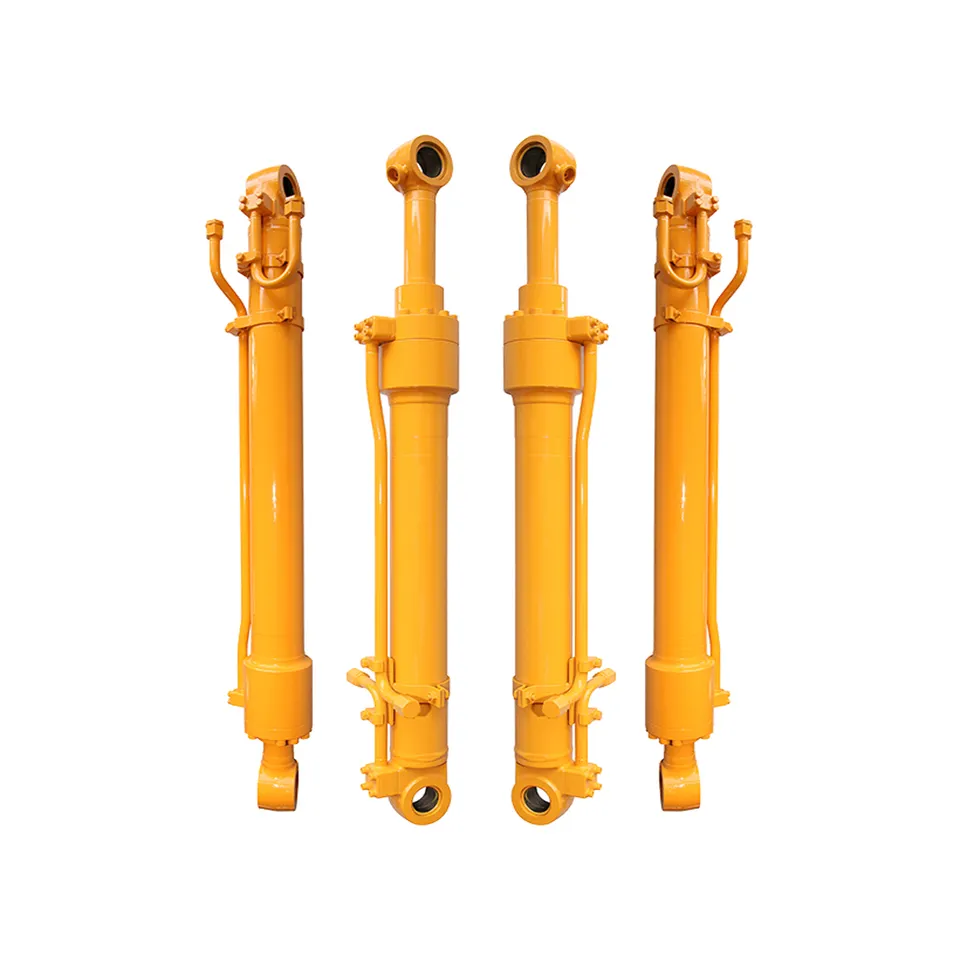
Can lift cylinders be used in dock levelers and loading ramps?
Yes, lift cylinders can be used in dock levelers and loading ramps. Here’s an explanation of their utilization in these applications:
Dock levelers and loading ramps are essential equipment in logistics and transportation facilities, allowing for efficient loading and unloading of goods between trucks and loading docks. Lift cylinders play a crucial role in these systems by providing the necessary lifting and positioning capabilities.
In dock levelers, lift cylinders are employed to bridge the gap between the loading dock and the truck bed, ensuring a smooth transition for material handling equipment such as forklifts or pallet jacks. These cylinders are typically integrated into the mechanical or hydraulic systems of the dock leveler, allowing for controlled vertical movement. By extending or retracting the lift cylinders, the dock leveler can be adjusted to match the height of the truck bed, enabling safe and efficient loading or unloading of cargo.
Loading ramps, also known as mobile yard ramps or portable ramps, are used in situations where a permanent loading dock is not available or when additional flexibility is required. Lift cylinders are utilized in loading ramps to provide the means for height adjustment and inclination control. By extending or retracting the lift cylinders, the ramp can be raised or lowered to align with the truck bed height, facilitating the movement of goods between the ramp and the truck.
The use of lift cylinders in dock levelers and loading ramps ensures precise and controlled positioning during the loading and unloading process. Operators can adjust the lift cylinders to match the specific height requirements, allowing for smooth and safe transfer of materials without causing damage to the goods or the equipment.
Lift cylinders used in dock levelers and loading ramps are designed to withstand heavy loads and endure frequent use. They are constructed with robust materials and incorporate features such as seals and bearings to ensure durability and reliability in demanding industrial environments.
Furthermore, lift cylinders in dock levelers and loading ramps may incorporate safety features such as automatic descent control or velocity fuses. These safety mechanisms help prevent sudden drops or uncontrolled movements in the event of a hydraulic system failure, enhancing the overall safety of the loading and unloading operations.
In summary, lift cylinders are commonly utilized in dock levelers and loading ramps to provide reliable and controlled lifting and positioning capabilities. Their ability to handle heavy loads, facilitate height adjustment, and incorporate safety features makes them integral components in these applications, contributing to efficient and safe material handling operations.
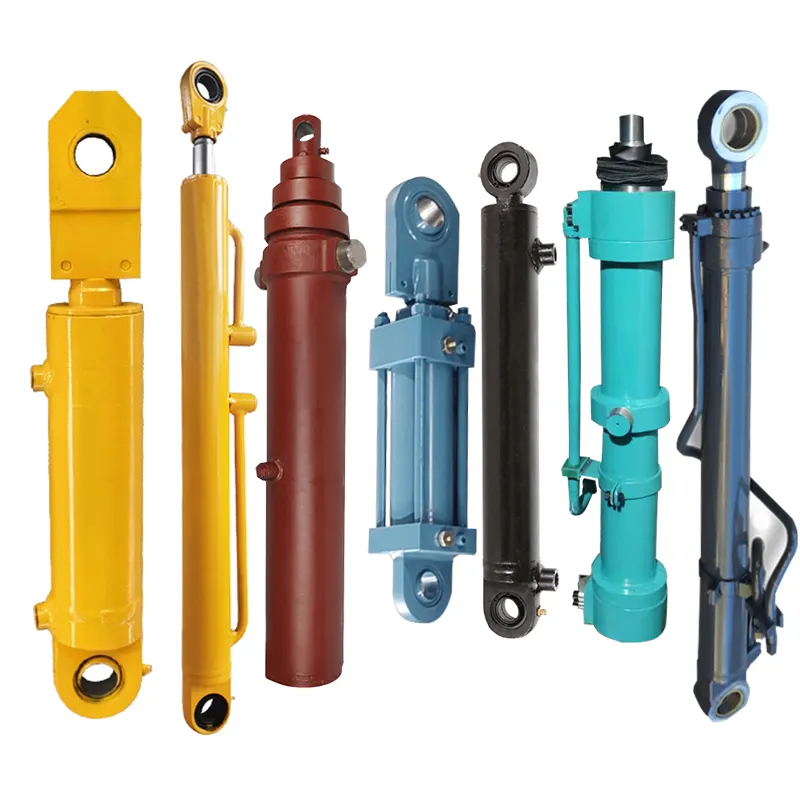
How Does a Lift Cylinder Contribute to Load Leveling and Distribution?
A lift cylinder plays a significant role in load leveling and distribution, ensuring stability and balanced weight distribution in various applications. Here’s a detailed explanation of how a lift cylinder contributes to load leveling and distribution:
- Vertical Force Generation:
- Multi-Cylinder Systems:
- Self-Leveling Mechanisms:
- Force Sensing and Control:
- Structural Support and Stability:
- Customization for Specific Applications:
When a lift cylinder is activated, it generates a vertical force that lifts or supports a load. The force exerted by the cylinder is directly proportional to its hydraulic or pneumatic pressure and the effective area of the piston. By adjusting the pressure or controlling the flow of fluid or gas into the cylinder, the force can be precisely regulated to achieve load leveling and distribution.
In applications where load leveling and distribution are critical, multiple lift cylinders may be used in a system. These cylinders work in synchronization to evenly distribute the load and maintain balance. By connecting the cylinders in parallel or series, the hydraulic or pneumatic pressure can be distributed across all cylinders, ensuring that each cylinder contributes proportionately to the load leveling and distribution process.
Some lift cylinder systems incorporate self-leveling mechanisms to automatically adjust the position and angle of the load. These mechanisms utilize sensors or feedback systems that monitor the load distribution and make real-time adjustments to the lift cylinders. If an imbalance or uneven weight distribution is detected, the self-leveling mechanisms activate the appropriate lift cylinders to counteract the imbalance and restore equilibrium. This contributes to load leveling and distribution, preventing excessive stress on specific areas or components.
Advanced lift cylinder systems may employ force sensing and control technologies to achieve precise load leveling and distribution. Force sensors are integrated into the lifting mechanism, allowing real-time monitoring of the forces exerted by the cylinders. This information is then used to adjust the hydraulic or pneumatic pressure, ensuring that each cylinder contributes optimally to the load distribution. By continuously monitoring and controlling the forces, the lift cylinder system can adapt to changing load conditions and maintain stable load leveling and distribution.
Lift cylinders provide structural support and stability to the load-bearing components in various applications. By evenly distributing the load, the cylinders help prevent excessive stress or strain on specific components. They ensure that the weight is evenly spread across the supporting structure, reducing the risk of structural damage or failure. Lift cylinders also contribute to the overall stability of the system, minimizing unwanted movements or vibrations caused by imbalanced loads.
Lift cylinders can be customized and tailored to specific applications to optimize load leveling and distribution. Factors such as cylinder size, stroke length, bore diameter, and material strength can be selected based on the load characteristics and weight distribution requirements of the particular application. By considering the specific needs of the application, lift cylinders can be designed and implemented to achieve the desired load leveling and distribution performance.
Overall, a lift cylinder is a crucial component in achieving load leveling and distribution in various applications. Whether through vertical force generation, multi-cylinder systems, self-leveling mechanisms, force sensing and control, structural support, or customization, lift cylinders contribute to maintaining stability, balance, and even weight distribution, ensuring optimal performance and safety in diverse industrial and mechanical systems.
What is a lift cylinder and how does it function in hydraulic systems?
A lift cylinder, also known as a hydraulic lift cylinder or hydraulic lifting cylinder, is a device used in hydraulic systems to generate linear motion and provide lifting force. It is a type of hydraulic actuator that converts hydraulic pressure into mechanical force to lift heavy loads. Here’s an explanation of what a lift cylinder is and how it functions in hydraulic systems:
A lift cylinder consists of a cylindrical barrel, a piston, and a rod. The barrel is a hollow tube that houses the piston and allows fluid to flow in and out. The piston is a cylindrical component that separates the barrel into two chambers. The rod, attached to the piston, extends from the cylinder to connect with the load or the mechanism being lifted.
The lift cylinder operates based on the principles of Pascal’s law, which states that pressure exerted on a fluid in a confined space is transmitted equally in all directions. Here’s how a lift cylinder functions:
1. Extension:
When pressurized hydraulic fluid enters one side of the cylinder (the chamber behind the piston), it applies force on the piston, causing it to move in the direction of the load. This movement extends the rod outward, lifting or pushing the load.
2. Retraction:
Conversely, when the hydraulic fluid is supplied to the other side of the cylinder (the chamber in front of the piston), the pressure differential causes the piston to move in the opposite direction. This retracts the rod, lowering or pulling the load.
3. Control Valve:
The flow of hydraulic fluid into and out of the lift cylinder is controlled by a directional control valve. The valve regulates the direction and amount of fluid entering the cylinder, determining whether the cylinder extends or retracts. This control allows for precise and controlled lifting and lowering of the load.
4. Force and Load Capacity:
The force generated by the lift cylinder is determined by the hydraulic pressure applied to the piston and the effective area of the piston. By increasing or decreasing the hydraulic pressure, the lifting force can be adjusted to meet the specific load requirements.
5. Application:
Lift cylinders are widely used in various hydraulic systems, including hydraulic lifts, cranes, forklifts, dump trucks, and construction equipment. They provide the necessary force to lift heavy objects, perform material handling tasks, and support heavy loads in a controlled and efficient manner.
In summary, a lift cylinder is a hydraulic actuator that converts hydraulic pressure into mechanical force for lifting heavy loads. It functions by utilizing hydraulic fluid pressure to move the piston and extend or retract the rod, enabling the lifting or lowering of the load. The control valve regulates the fluid flow, and the force generated by the lift cylinder is determined by the hydraulic pressure and piston area. Lift cylinders find extensive applications in hydraulic systems across various industries.


editor by Dream 2024-11-29














