Product Description
Single Acting Hydraulic Cylinder
Product Description
Factory Design Customized Hydraulic Oil Cylinder characteristics: Assemble with best quality seals kits, Hallite, and other brands to bring the better seal slick and the stronger persistence.
The process with the advanced technology by CNC machine tools, automatic plating, and painting equipment to ensure all the parts have the lower surface roughness and the higher performance level.
Own advanced special buffer device with independent intellectual property rights which can effectively absorb the shock to protect the cylinder work smoothly and reliable in performance.
Specifications
| Item | Specifications |
| Product Name: | Multi-stag Hydraulic Cylinder |
| Certificate: | CE, ISO9001 |
| Production Capacity: | 500,000 pcs per year |
| Sample Time: | 7-10 days |
| Brand | RL or customer’s logo |
| Service | OEM & ODM |
| Piston Rod | Chrome polished piston rod |
| Seal Type | Customer’s requirement |
| Tube | High tensile cold drawn tube, precision honed for extended seal life |
| Delivery Time | Based on order quantity. normally 15-30 days. |
| Price Advantage | Competitive factory price with guaranteed quality |
| Business Type | Manufacturer & Exporter |
Application
Hydraulic Cylinder Product Application
RL products are produced for OEM applications in a wide variety of CHINAMFG industries, including manufacturing engineering machinery, loaders hydraulic cylinders, vehicle cylinders, construction, forestry, waste management, mining, material handling, industrial applications, agriculture, manufacturing, transportation, marine applications, and oil field equipment. Our success has been built on the engineering expertise and manufacturing capabilities we offer to meet the very specific demands of our industry clients.
Hydraulic Cylinder Production
We have the advanced CNC machine tools, a horizontal machining center, a welding robot, parts cleaning agent, automatic assembly lines, automatic painting equipment, etc. to hydraulic cylinder ensure 360-degree quality control of the production process.
Why Choose Us
We specialize in working with every customer to share ideas and gather critical information regarding hydraulic cylinder fit and performance requirements for your specific application.RL has extensive experience in custom hydraulic cylinder designs. We strive to develop dynamic, innovative, and dependable hydraulic and machining solutions that exceed your expectations.
/* January 22, 2571 19:08:37 */!function(){function s(e,r){var a,o={};try{e&&e.split(“,”).forEach(function(e,t){e&&(a=e.match(/(.*?):(.*)$/))&&1
| Certification: | CE, ISO9001 |
|---|---|
| Pressure: | High Pressure |
| Work Temperature: | Normal Temperature |
| Samples: |
US$ 120/pieces
1 pieces(Min.Order) | Order Sample |
|---|
| Customization: |
Available
|
|
|---|
.shipping-cost-tm .tm-status-off{background: none;padding:0;color: #1470cc}
|
Shipping Cost:
Estimated freight per unit. |
about shipping cost and estimated delivery time. |
|---|
| Payment Method: |
|
|---|---|
|
Initial Payment Full Payment |
| Currency: | US$ |
|---|
| Return&refunds: | You can apply for a refund up to 30 days after receipt of the products. |
|---|
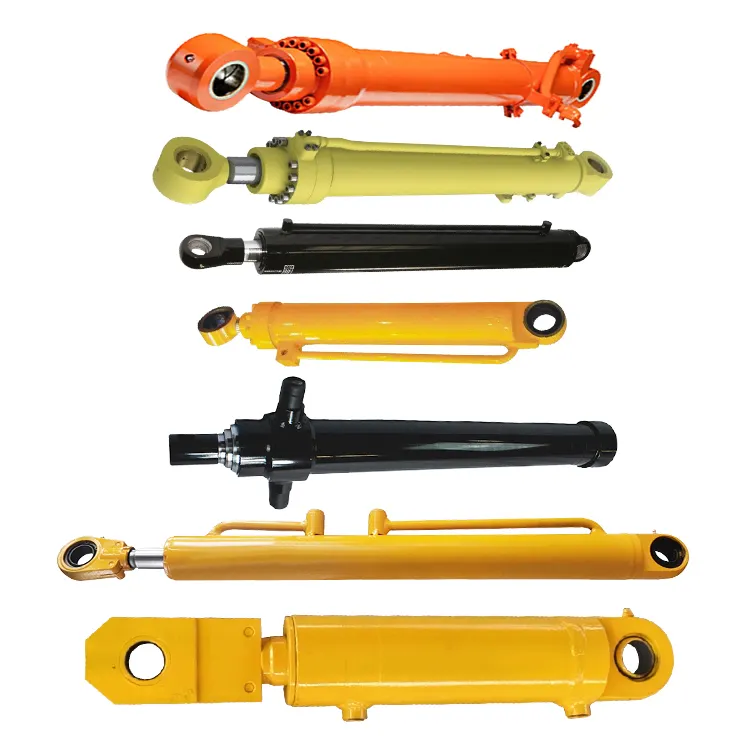
Can hydraulic cylinders be used in narrow-aisle forklifts?
Yes, hydraulic cylinders can be used in narrow-aisle forklifts. In fact, hydraulic cylinders play a crucial role in the lifting and operational capabilities of these specialized forklifts designed for maneuvering in narrow spaces. Here’s an explanation of their use:
Narrow-aisle forklifts, also known as narrow-aisle reach trucks or very narrow aisle (VNA) forklifts, are designed to operate in tight spaces with narrow aisles and high racking systems. These forklifts rely on hydraulic systems, including hydraulic cylinders, to perform their lifting and positioning functions.
The hydraulic cylinder in a narrow-aisle forklift is responsible for vertically extending and retracting the mast assembly, which carries the load-carrying forks. The mast assembly typically consists of multiple stages that can reach significant heights to access the high racking systems.
When the operator activates the lifting control, hydraulic fluid is pressurized and directed to the hydraulic cylinder. The cylinder extends vertically, raising the mast and forks to the desired height. The hydraulic system provides precise control over the lifting speed and positioning, allowing for efficient and accurate load handling in narrow spaces.
In addition to the lifting function, hydraulic cylinders can also contribute to the tilting and side-shifting capabilities of narrow-aisle forklifts. Some models are equipped with hydraulic cylinders that enable the tilting of the mast or the forks, allowing for better load positioning and stability. Hydraulic cylinders can also be employed to provide side-shifting functionality, enabling the lateral movement of the forks for improved load placement.
The use of hydraulic cylinders in narrow-aisle forklifts ensures that these specialized machines have the necessary power and control to operate in tight spaces. The hydraulic system provides the force required for lifting and positioning loads, while also offering the flexibility to tilt or shift the forks as needed.
In summary, hydraulic cylinders are an integral part of narrow-aisle forklifts. They enable the vertical lifting of the mast assembly and contribute to tilting and side-shifting functionalities. By utilizing hydraulic power, these forklifts can efficiently navigate narrow aisles and handle loads in high racking systems with precision and control.
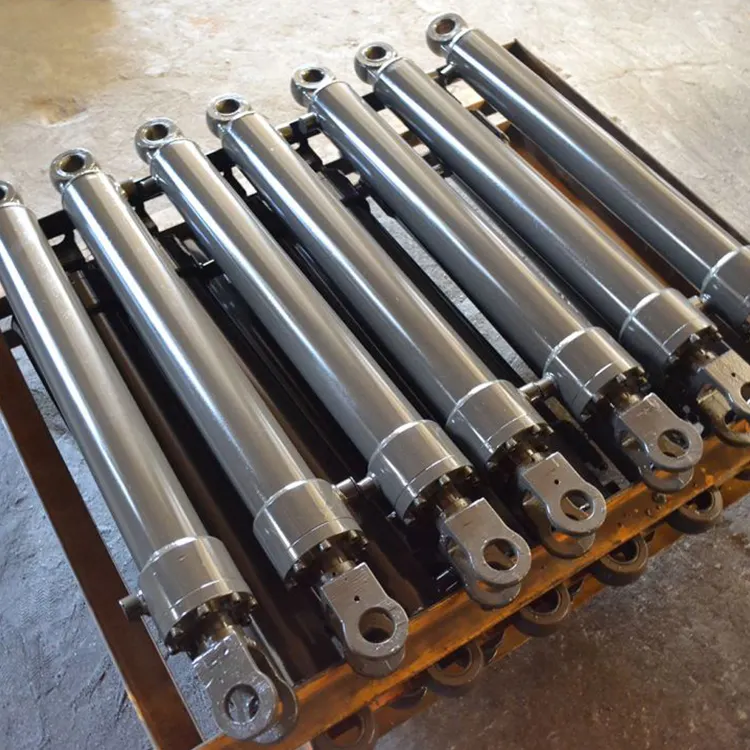
How does a forklift hydraulic cylinder handle variations in cylinder mounting?
A forklift hydraulic cylinder is designed to handle variations in cylinder mounting to accommodate different forklift configurations and applications. Here’s an explanation of how it can handle such variations:
The forklift hydraulic cylinder handles variations in cylinder mounting in the following ways:
1. Adjustable Mounting Brackets:
Many forklift hydraulic cylinders feature adjustable mounting brackets. These brackets allow for flexibility in positioning and aligning the cylinder to fit the specific requirements of the forklift. By adjusting the mounting brackets, the cylinder can be securely attached to the forklift frame, accommodating variations in mounting points, angles, and distances.
2. Threaded Rod Ends:
Threaded rod ends are commonly used in forklift hydraulic cylinders. These rod ends provide a threaded connection that allows for fine adjustments in cylinder mounting. By rotating the rod ends, the cylinder’s position can be modified, compensating for variations in mounting locations or angles.
3. Clevis Mounts:
Clevis mounts are another type of mounting mechanism used in forklift hydraulic cylinders. These mounts consist of a clevis bracket that attaches to the cylinder and a clevis pin that connects to the forklift. Clevis mounts offer a range of mounting positions to accommodate different forklift configurations. They provide flexibility in cylinder attachment, allowing for adjustments to compensate for variations in mounting points and angles.
4. Customizable Mounting Options:
In some cases, forklift hydraulic cylinders can be customized to meet specific mounting requirements. Manufacturers may offer options for custom brackets, rod ends, or mounting configurations based on the forklift’s unique specifications. This customization ensures proper alignment and secure attachment of the cylinder, even in situations with significant variations in mounting.
5. Alignment and Adjustment Mechanisms:
Forklift hydraulic cylinders may incorporate alignment and adjustment mechanisms to facilitate proper cylinder mounting. These mechanisms, such as swivel joints or adjustable linkage systems, allow for fine-tuning and alignment of the cylinder during installation. They enable the operator or technician to compensate for any variations in mounting, ensuring optimal performance and functionality.
In summary, a forklift hydraulic cylinder can handle variations in cylinder mounting through adjustable mounting brackets, threaded rod ends, clevis mounts, customizable mounting options, and alignment and adjustment mechanisms. These features provide flexibility and adaptability, allowing the cylinder to be securely mounted and properly aligned to ensure efficient and reliable operation in different forklift configurations and applications.
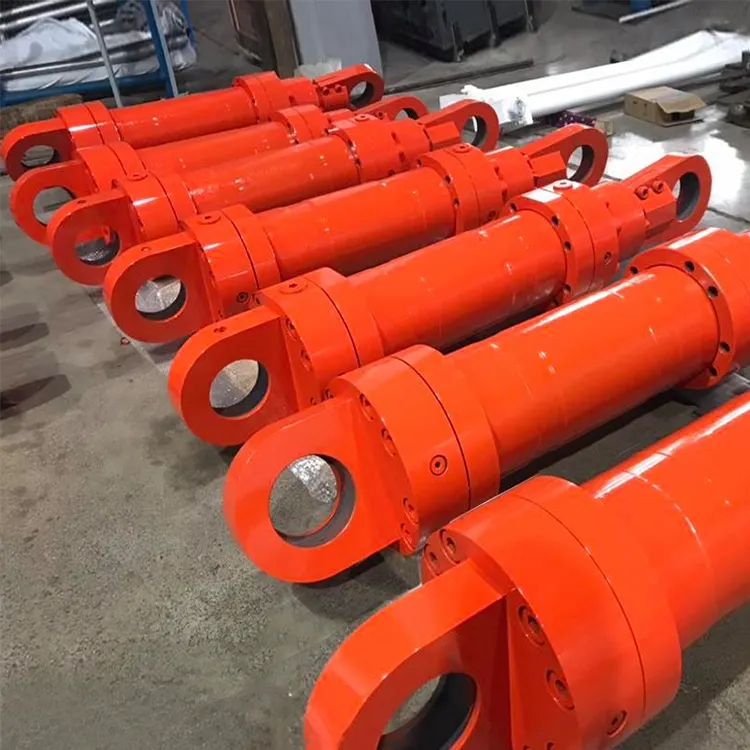
What are the Safety Considerations When Using Forklifts with Hydraulic Cylinders?
When using forklifts with hydraulic cylinders, it is essential to prioritize safety to prevent accidents, injuries, and property damage. Hydraulic systems and cylinders are integral components of forklifts, and understanding and implementing safety considerations is crucial. Here are important safety considerations to keep in mind:
- Operator Training and Certification:
- Regular Inspections and Maintenance:
- Load Capacity and Stability:
- Proper Load Positioning and Handling:
- Avoiding Overextension and Collisions:
- Proper Use of Controls:
- Clear Communication and Awareness:
- Emergency Procedures:
Operators must receive thorough training and certification specific to forklift operations. Proper training should cover the safe operation of hydraulic systems and cylinders, including understanding the controls, load capacity, stability, and safe maneuvering techniques. Well-trained operators are more likely to handle hydraulic cylinders safely and minimize the risk of accidents or misuse.
Forklifts and their hydraulic systems, including cylinders, should undergo regular inspections and maintenance to ensure they are in proper working condition. Inspections should identify any signs of wear, leaks, or damage, and maintenance tasks such as lubrication and component replacements should be performed as recommended by the manufacturer. Well-maintained hydraulic cylinders contribute to safe and reliable forklift operations.
Understanding and adhering to the forklift’s load capacity limitations is crucial for safe operation. Overloading a forklift can lead to instability and potential tip-overs. Operators should be aware of the load capacity rating and ensure that loads are properly balanced and secured. Maintaining the forklift’s stability, especially when using the hydraulic cylinder to lift or lower loads, is essential to prevent accidents caused by tipping or loss of control.
Safe load positioning and handling contribute to overall forklift safety. Operators should ensure that loads are positioned correctly on the forks, centered and secure, to prevent them from shifting or falling during transport. When using the hydraulic cylinder to raise or lower loads, operators should do so gradually and avoid sudden movements that may destabilize the forklift or cause the load to swing uncontrollably.
Overextending the hydraulic cylinder beyond its recommended limits can lead to failure or instability. Operators should be aware of the maximum extension and retraction limits of the cylinder and avoid exceeding them. Additionally, operators must exercise caution to prevent collisions with objects or structures, as impacts can damage the hydraulic cylinder, compromise its integrity, and pose safety risks.
Operators should be familiar with the forklift’s hydraulic control system and use the controls properly. This includes understanding the functions of each control, such as raising, lowering, tilting, or extending the forks, and using them with precision and care. Mishandling the hydraulic controls can result in sudden movements or unintended actions, potentially causing accidents or injuries.
Clear communication and situational awareness are essential for safe forklift operations. Operators should maintain clear visibility, use mirrors or cameras if available, and be aware of their surroundings to avoid collisions with pedestrians, other vehicles, or obstacles. Effective communication with co-workers and signaling to indicate forklift movements can help prevent accidents and ensure a safe working environment.
Operators should be familiar with emergency procedures and know how to respond in case of malfunctions, leaks, or other emergencies involving the hydraulic cylinder. Proper training should cover emergency shutdown procedures, reporting protocols, and evacuation plans to ensure a timely and coordinated response that minimizes risks to personnel and property.
By prioritizing operator training, regular inspections, adherence to load capacity limits, proper load handling, cautious control usage, and clear communication, forklifts with hydraulic cylinders can be operated safely and efficiently. Implementing these safety considerations helps reduce the risk of accidents, protect personnel, and maintain a secure work environment.


editor by CX 2024-03-30