Product Description
Introduction
This 3-stage Bailey Hydraulics Maxim 12-Ton Telescopic Cylinder is designed with multiple stages that enable longer strokes to be achieved using less space. Features 2 3/8in, 3in and 3 5/8in. sections for versatility. The collapsed cylinder size plus long stroke capability makes this an ideal choice for dump beds, trailers, and other applications where a constant force is not required.
Feature
1. Multiple stages enable longer strokes to be achieved using less space
2. Angular swivels allow for a small amount of misalignment while still functioning fully
3. Micro-honed inside and chrome plated outside to decrease corrosion and increase wear resistance and durability
4. Handles continuous loads of 25
SKU: 210704
Specification
| Working pressure | 2500PSI |
| Body OD | 4.43 in |
| Stroke | 90 in |
| Rod diameter | 2 in |
| Retracted | 38.75 in |
| Extended | 128.75 in |
| Port size | 1/2″ NPT |
| Pin diameter | 1.0 &1.5 in |
| Weight | 140 Ib |
| Stages | 3 |
| Plunger Dia | 3 5/8″, 3″, 2 3/8″ |
Hydraulic cylinders are the most effective and efficient method of pushing, pulling, lifting, and lowering.
Nowadays hydraulic cylinders play an essential role in daily application and industry:
√ Mining
√ Earthmoving & Construction
√ Agriculture &Forestry
√Waste Management & Material Handing
√Ship crane & offshore
Selecting the right cylinders for an application is critical in obtaining maximum performance and reliability.
ROCA team takes all your concerns into consideration to suit your hydraulic cylinder requirements.
Together, we work out the best design solution for your application.
FAQ
Q1.Do you have MOQ?
Depending on different ideas, Can be negotiated. The larger the quantity is, the competitive the unit price will be.
Q2.Should the customer pay the delivery fee, How much is it?
For the delivery fee, many samples are being requested to be sent, so we must get the delivery fee.
If you tell me to use the appointed Express, you will give me your express account or you will pay according to the Express.
If you do not request, I will choose a cheap one in China.
Q3.How about the after sale service?
1) We will always keep the quality the same as the buyer’s samples and if there is something with the quality, we will make compensation for our customers.
2) We will suggest our packing and take charge in our packing, we will keep the goods safe in the delivery.
3) We will trace the goods from the production to selling, we will solve the problems in the selling for our customers.
Q4.When can I get a price?
We usually quote within 24 hours after we get your inquiry.
Q5: Are you a trade company or manufacturer?
We are a professional manufacturer with our own factory.
| Certification: | GS, RoHS, CE, ISO9001 |
|---|---|
| Pressure: | Medium Pressure |
| Work Temperature: | Normal Temperature |
| Customization: |
Available
|
|
|---|
.shipping-cost-tm .tm-status-off{background: none;padding:0;color: #1470cc}
|
Shipping Cost:
Estimated freight per unit. |
about shipping cost and estimated delivery time. |
|---|
| Payment Method: |
|
|---|---|
|
Initial Payment Full Payment |
| Currency: | US$ |
|---|
| Return&refunds: | You can apply for a refund up to 30 days after receipt of the products. |
|---|
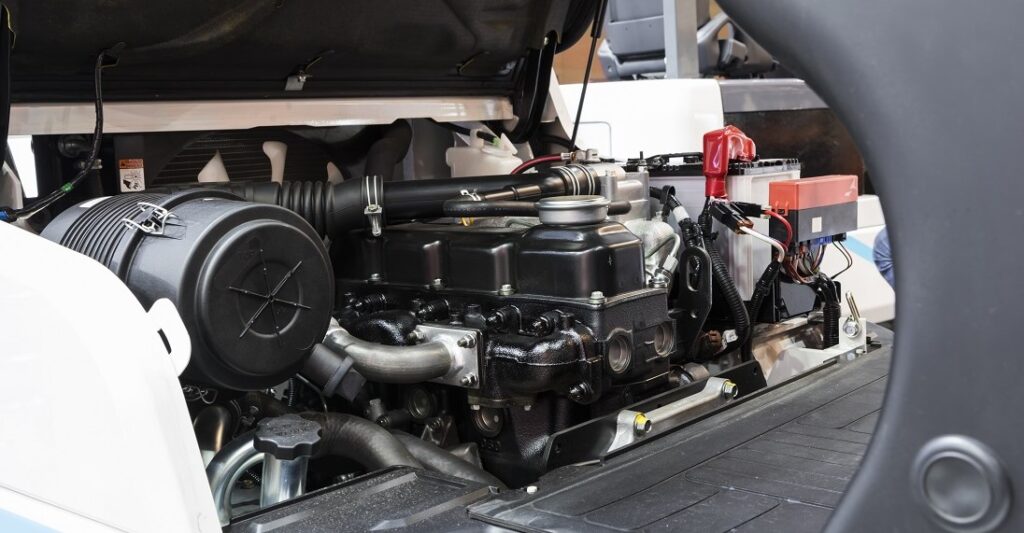
How Does a Forklift Hydraulic Cylinder Handle Variations in Temperature?
A forklift hydraulic cylinder is designed to handle variations in temperature effectively to ensure reliable and consistent performance. The hydraulic system, including the cylinder, is engineered to withstand both high and low temperatures commonly encountered in different operating environments. Here’s a detailed explanation of how a forklift hydraulic cylinder handles variations in temperature:
- Temperature-Resistant Seals:
- Hydraulic Fluid Selection:
- Thermal Expansion Compensation:
- Heat Dissipation and Cooling:
- Cold Start Considerations:
- Insulation and Protective Measures:
Hydraulic cylinders in forklifts are equipped with seals that are specifically designed to withstand temperature fluctuations. These seals are made from high-quality materials such as synthetic rubber or thermoplastic elastomers that have excellent resistance to heat and cold. The temperature-resistant seals ensure proper sealing and prevent leakage of hydraulic fluid, even when exposed to extreme temperature conditions.
The choice of hydraulic fluid plays a crucial role in temperature management within the hydraulic system, including the cylinder. Different types of hydraulic fluids are available, each with specific temperature ranges for optimal performance. Forklift manufacturers typically recommend hydraulic fluids that are suitable for the expected operating temperatures. These fluids have properties that enable them to maintain consistent viscosity and lubrication characteristics, ensuring smooth cylinder operation across a wide temperature range.
Variations in temperature cause materials to expand or contract. Hydraulic cylinders are designed to accommodate the thermal expansion of components effectively. The materials used in the cylinder construction, such as steel or aluminum alloys, have specific coefficients of thermal expansion. By considering these properties during the design and manufacturing process, forklift hydraulic cylinders are built to compensate for thermal expansion, minimizing the risk of structural damage or performance issues due to temperature changes.
In high-temperature environments, forklift hydraulic cylinders may be exposed to heat generated by the hydraulic system or external sources. To prevent overheating, cylinders are often equipped with cooling mechanisms. These mechanisms can include cooling fins or external cooling systems that help dissipate heat and maintain the cylinder within the desired temperature range. Effective heat dissipation ensures that the hydraulic fluid retains its optimal properties and that the cylinder operates efficiently and reliably.
In low-temperature conditions, such as during cold starts, hydraulic cylinders may experience increased viscosity of the hydraulic fluid, which can affect their performance. To mitigate this issue, forklift hydraulic systems are designed with features such as preheating systems or low-temperature hydraulic fluids. These measures help to warm up the hydraulic fluid and ensure its proper flow and lubrication, allowing the hydraulic cylinder to operate smoothly even in cold environments.
In extreme temperature conditions, additional insulation or protective measures may be applied to the hydraulic cylinder and its components. Insulation materials can help maintain stable operating temperatures within the cylinder, preventing heat loss in cold environments or minimizing heat absorption in hot environments. Protective coatings or covers may also be used to shield the cylinder from external temperature fluctuations or exposure to harsh elements, ensuring its longevity and performance.
By incorporating temperature-resistant seals, selecting suitable hydraulic fluids, compensating for thermal expansion, implementing heat dissipation mechanisms, considering cold start conditions, and applying insulation or protective measures, forklift hydraulic cylinders are designed to handle variations in temperature effectively. These design considerations ensure the reliable and consistent operation of the hydraulic system, enabling forklifts to perform optimally in diverse temperature environments.
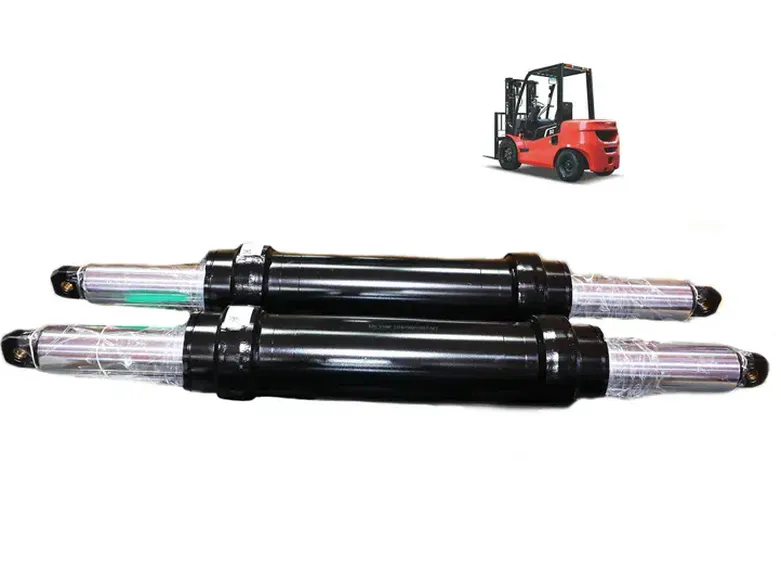
Can hydraulic cylinders be used in articulated forklifts?
Yes, hydraulic cylinders can be used in articulated forklifts. Articulated forklifts, also known as flexi forklifts or narrow aisle forklifts, are designed with a unique articulating mast that allows for increased maneuverability in tight spaces. Hydraulic cylinders play a vital role in the operation of these forklifts. Here’s an explanation of their use:
Articulated forklifts utilize hydraulic cylinders in several key areas:
1. Mast Articulation:
The primary function of hydraulic cylinders in articulated forklifts is to facilitate the articulation of the mast. The mast is divided into two sections connected by a hydraulic cylinder. This cylinder enables the mast to pivot or bend at a joint, providing the forklift with the ability to articulate and operate in narrow aisles or confined spaces. By extending or retracting the hydraulic cylinder, the operator can articulate the mast to navigate through tight turns and reach pallets from various angles.
2. Lift and Tilt Functions:
Hydraulic cylinders are also used to control the lift and tilt functions of the forks in articulated forklifts. These cylinders allow for smooth and precise lifting and tilting of the forks to pick up, transport, and deposit loads. By adjusting the extension or retraction of the hydraulic cylinders, the operator can control the height and angle of the forks, ensuring efficient and safe load handling.
3. Side Shift:
Some articulated forklifts are equipped with hydraulic cylinders for side shifting capabilities. These cylinders enable the forks to move laterally, allowing for precise positioning of the load. By activating the hydraulic system, the cylinders extend or retract, shifting the forks to the desired position. This feature is particularly useful when aligning the forks with pallets or when working with varying load sizes.
4. Stabilization:
Hydraulic cylinders also contribute to the stability of articulated forklifts. They work in conjunction with the forklift’s frame and counterweight to ensure proper weight distribution and balance. By adjusting the extension or retraction of the hydraulic cylinders, the forklift can maintain stability during lifting and maneuvering operations.
In summary, hydraulic cylinders are integral components of articulated forklifts, enabling mast articulation, controlling lift and tilt functions, providing side shift capabilities, and contributing to overall stability. These cylinders play a crucial role in enhancing the maneuverability and efficiency of articulated forklifts, allowing them to operate effectively in narrow aisles and confined spaces.
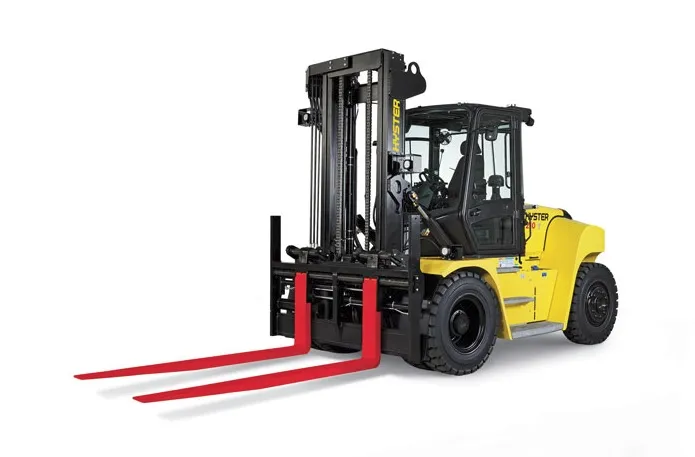
What Industries Rely on Forklifts with Hydraulic Cylinders?
Various industries heavily rely on forklifts equipped with hydraulic cylinders for their material handling and logistics operations. Forklifts with hydraulic cylinders offer efficient lifting, lowering, and maneuvering capabilities, making them indispensable in numerous sectors. Here are some industries that heavily rely on forklifts with hydraulic cylinders:
- Warehousing and Distribution:
- Manufacturing:
- Construction:
- Retail:
- Transportation and Logistics:
- Agriculture:
- Wholesale and Distribution:
- Food and Beverage:
In the warehousing and distribution industry, forklifts are essential for lifting and moving goods within warehouses and distribution centers. Forklifts with hydraulic cylinders enable the efficient stacking and retrieval of palletized goods, speeding up the loading and unloading process. They play a significant role in inventory management, order fulfillment, and ensuring smooth logistics operations.
Forklifts with hydraulic cylinders are widely used in manufacturing facilities for various applications. They are used to transport raw materials, components, and finished products within production lines and warehouses. Hydraulic-powered forklifts enable manufacturers to efficiently move heavy loads, streamline production processes, and optimize material flow.
The construction industry heavily relies on forklifts with hydraulic cylinders for material handling tasks on construction sites. Forklifts are used to lift and transport building materials, such as lumber, steel, bricks, and concrete blocks. Hydraulic cylinders allow forklift operators to lift and position heavy construction materials with precision, enhancing productivity on construction projects.
In the retail sector, forklifts with hydraulic cylinders play a crucial role in managing inventory and stock replenishment. They are used in retail warehouses, distribution centers, and large retail stores to handle palletized goods, unload delivery trucks, and stock shelves. Forklifts equipped with hydraulic cylinders enable efficient movement of goods, helping retailers maintain optimal stock levels and meet customer demand.
The transportation and logistics industry heavily relies on forklifts with hydraulic cylinders at various stages of the supply chain. Forklifts are used in freight terminals, airports, seaports, and rail yards to load and unload cargo containers, pallets, and freight shipments. Hydraulic-powered forklifts ensure smooth and efficient material handling operations in transportation hubs, contributing to the timely movement of goods.
In the agriculture industry, forklifts with hydraulic cylinders are utilized for various tasks on farms, nurseries, and agricultural warehouses. They are used to handle and transport bulky items such as bales of hay, bags of feed, and agricultural equipment. Forklifts enable efficient loading and unloading of agricultural products, contributing to streamlined operations and improved productivity.
Wholesale and distribution companies heavily rely on forklifts with hydraulic cylinders for their material handling needs. These forklifts are used to handle a wide range of products, including palletized goods, crates, and containers, in wholesale warehouses and distribution centers. Forklifts equipped with hydraulic cylinders enable efficient sorting, stacking, and movement of goods, ensuring smooth distribution operations.
In the food and beverage industry, forklifts with hydraulic cylinders are extensively used for material handling tasks in production facilities, warehouses, and cold storage facilities. They are employed to transport ingredients, packaging materials, and finished products. Forklifts equipped with hydraulic cylinders enable careful handling of delicate food items and efficient movement of goods in temperature-controlled environments.
These are just a few examples of the industries that heavily rely on forklifts with hydraulic cylinders. The versatility and lifting capabilities of these forklifts make them indispensable in a wide range of sectors, supporting efficient and safe material handling operations.


editor by CX 2023-11-22