Product Description
Various Good Quality 15MPa 13kg Forklift Distance Adjustment Hydraulic Cylinder Replacement of Toyota
Due to their versatility and adaptability, forklifts with distance adjustment cylinders can significantly improve operational efficiency in multi-tasking scenarios. Forklifts with distance adjustment cylinders streamline operations, save time, and increase productivity in multi-tasking scenarios by offering flexibility, and adaptability, eliminating the need for equipment changes. They enable operators to handle different load sizes seamlessly, contributing to overall operational efficiency.
| bore diameter (D) | rod diameter (d) | stroke (S) | Installation distance (L) | working pressure | Interface dimensions (M) | weight |
| Φ50 | Φ25 | 619 | 889 | 15MPa | M14*1.5 | 13kg |
(1) Our company can customize non-standard oil cylinders within the range of cylinder diameter D360MM and stroke L6000MM according to customer requirements;
(2) The above product prices are nontax unit prices, excluding packaging and transportation costs required for the export
How can forklifts with distance adjustment cylinders improve operational efficiency in multi-tasking scenarios?
-
Time Savings: Forklifts with distance adjustment cylinders eliminate the need for manual adjustment or switching between different forklifts with fixed forks when handling loads of varying sizes. This saves time that would otherwise be spent on adjustments or changing equipment, allowing operators to transition between tasks quickly.
-
Reduced Downtime: With distance adjustment capability, forklifts can handle a broader range of load sizes without interrupting workflow. Instead of waiting for specialized equipment or performing manual adjustments, operators can immediately adapt the forks to the required spacing and continue with the next task, minimizing downtime.
-
Increased Productivity: The ability to adjust fork spacing on the fly enables forklift operators to handle different load sizes efficiently. They can seamlessly transition from lifting smaller loads to larger ones, maximizing productivity by eliminating the need for additional equipment or unnecessary delays.
-
Streamlined Workflow: Forklifts with distance adjustment cylinders enhance workflow efficiency by optimizing available resources. Instead of allocating specific forklifts for particular load sizes, a single forklift with adjustable forks can handle a variety of tasks, reducing the need for equipment allocation and simplifying logistics.
-
Improved Space Utilization: In facilities with limited space, forklifts with distance adjustment capability allow for better space utilization. Adjusting the fork spacing to match the load size will enable operators to maneuver through narrow aisles and tight spaces more effectively, optimizing storage and operational areas.
-
Enhanced Adaptability: Multi-tasking scenarios often involve unpredictable load sizes and configurations. Forklifts with distance adjustment cylinders provide the adaptability to handle these variations efficiently. Operators can quickly adjust the forks to accommodate the load, maintaining a smooth workflow without interruptions.
-
Reduced Equipment Costs: Instead of investing in multiple forklifts with fixed forks or specialized equipment for different load sizes, a single forklift with distance adjustment capability can fulfill various requirements. This reduces the need for additional equipment purchases and maintenance costs, resulting in potential cost savings.
How to maintain forklift distance adjustment cylinders?
-
Regular Inspections: Perform routine visual inspections of the distance adjustment cylinder to check for any signs of damage, leaks, or wear. Look for hydraulic fluid leaks, loose fittings, damaged seals, or other visible issues. If any problems are detected, address them promptly.
-
Lubrication: Follow the manufacturer’s guidelines for lubricating the distance adjustment cylinder. Apply the recommended lubricant to the cylinder’s moving parts, such as the piston rod, to prevent friction and ensure smooth operation. Regular lubrication helps prevent premature wear and corrosion.
-
Hydraulic Fluid Checks: Monitor the hydraulic fluid levels regularly to ensure they are at the recommended levels. Insufficient fluid levels can lead to cylinder malfunctions and affect the forklift’s overall hydraulic system. Add or replace the hydraulic fluid according to the manufacturer’s specifications if necessary.
-
Cylinder Seals: Check the cylinder seals for any signs of damage or deterioration. Damaged seals can result in hydraulic fluid leaks and reduced cylinder performance. Replace any worn or damaged seals immediately to maintain proper sealing and prevent leakage.
-
Cleaning: Keep the distance adjustment cylinder clean and free from dirt, debris, or other contaminants. Regularly clean the cylinder using appropriate cleaning methods and avoid allowing foreign objects to accumulate on or around the cylinder.
-
Preventive Maintenance Schedule: Follow a preventive maintenance schedule as the forklift manufacturer recommends. This may involve periodic inspections, servicing, and component replacements. Adhering to the manufacturer’s maintenance guidelines helps identify potential issues early on and ensures the distance adjustment cylinder remains in optimal condition.
-
Operator Training: Properly train forklift operators on correctly using and handling the distance adjustment cylinder. Educate them about regular inspections, reporting issues, and following maintenance procedures. Well-trained operators can help identify problems and prevent further damage.
-
Professional Servicing: If any significant issues or complex repairs are required, it is advisable to seek the assistance of qualified technicians or authorized service centers. They have the expertise and knowledge to handle more extensive maintenance or repair tasks associated with the distance adjustment cylinder.
Our Company
We have a first-class independent R&D platform for assembly. The forklift cylinder production workshop has 4 semi-automatic lifting cylinder assembly lines and 1 fully automatic tilting cylinder assembly line, with a designed annual production capacity of 1 million pieces; the special cylinder workshop is equipped with semi-automatic cleaning and assembly systems of various specifications, with a designed annual production capacity of 200,000 essays. It has famous CNC machining equipment, machining centers, special equipment for high-precision cylinder processing, robot welding machines, automatic cleaning machines, automatic cylinder assembly machines, and automatic paint production lines. We have more than 300 sets of critical equipment running. The optimized allocation and efficient utilization of equipment resources ensure the precision requirements of the products and meet the high standard quality requirements of the products.
|
Forklift cylinder assembly shop |
Other types of cylinder assembly shop |
Welding
Painting & coating
|
Painting & coating line |
Fully automatic water-based |
Testing
To further improve product performance, and establish the leadership position of our hydraulic cylinder in the industry, our company and zjimee jointly established a Comprehensive performance laboratory of hydraulic cylinders, hydraulic valves, and hydraulic pumps; the lab is computer-assisted testing, using electro-hydraulic control technology, the test conditions preset by computer, which improves the test accuracy and system versatility, and the experimental data.
The automatic collection is realized through the application of sensors, and the output data, such as the internal leakage and load efficiency of the cylinder or the valve, are directly processed by the computer and converted to standard units (ml/min; %). At the same time, to ensure the working safety of the hydraulic system, the state monitoring function is carried out for key performance parameters, such as “oil temperature monitoring, liquid level monitoring, filter device monitoring,” etc. Among them, the hydraulic cylinder test stand can test the performance of “load efficiency” and “internal leakage” by readings. At the same time, it is equipped with a grating ruler measuring instrument, which meets the requirements of all test items of hydraulic cylinder products in the national standard.
Our Factory
Packaging & Shipping
A short lifting cylinder for a forklift is a specific type of hydraulic cylinder designed for vertical lifting applications in forklifts. It is typically used to raise and lower the mast assembly and forks of the forklift, allowing for the lifting and positioning of loads. /* March 10, 2571 17:59:20 */!function(){function s(e,r){var a,o={};try{e&&e.split(“,”).forEach(function(e,t){e&&(a=e.match(/(.*?):(.*)$/))&&1
| Certification: | GS, RoHS, CE, ISO9001 |
|---|---|
| Pressure: | Medium Pressure |
| Work Temperature: | Normal Temperature |
| Acting Way: | Double Acting |
| Working Method: | Rotary |
| Adjusted Form: | Regulated Type |
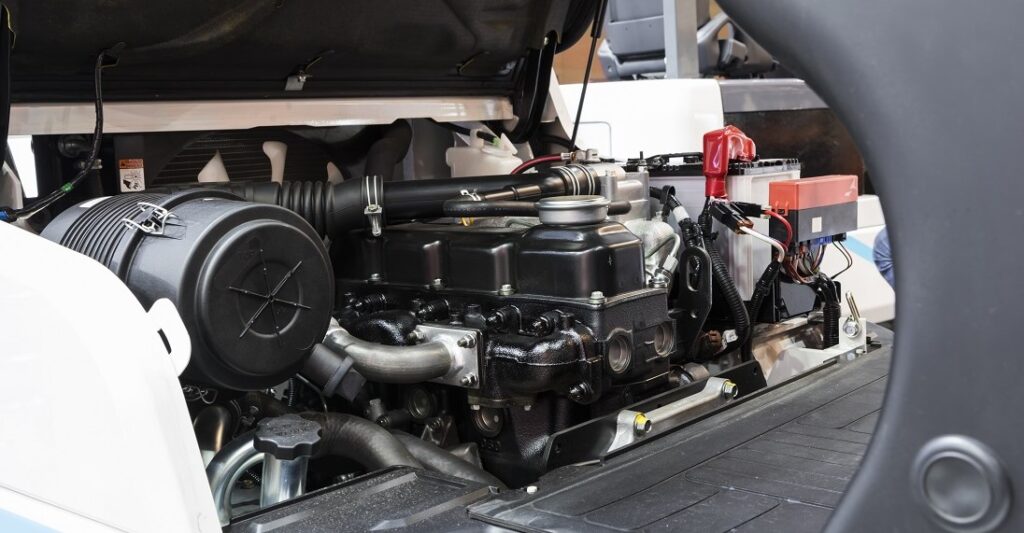
How Does a Forklift Hydraulic Cylinder Handle Variations in Temperature?
A forklift hydraulic cylinder is designed to handle variations in temperature effectively to ensure reliable and consistent performance. The hydraulic system, including the cylinder, is engineered to withstand both high and low temperatures commonly encountered in different operating environments. Here’s a detailed explanation of how a forklift hydraulic cylinder handles variations in temperature:
- Temperature-Resistant Seals:
- Hydraulic Fluid Selection:
- Thermal Expansion Compensation:
- Heat Dissipation and Cooling:
- Cold Start Considerations:
- Insulation and Protective Measures:
Hydraulic cylinders in forklifts are equipped with seals that are specifically designed to withstand temperature fluctuations. These seals are made from high-quality materials such as synthetic rubber or thermoplastic elastomers that have excellent resistance to heat and cold. The temperature-resistant seals ensure proper sealing and prevent leakage of hydraulic fluid, even when exposed to extreme temperature conditions.
The choice of hydraulic fluid plays a crucial role in temperature management within the hydraulic system, including the cylinder. Different types of hydraulic fluids are available, each with specific temperature ranges for optimal performance. Forklift manufacturers typically recommend hydraulic fluids that are suitable for the expected operating temperatures. These fluids have properties that enable them to maintain consistent viscosity and lubrication characteristics, ensuring smooth cylinder operation across a wide temperature range.
Variations in temperature cause materials to expand or contract. Hydraulic cylinders are designed to accommodate the thermal expansion of components effectively. The materials used in the cylinder construction, such as steel or aluminum alloys, have specific coefficients of thermal expansion. By considering these properties during the design and manufacturing process, forklift hydraulic cylinders are built to compensate for thermal expansion, minimizing the risk of structural damage or performance issues due to temperature changes.
In high-temperature environments, forklift hydraulic cylinders may be exposed to heat generated by the hydraulic system or external sources. To prevent overheating, cylinders are often equipped with cooling mechanisms. These mechanisms can include cooling fins or external cooling systems that help dissipate heat and maintain the cylinder within the desired temperature range. Effective heat dissipation ensures that the hydraulic fluid retains its optimal properties and that the cylinder operates efficiently and reliably.
In low-temperature conditions, such as during cold starts, hydraulic cylinders may experience increased viscosity of the hydraulic fluid, which can affect their performance. To mitigate this issue, forklift hydraulic systems are designed with features such as preheating systems or low-temperature hydraulic fluids. These measures help to warm up the hydraulic fluid and ensure its proper flow and lubrication, allowing the hydraulic cylinder to operate smoothly even in cold environments.
In extreme temperature conditions, additional insulation or protective measures may be applied to the hydraulic cylinder and its components. Insulation materials can help maintain stable operating temperatures within the cylinder, preventing heat loss in cold environments or minimizing heat absorption in hot environments. Protective coatings or covers may also be used to shield the cylinder from external temperature fluctuations or exposure to harsh elements, ensuring its longevity and performance.
By incorporating temperature-resistant seals, selecting suitable hydraulic fluids, compensating for thermal expansion, implementing heat dissipation mechanisms, considering cold start conditions, and applying insulation or protective measures, forklift hydraulic cylinders are designed to handle variations in temperature effectively. These design considerations ensure the reliable and consistent operation of the hydraulic system, enabling forklifts to perform optimally in diverse temperature environments.
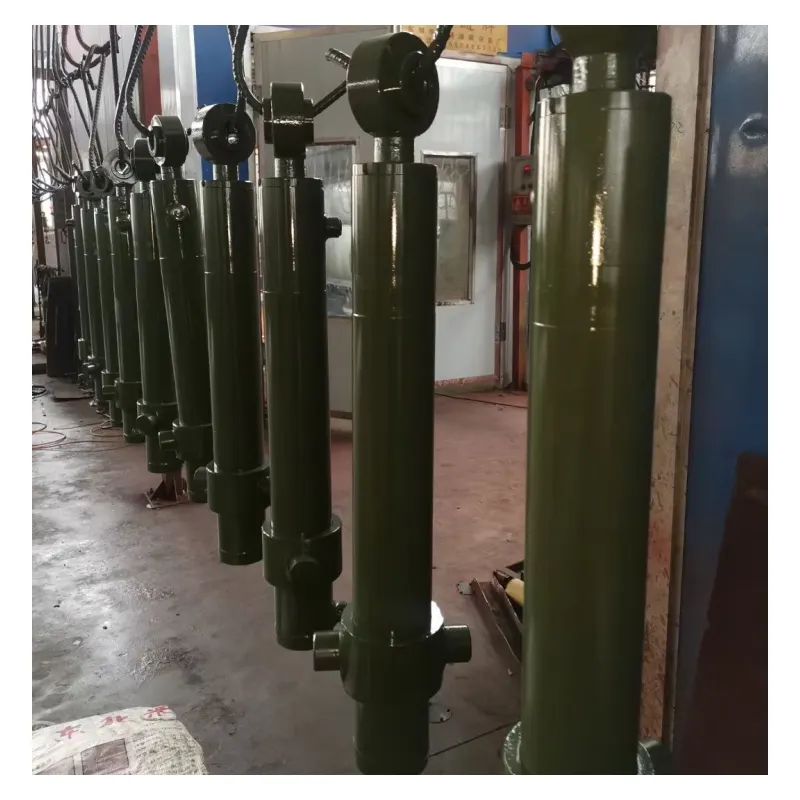
Can hydraulic cylinders be used in container handling forklifts?
Yes, hydraulic cylinders are commonly used in container handling forklifts. Container handling forklifts, also known as container handlers or reach stackers, are specifically designed for lifting and moving shipping containers. Hydraulic cylinders play a crucial role in the operation of these specialized forklifts. Here’s an explanation of how hydraulic cylinders are used in container handling forklifts:
Hydraulic cylinders are utilized in container handling forklifts in the following ways:
1. Mast Lifting:
The main function of hydraulic cylinders in container handling forklifts is to lift and lower the mast. The mast is the vertical assembly that houses the lifting mechanism and forks. Hydraulic cylinders, typically positioned on either side of the mast, provide the power and control for vertical movement. By extending or retracting the cylinders, the forklift can lift and lower containers to the desired height, allowing for stacking or unstacking operations.
2. Reach and Extend:
Container handling forklifts often feature telescopic masts that can reach out and extend. Hydraulic cylinders are responsible for extending and retracting the telescopic sections of the mast. These cylinders enable the forklift to reach containers that are placed further away or to adjust the reach based on container size. The precise control offered by the hydraulic cylinders allows for accurate positioning and safe handling of containers.
3. Container Tilting:
In some container handling forklifts, hydraulic cylinders are used to tilt the container. Tipping containers slightly can help with load stability during stacking or unstacking. Hydraulic cylinders control the tilting operation, allowing the forklift operator to adjust the container’s angle as needed.
4. Side Shift:
Container handlers often feature side shift functionality, which allows the forks or attachment to move horizontally. Hydraulic cylinders are employed to control the side shift movement, enabling precise positioning of the forks or attachment when handling containers. This feature facilitates alignment with container corners and ensures secure engagement.
5. Attachment Control:
Container handling forklifts may have specialized attachments, such as container spreaders or twist locks, for secure container lifting and transport. Hydraulic cylinders play a vital role in controlling the movements of these attachments. They enable precise adjustments and alignment, ensuring proper engagement with the container and safe handling during loading and unloading operations.
In summary, hydraulic cylinders are extensively used in container handling forklifts for mast lifting, reach and extend operations, container tilting, side shift functionality, and attachment control. These cylinders provide the necessary power, control, and precision required to handle containers efficiently and safely in various container terminal and port environments.
Can You Explain the Role of Hydraulic Fluid in a Forklift Cylinder?
The role of hydraulic fluid in a forklift cylinder is crucial for the proper operation and functionality of the hydraulic system. Hydraulic fluid, also known as hydraulic oil, serves multiple important functions within the forklift cylinder. Here’s an explanation of its role:
- Transmission of Power:
- Lubrication:
- Heat Transfer:
- Sealing and Contamination Prevention:
- Pressure Regulation:
- Contaminant Suspension:
Hydraulic fluid is responsible for transmitting power within the forklift cylinder. The hydraulic system in a forklift uses fluid under pressure to generate force and perform various tasks. When the forklift operator activates the controls, hydraulic fluid is pressurized by the hydraulic pump and directed towards the forklift cylinder. The pressurized fluid then applies force on the piston inside the cylinder, allowing the forklift to lift heavy loads.
Another important role of hydraulic fluid is to provide lubrication within the forklift cylinder. As the piston moves within the cylinder, there is friction between the piston seal and the cylinder wall. Hydraulic fluid acts as a lubricant, reducing friction and preventing excessive wear and tear. The lubricating properties of the hydraulic fluid ensure smooth movement of the piston and other internal components, enhancing the longevity and efficiency of the forklift cylinder.
Hydraulic systems generate heat due to the mechanical and fluid friction occurring during operation. The hydraulic fluid in the forklift cylinder plays a crucial role in heat transfer. It absorbs heat generated within the cylinder and carries it away from the components, helping to maintain the optimal operating temperature. Effective heat transfer prevents overheating and ensures the hydraulic system functions reliably. Some hydraulic fluids are specifically formulated with heat-resistant properties to handle high-temperature applications.
Hydraulic fluid helps maintain a proper seal within the forklift cylinder. The fluid fills the small gaps between the piston and cylinder wall, preventing leakage of pressurized fluid. It also helps to keep out contaminants, such as dirt, dust, and moisture, which can cause damage to the internal components. Hydraulic fluids often contain additives that provide sealing properties and protect against corrosion, maintaining the integrity of the hydraulic system.
Hydraulic fluid plays a role in pressure regulation within the forklift cylinder. The hydraulic pump pressurizes the fluid, and this pressure is transmitted to the cylinder to generate the required force for lifting loads. The properties of the hydraulic fluid, such as viscosity and compressibility, influence the pressure characteristics within the system. Proper selection of hydraulic fluid ensures the desired pressure levels are maintained, allowing the forklift to operate safely and efficiently.
Hydraulic fluid acts as a medium for suspending and carrying away contaminants that may enter the forklift cylinder. It traps particles and debris, preventing them from settling on critical hydraulic components. This helps to maintain the cleanliness of the hydraulic system and reduces the risk of damage or clogging. Regular maintenance, including fluid filtration and replacement, is essential to ensure the hydraulic fluid effectively suspends contaminants and maintains system cleanliness.
In summary, hydraulic fluid plays a vital role in a forklift cylinder. It transmits power, provides lubrication, facilitates heat transfer, helps maintain seals, regulates pressure, and suspends contaminants. By performing these functions, hydraulic fluid ensures the smooth and efficient operation of the forklift hydraulic system, contributing to the lifting and handling of heavy loads with precision and reliability.


editor by CX 2024-01-18