Product Description
Mal series mini pneumatic cylinders pneumatic round cylinder air lift cylinder
Product Features
1.Manufactured by our enterprise.
2.Front and back cover and cylinder tube are connected by threads.
3.Piston adopts heterogeneous two-way seal structure. It has compact size and has the function of grease reservation.
4.Front cover adopts self-lubrication bearing guide that has good performance of lubrication and guide.
5.There are several modes of back cover, which makes the installation of cylinder more convenient
6.There are cylinders and mounting accessories with several specifications for your choice.
Product specifications
| Bore Size(mm) | 16 | 20 | 25 | 32 | 40 | 50 | 63 | |
| Acting Type | Double Acting Type | |||||||
| Single Acting Type | ||||||||
| Fluid | Air(to be filtered by 40um filter element) | |||||||
| Operating Pressure | 0.15-1.0Mpa(0.20-145Psi) | |||||||
| TemperatureºC | -20 – +70 | |||||||
| Proof Pressure | 1.5Mpa(215Psi) | |||||||
| Speed Range (mm/s) | Double Acting Type:30-500 Single Acting Type:50-500 |
|||||||
| Cushion type | Bumper | |||||||
| Port Size | M5*0.8 | 1/8″ | 1/4″ | |||||
Product Description
Product Show
Related Products
Production Workshop
Quality Assurance
Main Equipment:
automatic coil winding machine, precision automatic die-casting machine, precision extrusion machine, forging machine, CNC machine, milling machine, turning and milling machine, four-axle CNC milling machine, injection machine, vulcanizing machine, surface treatment, electro coating line, automatic painting line, sealing parts pressing machine, as well as 200 testing devices like projectors, direct-reading spectrometer, 3D measuring apparatus, salt spray testing machine, and 10 automatic processing lines.
Perfect Inspection Process:
Raw material inspection (5steps)- Raw materials testing is to ensure the raw material conforming to the order requirements.
Process testing(10steps)-Each processing step testing is to guarantee each step product qualified.
Factory testing(6steps)-Assure 100% product qualified rate to meet customer’s requirements
Contact Us
| Material: | Aluminum |
|---|---|
| Usage: | Semiconductor |
| Structure: | Piston Cylinder |
| Power: | Pneumatic |
| Standard: | Standard |
| Pressure Direction: | Double-acting Cylinder |
| Customization: |
Available
|
|
|---|
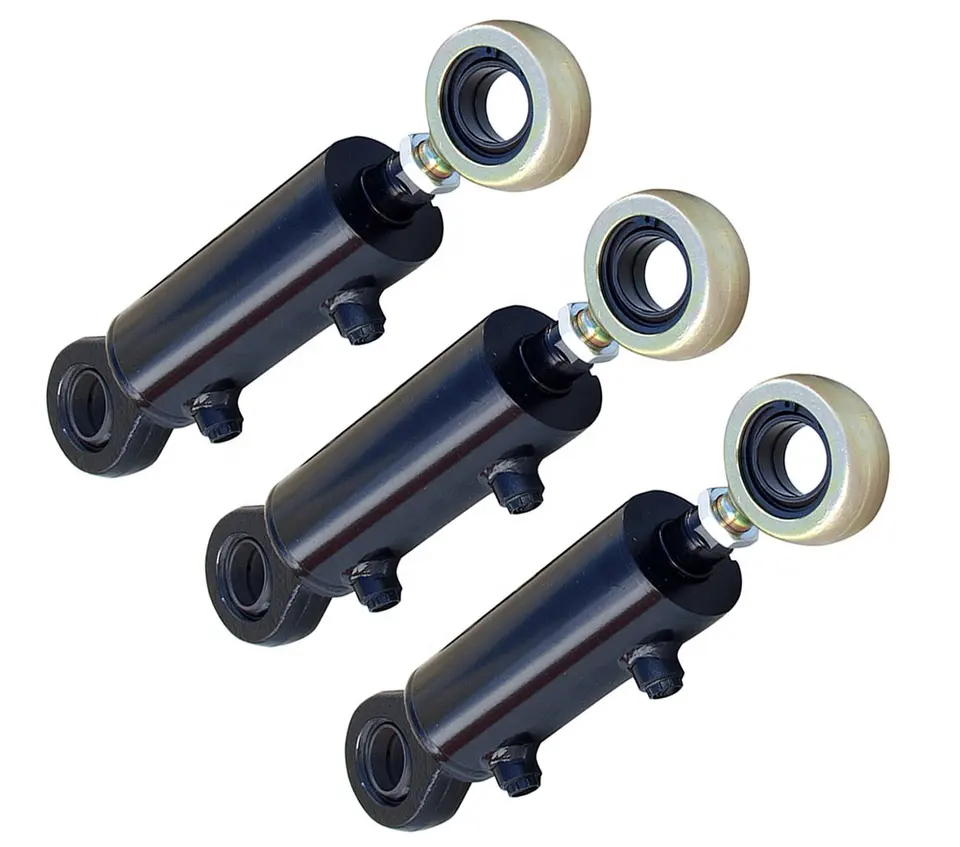
Can lift cylinders be used in aerial work platforms and scissor lifts?
Yes, lift cylinders are commonly used in aerial work platforms and scissor lifts. Here’s an explanation of their utilization in these types of equipment:
Aerial work platforms, also known as aerial lifts or elevated work platforms, are used to provide elevated access for various tasks, such as maintenance, construction, or inspection work. Scissor lifts are a specific type of aerial work platform that utilize a scissor mechanism to vertically extend the platform. Lift cylinders play a crucial role in the lifting operation of both aerial work platforms and scissor lifts.
In scissor lifts, multiple lift cylinders are typically positioned vertically and connected to the scissor mechanism. These lift cylinders work in synchronization to extend or retract the scissor arms, thereby raising or lowering the platform. The lift cylinders exert force to expand the scissor arms, creating a lifting motion that allows the platform to reach elevated positions. By controlling the flow of hydraulic fluid to the lift cylinders, operators can easily adjust the platform height and achieve the desired working elevation.
Lift cylinders used in aerial work platforms and scissor lifts are usually hydraulic cylinders. Hydraulic systems offer the advantages of smooth operation, precise control, and high lifting capacities. The hydraulic system includes a pump, control valves, hydraulic lines, and the lift cylinders. When the hydraulic system is activated, the pump pressurizes the hydraulic fluid, which is then directed to the lift cylinders through the control valves. The pressurized fluid causes the lift cylinders to extend, resulting in the upward movement of the platform.
One of the key benefits of using lift cylinders in aerial work platforms and scissor lifts is their ability to provide stable and controlled lifting. The synchronized movement of the lift cylinders ensures that the platform remains level and secure during the lifting process. This stability is essential for safe working conditions at elevated heights.
In addition to lifting capabilities, lift cylinders in aerial work platforms and scissor lifts may incorporate features such as safety locks, overload protection, or emergency descent mechanisms. These safety measures enhance the overall performance and reliability of the equipment, ensuring the well-being of operators working at height.
Overall, lift cylinders are integral components in aerial work platforms and scissor lifts, enabling the vertical lifting motion and providing stability during elevated work. Their hydraulic operation, synchronized movement, and safety features make them essential for efficient and secure access at height.
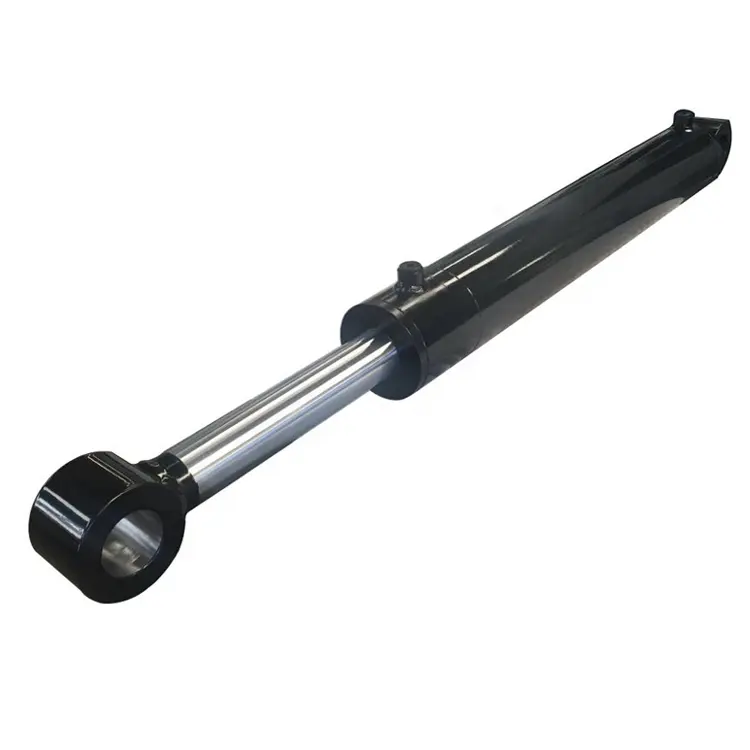
How does a lift cylinder contribute to load clamping and gripping?
A lift cylinder plays a significant role in load clamping and gripping applications by providing the necessary force and control to securely hold objects in place. Lift cylinders, also known as hydraulic cylinders, are widely used in various industrial settings for lifting, pushing, pulling, and holding heavy loads.
When it comes to load clamping and gripping, lift cylinders contribute in the following ways:
- Clamping Force: Lift cylinders can generate a high clamping force, which is utilized to tightly hold objects together. By exerting pressure on clamping mechanisms or jaws, the cylinders ensure a secure grip on the load, preventing undesired movement or slippage.
- Gripping Action: Lift cylinders are integrated into gripping devices or gripper systems to perform gripping actions. These cylinders provide the force necessary to close the gripper fingers or jaws around the object, creating a firm grip. The gripping action allows for safe transportation, manipulation, or assembly of the load.
- Controlled Pressure: Lift cylinders offer precise control over the clamping or gripping force. The hydraulic system controlling the cylinders allows for adjustable pressure settings, enabling operators to tailor the clamping force according to the specific requirements of the application. This control ensures optimal grip without damaging the load.
- Positioning and Alignment: Lift cylinders assist in the positioning and alignment of the load during clamping or gripping operations. They can be used to finely adjust the position of the clamping or gripping elements, ensuring accurate and proper alignment with the load. This precision helps achieve a secure and balanced grip on the object.
The use of lift cylinders in load clamping and gripping applications offers several advantages. They provide reliable and powerful clamping or gripping force, enabling safe and efficient handling of objects. The adjustable pressure and precise control allow for customization based on the load characteristics, ensuring optimal grip without causing damage.
In summary, lift cylinders contribute significantly to load clamping and gripping by providing the necessary force, control, and adjustability. Their integration into clamping mechanisms and gripper systems enhances safety, accuracy, and productivity in various industrial processes.
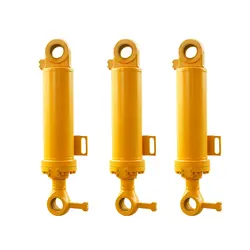
What is a lift cylinder and how does it function in hydraulic systems?
A lift cylinder, also known as a hydraulic lift cylinder or hydraulic lifting cylinder, is a device used in hydraulic systems to generate linear motion and provide lifting force. It is a type of hydraulic actuator that converts hydraulic pressure into mechanical force to lift heavy loads. Here’s an explanation of what a lift cylinder is and how it functions in hydraulic systems:
A lift cylinder consists of a cylindrical barrel, a piston, and a rod. The barrel is a hollow tube that houses the piston and allows fluid to flow in and out. The piston is a cylindrical component that separates the barrel into two chambers. The rod, attached to the piston, extends from the cylinder to connect with the load or the mechanism being lifted.
The lift cylinder operates based on the principles of Pascal’s law, which states that pressure exerted on a fluid in a confined space is transmitted equally in all directions. Here’s how a lift cylinder functions:
1. Extension:
When pressurized hydraulic fluid enters one side of the cylinder (the chamber behind the piston), it applies force on the piston, causing it to move in the direction of the load. This movement extends the rod outward, lifting or pushing the load.
2. Retraction:
Conversely, when the hydraulic fluid is supplied to the other side of the cylinder (the chamber in front of the piston), the pressure differential causes the piston to move in the opposite direction. This retracts the rod, lowering or pulling the load.
3. Control Valve:
The flow of hydraulic fluid into and out of the lift cylinder is controlled by a directional control valve. The valve regulates the direction and amount of fluid entering the cylinder, determining whether the cylinder extends or retracts. This control allows for precise and controlled lifting and lowering of the load.
4. Force and Load Capacity:
The force generated by the lift cylinder is determined by the hydraulic pressure applied to the piston and the effective area of the piston. By increasing or decreasing the hydraulic pressure, the lifting force can be adjusted to meet the specific load requirements.
5. Application:
Lift cylinders are widely used in various hydraulic systems, including hydraulic lifts, cranes, forklifts, dump trucks, and construction equipment. They provide the necessary force to lift heavy objects, perform material handling tasks, and support heavy loads in a controlled and efficient manner.
In summary, a lift cylinder is a hydraulic actuator that converts hydraulic pressure into mechanical force for lifting heavy loads. It functions by utilizing hydraulic fluid pressure to move the piston and extend or retract the rod, enabling the lifting or lowering of the load. The control valve regulates the fluid flow, and the force generated by the lift cylinder is determined by the hydraulic pressure and piston area. Lift cylinders find extensive applications in hydraulic systems across various industries.


editor by CX 2023-10-23