Product Description
forklift HTR-3571 chrome plated durable tie rod hydraulic piston cylinder
- Product Information
- Related Products
- Our Service
1. Sample service: samples will be provided according to customer’s instruction.
2. Customized services: a variety of cylinders can be customized according to customer demand.
3. Warranty service: In case of quality problems under 1 year warranty period, free replacement will be made for customer.
- Working Process
- Packing and Shipping
The products are fully protected by metal shelves, wood boxes and plastic fillers.
- Company Information
HangZhou GD Machinery is specialized to offer high precision all kind of hydraulic valves and hydraulic cylinder.we also have some hydraulic valve from CHINAMFG brand aboard
With a wide range, good quality ,reasonable price,our products are extensively used in the industries of construction machinery,machine tool,plastic machinery,vehicle. mining equipment,metallurgy,shipyard,food machinery,agricultural machinery,and other industries.
Our products are widely recognized and trusted by users and can meet continuously changing economic and social needs.
Welcome new and old customers to contact us for future business. we will offer you good quality and best price.
|
HangZhou GD Machinery CO.,LTD. |
|
|
Product |
|
|
tie rod hydraulic cylinder, welded hydraulic cylinder, telescopic cylinders cylinder, flange type hydraulic cylinder, hydraulic cylinder with valve function, hydraulic power unit, Hydraulic manifold block, pneumatic fitting, |
|
|
Material |
Tube – Cold Drawn Precision seamless Tubing Mounts – Trunnion with angular Swivels |
|
Application |
Agriculture, Concrete & Asphalt, Cranes, Fire & Rescue, Forestry & Logging,Mining & Rock Crushing,Oil & Gas, Snow & Ice Control,Waste Management and Material Recycling Industry , Engineering Equipment, Special Vehicle |
|
Feature |
1.High quality with a reasonable price 2.ISO9001-2008 3.Customized specification are accepted |
|
Payment |
T/T;L/C, Paypal |
|
Port |
HangZhou ,China |
|
Quotation |
According to the specific request |
|
MOQ |
According to the product |
|
Packaging |
metal case;plywood case;carton or as requirement |
|
Delivery time |
30days upon receipt of 30% deposit; or upon receipt of relevant L/C; |
- Company Show
- FAQ
Q: Do you accept OEM manufacturing?
A: Yes! We do accept OEM manufacturing. We will quote you the exact price and make the exact cylinder according to your specification and drawing.
Q: Can we design our own package or print our own logo?
A: Yes! Package and logo will be made acording to your requirements.
Q: Could we get small quantity samples?
A: Yes! We understand the quality test is important and we are glad to make the sample for you. The MOQ is 1pcs.
Q: How long is the production time?
A: Generally the production time is 30 days.
Q: What is your payment term?
A: For sample payment, generally 100% T/T payment in advance, west union, paypal.
For order payment, generally is 30% T/T in advance, 70% balance before shipment. If you require the different payment term, let us negotiate it together.
/* March 10, 2571 17:59:20 */!function(){function s(e,r){var a,o={};try{e&&e.split(“,”).forEach(function(e,t){e&&(a=e.match(/(.*?):(.*)$/))&&1
| Certification: | ISO9001, SGS |
|---|---|
| Pressure: | Medium Pressure |
| Work Temperature: | Normal Temperature |
| Samples: |
US$ 60/Piece
1 Piece(Min.Order) | Order Sample |
|---|
| Customization: |
Available
|
|
|---|
.shipping-cost-tm .tm-status-off{background: none;padding:0;color: #1470cc}
| Shipping Cost:
Estimated freight per unit. |
about shipping cost and estimated delivery time. |
|---|
| Payment Method: |
|
|---|---|
|
Initial Payment Full Payment |
| Currency: | US$ |
|---|
| Return&refunds: | You can apply for a refund up to 30 days after receipt of the products. |
|---|
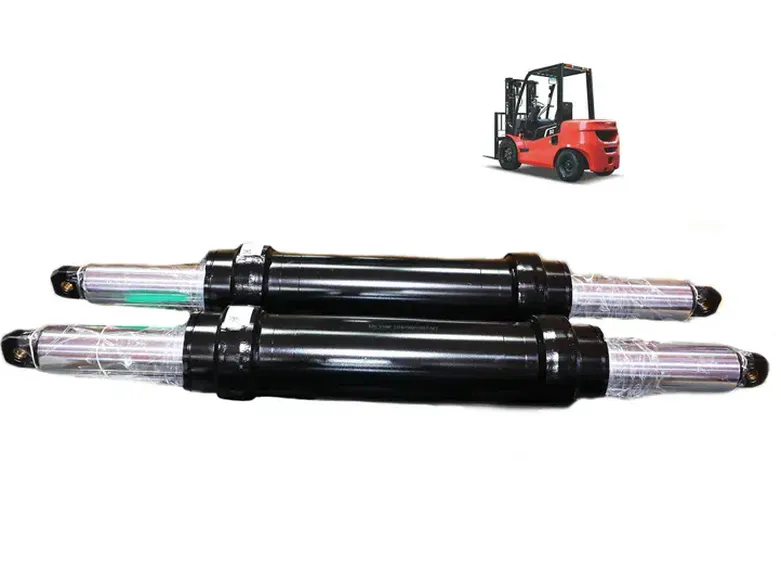
How does a forklift hydraulic cylinder contribute to energy-efficient lifting?
A forklift hydraulic cylinder plays a significant role in facilitating energy-efficient lifting operations. Here’s an explanation of how it contributes to energy efficiency:
1. Power Transfer:
The hydraulic cylinder efficiently transfers power from the hydraulic system to the load-bearing structure of the forklift. By converting hydraulic pressure into linear force, it allows the forklift to lift heavy loads with minimal energy expenditure.
2. Load Balancing:
Hydraulic cylinders can be designed to provide load balancing capabilities, ensuring that the lifting force is evenly distributed across multiple cylinders. This feature allows for stable and efficient lifting, as each cylinder shares the load, reducing the strain on individual components and optimizing energy usage.
3. Controlled Fluid Flow:
The hydraulic system of a forklift, including the hydraulic cylinder, operates based on precise control of fluid flow. By regulating the flow rate and direction of the hydraulic fluid, the operator can control the speed and force of the cylinder’s extension and retraction. This level of control minimizes energy waste by avoiding sudden or excessive movements.
4. Regenerative Systems:
In some advanced forklift designs, regenerative systems can be incorporated into the hydraulic circuit. These systems capture and reuse energy that would otherwise be dissipated as heat during the lowering of loads. The regenerated energy can be stored and used to power other components of the forklift, contributing to overall energy efficiency.
5. Proper Maintenance:
Maintaining the hydraulic cylinder in good working condition is crucial for energy-efficient lifting. Regular inspection, cleaning, and lubrication of the cylinder and its seals help reduce friction and prevent fluid leakage. Well-maintained cylinders operate with improved efficiency and minimize energy losses.
By employing these energy-saving techniques, a forklift hydraulic cylinder enhances the overall energy efficiency of the lifting process. It enables controlled power transfer, load balancing, regulated fluid flow, and, in some cases, the utilization of regenerative systems. Proper maintenance further ensures optimal performance and energy conservation.
In summary, a forklift hydraulic cylinder contributes to energy-efficient lifting by efficiently transferring power, providing load balancing capabilities, enabling controlled fluid flow, and potentially incorporating regenerative systems. Its proper maintenance enhances energy conservation and overall lifting efficiency.
Can hydraulic cylinders be used in articulated forklifts?
Yes, hydraulic cylinders can be used in articulated forklifts. Articulated forklifts, also known as flexi forklifts or narrow aisle forklifts, are designed with a unique articulating mast that allows for increased maneuverability in tight spaces. Hydraulic cylinders play a vital role in the operation of these forklifts. Here’s an explanation of their use:
Articulated forklifts utilize hydraulic cylinders in several key areas:
1. Mast Articulation:
The primary function of hydraulic cylinders in articulated forklifts is to facilitate the articulation of the mast. The mast is divided into two sections connected by a hydraulic cylinder. This cylinder enables the mast to pivot or bend at a joint, providing the forklift with the ability to articulate and operate in narrow aisles or confined spaces. By extending or retracting the hydraulic cylinder, the operator can articulate the mast to navigate through tight turns and reach pallets from various angles.
2. Lift and Tilt Functions:
Hydraulic cylinders are also used to control the lift and tilt functions of the forks in articulated forklifts. These cylinders allow for smooth and precise lifting and tilting of the forks to pick up, transport, and deposit loads. By adjusting the extension or retraction of the hydraulic cylinders, the operator can control the height and angle of the forks, ensuring efficient and safe load handling.
3. Side Shift:
Some articulated forklifts are equipped with hydraulic cylinders for side shifting capabilities. These cylinders enable the forks to move laterally, allowing for precise positioning of the load. By activating the hydraulic system, the cylinders extend or retract, shifting the forks to the desired position. This feature is particularly useful when aligning the forks with pallets or when working with varying load sizes.
4. Stabilization:
Hydraulic cylinders also contribute to the stability of articulated forklifts. They work in conjunction with the forklift’s frame and counterweight to ensure proper weight distribution and balance. By adjusting the extension or retraction of the hydraulic cylinders, the forklift can maintain stability during lifting and maneuvering operations.
In summary, hydraulic cylinders are integral components of articulated forklifts, enabling mast articulation, controlling lift and tilt functions, providing side shift capabilities, and contributing to overall stability. These cylinders play a crucial role in enhancing the maneuverability and efficiency of articulated forklifts, allowing them to operate effectively in narrow aisles and confined spaces.
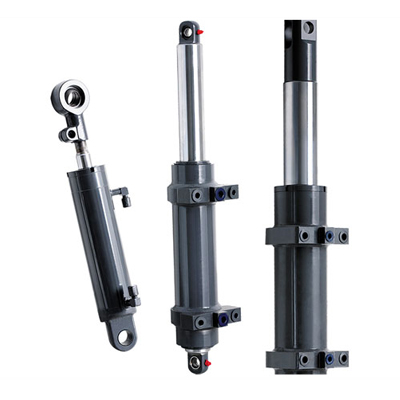
How does a forklift hydraulic cylinder handle variations in cylinder material?
A forklift hydraulic cylinder is designed to handle variations in cylinder material and accommodate different operating conditions. Here’s an explanation of how it achieves this:
The hydraulic cylinder’s ability to handle variations in cylinder material is primarily dependent on its design and the following factors:
1. Material Selection:
The choice of cylinder material is crucial in determining its performance and durability. Forklift hydraulic cylinders are typically constructed using high-strength materials such as steel or aluminum alloys. The specific material is selected based on factors like load capacity, environmental conditions, and the desired strength-to-weight ratio. Different materials offer varying levels of strength, corrosion resistance, and heat resistance, allowing the cylinder to adapt to different operating environments.
2. Structural Integrity:
The hydraulic cylinder is designed to maintain its structural integrity regardless of the cylinder material. It incorporates features such as robust construction, precise machining, and appropriate reinforcement to ensure reliable performance. The cylinder’s structural design accounts for the specific characteristics and properties of the chosen material, providing the necessary strength and stability to handle the operating conditions.
3. Seal Compatibility:
The hydraulic cylinder’s seals, including O-rings and other sealing components, are designed to be compatible with various cylinder materials. The seals are carefully selected to withstand the specific properties of the material, such as its hardness, temperature range, and chemical resistance. This ensures proper sealing and prevents fluid leakage, regardless of the cylinder material.
4. Surface Treatment:
In some cases, the cylinder material may undergo surface treatments or coatings to enhance its performance and protect against wear, corrosion, or other forms of deterioration. For instance, steel cylinders may be coated with protective layers such as chrome plating or various types of coatings to improve their resistance to corrosion and abrasion. These surface treatments can be tailored to suit the specific cylinder material and operating conditions.
5. Performance Testing:
Before being deployed in forklifts, hydraulic cylinders undergo rigorous performance testing to ensure their functionality and reliability. These tests evaluate factors such as load capacity, pressure resistance, and endurance under different operating conditions. The testing process helps identify any potential issues related to the cylinder material and allows for necessary adjustments or modifications.
In summary, a forklift hydraulic cylinder handles variations in cylinder material through careful material selection, robust structural design, seal compatibility, surface treatments, and thorough performance testing. These factors ensure that the cylinder can effectively handle different materials, providing optimal performance and durability in various operating conditions.


editor by CX 2024-02-08