Product Description
Detailed Photos
Product Parameters
| Hydraulic cylinder type | Stroke(mm) | Rated Pressure (MPa) |
H(mm) | b(mm) | c(mm) | φd(mm) |
| 3TG-E149*4280ZZ | 4280 | 20 | 343 | 340 | 245 | φ60 |
| 4TG-E149*4280ZZ | 4280 | 20 | 343 | 340 | 245 | φ60 |
| 4TG-E149*4650ZZ | 4650 | 20 | 343 | 340 | 245 | φ60 |
| 4TG-E149*5180ZZ | 5180 | 20 | 343 | 340 | 245 | φ60 |
| 5TG-E149*4280ZZ | 4280 | 20 | 343 | 340 | 245 | φ60 |
| 5TG-E149*4650ZZ | 4650 | 20 | 343 | 340 | 245 | φ60 |
| 5TG-E149*5180ZZ | 5180 | 20 | 343 | 340 | 245 | φ60 |
| 3TG-E157*4280ZZ | 4280 | 20 | 343 | 340 | 245 | φ60 |
| 4TG-E157*4280ZZ | 4280 | 20 | 343 | 340 | 245 | φ60 |
| 4TG-E157*4650ZZ | 4650 | 20 | 343 | 340 | 245 | φ60 |
| 4TG-E157*5180ZZ | 5180 | 20 | 343 | 340 | 245 | φ60 |
| 5TG-E157*4280ZZ | 4280 | 20 | 343 | 340 | 245 | φ60 |
| 5TG-E157*4650ZZ | 4650 | 20 | 343 | 340 | 245 | φ60 |
| 5TG-E157*5180ZZ | 5180 | 20 | 343 | 340 | 245 | φ60 |
| 6TG-E169*4280ZZ | 4280 | 20 | 343 | 340 | 245 | φ60/φ65 |
| 6TG-E169*4650ZZ | 4650 | 20 | 343 | 340 | 245 | φ60/φ65 |
| 6TG-E179*4280ZZ | 4280 | 20 | 343 | 340 | 245 | φ60/φ65 |
| 6TG-E179*4650ZZ | 4650 | 20 | 343 | 340 | 245 | φ60/φ65 |
Product Details
The CHINAMFG hydraulic cylinder adopts excellent sealing technology and new material applications, which can withstand the worstworking conditions and can adapt to the temperature range of
-40~110°C. It operates continuously and stably in high and low temperature environments, ensuring the safety of drivers and vehicles.
1. Adopts high-quality 27SiMn regulated steel pipe, with high tensile strength, high yield and strong bearing capacity.
2. Patented technology design and advanced production manufacturing are adopted to ensure the stability of product quality.
3. Imported oil seal is adopted, with good sealing performance.
4. Special design, light weight, fast lifting and lowering speed.
5. Surface is chromed to increase the surface hardness and prolong the service life.
Application
We have more hydraulic cylinders, you can initiate inquiries and contact us
Company Introduction
HangZhou CHINAMFG Machinery Co., Ltd. was established in 2002 and is located at the north end of the East Outer Ring Road in HangZhou City (1 kilometer south of thehighway toll station), with convenient transportation. The company is a profes-sional equipment production enterprise dedicated to the design, research and development, and manufacturing of hydraulic machinery products. Leading vari-ous specialized vehicle hydraulic cylinder assemblies and hydraulic system prod-ucts.
The company covers an area of over 100 acres. We have a total of 150 sets of deep hole boring equipment, cold drawing production lines, testing equipment, various CNC machining machines, cylindrical grinding machines, centerless grind-ing machines, welding production lines, etc. The company passed the IS09001d quality system certification in 2003; In 2013, it passed ISO/TSI6949 international quality system certification and was awarded the title of China’s Quality Integrity AAA Class Brand Enterprise.
Other products
Packaging & Shipping
After sending, we will track the products for you once every 2 days, until you get the products. When you got the goods, test them, and give me a feedback. If you have any questions about the problem, contact with us, we will offer the solve way for you.
FAQ
Q1: How is the quality?
We adopt patented technology structure design and advanced production process, and have passed the IATF16949:2016 quality control system and ISO9001 to ensure stable product quality.
Q2: What are the advantages of your oil cylinder?
The oil cylinder is manufactured using advanced equipment and processed through strict quality control. The steel has undergone tempering treatment, and all raw mate-
rials are from world-renowned companies with superior quality.
Competitive prices!
Q3: When was your company established?
Our company was established in 2002, specializing in the production of hydraulic cyl-
inders for over 20 years.
Q4: What is the delivery time?
About 30 days.
Q5: What is the quality assurance of hydraulic cylinders?
One year.
To get price list of promotion hydro cylinder, please contact us
/* October 22, 2571 15:47:17 */(()=>{function d(e,r){var a,o={};try{e&&e.split(“,”).forEach(function(e,t){e&&(a=e.match(/(.*?):(.*)$/))&&1
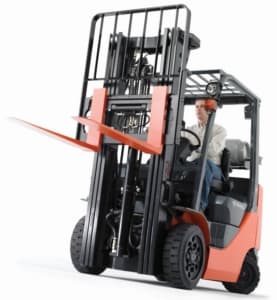
Can Hydraulic Cylinders be Used in Forklift Attachments?
Yes, hydraulic cylinders can be used in forklift attachments to enhance their functionality and expand their capabilities. Forklift attachments are auxiliary devices that can be mounted to the forks or carriage of a forklift to perform specific material handling tasks. The addition of hydraulic cylinders to these attachments offers several advantages and enables a wide range of applications. Here’s a detailed explanation of how hydraulic cylinders can be used in forklift attachments:
- Improved Lifting and Tilting:
- Extended Reach and Telescoping:
- Rotational Movement:
- Specialized Handling:
- Quick Attachment Changes:
Hydraulic cylinders can be incorporated into forklift attachments to provide enhanced lifting and tilting capabilities. For example, attachments such as fork positioners, side shifters, or paper roll clamps can utilize hydraulic cylinders to adjust the position of the forks or arms, allowing for efficient handling of different load sizes or configurations. The hydraulic cylinders enable precise control over the movement, enabling operators to lift, tilt, or adjust the position of the attachment as needed to optimize material handling operations.
Hydraulic cylinders can be employed in telescopic attachments for forklifts, enabling extended reach capabilities. Telescopic attachments consist of multiple sections that can be extended or retracted using hydraulic cylinders. By extending or retracting the sections, the attachment can reach deeper into racks, containers, or other storage areas, allowing forklifts to handle materials that are situated further away or at greater heights. This extension and retraction feature enhances the versatility of the forklift and enables efficient material handling in various environments.
Some forklift attachments, such as rotators or clamps, require rotational movement to handle loads effectively. Hydraulic cylinders can be integrated into these attachments to provide the necessary rotational capabilities. By utilizing hydraulic power, the attachment can rotate the load in either direction, allowing for precise positioning or transferring of goods. The inclusion of hydraulic cylinders enables controlled and smooth rotation, enhancing the efficiency and safety of material handling operations.
Hydraulic cylinders can be utilized in various specialized forklift attachments designed for specific material handling applications. Examples include attachments for handling drums, barrels, coils, or bales. These attachments often require unique lifting, clamping, or squeezing mechanisms, which can be achieved by incorporating hydraulic cylinders. The hydraulic cylinders provide the necessary force and control to handle specialized loads safely and efficiently, expanding the capabilities of the forklift in specific industries or tasks.
Hydraulic cylinders can facilitate quick and easy attachment changes on forklifts. Some forklifts are equipped with hydraulic quick-coupler systems that allow attachments to be rapidly connected or disconnected using hydraulic power. The hydraulic cylinders in the quick-coupler system enable a secure and efficient attachment change process, reducing downtime and improving productivity. This feature is particularly beneficial in applications where different attachments are frequently used, allowing forklifts to adapt to diverse material handling requirements swiftly.
The integration of hydraulic cylinders in forklift attachments provides numerous benefits, including improved lifting and tilting capabilities, extended reach and telescoping features, rotational movement, specialized handling options, and quick attachment changes. These advantages enhance the versatility, efficiency, and adaptability of forklifts, allowing them to handle a wide range of materials and perform specialized tasks in various industries.
Can hydraulic cylinders be used in counterbalance forklifts?
Yes, hydraulic cylinders are commonly used in counterbalance forklifts. They play a crucial role in the operation and stability of these types of forklifts. Here’s an explanation of their use:
Counterbalance forklifts are a popular type of forklift widely used in various industries for lifting and transporting heavy loads. They are designed with a weight distribution system that includes hydraulic cylinders to provide balance and stability.
The hydraulic cylinders in counterbalance forklifts contribute in the following ways:
1. Weight Distribution:
Counterbalance forklifts feature hydraulic cylinders that are strategically positioned to help distribute the weight of the load and the forklift itself. These cylinders work in conjunction with the forklift’s frame and counterweight to create a stable equilibrium. By adjusting the extension or retraction of the hydraulic cylinders, the forklift can maintain a balanced weight distribution, ensuring safe and efficient lifting and maneuvering of loads.
2. Tilt Control:
Hydraulic cylinders are utilized in counterbalance forklifts to control the tilting of the mast and forks. These cylinders enable the operator to tilt the mast and adjust the angle of the forks as needed to safely pick up, transport, and deposit loads. By extending or retracting the hydraulic cylinders, the operator can achieve precise control over the tilt angle, enhancing stability during lifting and maneuvering operations.
3. Mast Height Adjustment:
Some counterbalance forklifts incorporate hydraulic cylinders to facilitate the adjustment of the mast height. These cylinders enable the operator to raise or lower the mast to match the height requirements of the storage racks or loading docks. The hydraulic system allows for smooth and controlled vertical movement, ensuring accurate positioning of the load at different heights.
4. Stability and Safety:
The hydraulic cylinders in counterbalance forklifts contribute to overall stability and safety. By maintaining proper weight distribution and providing controlled tilt and mast height adjustments, these cylinders help prevent tip-overs, load shifts, and other safety hazards. The hydraulic system’s responsiveness and precision control enhance the operator’s ability to handle loads safely.
In summary, hydraulic cylinders are integral components of counterbalance forklifts. They are used for weight distribution, tilt control, mast height adjustment, and overall stability and safety. By utilizing hydraulic power, these cylinders contribute to the efficient and safe lifting, moving, and positioning of heavy loads in counterbalance forklift operations.
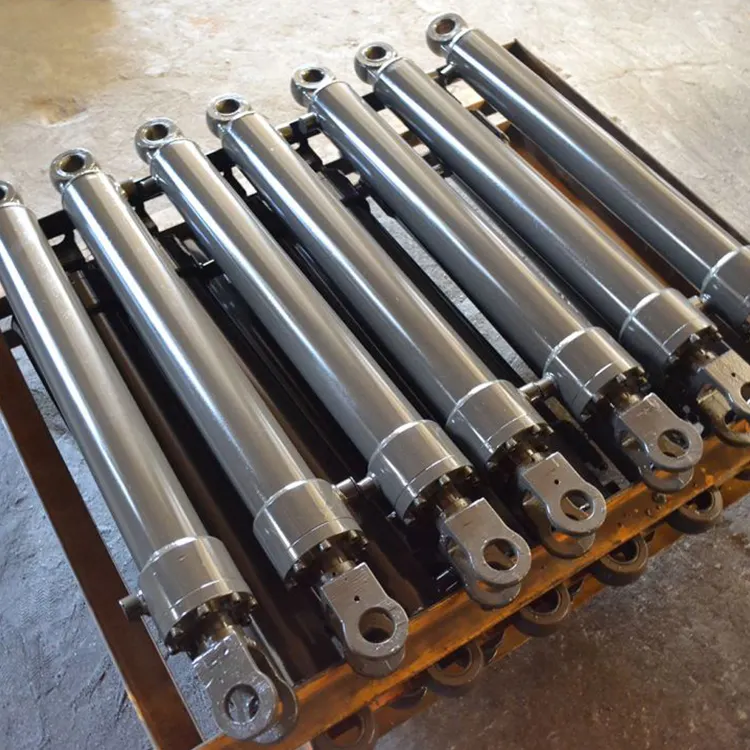
How Does a Forklift Hydraulic Cylinder Contribute to Precise Load Positioning?
A forklift hydraulic cylinder plays a crucial role in achieving precise load positioning during material handling operations. The hydraulic cylinder, along with the hydraulic system of a forklift, enables operators to accurately lift, lower, and position loads with precision. Here’s how a forklift hydraulic cylinder contributes to precise load positioning:
- Controlled Lifting and Lowering:
- Smooth and Gradual Movements:
- Load Sensing and Feedback:
- Fine Adjustment Controls:
- Stability and Balance:
The hydraulic cylinder allows for controlled lifting and lowering of the load. When the operator activates the controls to lift the load, the pressurized hydraulic fluid is directed to the hydraulic cylinder. The hydraulic pressure exerts force on the piston, causing it to extend and lift the load. By regulating the hydraulic pressure and flow, the operator can precisely control the height to which the load is raised. Similarly, during lowering, the hydraulic system enables a controlled descent, allowing for accurate placement of the load.
The hydraulic system, including the cylinder, facilitates smooth and gradual movements of the load. This is achieved through the use of control valves and hydraulic fluid flow regulation. By adjusting the valve settings, the operator can control the speed at which the hydraulic fluid enters or exits the cylinder, resulting in smooth and gradual movements. This level of control allows for precise positioning of the load, especially when working in tight spaces or when dealing with fragile or sensitive materials.
Modern forklifts often incorporate load sensing mechanisms in their hydraulic systems, which further enhance precise load positioning. Load sensing valves continuously monitor the force exerted on the hydraulic cylinder and provide feedback to the hydraulic system. This feedback enables the hydraulic system to adjust the hydraulic pressure and flow rate in real-time, ensuring that the load is positioned accurately and safely. Load sensing technology helps compensate for variations in load weight and provides the operator with greater control and precision.
Forklift hydraulic systems are typically equipped with fine adjustment controls that allow for precise load positioning. These controls, often in the form of joysticks or knobs, enable the operator to make small, incremental adjustments to the lift height or tilt angle of the forks. By manipulating these controls, the operator can fine-tune the position of the load to align it with racks, shelves, or other designated areas. These fine adjustment controls provide the operator with fine-grained control over load positioning, increasing accuracy and efficiency.
The hydraulic cylinder works in conjunction with the overall design and stability features of the forklift to contribute to precise load positioning. Forklifts are designed with a stable base, a low center of gravity, and features such as tilt cylinders and mast positioners. These elements ensure stability and balance during load handling operations, allowing for more accurate positioning of the load. The hydraulic cylinder’s smooth and controlled movements, combined with the stability features of the forklift, enable precise load placement without compromising safety or stability.
In summary, a forklift hydraulic cylinder contributes to precise load positioning through controlled lifting and lowering, smooth and gradual movements, load sensing and feedback mechanisms, fine adjustment controls, and the overall stability and balance of the forklift. These features and capabilities empower operators to handle loads with precision, align them accurately in designated areas, and optimize material handling operations in various industrial settings.


editor by Dream 2024-11-26