Product Description
Product Description
A: Product Description
| Commodity Name | double acting hydraulic cylinder, hydraulic cylinder |
| Suitable Model | construction machinery |
| Original | ZheJiang , China |
| Warranty | One year |
| Min of quantity | 1 piece |
| Packing | standard export wooden box or as your require |
| Time of Shipment | Usual 30-60days. Different according the quantity of order. |
| Port of Delivery | HangZhou, China |
Product Parameters
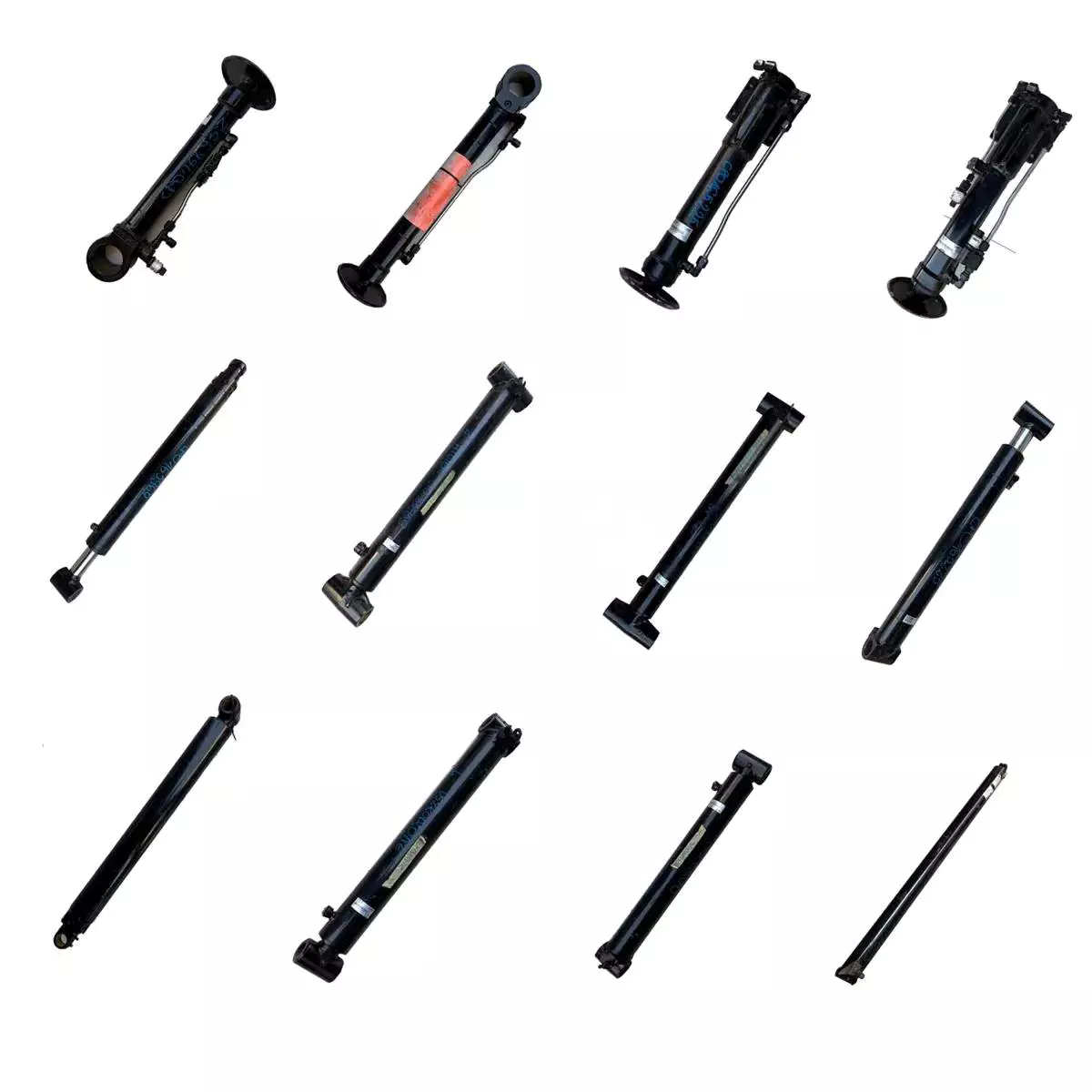
CATALOGUE OF HYDRAULIC CYLINDERS
| NO. | MACHINERY NAME | CYLINDER MODEL | TUBE(mm) | ROD(mm) | STROKE LENGTH(mm) | LOCATING DISTANCE(mm) | WORKING PRESSURE(Mpa) |
| 1 | CANE HARVESTER | 40-22-108 | 40 | 22 | 108 | 352 | 16 |
| 2 | CANE HARVESTER | 40-43-180 | 40 | 43 | 180 | 295 | 16.5 |
| 3 | CANE HARVESTER | 50-25-165 | 50 | 25 | 165 | 440 | 16 |
| 4 | CANE HARVESTER | 63-40-733 | 63 | 40 | 733 | 1120 | 16 |
| 5 | CANE HARVESTER | 75-40-250 | 75 | 40 | 250 | 521 | 16.5 |
| 6 | CANE HARVESTER | 83-60-140 | 83 | 60 | 140 | 525 | 16 |
| 7 | COMBINE HARVESTER | 32-18-123 | 32 | 18 | 123 | 313 | 16 |
| 8 | COMBINE HARVESTER | 50-25-87 | 50 | 25 | 87 | 265 | 16 |
| 9 | COMBINE HARVESTER | 50-25-126 | 50 | 25 | 126 | 816 | 16 |
| 10 | COMBINE HARVESTER | 83-60-150 | 83 | 60 | 150 | 625 | 16 |
| 11 | CORN HARVESTER | 40-22-200 | 40 | 22 | 200 | 367 | 16 |
| 12 | CORN HARVESTER | 40-35-270 | 40 | 35 | 270 | 640 | 16 |
| 13 | CORN HARVESTER | 45-25-200 | 45 | 25 | 200 | 430 | 16 |
| 14 | CORN HARVESTER | 50-25-220 | 50 | 25 | 220 | 439 | 16 |
| 15 | CORN HARVESTER | 50-28-210 | 50 | 28 | 210 | 490 | 16 |
| 16 | CORN HARVESTER | 52-35-190 | 52 | 35 | 190 | 350 | 16 |
| 17 | CORN HARVESTER | 55-35-270 | 55 | 35 | 270 | 739 | 16 |
| 18 | CORN HARVESTER | 55-35-780 | 55 | 35 | 780 | 1030 | 16 |
| 19 | CORN HARVESTER | 55-45-160 | 55 | 45 | 160 | 279 | 16 |
| 20 | CORN HARVESTER | 63-35-621 | 63 | 35 | 621.5 | 1066 | 16 |
| 21 | CORN HARVESTER | 63-45-950 | 63 | 45 | 950 | 1310 | 16 |
| 22 | CORN HARVESTER | 68-50-255 | 68 | 50 | 255 | 764 | 16 |
| 23 | CORN HARVESTER | 75-45-916 | 75 | 45 | 916 | 1320 | 16 |
| 24 | CORN HARVESTER | 25-180 | / | 25 | 180 | 340 | 16 |
| 25 | CORN HARVESTER | 45-185 | / | 45 | 185 | 300 | 16 |
| 26 | CORN HARVESTER | 45-280 | / | 45 | 280 | 795 | 16 |
| 27 | CORN HARVESTER | 45-360 | / | 45 | 360 | 520 | 16 |
| 28 | CORN HARVESTER | 50-155 | / | 50 | 155 | 405 | 16 |
| 29 | CORN HARVESTER | 50-215 | 50 | 215 | 467 | 16 | |
| 30 | CORN HARVESTER | 60-210 | 60 | 210 | 1130 | 16 |
Application
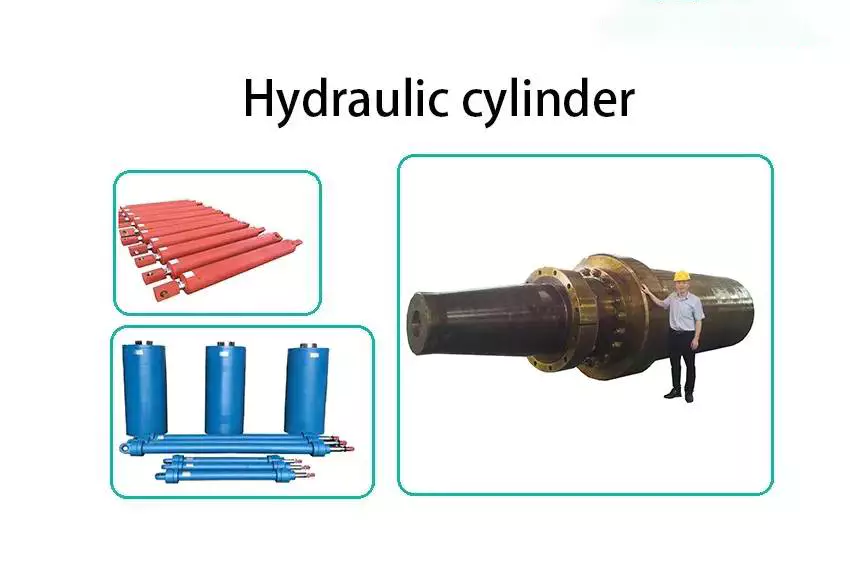
Hydraulic cylinder can application for Excavator, Forklift, Snowplow, Farm Cultivator, Metallurgical Machinery, Agricultural Machinery, Forest Machinery, Construction Machinery and more.
Our service/certifications
—CE Certificate of Quality Checked
—Adopt ISO Certificate of Quality Management System
—BV Certificate of Main Products Line verification
—Fast Delivery
—After-sales Service
—24 Hours, 7 Days on-line Service
Company Profile
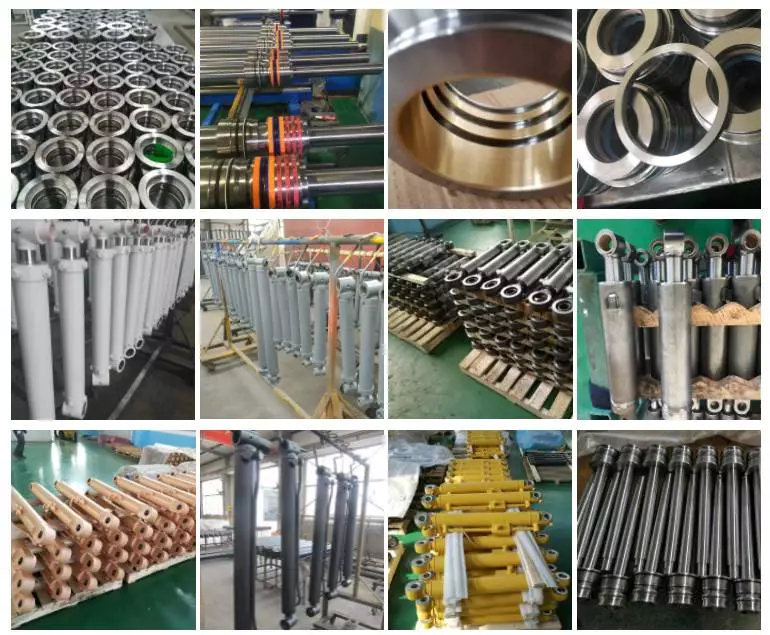
KENDE is a leading global designer, manufacturer and marketer of hydraulic cylinder,cab, oil tank, counterweight, boom, arm, bucket, chassis, outrigger, pipe, hose, fitting, valve block, tyre, wheel,and other parts. Products are widely used in construction, mining, crane, material handing, automobile, truck, transportation, oil and gas, farm and garden equipment and so on .
We supply a wide range of parts for excavators, loaders, drills, dumpers, forklifts, tractors, trailers, harvestors, cars, buses, trucks and so on. Our products are focused on improved efficiency and life of the machineries and equipments.
Founded in January of 2015, we have become a big group till now which has 3 factories in asia to supply a wide range of products and service for the global customers.
We have the most advanced production equipments and specialized R &D center to assure the highest quality products to customers.
Our vision statement is “Science and technology first, Always with a grateful heart, Walk the world by virtue, Struggle for a better future”
FAQ
1)>. How about your delivery time?
: Generally, it will take 30 to 60 days after receiving your advance payment. The specific delivery time depends on the items and the quantity of your order.
2)>. What is your terms of price?
: EXW, FOB, CFR, CIF, DDU.
3)> . What is your terms of payment?
: T/T 50% as deposit, and 50% before delivery. We’ll show you the photos of the products and packages before you pay the balance.
4)> . Can you supply a sample freely?
: Sorry, we only can produce the sample with the cost price for you.
5)> Can you produce according to the samples?
: Yes, we can produce by your samples or technical drawings. We can build the molds and fixtures.
6)>. What is your sample policy?
: We can supply the sample if we have ready parts in stock, but the customers have to pay the sample cost and the courier cost.
7)>. Do you test all your goods before delivery?
: Yes, we have 100% test before delivery
8)>: How do you make our business long-term and good relationship?
:1. We keep good quality and competitive price to ensure our customers benefit ;
2. We respect every customer as our friend and we sincerely do business and make friends with them, no matter where they come from.
| Certification: | CE, TUV, SGS, BV |
|---|---|
| Pressure: | High Pressure Low Pressure Medium Pressure |
| Work Temperature: | High Temperature Low Temperature Normal Temperat |
| Acting Way: | Double Acting Single Acting |
| Working Method: | Straight Trip |
| Adjusted Form: | Regulated Type |
| Customization: |
Available
|
|
|---|
How do hydraulic cylinders handle the challenges of precise positioning and control?
Hydraulic cylinders are designed to handle the challenges of precise positioning and control with a combination of engineering principles and advanced control systems. These challenges often arise in applications where accurate and controlled movements are required, such as in industrial automation, construction, and material handling. Here’s a detailed explanation of how hydraulic cylinders overcome these challenges:
1. Fluid Power Control:
– Hydraulic cylinders utilize fluid power control to achieve precise positioning and control. The hydraulic system consists of a hydraulic pump, control valves, and hydraulic fluid. By regulating the flow of hydraulic fluid into and out of the cylinder, operators can control the speed, direction, and force exerted by the cylinder. The fluid power control allows for smooth and accurate movements, enabling precise positioning of the hydraulic cylinder and the attached load.
2. Control Valves:
– Control valves play a crucial role in handling the challenges of precise positioning and control. These valves are responsible for directing the flow of hydraulic fluid within the system. They can be manually operated or electronically controlled. Control valves allow operators to adjust the flow rate of the hydraulic fluid, controlling the speed of the cylinder’s movement. By modulating the flow, operators can achieve fine control over the positioning of the hydraulic cylinder, enabling precise and accurate movements.
3. Proportional Control:
– Hydraulic cylinders can be equipped with proportional control systems, which offer enhanced precision in positioning and control. Proportional control systems utilize electronic feedback and control algorithms to precisely regulate the flow and pressure of the hydraulic fluid. These systems provide accurate and proportional control over the movement of the hydraulic cylinder, allowing for precise positioning at various points along its stroke length. Proportional control enhances the cylinder’s ability to handle complex tasks that require precise movements and control.
4. Position Feedback Sensors:
– To achieve precise positioning, hydraulic cylinders often incorporate position feedback sensors. These sensors provide real-time information about the position of the cylinder’s piston rod. Common types of position feedback sensors include potentiometers, linear variable differential transformers (LVDTs), and magnetostrictive sensors. By continuously monitoring the position, the feedback sensors enable closed-loop control, allowing for accurate positioning and control of the hydraulic cylinder. The feedback information is used to adjust the flow of hydraulic fluid to achieve the desired position accurately.
5. Servo Control Systems:
– Advanced hydraulic systems employ servo control systems to handle the challenges of precise positioning and control. Servo control systems combine electronic control, position feedback sensors, and proportional control valves to achieve high levels of accuracy and responsiveness. The servo control system continuously compares the desired position with the actual position of the hydraulic cylinder and adjusts the flow of hydraulic fluid to minimize any positional error. This closed-loop control mechanism enables the hydraulic cylinder to maintain precise positioning and control, even under varying loads or external disturbances.
6. Integrated Automation:
– Hydraulic cylinders can be integrated into automated systems to achieve precise positioning and control. In such setups, the hydraulic cylinders are controlled by programmable logic controllers (PLCs) or other automation controllers. These controllers receive input signals from various sensors and use pre-programmed logic to command the hydraulic cylinder’s movements. The integration of hydraulic cylinders into automated systems allows for precise and repeatable positioning and control, enabling complex sequences of movements to be executed with high accuracy.
7. Advanced Control Algorithms:
– Advancements in control algorithms have also contributed to the precise positioning and control of hydraulic cylinders. These algorithms, such as PID (Proportional-Integral-Derivative) control, adaptive control, and model-based control, enable sophisticated control strategies to be implemented. These algorithms consider factors such as load variations, system dynamics, and environmental conditions to optimize the control of hydraulic cylinders. By employing advanced control algorithms, hydraulic cylinders can compensate for disturbances and achieve precise positioning and control over a wide range of operating conditions.
In summary, hydraulic cylinders overcome the challenges of precise positioning and control through the use of fluid power control, control valves, proportional control, position feedback sensors, servo control systems, integrated automation, and advanced control algorithms. By combining these elements, hydraulic cylinders can achieve accurate and controlled movements, enabling precise positioning and control in various applications. These capabilities are essential for industries that require high precision and repeatability in their operations, such as industrial automation, robotics, and material handling.
Customization of Hydraulic Cylinders for Marine and Offshore Applications
Yes, hydraulic cylinders can be customized for use in marine and offshore applications. These environments present unique challenges, such as exposure to corrosive saltwater, high humidity, and extreme operating conditions. Customization allows hydraulic cylinders to meet the specific requirements and withstand the harsh conditions encountered in marine and offshore settings. Let’s delve into the details of how hydraulic cylinders can be customized for marine and offshore applications:
- Corrosion Resistance: Marine and offshore environments expose hydraulic cylinders to corrosive elements, such as saltwater. To mitigate corrosion, hydraulic cylinders can be customized with materials and surface treatments that provide enhanced corrosion resistance. For example, cylinders can be constructed from stainless steel or coated with protective layers like chrome plating or specialized coatings to withstand the corrosive effects of saltwater.
- Sealing and Environmental Protection: Hydraulic cylinders for marine and offshore applications require robust sealing systems to prevent water ingress and protect internal components. Customized sealing solutions, such as high-quality seals, wipers, and gaskets, can be employed to ensure effective sealing and resistance to water, debris, and contaminants. Additionally, hydraulic cylinders can be designed with protective features like bellows or boots to shield vulnerable areas from environmental elements.
- High-Pressure and Shock Resistance: Marine and offshore operations may involve high-pressure hydraulic systems and encounters with dynamic loads or shocks. Customized hydraulic cylinders can be engineered to withstand these demanding conditions. They can be designed with reinforced construction, thicker walls, and specialized components to handle high-pressure applications and absorb shock loads, ensuring reliable performance and durability.
- Temperature and Fluid Compatibility: Marine and offshore applications can expose hydraulic cylinders to extreme temperature variations and specific fluid requirements. Customization allows the selection of materials, seals, and fluids compatible with the anticipated temperature range and the specific fluid being used. Hydraulic cylinders can be tailored to maintain optimal performance and reliability under challenging temperature conditions and with the designated fluid type.
- Mounting and Integration: Customized hydraulic cylinders can be designed to facilitate easy integration and mounting within marine and offshore machinery. Mounting options can be tailored to suit the available space and structural requirements of the equipment. Additionally, customized hydraulic cylinder designs can incorporate features for easy maintenance, accessibility, and connection to the hydraulic system, ensuring convenient installation and serviceability in marine and offshore applications.
In summary, hydraulic cylinders can be customized to meet the unique demands of marine and offshore applications. Customization enables the integration of corrosion-resistant materials, robust sealing systems, high-pressure and shock-resistant designs, temperature and fluid compatibility, as well as optimized mounting and integration features. By tailoring hydraulic cylinders to the specific requirements of marine and offshore environments, reliable performance, extended service life, and efficient operation can be achieved in these challenging operating conditions.
Can you explain the role and significance of hydraulic cylinders in machinery?
Hydraulic cylinders play a crucial role in machinery across various industries. They are essential components that provide controlled and powerful linear motion, enabling the operation of heavy equipment and facilitating numerous tasks. The role and significance of hydraulic cylinders in machinery can be explained in detail as follows:
Role of Hydraulic Cylinders:
– Conversion of Hydraulic Energy: Hydraulic cylinders convert hydraulic energy, typically in the form of pressurized hydraulic fluid, into linear force and motion. This conversion allows machinery to perform tasks such as lifting, pushing, pulling, clamping, tilting, and controlling various mechanisms.
– Generation of Linear Motion: Hydraulic cylinders generate linear motion by utilizing the principles of Pascal’s law. When hydraulic fluid is directed into one side of the cylinder, it applies pressure on the piston, resulting in linear movement of the piston and the attached piston rod. This linear motion can be used to actuate other components within the machinery or directly perform the required task.
– Force Generation: Hydraulic cylinders are capable of generating high forces due to the hydraulic pressure applied to the piston. The force output of a hydraulic cylinder depends on the surface area of the piston and the pressure of the hydraulic fluid. This force allows machinery to exert significant power for lifting heavy loads, applying pressure, or overcoming resistance.
– Precise Control: Hydraulic cylinders offer precise control over the linear motion and force exerted. By regulating the flow of hydraulic fluid, the speed and direction of the cylinder’s movement can be accurately adjusted. This level of control is crucial in machinery that requires precise positioning, delicate movements, or synchronization of multiple cylinders.
– Integration with Hydraulic Systems: Hydraulic cylinders are integral parts of hydraulic systems used in machinery. They work in conjunction with hydraulic pumps, valves, and actuators to create a complete hydraulic circuit. This integration allows for efficient power transmission, control, and coordination of various machine functions.
Significance of Hydraulic Cylinders:
– Heavy Equipment Operation: Hydraulic cylinders are vital in heavy machinery used in construction, mining, agriculture, material handling, and other industries. They enable the lifting and movement of heavy loads, the operation of attachments, and the performance of tasks that require high force and precision.
– Versatility and Adaptability: Hydraulic cylinders are versatile components that can be designed and tailored to meet specific machinery requirements. They can be integrated into various types of equipment and customized based on factors such as force capacity, stroke length, speed, and mounting options. This adaptability makes hydraulic cylinders suitable for diverse applications.
– Durability and Reliability: Hydraulic cylinders are built to withstand rigorous operating conditions, including high pressures, heavy loads, and continuous use. They are designed with robust materials, precise machining, and effective sealing systems to ensure durability and reliability over extended periods of operation.
– Safety and Load Control: Hydraulic cylinders provide safe and controlled operation in machinery. They offer overload protection mechanisms, such as relief valves, to prevent damage caused by excessive force or pressure. Additionally, hydraulic cylinders allow for precise load control, minimizing the risk of accidents during lifting, lowering, or positioning of heavy loads.
– Compact Design: Hydraulic cylinders offer a high power-to-size ratio, allowing for compact machinery design. Their relatively small size compared to the forces they can generate makes them suitable for applications where space is limited or weight restrictions apply.
– Energy Efficiency: Hydraulic cylinders contribute to energy efficiency in machinery. The use of hydraulic systems allows for the transfer of power over long distances without significant power losses. Additionally, hydraulic cylinders can incorporate energy-saving features such as load-sensing technology and regenerative circuits, reducing energy consumption.
Overall, hydraulic cylinders play a vital role in machinery by providing controlled and powerful linear motion. Their significance lies in their ability to convert hydraulic energy, generate high forces, offer precise control, integrate with hydraulic systems, and facilitate the operation of heavy equipment across various industries. Hydraulic cylinders contribute to increased productivity, safety, and efficiency in machinery applications, making them indispensable components in modern-day engineering.


editor by CX 2023-10-20