Product Description
Construction machinery accessories Loader Spare Parts Xihu (West Lake) Dis. 50E-2 Steering cylinder
Product description:This model application to Xihu (West Lake) Dis. 50E-2 model loader
FAQ:
Q:Are you factory?
A:Yes, We are the leading manufacturer of Forklift attachment and Wheel excavator in filling needs of the forklift attachment & Wheel excavator market with innovative models, and quality at reasonable price from $80 to $9999
Q:Can I customized my own design and choose the color I want?
A:Of course, we have several professional designers who can help you with your designs.And we can also support you customizing colors, and also the material of both Forklift attachment and Wheel excavator.
Q:Can I put on my logos?
A:Yes, we support the paint spraying.If the order is big enough, we can free the cost of it.
Q:Are there any forklift or Wheel excavator accessories I can choose for my order?
A:Yes, we can also make hydrocylinder ,hydraulic tubing and other accessories of forklift and wheel excavator industry.
Q:What about the MOQ?
A:For our products in ready stock, we have NO MOQ but for accessories, please contact us to get the MOQ and latest price.
Q:Are samples Free?
A:Usually we do not offer samples, but you can order 1 piece for check and they are not free shipping.So you need afford the shipping cost (freight) by yourself.
Q:What is the Lead Time?
A:For ready stock, we will ship out items within7 working days after getting your payment.For normal OEM orders, we will ship out within 60 days in normal condition after getting your payment.
Q:What kind of terms of payment can you accept?
A:We can accept T/T, L/C Western Union or Paypal.Normally we need 30% of full amount as deposit to start OEM orders.Once we get the rest 70% balance will ship out the goods to you.
Q:Is the price negotiable?
A:Yes, the price we quote is based on the quantity for the order.You will get more discount absolutely if you order more.
| Certification: | ISO9001 |
|---|---|
| Pressure: | Medium Pressure |
| Work Temperature: | Normal Temperature |
| Acting Way: | Single Acting |
| Working Method: | Straight Trip |
| Adjusted Form: | Regulated Type |
| Customization: |
Available
|
|
|---|
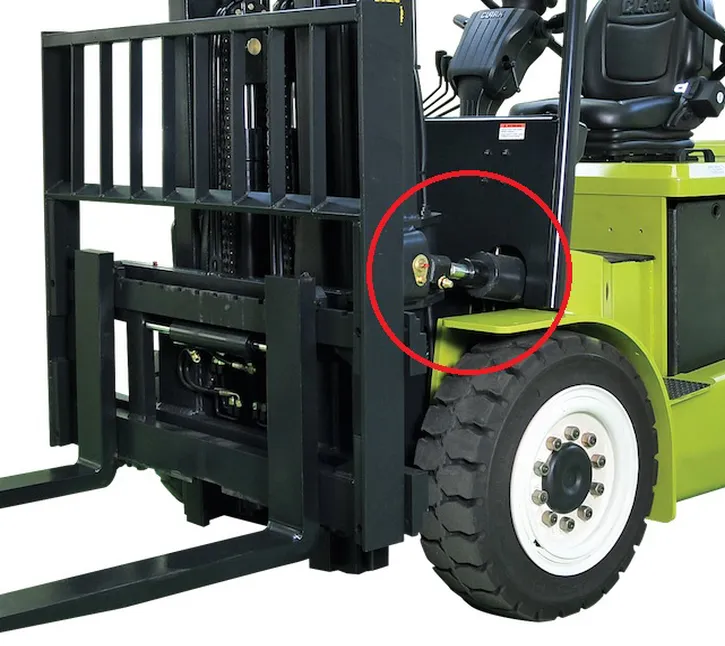
How does a forklift hydraulic cylinder contribute to quick load release?
A forklift hydraulic cylinder plays a crucial role in facilitating quick load release during material handling operations. Here’s an explanation of how it achieves this:
The hydraulic cylinder’s contribution to quick load release is primarily attributed to its design and the following factors:
1. Cylinder Actuation:
The hydraulic cylinder is actuated by the controlled release of hydraulic fluid. When the operator activates the appropriate controls, the hydraulic system allows the fluid to flow back into the reservoir, causing the cylinder to retract rapidly. This rapid retraction enables quick release of the load, expediting the unloading process.
2. Flow Control Valves:
The forklift’s hydraulic system incorporates flow control valves that regulate the rate of fluid flow to and from the hydraulic cylinder. During load release, these valves can be adjusted to increase the flow rate, allowing the hydraulic fluid to return to the reservoir more quickly. By controlling the flow, the cylinder can retract rapidly, facilitating quick load release.
3. Load Lowering Speed:
Hydraulic cylinders also contribute to quick load release through their load lowering functionality. When the operator desires to lower the load rapidly, the hydraulic system can be adjusted to increase the flow rate of the hydraulic fluid, which allows for faster descent of the load. This controlled acceleration of load lowering speed helps expedite the unloading process.
4. Responsive Control System:
The forklift’s hydraulic control system, including the controls for the hydraulic cylinder, is designed to be responsive and easy to operate. The operator can quickly activate the load release functions, initiating the rapid retraction of the cylinder and the subsequent quick release of the load. The intuitive control system ensures efficient and timely load release.
5. Safety Measures:
While facilitating quick load release, forklift hydraulic cylinders also incorporate safety measures to prevent uncontrolled or accidental release of the load. These safety features, such as pressure relief valves and load holding valves, ensure that the load release process remains safe and controlled, minimizing the risk of accidents or damage.
In summary, a forklift hydraulic cylinder contributes to quick load release through its actuation mechanism, flow control valves, load lowering functionality, responsive control system, and integrated safety measures. By utilizing these features, the cylinder enables rapid retraction and controlled release of the load, enhancing the efficiency of material handling operations.
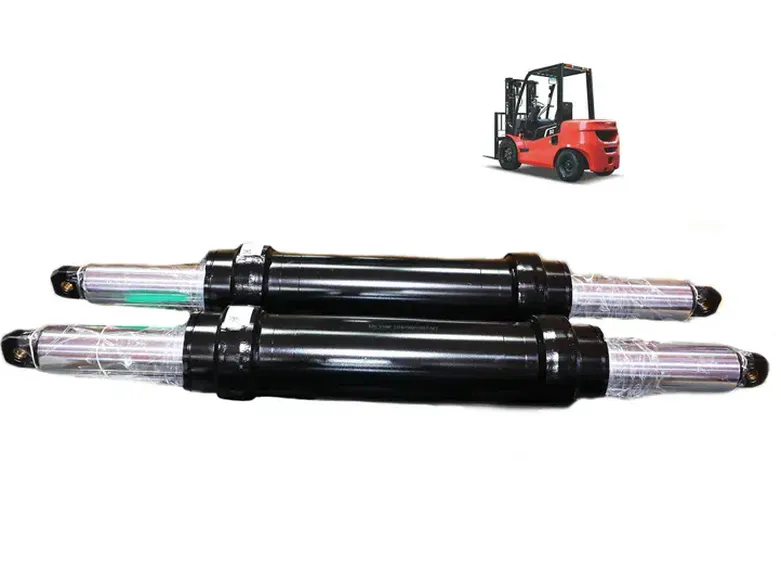
Can hydraulic cylinders be used in articulated forklifts?
Yes, hydraulic cylinders can be used in articulated forklifts. Articulated forklifts, also known as flexi forklifts or narrow aisle forklifts, are designed with a unique articulating mast that allows for increased maneuverability in tight spaces. Hydraulic cylinders play a vital role in the operation of these forklifts. Here’s an explanation of their use:
Articulated forklifts utilize hydraulic cylinders in several key areas:
1. Mast Articulation:
The primary function of hydraulic cylinders in articulated forklifts is to facilitate the articulation of the mast. The mast is divided into two sections connected by a hydraulic cylinder. This cylinder enables the mast to pivot or bend at a joint, providing the forklift with the ability to articulate and operate in narrow aisles or confined spaces. By extending or retracting the hydraulic cylinder, the operator can articulate the mast to navigate through tight turns and reach pallets from various angles.
2. Lift and Tilt Functions:
Hydraulic cylinders are also used to control the lift and tilt functions of the forks in articulated forklifts. These cylinders allow for smooth and precise lifting and tilting of the forks to pick up, transport, and deposit loads. By adjusting the extension or retraction of the hydraulic cylinders, the operator can control the height and angle of the forks, ensuring efficient and safe load handling.
3. Side Shift:
Some articulated forklifts are equipped with hydraulic cylinders for side shifting capabilities. These cylinders enable the forks to move laterally, allowing for precise positioning of the load. By activating the hydraulic system, the cylinders extend or retract, shifting the forks to the desired position. This feature is particularly useful when aligning the forks with pallets or when working with varying load sizes.
4. Stabilization:
Hydraulic cylinders also contribute to the stability of articulated forklifts. They work in conjunction with the forklift’s frame and counterweight to ensure proper weight distribution and balance. By adjusting the extension or retraction of the hydraulic cylinders, the forklift can maintain stability during lifting and maneuvering operations.
In summary, hydraulic cylinders are integral components of articulated forklifts, enabling mast articulation, controlling lift and tilt functions, providing side shift capabilities, and contributing to overall stability. These cylinders play a crucial role in enhancing the maneuverability and efficiency of articulated forklifts, allowing them to operate effectively in narrow aisles and confined spaces.
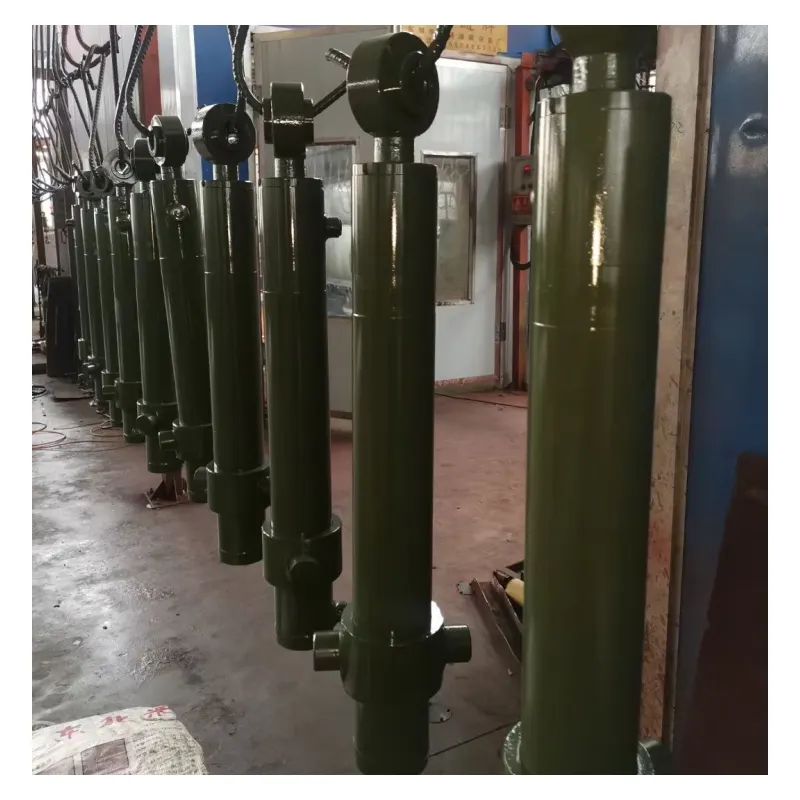
Can Hydraulic Cylinders be Customized for Specific Forklift Models?
Yes, hydraulic cylinders can be customized to fit specific forklift models. Forklift manufacturers and hydraulic cylinder suppliers often offer customization options to ensure compatibility and optimal performance with different forklift models. Here’s a detailed explanation of how hydraulic cylinders can be customized for specific forklift models:
1. Cylinder Size and Dimensions:
Hydraulic cylinders can be customized to match the required size and dimensions of a specific forklift model. Forklifts come in various sizes, from small electric models to large industrial forklifts, and each model may have unique specifications for the hydraulic cylinder. By customizing the cylinder size, stroke length, bore diameter, and overall dimensions, it can be precisely tailored to fit the hydraulic system of the forklift model.
2. Lifting Capacity:
The lifting capacity of a forklift is determined by various factors, including the hydraulic cylinder’s design and specifications. Hydraulic cylinders can be customized to match the required lifting capacity of a specific forklift model. This customization involves selecting the appropriate cylinder components, such as piston size, rod diameter, and hydraulic pressure ratings, to ensure the cylinder can handle the intended load capacity of the forklift.
3. Mounting and Connection:
Hydraulic cylinders need to be properly mounted and connected to the forklift’s hydraulic system. The mounting style and connection points may vary depending on the forklift model. Customization allows for the adaptation of the hydraulic cylinder’s mounting brackets, clevises, or other attachment mechanisms to fit the specific mounting requirements of the forklift. This ensures a secure and compatible connection between the cylinder and the forklift’s hydraulic system.
4. Operating Parameters:
Customization of hydraulic cylinders also involves adjusting the operating parameters to meet the specific requirements of the forklift model. This includes setting the hydraulic pressure, flow rate, and other parameters to match the forklift’s hydraulic system specifications. Customization ensures that the hydraulic cylinder operates within the recommended parameters, optimizing its performance and compatibility with the forklift.
5. Special Features and Accessories:
In some cases, specialized forklift models may require additional features or accessories in the hydraulic cylinder design. Customization allows for the inclusion of specific features such as position sensors, integrated valves, cushioning mechanisms, or other enhancements based on the unique requirements of the forklift model. These additional features enhance the functionality and performance of the hydraulic cylinder, addressing specific needs or challenges of the forklift application.
By offering customization options, hydraulic cylinder manufacturers can ensure that the cylinders are specifically tailored to fit the hydraulic systems of various forklift models. Customization allows for precise matching of size, lifting capacity, mounting style, operating parameters, and additional features, resulting in hydraulic cylinders that seamlessly integrate with specific forklift models and deliver optimal performance.


editor by CX 2023-12-02