Product Description
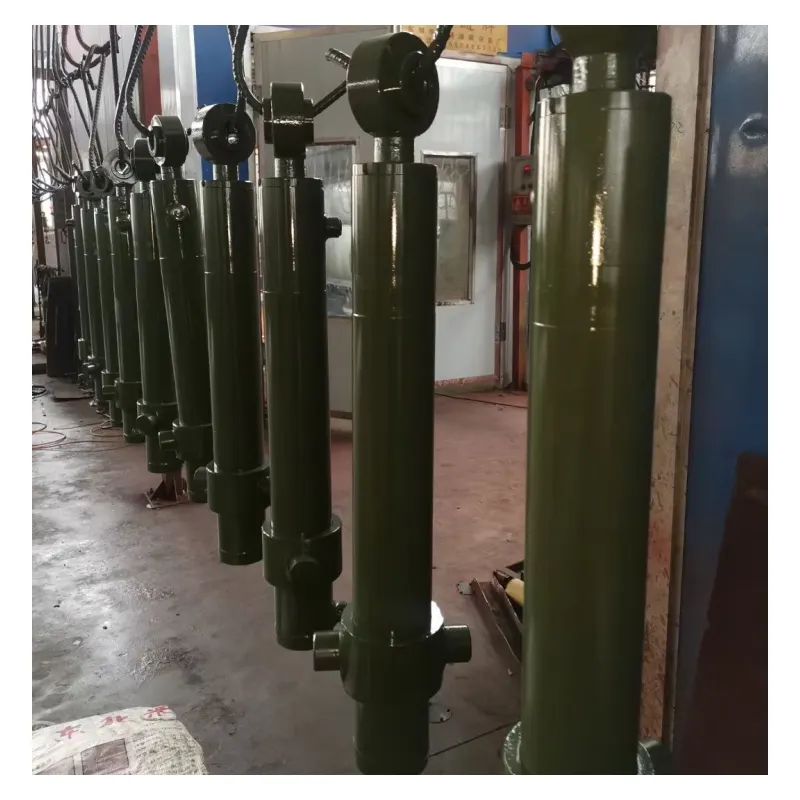
Parker Telescopic Hydraulic Dump Truck/Trailer Cylinder/Roll-Off hoist
Features
·Parker Seal Division-“Zero-leak”Sealing Package
·100,000 Yield Induction Hardened Chrome Plated Rod as Standard
·Skived and Burnished Tubing
·Hardened Pin-eye Bushings
·Parker”Zero-leak” Internal Bypass Piston Design
·Greater Rod Support
Benefits
·Leak Free Extended Life
·More Resilient to External Damage
·Consistant Quality
·Extends Cylinder Life as Cylinder Wears
·More Efficient/Less Heat
·Resiste rod Deflection and Side Loading
| Part Description | |
| Application | Dump truck,Tipping,Trailer,Underbody,Roll-off Hoist |
| Material of cylinder tube | 45 steel,27SiMn,Carbon steel,Alloy steel and general seamless steel |
| Seal | Hallite,SKF,NOK,Guarnitec,Parker,and other equivalent brands |
| Coating | Hard Chrome 0.03-0.05mm |
| Temperature | _30°C to |
Why choose us?
Roca team takes all your concerns into consideration to suit your hydraulic cylinder requirements. We work out the best design solution for your application.
Hydraulic cylinders are the most effective and efficient method of pushing, pulling, lifting, and lowering.
Nowadays hydraulic cylinders play an essential role in daily application and industry:
√ Mining
√ Earthmoving & Construction
√ Agriculture &Forestry
√Waste Management & Material Handing
√Ship crane & offshore
Selecting the right cylinders for an application is critical in obtaining maximum performance and reliability.
ROCA team considers all your concerns to suit your hydraulic cylinder requirements.
Together, we work out the best design solution for your application.
FAQ
Q1.Do you have MOQ?
Depending on different ideas, Can be negotiated. The larger the quantity is, the competitive the unit price will be.
Q2.Should the customer pay the delivery fee, How much is it?
For the delivery fee, many samples are being requested to be sent, so we must get the delivery fee.
If you tell me to use the appointed Express, you will give me your express account or you will pay according to the Express.
If you do not request, I will choose a cheap one in China.
Q3.How about the after sale service?
1) We will always keep the quality the same as the buyer’s samples and if there is something with the quality, we will make compensation for our customers.
2) We will suggest our packing and take charge in our packing, we will keep the goods safe in the delivery.
3) We will trace the goods from the production to selling, we will solve the problems in the selling for our customers.
Q4.When can I get a price?
We usually quote within 24 hours after we get your inquiry.
Q5: Are you a trade company or manufacturer?
We are a professional manufacturer with our own factory.
| Certification: | RoHS, CE, ISO9001 |
|---|---|
| Pressure: | High Pressure |
| Work Temperature: | High Temperature |
| Acting Way: | Single Acting |
| Working Method: | Rotary |
| Adjusted Form: | Regulated Type |
| Customization: |
Available
|
|
|---|
Can hydraulic cylinders be used in rough terrain forklifts?
Yes, hydraulic cylinders can be used in rough terrain forklifts. Hydraulic systems, including hydraulic cylinders, are an essential component of rough terrain forklifts and play a crucial role in their operation. Here’s an explanation of their use:
Rough terrain forklifts are specifically designed to operate in challenging outdoor environments, such as construction sites, lumber yards, and agricultural settings. These forklifts are equipped with features that allow them to navigate uneven terrain, slopes, and other rough surfaces. Hydraulic cylinders are integral to their performance in the following ways:
1. Lifting Functionality:
The hydraulic cylinder in a rough terrain forklift is responsible for lifting and lowering the load-carrying forks. It provides the necessary force to elevate heavy loads to the desired height. The hydraulic system allows precise control over the lifting speed and positioning, enabling efficient material handling even on rough and uneven surfaces.
2. Suspension System:
Rough terrain forklifts are equipped with a suspension system that helps absorb shocks and vibrations during operation. Hydraulic cylinders are often used as part of the suspension system to provide damping and improve ride comfort. These cylinders help cushion the impact of uneven terrain, reducing the transfer of vibrations to the forklift and the load being carried.
3. Stability and Balance:
Hydraulic cylinders contribute to the stability and balance of rough terrain forklifts. They are used to control the extension and retraction of the mast assembly, which supports the forks and the load. By adjusting the mast height and angle, the cylinders help maintain stability and balance, especially when operating on slopes or uneven ground.
4. Steering and Maneuverability:
Some rough terrain forklifts utilize hydraulic cylinders in their steering mechanisms. These cylinders assist in turning and maneuvering the forklift, allowing it to navigate through tight spaces and negotiate obstacles on rough terrain. The hydraulic system provides the necessary power and control for smooth and precise steering operations.
Overall, hydraulic cylinders are essential components of rough terrain forklifts. They enable the lifting functionality, contribute to the suspension system for improved ride comfort, help maintain stability and balance, and assist in steering and maneuverability. By utilizing hydraulic power, these forklifts can effectively handle the challenges of rough outdoor environments and ensure efficient material handling operations.
In summary, hydraulic cylinders are indeed used in rough terrain forklifts. Their presence in these forklifts enables reliable lifting, enhances stability and balance, improves ride comfort through suspension systems, and assists in steering and maneuverability on uneven surfaces. The use of hydraulic technology is instrumental in achieving optimal performance and productivity in rough terrain applications.
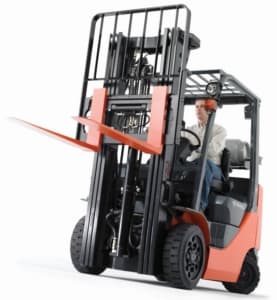
How does a forklift hydraulic cylinder contribute to load rotation?
A forklift hydraulic cylinder plays a significant role in facilitating load rotation. The hydraulic cylinder enables the forklift to manipulate and reposition loads by providing controlled rotational movement. Here’s an explanation of how the hydraulic cylinder contributes to load rotation:
The forklift hydraulic cylinder contributes to load rotation in the following ways:
1. Tilt Function:
Hydraulic cylinders are responsible for the tilt function of the forklift’s mast or carriage. The hydraulic cylinder controls the tilting mechanism, allowing the forks or attachments to tilt forward or backward. By adjusting the tilt angle, the hydraulic cylinder enables the forklift to change the orientation of the load and achieve load rotation.
2. Controlled Movement:
The hydraulic cylinder provides controlled movement during load rotation. It allows the operator to adjust the speed and direction of the tilt function, ensuring smooth and precise rotation of the load. The operator can manipulate the hydraulic controls to achieve the desired rotation angle and maintain stability throughout the process.
3. Load Centering:
Hydraulic cylinders contribute to load rotation by assisting in load centering. The hydraulic system can be equipped with attachments such as rotators or clamps that are actuated by hydraulic cylinders. These attachments help secure the load and ensure it remains centered during rotation, preventing imbalances or accidents.
4. Load Manipulation:
The hydraulic cylinder allows for load manipulation during rotation. By controlling the tilt function, the hydraulic cylinder enables the forklift to precisely position the load, making it easier to place or retrieve items from specific locations. Load rotation facilitated by the hydraulic cylinder enhances the forklift’s versatility and efficiency in various material handling tasks.
5. Operator Control:
Forklift hydraulic cylinders are operated by the forklift operator using hydraulic controls. The operator can adjust the tilt angle and speed of the hydraulic cylinder to achieve the desired load rotation. The hydraulic system provides the necessary responsiveness and control, allowing the operator to safely and accurately manipulate the load.
In summary, a forklift hydraulic cylinder enables load rotation through its tilt function, controlled movement, load centering capabilities, load manipulation, and operator control. The hydraulic cylinder’s ability to provide controlled rotation enhances the forklift’s versatility and efficiency in handling different types of loads and materials.
What are the Safety Considerations When Using Forklifts with Hydraulic Cylinders?
When using forklifts with hydraulic cylinders, it is essential to prioritize safety to prevent accidents, injuries, and property damage. Hydraulic systems and cylinders are integral components of forklifts, and understanding and implementing safety considerations is crucial. Here are important safety considerations to keep in mind:
- Operator Training and Certification:
- Regular Inspections and Maintenance:
- Load Capacity and Stability:
- Proper Load Positioning and Handling:
- Avoiding Overextension and Collisions:
- Proper Use of Controls:
- Clear Communication and Awareness:
- Emergency Procedures:
Operators must receive thorough training and certification specific to forklift operations. Proper training should cover the safe operation of hydraulic systems and cylinders, including understanding the controls, load capacity, stability, and safe maneuvering techniques. Well-trained operators are more likely to handle hydraulic cylinders safely and minimize the risk of accidents or misuse.
Forklifts and their hydraulic systems, including cylinders, should undergo regular inspections and maintenance to ensure they are in proper working condition. Inspections should identify any signs of wear, leaks, or damage, and maintenance tasks such as lubrication and component replacements should be performed as recommended by the manufacturer. Well-maintained hydraulic cylinders contribute to safe and reliable forklift operations.
Understanding and adhering to the forklift’s load capacity limitations is crucial for safe operation. Overloading a forklift can lead to instability and potential tip-overs. Operators should be aware of the load capacity rating and ensure that loads are properly balanced and secured. Maintaining the forklift’s stability, especially when using the hydraulic cylinder to lift or lower loads, is essential to prevent accidents caused by tipping or loss of control.
Safe load positioning and handling contribute to overall forklift safety. Operators should ensure that loads are positioned correctly on the forks, centered and secure, to prevent them from shifting or falling during transport. When using the hydraulic cylinder to raise or lower loads, operators should do so gradually and avoid sudden movements that may destabilize the forklift or cause the load to swing uncontrollably.
Overextending the hydraulic cylinder beyond its recommended limits can lead to failure or instability. Operators should be aware of the maximum extension and retraction limits of the cylinder and avoid exceeding them. Additionally, operators must exercise caution to prevent collisions with objects or structures, as impacts can damage the hydraulic cylinder, compromise its integrity, and pose safety risks.
Operators should be familiar with the forklift’s hydraulic control system and use the controls properly. This includes understanding the functions of each control, such as raising, lowering, tilting, or extending the forks, and using them with precision and care. Mishandling the hydraulic controls can result in sudden movements or unintended actions, potentially causing accidents or injuries.
Clear communication and situational awareness are essential for safe forklift operations. Operators should maintain clear visibility, use mirrors or cameras if available, and be aware of their surroundings to avoid collisions with pedestrians, other vehicles, or obstacles. Effective communication with co-workers and signaling to indicate forklift movements can help prevent accidents and ensure a safe working environment.
Operators should be familiar with emergency procedures and know how to respond in case of malfunctions, leaks, or other emergencies involving the hydraulic cylinder. Proper training should cover emergency shutdown procedures, reporting protocols, and evacuation plans to ensure a timely and coordinated response that minimizes risks to personnel and property.
By prioritizing operator training, regular inspections, adherence to load capacity limits, proper load handling, cautious control usage, and clear communication, forklifts with hydraulic cylinders can be operated safely and efficiently. Implementing these safety considerations helps reduce the risk of accidents, protect personnel, and maintain a secure work environment.


editor by CX 2023-11-21