Product Description
FC Multistage Telescopic Hydraulic Cylinder for Tipper Truck/Dump Trailer on Sale
No.1 Company Introduction:
ZheJiang CHINAMFG hydraulic co., ltd. is a specialized custom hydraulic cylinder for tipper truck manufacturing enterpirise which takes up with design, manufacturer, sell hydraulic products. The company covers an area of 180,000 square meters, with 500 emplayees in it. There are 700 sets of manufacturing equipments, such as cold drawing production lines, surface treatment production line, boring and rolling production line, various of digital-control machining and testing equipment.
>Professional manufacturer& supplier of Hydraulic Cylinders for more than 22 years;
>Hydraulic Cylinders Certification ISO9001:2009, SGS, TS16949, RoHS, CNAS Certification;
>Experience in export North America, Australia, Asia, Middle East, Africa;
>Hydraulic Cylinders can be Make according to client’s requirements;
>The Hydraulic Cylinders can be used for Dump Truck, Tipper Truck, Trailer, Agricultural Machinery, Engineering Machinery, Garbage Truck, Landing Platform etc;
>We are the supplier of Sinotruk, IVECO, AUMAN, BEIBEN TRUCK, CIMC, JMC, Beiben Truck, CAMC, FOTON, JAC, Xihu (West Lake) Dis.n, SHACMAN, most of famous truck manufacturing and refitting company use our telescopic cylinder as first choice.
No.2 Technical specification Description:
| Material | Carbon Steel, 27SiMn, Alloy Steel |
| Honed tube | 20-2000mm, Heat treatment, honing, rolling |
| Piston rod | 10-1500mm,tempering, plated nickel, Chrome or ceramic |
| Working Pressure | 9.8-11.8Mpa |
| Seals | Parker, Merkel, Hallite, Kaden |
| Technology | Bosch Rexroth, Parker, HYVA, Meiller |
| Coating | Sandblasting, primer paint, middle paint, finish paint |
| Temperature range | -30°C to +100°C |
| Work medium | Hydraulic Oil |
| Piston speed | maximum 0.5m/s |
| Mounting style | Earrings, flange, foot mounting, screw thread. |
| Model No. | Max lifting capacity(T) | Rated pressure(Mpa) | Bore diameter (mm) |
| WTFC 4TG-E152*4280ZJ | 28.3 | 16 | 158/136/115/95 |
| WTFC 5TG-E152*4280ZJ | 28.3 | 20 | 158/136/115/95/75 |
| WTFC 4TG-E160*5390ZJ | 32.2 | 20 | 166/141/115/95/75 |
| WTFC 4TG-F175*4280ZJ | 49 | 20 | 181/158/136/115 |
| WTFC 4TG-F175*5390ZJ | 49 | 20 | 181/158/136/115 |
| WTFC 4TG-F175*5700ZJ | 49 | 20 | 181/158/136/115 |
| WTFC 5TG-F175*5390ZJ | 49 | 20 | 181/158/136/115/95 |
| WTFC 5TG-F175*5700ZJ | 49 | 20 | 181/158/136/115/95 |
| WTFC 4TG-F185*4650ZJ | 54.8 | 20 | 191/166/141/115 |
| WTFC 4TG-F185*5000ZJ | 54.8 | 20 | 191/166/141/115 |
| WTFC 4TG-F185*5700ZJ | 54.8 | 20 | 191/166/141/115 |
| WTFC 4TG-F185*6180ZJ | 54.8 | 20 | 191/166/141/115 |
| WTFC 5TG-F185*5000ZJ | 54.8 | 20 | 191/166/141/115/95 |
| WTFC 4TG-F200*6000ZJ | 64 | 20 | 206/181/158/136 |
| WTFC 5TG-F200*6500ZJ | 64 | 20 | 206/181/158/136/115 |
| WTFC 4TG-F175*4280BH | 49 | 20 | 181/158/136/115 |
| WTFC 4TG-F175*4650BH | 49 | 20 | 181/158/136/115 |
| WTFC 4TG-F175*5390BH | 49 | 20 | 181/158/136/115 |
| WTFC 4TG-F185*5700BH | 54.8 | 20 | 191/166/141/115 |
| WTFC 4TG-F185*6000BH | 54.8 | 20 | 191/166/141/115 |
| WTFC 4TG-F185*6180BH | 54.8 | 20 | 191/166/141/115 |
| WTFC 4TG-F200*6000BH | 64 | 20 | 206/181/158/136 |
| WTFC 4TG-F175*4280JT | 49 | 20 | 181/158/136/115 |
| WTFC 4TG-F175*4650JT | 49 | 20 | 181/158/136/115 |
| WTFC 4TG-F175*5390JT | 49 | 20 | 181/158/136/115 |
| WTFC 4TG-F200*5700JT | 64 | 20 | 206/181/158/136 |
| WTFC 4TG-F200*6180JT | 64 | 20 | 206/181/158/136 |
| WTFC 4TG-F175*4450HT | 49 | 20 | 181/158/136/115 |
| WTFC 5TG-F200*6180AF | 64 | 20 | 206/181/158/136/115 |
We firmly believe that quality products from the outstanding design and concept, there are 25 engineers with rich experience in our strong technical team and more than 9,000 types of design. Analyzes, calculations, strength check and motion simulation in variety of software to make our design more close to actual working conditions, We will consider various factors in the design stage to avoid each risk of project failure. Our design and products could perfectly match customers’ varied needs.
No.3 Complete Manufacturing Processes
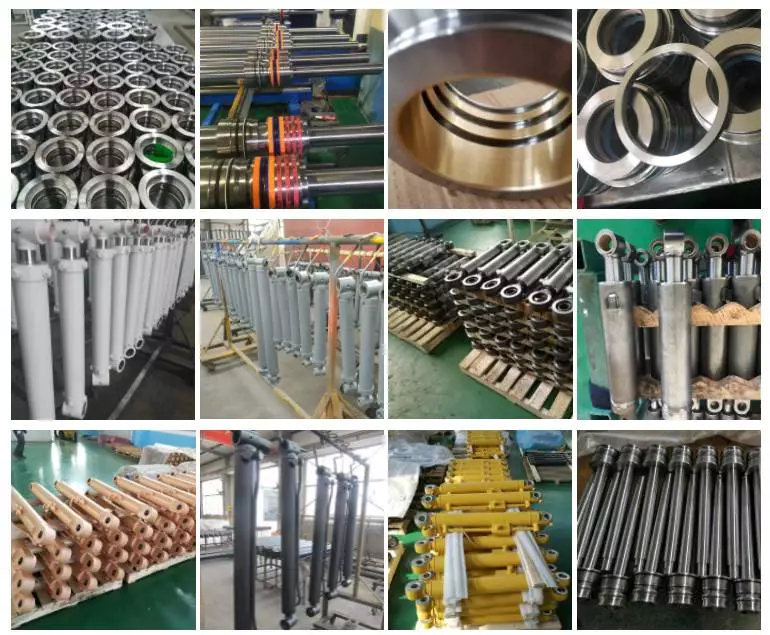
700 sets manufacturing equipment,such as cold drawing production line ,heat treatment production line ,surface treatment production line,testing equipment,various digital-control machining equipment,gantry style linear electroplating production line.
>Owned plating plant founded in 1998;
>Owned honed tube plant founded in 2000;
>Owned Heat treatment founded in 1995;
>Each processing under our control, each products,every step under strict quality control;
No.4 Advantage
1) Professional, skilled, reliable.
2) One-stop total solution
3) Ready stock goods with fast delivery
4) Customizable: Non-standard sizes are also available
5) Small quantity is acceptable
6) Refund or replacement for any product faulty
No.5 Dream
*Company vision:Act as the laeder of internal hydraulic industry
*Enterprise concept:Better and stronger
*Core values:Learning and innovation,equality and justice,customers the first,and quality winning the world
*Enterprise spirit:Complete sincerity,complete precision more excellent,and up to date
*Quality policy:Pursue zero defects of our products,and realize zeo customers’ complains
*Company type:Respond quickly,act immediately,finish what to do today,and improve day after day
No.6 Strict Quality Control System And Certificates and Packaging
1. Trial Operation Test
2. Start-up Pressure Test
3. Pressure-Tight Test
4. Leak Test
5. Full Stroke Test
6. Buffer Test
7. Testing the Effect of Limit
8. Load Efficiency Test
9. Reliability Test
Every piece of hydraulic cylinder are tested and will send out only after they are pasted the each test.
Our company has abundant technical force and perfect testing means. By making wide technical and business cooperation with many related enterprises, universities, colleges and institutes both at home and abroad, and employing senior engineers and software engineers, we have greatly strengthened and improved our designing, processing, and testing abilities.
No.7 After-service
1).Pre-sale service: Keep communicating with the truck manufacturers , including selection of product model , design of hydraulic system, test of performance and analysis of the accident. Once the problems occur, we will solve them immediately together with truck manufacturers
2).The sale service: Provide training and technical support for users.
3).After-sale service: Solve the problem firstly, then analyse responsibility ; Replace the system components immediately if any need.
4). 24 hours telephone service hotline.
No.8 Rich Market Experiences and Exhibitions
We are the supplier of Sinotruk, CAMC, CIMC, Beiben Truck, AUMAN, JMC, FOTON, JAC, SHACMAN, Xihu (West Lake) Dis.n, CHINAMFG most of famous truck manufacturing and refitting company use our telescopic cylinder as first choice.
We attended each Bauma ,Las Vegas exhibition, the world grade fair for construction equipments, building material machines, mining machines and earn much more opportunity to extend our business to oversea market.
No.9 FAQ
Q1. What are the same aspects of your cylinder with CHINAMFG cylinder?
A: Same inside structure.
Same outside dimension and same mounting sizes. It can be interchangeable with Hyva’s
Q2. Compared with CHINAMFG cylinder, what are your cylinder advantages?
A: 1. Rod are chrome plated.
2. Tubes are quenched and tempered.
3. Tube inner hole goes through deephole boring machine processing. Surface roughness is 0.4Ra
and circular degree is 0.571.
4. Good quality yet lower price.
Q3: Are you a manufacture or a trade company?
A: Manufacture, we are the leader manufacturer of hydraulic industry in China with 22 years’ experience and technology accumulation. With strong technical team we could solve any annoyance of you.
Q4: Do you have quality control system?
A: Yes, The quality management system introduced is: ISO/TS 16949:2009-certified by NQA and IATF cert.
Q5: How can I get a booklet and buy a cylinder from you?
A: Very easy! Just leave me a message or email or call me directly, let me know you are interesting in our products. I will talk with you for the details soon!
Q6: Can you tell me the price for the cylinder?
A: 1. Please advice the drawing with technical requirement.
2. Please advice the model No. after you check our booklet.
3. Please advice the tipping capacity, number of stages, closed length, mounting type and size.
4. Please also help advice the quantities, this is very important.
Q7: Do your products come with a warranty?
A: Yes, we have 14 months warranty. In this year, if the quality problem we will free repair for you.
Q8: Hydraulic cylinder internal leakage?
A: 3 main reasons causing internal leakage: Overload, polishing bad controlled, cheap seal kits. As is known to all, vehicles in China are often overloaded, our products all designed to bear the overload power. Advanced equipment could assure the polish processing. And we use the imported/TOP brand seals to meet customers’ requirement.
Q9: What about the quality feedback of your products?
A: We have never received even once quality complaint for many years of international business.
Q10: Can you help me to install or recommend what kind of hydraulic cylinder or power pack should I use for specific machine?
A: Yes, we have 25 experienced engineers who are always ready to help you. If you do not know what kind of hydraulic cylinders should be used in your machine, please just contact us, our engineers will design the exact products match your need.
Q11: What is the delivery time?
A: Within 15 days for samples.
15-30 days for bulk production, which is depend on quality, production process and so on.
Q12: What is your main payment term?
A: T/T, L/C, either is available.
| Certification: | ISO9001, ISO/Ts16949:2009, ABS, API |
|---|---|
| Pressure: | Medium Pressure |
| Work Temperature: | Normal Temperature |
| Acting Way: | Single Acting |
| Working Method: | Straight Trip |
| Adjusted Form: | Switching Type |
| Customization: |
Available
|
|
|---|
What advancements in hydraulic cylinder technology have improved energy efficiency?
Advancements in hydraulic cylinder technology have led to significant improvements in energy efficiency, allowing hydraulic systems to operate more efficiently and reduce energy consumption. These advancements aim to minimize energy losses, optimize system performance, and enhance overall efficiency. Here’s a detailed explanation of some key advancements in hydraulic cylinder technology that have improved energy efficiency:
1. Efficient Hydraulic Circuit Design:
– The design of hydraulic circuits has evolved to improve energy efficiency. Advancements in circuit design techniques, such as load-sensing, pressure-compensated systems, or variable displacement pumps, help match the hydraulic power output to the actual load requirements. These designs reduce unnecessary energy consumption by adjusting the flow and pressure levels according to the system demands, rather than operating at a fixed high pressure.
2. High-Efficiency Hydraulic Fluids:
– The development of high-efficiency hydraulic fluids, such as low-viscosity or synthetic fluids, has contributed to improved energy efficiency. These fluids offer lower internal friction and reduced resistance to flow, resulting in decreased energy losses within the system. Additionally, advanced fluid additives and formulations enhance lubrication properties, reducing friction and optimizing the overall efficiency of hydraulic cylinders.
3. Advanced Sealing Technologies:
– Seal technology has advanced significantly, leading to improved energy efficiency in hydraulic cylinders. High-performance seals, such as low-friction or low-leakage seals, minimize internal leakage and friction losses. Reduced internal leakage helps maintain system pressure more effectively, resulting in less energy waste. Additionally, innovative sealing materials and designs enhance durability and extend seal life, reducing the need for frequent maintenance and replacement.
4. Electro-Hydraulic Control Systems:
– The integration of advanced electro-hydraulic control systems has greatly contributed to energy efficiency improvements. By combining electronic control with hydraulic power, these systems enable precise control over cylinder operation, optimizing energy usage. Proportional or servo valves, along with position or force feedback sensors, allow for accurate and responsive control, ensuring that hydraulic cylinders operate at the required level of performance while minimizing energy waste.
5. Energy Recovery Systems:
– Energy recovery systems, such as hydraulic accumulators, have been increasingly utilized to improve energy efficiency in hydraulic cylinder applications. Accumulators store excess energy during low-demand periods and release it when there is a peak demand, reducing the need for the hydraulic pump to provide the full power continuously. By utilizing stored energy, these systems can significantly reduce energy consumption and improve overall system efficiency.
6. Smart Monitoring and Control:
– Advancements in smart monitoring and control technologies have enabled real-time monitoring of hydraulic systems, allowing for optimized energy usage. Integrated sensors, data analytics, and control algorithms provide insights into system performance and energy consumption, enabling operators to make informed decisions and adjustments. By identifying inefficiencies or suboptimal operating conditions, energy consumption can be minimized, leading to improved energy efficiency.
7. System Integration and Optimization:
– The integration and optimization of hydraulic systems as a whole have played a significant role in improving energy efficiency. By considering the entire system layout, component sizing, and interaction between different elements, engineers can design hydraulic systems that operate in the most energy-efficient manner. Proper sizing of components, minimizing pressure drops, and reducing unnecessary piping or valve restrictions all contribute to improved energy efficiency of hydraulic cylinders.
8. Research and Development:
– Ongoing research and development efforts in the field of hydraulic cylinder technology continue to drive energy efficiency advancements. Innovations in materials, component design, system modeling, and simulation techniques help identify areas for improvement and optimize energy usage. Additionally, collaboration between industry stakeholders, research institutions, and regulatory bodies fosters the development of energy-efficient hydraulic cylinder technologies.
In summary, advancements in hydraulic cylinder technology have resulted in notable improvements in energy efficiency. Efficient hydraulic circuit designs, high-efficiency hydraulic fluids, advanced sealing technologies, electro-hydraulic control systems, energy recovery systems, smart monitoring and control, system integration and optimization, as well as ongoing research and development efforts, all contribute to reducing energy consumption and enhancing the overall energy efficiency of hydraulic cylinders. These advancements not only benefit the environment but also offer cost savings and improved performance in various hydraulic applications.
Contribution of Hydraulic Cylinders to the Precision of Robotic and Automation Systems
Hydraulic cylinders play a significant role in enhancing the precision of robotic and automation systems. These systems rely on precise and controlled movements to perform various tasks with accuracy and repeatability. Let’s explore how hydraulic cylinders contribute to the precision of robotic and automation systems:
- Precise Positioning: Hydraulic cylinders enable precise positioning of robotic arms or automation components. They provide accurate control over the linear motion required for tasks such as picking, placing, and assembly. By precisely controlling the extension and retraction of the hydraulic cylinder, the system can achieve the desired position with high accuracy, ensuring precise alignment and consistent results.
- Controlled Motion: Hydraulic cylinders offer controlled and smooth motion, which is crucial for precise operation in robotic and automation systems. The flow of hydraulic fluid can be precisely regulated to control the speed and acceleration of the cylinder’s movement. This precise control allows for gentle and controlled movements, minimizing vibrations, overshooting, or jerky motions that could affect the accuracy of the system.
- Force Control: Hydraulic cylinders provide force control capabilities that contribute to precision in robotic and automation systems. By adjusting the hydraulic pressure, the force exerted by the cylinder can be precisely controlled. This is particularly valuable in applications that require delicate force-sensitive tasks, such as gripping fragile objects or performing precise force feedback during assembly or testing processes.
- Load Handling: Hydraulic cylinders are capable of handling heavy loads, allowing robotic and automation systems to manipulate and transport objects with precision. The high force capabilities of hydraulic cylinders ensure secure and stable handling of loads, minimizing the risk of slippage or imprecise positioning. This is crucial in applications where precise control over heavy objects is required, such as material handling or industrial assembly processes.
- Durability and Reliability: Hydraulic cylinders are known for their durability and reliability in demanding industrial environments. The ability to withstand repeated use, high loads, and harsh conditions ensures consistent performance over time. This reliability contributes to the precision of robotic and automation systems, as any deviation or failure in the cylinder’s movement could lead to inaccuracies or disruptions in the system’s operation.
In summary, hydraulic cylinders make significant contributions to the precision of robotic and automation systems by enabling precise positioning, controlled motion, force control, load handling, and offering durability and reliability. These capabilities ensure accurate and repeatable movements, minimize errors, and enhance the overall precision of the system. By incorporating hydraulic cylinders into robotic and automation systems, manufacturers can achieve higher levels of precision, efficiency, and productivity in various industrial applications.
How do hydraulic cylinders handle variations in load and pressure during operation?
Hydraulic cylinders are designed to handle variations in load and pressure during operation, making them versatile and efficient in various applications. Hydraulic systems use the principle of transmitting force through incompressible fluid to generate linear motion. Here’s a detailed explanation of how hydraulic cylinders handle variations in load and pressure:
1. Load Handling:
– Hydraulic cylinders are capable of handling different loads by utilizing the principle of Pascal’s law. According to Pascal’s law, when pressure is applied to a fluid in a confined space, the pressure is transmitted equally in all directions. In a hydraulic cylinder, the force applied to the piston results in an equal force output at the rod end of the cylinder. The size of the piston and the pressure exerted determine the force generated by the cylinder. Therefore, hydraulic cylinders can handle a wide range of loads by adjusting the pressure applied to the fluid.
2. Pressure Compensation:
– Hydraulic systems incorporate pressure compensation mechanisms to handle variations in pressure during operation. Pressure compensating valves or regulators are often used to maintain a consistent pressure in the hydraulic system, regardless of load changes. These valves automatically adjust the flow rate or pressure to ensure stable and controlled operation of the hydraulic cylinder. By compensating for pressure variations, hydraulic cylinders can maintain a consistent force output and prevent damage or instability due to excessive pressure.
3. Control Valves:
– Control valves play a crucial role in managing variations in pressure and load during hydraulic cylinder operation. Directional control valves, such as spool valves or poppet valves, control the flow of hydraulic fluid into and out of the cylinder, enabling precise control of the cylinder’s extension and retraction. By adjusting the position of the control valve, the speed and force exerted by the hydraulic cylinder can be regulated to match the load and pressure requirements of the application. Control valves allow for efficient handling of variations in load and pressure by providing fine-tuned control over the hydraulic system.
4. Accumulators:
– Hydraulic accumulators are often used to handle fluctuations in pressure and load. Accumulators store hydraulic fluid under pressure, which can be released or absorbed as needed to compensate for sudden changes in load or pressure. When the load on the hydraulic cylinder decreases, the accumulator releases stored fluid to maintain pressure and prevent pressure spikes. Conversely, when the load on the cylinder increases, the accumulator absorbs excess fluid to maintain system stability. By utilizing accumulators, hydraulic cylinders can effectively handle variations in load and pressure, ensuring smooth and controlled operation.
5. Feedback and Control Systems:
– Advanced hydraulic systems may incorporate feedback and control systems to monitor and adjust the operation of hydraulic cylinders in real-time. Position sensors or pressure sensors provide feedback on the cylinder’s position, force, and pressure, allowing the control system to make continuous adjustments to optimize performance. These systems can automatically adapt to variations in load and pressure, ensuring precise control and efficient operation of the hydraulic cylinder.
6. Design Considerations:
– Proper design considerations, such as selecting the appropriate cylinder size, piston diameter, and rod diameter, are essential for handling variations in load and pressure. The design should account for the maximum anticipated load and pressure conditions to ensure the hydraulic cylinder operates within its specified range. Additionally, the selection of suitable seals, materials, and components that can withstand the anticipated load and pressure variations is crucial for maintaining the reliability and longevity of the hydraulic cylinder.
By utilizing the principles of hydraulic systems, incorporating pressure compensation mechanisms, employing control valves and accumulators, and implementing feedback and control systems, hydraulic cylinders can effectively handle variations in load and pressure during operation. These features and design considerations allow hydraulic cylinders to adapt and perform optimally in a wide range of applications and operating conditions.


editor by CX 2023-10-12