APPLICATION GUIDE · TRACTOR HYDRAULICS · STEERING & REAR LIFT
How Lift Cylinders Power
Tractor Steering and
Rear Lifting Systems
Every modern tractor relies on two distinct lift cylinder systems operating from a shared hydraulic pump: the power steering circuit that controls front wheel direction and the rear lifting circuit that raises, lowers, and controls depth for three-point hitch implements. This guide covers both systems — hydraulic architecture, cylinder specifications, circuit integration, selection parameters, and field maintenance for tractor steering and rear lifting lift cylinders.
Three-Point Hitch Lift
Draft & Position Control
LIFT CYLINDERS · TRACTOR APPLICATION ENGINEERING · JULY 2026
SYSTEM REFERENCE · TRACTOR LIFT CYLINDER OPERATING PARAMETERS
STEERING BORE
40–80 мм
Double-acting steering cylinder bore — scales with tractor front axle weight
REAR LIFT BORE
70–120 mm
Internal or external rear lift cylinder — sized for three-point hitch capacity
СИСТЕМНОЕ ДАВЛЕНИЕ
14–21 MPa
Common tractor hydraulic system pressure — steering priority, lift secondary
LIFT CAPACITY
800–5 000 kg
Three-point hitch maximum lift at link ends — 60–300 HP tractor range
РАЗДЕЛ 01
Tractor Hydraulic Architecture — Two Systems, One Pump
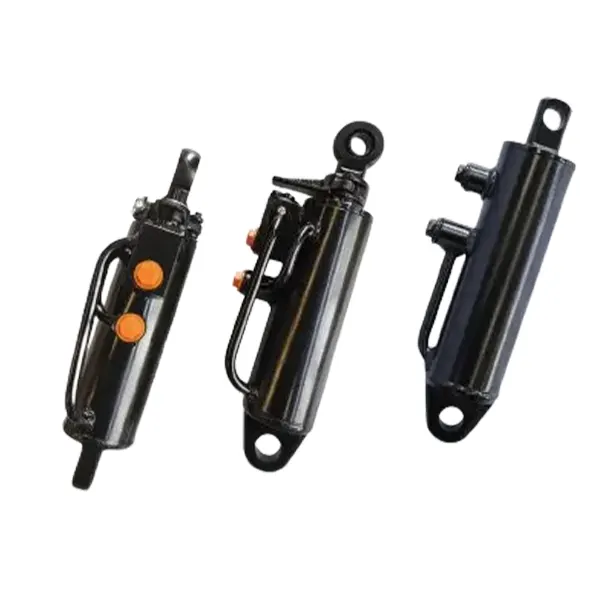
Modern agricultural tractors integrate two hydraulic cylinder functions into a single hydraulic system — power steering and rear implement lifting — each with fundamentally different performance requirements. The steering cylinder must respond instantly to operator input with precise proportional control across the full lock-to-lock range. The rear cylinder must generate maximum force to raise heavy three-point hitch implements, but speed and proportional accuracy are secondary to raw lifting capacity.
Both functions share a single engine-driven hydraulic pump, but a priority flow control valve ensures the steering circuit always receives sufficient oil flow before any excess is routed to the rear lift and remote valve circuits. This priority architecture means that the cylinder in the rear hitch may slow down during a steering manoeuvre — an acceptable trade-off because a brief delay in implement lifting is far less dangerous than a momentary loss of steering control.
STEERING CIRCUIT
→
Priority flow — always receives oil first
→
Double-acting lift cylinder — hydraulic power in both directions
→
Hydrostatic or orbitrol valve — proportional flow control
→
Low force, fast response, high cycle frequency
REAR LIFT CIRCUIT
→
Secondary flow — receives surplus after steering is satisfied
→
Single-acting lift cylinder — hydraulic raise, gravity lower
→
Position or draft control valve — adjusts lift height or soil resistance
→
High force, moderate speed, lower cycle frequency
Understanding this dual-circuit architecture is the essential first step before specifying any replacement tractor steering and lifting cylinders — because a steering cylinder and a rear lift cylinder, despite both being called “lift cylinders” in the tractor context, are engineered for completely different operating profiles and cannot be interchanged.
РАЗДЕЛ 02
Power Steering Lift Cylinders — Engineering Requirements
The steering lift cylinder on a tractor must meet five engineering requirements simultaneously — and a failure in any one of them compromises operator safety. Unlike the rear lift circuit where a slow or hesitant response is merely inconvenient, a steering cylinder that hesitates, drifts, or produces unequal force left-to-right is a direct safety hazard, particularly on tractors operating at road speed or on slopes.
Proportional response. The steering lift cylinder must extend or retract in direct proportion to the orbitrol valve input — small steering wheel movement produces small wheel angle change; large input produces full lock. Non-proportional response causes steering overshoot on road, dangerous at speed.
Zero drift under load. When the steering wheel is released in a straight-ahead position, the lift cylinder must hold position against front axle side loads — road camber, implement draft forces, and uneven tyre pressure — without the wheels drifting off course.
Equal force left and right. The double-acting steering cylinder must produce symmetrical force in both extension and retraction — any force imbalance causes the tractor to steer more easily in one direction, creating operator fatigue and uneven tyre wear.
Internal cushioning at stroke ends. Full lock-to-lock steering generates significant kinetic energy in the front axle assembly — the cylinder must incorporate internal cushioning (deceleration chamber) at both stroke ends to prevent metal-to-metal impact and shock loading on the steering linkage.
Low-friction rod sealing. The steering cylinder operates at very high cycle frequency — potentially 50–100 direction changes per minute during loader work — requiring rod seals with minimal breakaway friction to prevent “sticky” steering response after the tractor has been parked.
Hydrostatic steering systems (used on most tractors above 60 HP) have no mechanical linkage between the steering wheel and front wheels — the steering cylinder is the only force path. Loss of hydraulic pressure means total loss of steering. This is why the priority flow control valve exists in the circuit: it guarantees the steering circuit receives oil before any other consumer, even if the rear lift cylinder or remote valves are demanding maximum flow simultaneously.
РАЗДЕЛ 03
Rear Lifting Cylinders — Three-Point Hitch Integration
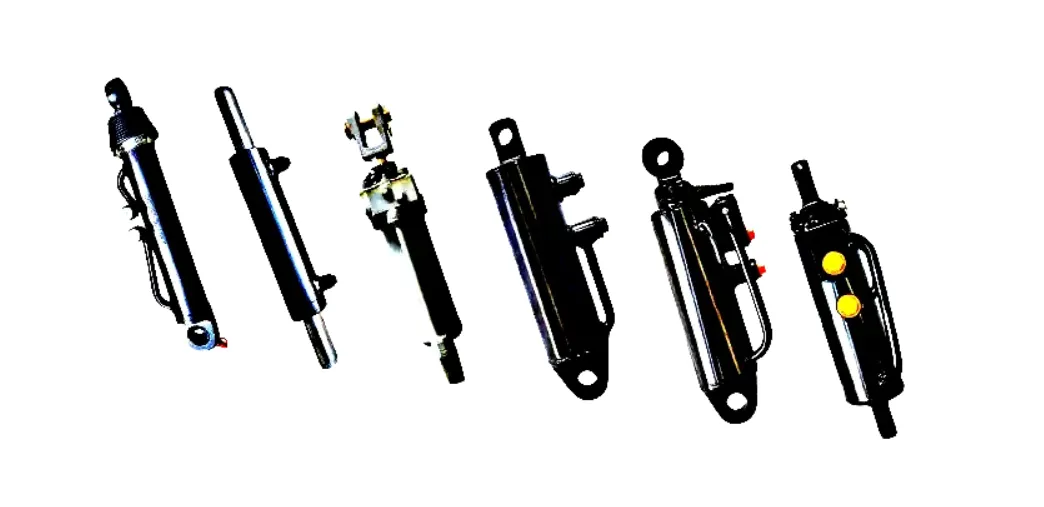
The rear lift cylinder is the highest-force actuator on most agricultural tractors. Mounted internally within the rear transmission housing (on most tractors below 200 HP) or externally as a pair of assist cylinders (on larger tractors and aftermarket retrofit installations), the cylinder acts on the rockshaft — a transverse shaft that converts linear cylinder force into the rotational motion of the three-point hitch lower link arms.
The rear lift cylinder operates through two operator control modes that determine how the hydraulic system manages rod position:
POSITION CONTROL MODE
The operator sets a target height — the lift cylinder raises or lowers the three-point hitch to that height and holds it. The control lever position directly corresponds to hitch arm height, regardless of implement weight or soil resistance.
▸
Best for transport, loader work, non-soil-engaging implements
▸
Lift cylinder holds a fixed rod position under variable load
▸
Simpler control — preferred by operators unfamiliar with draft
DRAFT CONTROL MODE
The operator sets a target soil resistance (draft) — the lift cylinder automatically adjusts hitch height to maintain constant implement draft force. When soil resistance increases, the cylinder raises the implement slightly; when resistance decreases, it lowers the implement deeper.
▸
Best for ploughing, subsoiling, deep tillage — soil-engaging implements
▸
Lift cylinder adjusts continuously based on top-link draft sensing
▸
Maintains constant engine load — prevents stalling in hard ground
The rear lift cylinder operates as a single-acting unit on most tractors — hydraulic pressure raises the hitch, and implement weight (gravity) lowers it when the control valve opens the exhaust path. A drop rate control valve (typically located under the operator seat) restricts the exhaust flow to prevent the implement from crashing down when the operator moves the control lever to the lower position. Tractors equipped with front-end loaders typically share the same lift cylinder pump supply but route it through separate control valves — the loader circuit uses double-acting cylinders while the rear hitch uses the single-acting rear lift cylinder through its own position/draft control valve.
РАЗДЕЛ 04
Specification Selection by Tractor Class

| TRACTOR CLASS | STEERING BORE × STROKE | REAR LIFT BORE × STROKE | 3PH LIFT CAPACITY | PUMP FLOW |
|---|---|---|---|---|
| Compact (20–45 HP) | Ø40 × 180 mm | Ø70 × 150 mm | 800–1 200 kg | 12–20 l/min |
| Utility (45–100 HP) | Ø50 × 200 mm | Ø80 × 180 mm | 1 500–2 500 kg | 20–40 l/min |
| Row-crop (100–200 HP) | Ø63 × 220 mm | Ø100 × 200 mm | 3 000–4 000 kg | 40–80 l/min |
| 4WD Articulated (200–600 HP) | Ø80 × 280 mm | Ø120 × 250 mm | 4 000–5 000+ kg | 80–160 l/min |
Replacement note: When replacing a worn or damaged tractor cylinder, the critical matching parameters are bore diameter, rod diameter, stroke length, and mounting geometry (pin-to-pin centre distance). An aftermarket cylinder with the correct bore and stroke but incorrect pin-to-pin distance will not fit the tractor’s existing mounting brackets without modification — and modifying steering mountings is never acceptable due to the safety-critical nature of the steering system. The full подъемный цилиндр product range includes OEM-equivalent replacement dimensions for the most common tractor models across compact, utility, and row-crop classes, covering both steering and rear lifting applications as well as mobile machinery hydraulic cylinders for loaders and material handling equipment.
РАЗДЕЛ 05
Maintenance, Seal Life and Troubleshooting
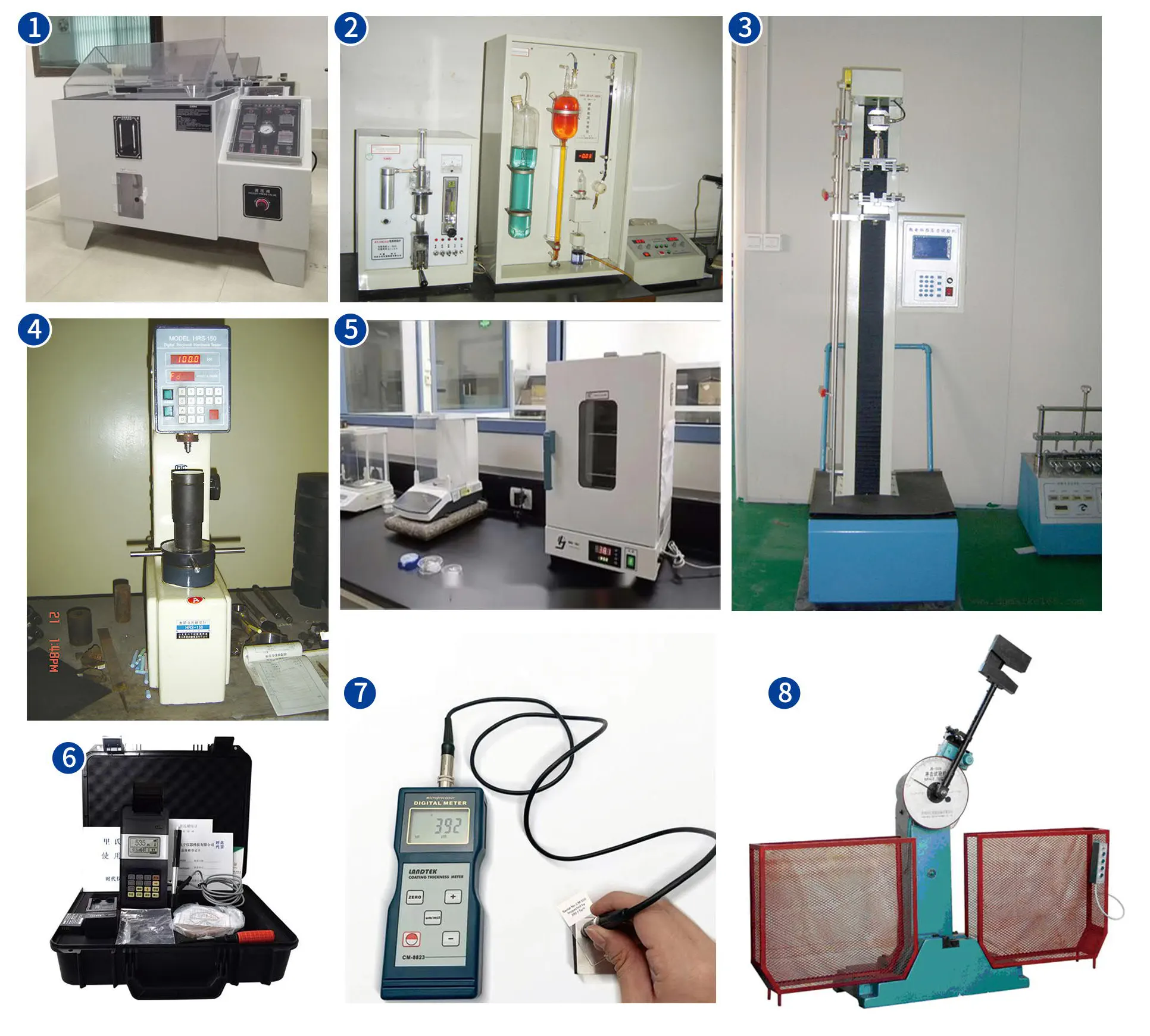
Steering and rear cylinders have different maintenance priorities because they operate under different load profiles and failure consequences. The steering cylinder is safety-critical — any degradation must be addressed immediately. The rear cylinder is production-critical — degradation causes implement control problems but does not create an immediate safety hazard.
STEERING CYLINDER — SAFETY-CRITICAL
▸
Inspect rod surface and seal area at every service interval — any external leakage requires immediate cylinder removal and seal replacement
▸
Check steering linkage ball joints and tie rod ends — worn joints allow the cylinder rod to absorb lateral forces it is not designed for, accelerating rod seal wear
▸
Verify the cylinder holds position when the engine is off — if the front wheels drift with the engine off, the internal piston seal has failed and the unit must be rebuilt or replaced
▸
Replace the entire cylinder rather than rebuilding if rod scoring is visible — a scored rod will destroy a new seal kit within weeks
REAR LIFT CYLINDER — PRODUCTION-CRITICAL
▸
Check hydraulic oil level and condition at every 250-hour service — contaminated oil (water, metal particles) accelerates internal wear on the piston seal
▸
Test hitch lift-and-hold — raise the three-point hitch to maximum height with a heavy implement and observe for 30 minutes. A drop of more than 25 mm indicates internal bypass in the piston seal
▸
Inspect the drop rate control valve — a fully open or stuck valve allows the hitch to drop uncontrolled when the control lever is moved to the lower position, potentially damaging the implement
▸
On external assist lift cylinders — grease the clevis pins and check for rod corrosion seasonally, as external cylinders are directly exposed to field conditions
FIELD TROUBLESHOOTING · TRACTOR LIFT CYLINDER SYMPTOMS
SYMPTOM
Steering feels heavy or stiff on one side only
ROOT CAUSE
Bent cylinder rod or worn bushing creating binding in one stroke direction
ACTION
Replace steering lift cylinder — do not attempt to straighten rods
SYMPTOM
3-point hitch won’t lift to full height, raises slowly
ROOT CAUSE
Worn hydraulic pump (low pressure/flow) or internal bypass in lift cylinder piston seal
ACTION
Test pump pressure at relief (should be 14–21 MPa); if pressure is correct, rebuild the cylinder
SYMPTOM
Hitch drifts down with implement attached (creep)
ROOT CAUSE
Internal leakage past lift cylinder piston seal or control valve spool wear
ACTION
Close drop rate valve fully — if creep stops, control valve is leaking; if creep continues, rebuild lift cylinder
Часто задаваемые вопросы по применению приложения
Tractor Lift Cylinder Engineering Questions
Why does my tractor’s three-point hitch lift slowly when I turn the steering wheel at the same time?
This is normal priority flow control behaviour — not a fault. The tractor’s hydraulic system gives the steering lift cylinder first priority for oil flow. When you turn the steering wheel, the priority valve diverts flow to the steering circuit, reducing the flow available for the rear lift cylinder. The hitch raises more slowly because the rear cylinder is receiving less oil per second. Once you stop turning the steering wheel, full flow returns to the rear lift circuit and the hitch resumes normal lifting speed. If the slowdown is severe (hitch barely moves during steering), the hydraulic pump may be marginal — check pump output against the tractor manufacturer’s specification. A pump producing less than 70% of rated flow at operating temperature needs rebuilding or replacement.
Can I add external assist lift cylinders to increase my tractor’s three-point hitch lifting capacity?
Yes — external assist lift cylinders are a common upgrade for tractors that need to lift heavier implements than the factory internal cylinder can handle. The external cylinders connect between the tractor’s rear axle housing and the three-point hitch lower link arms, working in parallel with the internal lift cylinder. The hydraulic force is additive: if the factory cylinder produces 2 000 kg of lift force and each external assist cylinder adds 800 kg, the total system lift capacity increases to approximately 3 600 kg. The key constraint is hydraulic pump capacity — adding assist cylinders increases the total system oil volume, which means the hitch raises more slowly unless the pump flow is also adequate. Ensure the pump can fill all three cylinders (internal plus two external) to full extension within the manufacturer’s specified raise time, typically 3–5 seconds with no load.
What causes rust inside the rear lift cylinder, and how do I prevent it?
Rust inside the rear lift cylinder is caused by water contamination in the hydraulic oil — and it is one of the most common reasons for internal seizure on older tractors. Water enters the hydraulic system through condensation (temperature cycling in the reservoir), worn shaft seals on the tractor PTO or transmission, or through unsealed filler caps during washing. Even small amounts of water (0.1% by volume) can cause pitting corrosion on the honed cylinder bore surface over several seasons. Prevention requires three practices: change hydraulic oil at the manufacturer’s recommended interval (typically 500–1 000 hours); ensure the reservoir breather cap has a functional desiccant or filter element; and before storing the tractor for off-season, raise the three-point hitch to full height to retract the cylinder rod completely inside the bore, minimising the internal surface area exposed to condensation.
How do I know if the problem is the cylinder or the control valve when the hitch isn’t working?
Use this diagnostic sequence to isolate the fault:
1.
Install a pressure gauge at the pump outlet — warm the oil, run the engine at rated RPM, and actuate the lift lever to the raise position. Read the pressure.
2.
If pressure reaches the system relief setting (typically 14–21 MPa) but the hitch does not lift — the control valve is directing oil correctly but the lift cylinder has internal bypass. Rebuild or replace the cylinder.
3.
If pressure does not reach the relief setting — either the pump is weak (rebuild pump) or the control valve is bypassing oil internally (rebuild or replace valve).
4.
To confirm control valve bypass: disconnect the lift cylinder supply line and cap it. If pressure now reaches relief, the valve is good and the cylinder is the problem. If pressure is still low, the valve or pump is at fault.
What type of hydraulic oil should I use in a tractor with shared steering and lift cylinder circuits?
Most tractors with shared hydraulic systems (steering + rear lift + transmission lubrication) specify a Universal Tractor Transmission Oil (UTTO) or equivalent — a multi-function fluid that serves as hydraulic oil, transmission lubricant, and wet brake fluid simultaneously. Key specifications to verify:
●
Viscosity grade: typically SAE 10W-30 or 15W-40 depending on climate range
●
OEM specification: match the tractor manufacturer’s fluid code (e.g. John Deere Hy-Gard, Case IH Hy-Tran, Kubota UDT)
●
Anti-wear additive package: zinc dialkyldithiophosphate (ZDDP) at ≥ 800 ppm zinc — protects the lift cylinder piston and bore surface
●
Water separation: rapid demulsibility — prevents the moisture accumulation that causes internal cylinder rust
TRACTOR LIFT CYLINDER APPLICATION SUPPORT
Need Steering or Rear Lifting Cylinders for Your Tractor?
Our application team provides OEM-equivalent lift cylinder matching for tractor steering and three-point hitch systems — bore, stroke, pin-to-pin dimensions confirmed against your tractor model and serial number. Contact us with your tractor make, model, and the cylinder you need to replace.
Редактор: Cxm