Serie Schwerlasttransportgeräte · Monographie X
Teleskop-Hubzylinder für Muldenkipper
Muldenkipper sind in der Bau-, Bergbau- und Schüttgutindustrie anspruchsvollen Einsatzbedingungen ausgesetzt, wo kurze Arbeitszyklen und hohe Nutzlastkapazitäten die Wirtschaftlichkeit bestimmen. Dieser technische Leitfaden bietet eine detaillierte Analyse von einfachwirkenden, mehrstufigen Teleskop-Hubzylindern. Wir untersuchen die Kippkinematik, die Metallurgie des niedriglegierten, hochfesten Stahls Q345D, das Verhalten von Hartchrombeschichtungen in abrasiven Schlamm- und Staubumgebungen, die Hauptursachen für Ölleckagen zwischen den Stufen sowie spezielle mehrstufige Dichtungsarchitekturen, die entwickelt wurden, um einen Flüssigkeitsdurchfluss unter hohen Lasten zu verhindern.
Mehrstufige Abdichtung
Leckageverhinderung
Technische Spezifikationsmatrix für Teleskopzylinder von Muldenkippern
Die folgenden technischen Parameter legen die strukturellen, materialtechnischen, dichtungstechnischen und betriebstechnischen Benchmarks für mehrstufige, einfachwirkende Teleskop-Hydraulikzylinder fest, die in Schwerlast-Heckkippern eingesetzt werden.
| Technischer Parameter | Spezifikationsstandard für Muldenkipper |
|---|---|
| Gerätekategorie & Anwendung | Baumaschinen- und Bergbaumaschinentransporte / Muldenkippertransporte |
| Bewegungsprofil des Teilsystems | Kipp- und Hubsystem für Karosserien / Einfachwirkende mehrstufige Linearverlängerung |
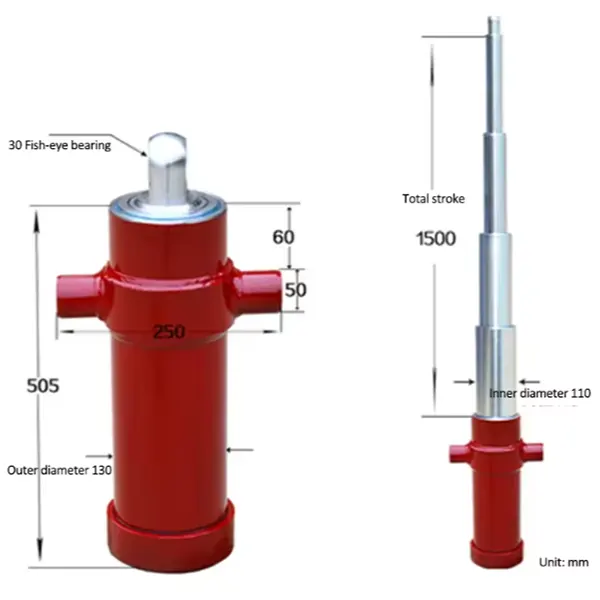
| Name des Hydraulikzylinders | Mehrstufiger Teleskop-Hubzylinder (3 bis 5 Stufen) |
| Aktionsmodus & Strukturtyp | Einfachwirkend (hydraulisch ausfahrbar / durch Schwerkraft einziehbar), Teleskophülse, verschachtelt |
| Fertigungsbau | Geschweißte Grundplatte und Zapfengehäuse / Präzisionsgeschälte und polierte Stufen |
| Werkstoffsystem Metallurgie | Q345D Niedriglegierter hochfester Baustahl (GB/T 1591) |
| Oberflächenbehandlung & Beschichtung | Stark mikrorissige Hartchrombeschichtung (25–35 μm pro Stufe) / 58–62 HRC Gehäuse |
| Umweltklasse | Schleifstaub + korrosives Schlammwasser + extreme Temperaturschwankungen (-30 °C bis +80 °C) |
| Merkmale der Arbeitsbedingungen | Extrem langer Hub (3.000 bis 7.000 mm) + Schwerlast-Kippfunktion mit außermittiger Nutzlast |
| Primäres Versagen gemildert | Externe Ölleckage, Zwischenstufendichtungsextrusion und Zylindererweiterungs-Bypass |
| Empfohlene Dichtungsarchitektur | Mehrlippige V-Dichtung / Polyurethan-U-Manschetten + Anti-Extrusions-Nylonringe + Doppelabstreifer |
| Nennhydraulischer Druck | 17,5 MPa bis 22,0 MPa (175 – 220 bar) Betriebsdruck |
Kippkinematik und mehrstufige Teleskopmechanik
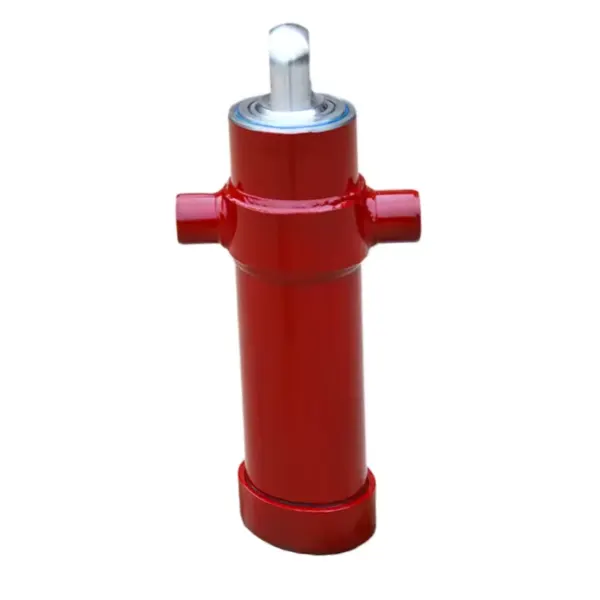
Die wichtigste funktionale Anforderung an das Hydrauliksystem eines Muldenkippers ist das Anheben einer voll beladenen Mulde – mit Nutzlasten von 15 bis über 60 Tonnen feuchtem Boden, Zuschlagstoffen oder gesprengtem Gestein – in einen steilen Auswurfwinkel, typischerweise zwischen 45 und 55 Grad. Um diesen hohen Neigungswinkel zu erreichen, muss der Hydraulikzylinder einen Hubweg aufweisen, der um ein Vielfaches länger ist als sein eingefahrener Einbauraum. Standardmäßig einstufig Hydraulikzylinder Diese räumliche Anforderung kann nicht erfüllt werden, ohne in die Fahrerkabine des Lkw hineinzuragen oder die Freigängigkeitsgrenzen des Fahrgestells zu unterschreiten.
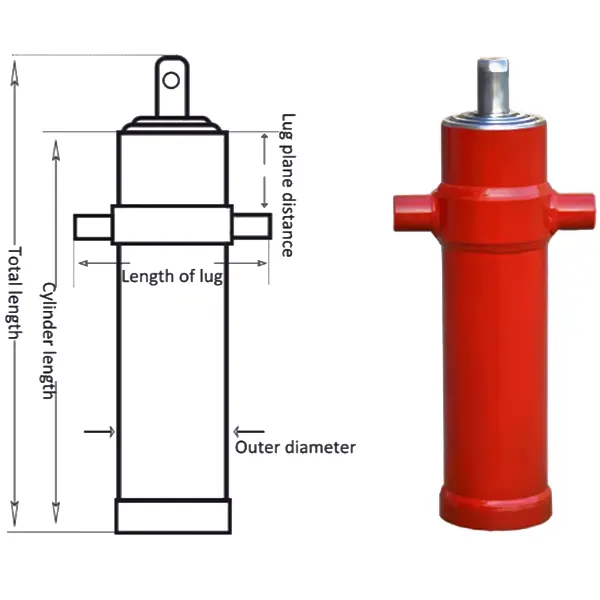
Teleskop-Hydraulikzylinder lösen diese geometrische Einschränkung durch die Anordnung mehrerer rohrförmiger Stufenhülsen in einem einzigen äußeren Zylinderrohr. Beim Eintritt der Hydraulikflüssigkeit in den Zylinderfuß fahren die Stufen nacheinander aus, beginnend mit der Stufe mit dem größten Durchmesser (Stufe 1) bis hin zur Stufe mit dem kleinsten Durchmesser (Stufe N). Diese mehrstufige Teleskopkonstruktion ermöglicht einen langen Hub bei gleichzeitig kompakten Abmessungen (Bolzenabstand) im vollständig eingefahrenen Zustand unter der Kippmulde.
Sequenzielle Verlängerungskinematik und effektive hydraulische Fläche
Bei einem einfachwirkenden mehrstufigen Zylinder wird die Ausfahrreihenfolge durch die hydraulische Oberfläche bestimmt. Das von der Pumpe geförderte Hydrauliköl wirkt gleichzeitig auf die Grundfläche aller eingefahrenen Stufen. Da die größte Stufenhülse den größten Querschnitt aufweist, erzeugt sie bei gegebenem Systemdruck die höchste Schubkraft. Folglich fährt Stufe 1 zuerst aus, bis sie ihren mechanischen Anschlagring erreicht, gefolgt von Stufe 2, Stufe 3 und den nachfolgenden kleineren Stufen in der Reihenfolge abnehmenden Durchmessers.
Sobald jede Stufe ihren maximalen Hub erreicht und die nächste, kleinere Stufe mit dem Ausfahren beginnt, verringert sich die aktive hydraulische Querschnittsfläche schrittweise. Die Schubkraft FSchub Die in Phase i generierten Daten werden wie folgt definiert:
Wo Phyd ist der Hydraulikleitungsdruck und DStufe (i) ist der effektive Außendurchmesser der Stufenhülse i. Da sich die effektive Fläche mit jeder ausfahrenden Stufe verringert, sinkt die Schubkraft stufenweise, wenn der Systemdruck konstant bleibt. Glücklicherweise korrespondiert diese Kraftreduzierung mit der Kippgeometrie: Neigt sich die Mulde nach oben, verringert sich die benötigte Hubkraft, da sich der Gewichtsvektor der Nutzlast näher an den hinteren Drehpunkt verlagert und ein Teil der Ladung aus der Heckklappe herausgleitet.
Einfachwirkende Schwerkraftrückführung und hydraulische Druckvariationen
Im Gegensatz zu doppeltwirkenden Aktuatoren, die Hydraulikflüssigkeit zum Einfahren nutzen, sind die Standard-Fronthebezylinder von Muldenkippern einfachwirkend. Hydraulikdruck wird nur zum Ausfahren der mehrstufigen Baugruppe zugeführt. Das Einfahren erfolgt ausschließlich durch das Eigengewicht der leeren Stahlmulde, die das Öl durch das Steuerventil zurück in den Vorratsbehälter drückt.
Beim Ausfahren unter voller Nutzlast muss der Ölfluss der Pumpe reguliert werden, wenn sich eine Stufe bewegt, während der Schwerpunkt des Kippaufbaus den Kipppunkt überschreitet. Ist der Ölfluss unzureichend, kann das fallende Gewicht des Aufbaus die Zylinderstufe schneller ziehen, als die Pumpe Öl fördern kann. Dies führt zu lokaler Vakuumbildung und Lufteinschlüssen. Umgekehrt ist beim Absenken eines leeren Aufbaus bei Minustemperaturen das kalte, zähflüssige Hydrauliköl aufgrund des geringen Rücklaufs schwer zu fließen. Daher muss die Leitungsdimensionierung ausreichend sein, um zu verhindern, dass hoher Gegendruck die Einfahrzyklen verzögert.
Bauingenieurwesen und Metallurgie: Die Rolle des Stahls Q345D
Mehrstufige Teleskopzylinder erfahren im voll ausgefahrenen Zustand erhebliche Biegemomente. Kippt ein Muldenkipper eine 30-Tonnen-Ladung auf unebenem Gelände oder entlädt er zähflüssigen Lehm, der an einer Seite der Ladefläche hängt, wirken starke seitliche Kräfte auf die ineinandergreifenden Zylinderrohre. Standardmäßige Kohlenstoffstahlrohre (wie z. B. Q235 oder AISI 1020) weisen nicht die erforderliche Streckgrenze und Dauerfestigkeit auf, um ein Durchbiegen oder Versagen der Rohre unter diesen Bedingungen zu verhindern.
Die Teleskopzylinder von Schwerlast-Muldenkippern nutzen hochfeste Teleskopierbare hydraulische Hubzylinder für Muldenkipper hergestellt aus Q345D niedriglegierter hochfester Baustahl (entspricht GB/T 1591, gleichwertig mit S355J2+N nach EN 10025-3).
Chemische Zusammensetzung und Mikrolegierungsmechanik
Q345D ist ein kohlenstoffarmer, manganhaltiger mikrolegierter Stahl. Seine chemische Zusammensetzung vereint hohe Streckgrenze mit guter Kerbschlagzähigkeit bei Minustemperaturen und hoher Schweißbarkeit für Strukturverbindungen.
- ▸
Kohlenstoff (C ≤ 0,18%): Niedrig gehalten, um eine hohe Duktilität und Schweißbarkeit zu gewährleisten und Rissbildung in der Wärmeeinflusszone (WEZ) beim Roboterschweißen von Grundhalterungen und Zapfenringen zu verhindern. - ▸
Mangan (Mn: 1,00 – 1,60%): Erhöht die Festigkeit der Mischkristallmatrix, steigert sowohl die Streckgrenze als auch die Zugfestigkeit und verfeinert gleichzeitig die Kornstruktur. - ▸
Silizium (Si ≤ 0,50%): Wirkt bei der Stahlherstellung als Desoxidationsmittel und erhöht die Kernhärte sowie die Widerstandsfähigkeit gegen mechanische Verformung unter Umfangsspannung. - ▸
Mikrolegierungselemente (V, Nb, Ti ≤ 0,15% kombiniert): Es bilden sich feine Karbid- und Nitridausscheidungen, die beim Warmwalzen und Kaltziehen die Korngrenzen fixieren und so eine Kornverfeinerung bewirken, die die Schlagzähigkeit bis zu -20°C erhöht.
Referenzwert für die Schlagzähigkeit bei Minustemperaturen (Qualitätsklasse D)
Die Gütebezeichnung „D“ in Q345D steht für die Charpy-V-Kerbschlagprüfung bei -20 °C. Muldenkipper sind in nördlichen Bergbauregionen häufig im Winter bei Minustemperaturen im Einsatz. Standard-Baustähle werden bei niedrigen Temperaturen spröde und sind daher anfällig für plötzliche Brüche unter dynamischen Stoßbelastungen beim Abladen festgefrorener Ladungen.
Q345D garantiert eine minimale Kerbschlagzähigkeit von 34 Joule bei -20 °C (Charpy-V-Kerbschlagbiegeversuch). Diese Schlagfestigkeit verhindert ein katastrophales Rohrbrechen oder das Ablösen des Zapfenrings bei Stoßbelastung in extrem kalten Umgebungen.
| Stahlwerkstoffgüte | Streckgrenze (σS) | Zugfestigkeit (σB) | Charpy-Schlagtemperatur und -energie |
|---|---|---|---|
| Q235B (Standard-Kohlenstoffstahl) | ≥ 235 MPa | 370 – 500 MPa | ≥ 27 J bei +20°C |
| Q345B (Standardstruktur) | ≥ 345 MPa | 470 – 630 MPa | ≥ 34 J bei +20°C |
| Q345D niedriglegierter Stahl | ≥ 345 MPa | 470 – 630 MPa | ≥ 34 J bei -20 °C |
Umwelttribologie und Hartchrom-Oberflächenschutz
Die Teleskopzylinder von Muldenkippern arbeiten in schmutzigen Feldumgebungen. Direkt hinter dem Fahrerhaus oder unter dem vorderen Ende der Mulde positioniert, sind die Außenflächen der ausfahrbaren Hubrohre Spritzwasser, aufgewirbeltem Sand, Kalksteinstaub, nassem Lehm und von den Vorderreifen aufgewirbelten Streusalzen ausgesetzt.
Beim Ausfahren des Zylinders zum Anheben einer Last lagern sich abrasive Verunreinigungen auf den freiliegenden Außenflächen der ausgefahrenen Stufen ab. Beim anschließenden einstufigen Einfahren fahren die Stufen wieder in ihre Haupthülsen zurück. Gelangen abrasive Partikel durch die äußeren Abstreifdichtungen, zerkratzen sie die polierten Stufenoberflächen, beschädigen die Hauptdichtungselemente und verursachen Hydraulikölverlust.
Hartverchromung und Mikrofinish-Bearbeitung
Zum Schutz vor abrasivem Verschleiß und Korrosion durch Umwelteinflüsse wird die äußere Gleitfläche jedes Q345D-Stufenrohrs präzisionsgeschliffen, mikropoliert und hartverchromt:
- 1.
Präzisionsschleifen & Spitzenloses Polieren: Vor der Galvanisierung wird der Außendurchmesser des Q345D-Tischrohrs präzisionsgeschliffen und poliert, um eine gleichmäßige Oberflächengüte von Ra ≤ 0,2 μm zu erzielen und so ein ebenes Substrat für die Elektroabscheidung zu gewährleisten. - 2.
Kontrollierte Hartverchromungsschicht: Auf die Außenfläche wird eine Schicht aus Hartchrom (25 μm bis 35 μm dick) galvanisch abgeschieden. Der Beschichtungsprozess wird so gesteuert, dass eine Oberflächenhärte von 58 bis 62 HRC (≥ 800 HV) erreicht wird, wodurch das Material härter als vom Wind verwehter Quarzsand ist. - 3.
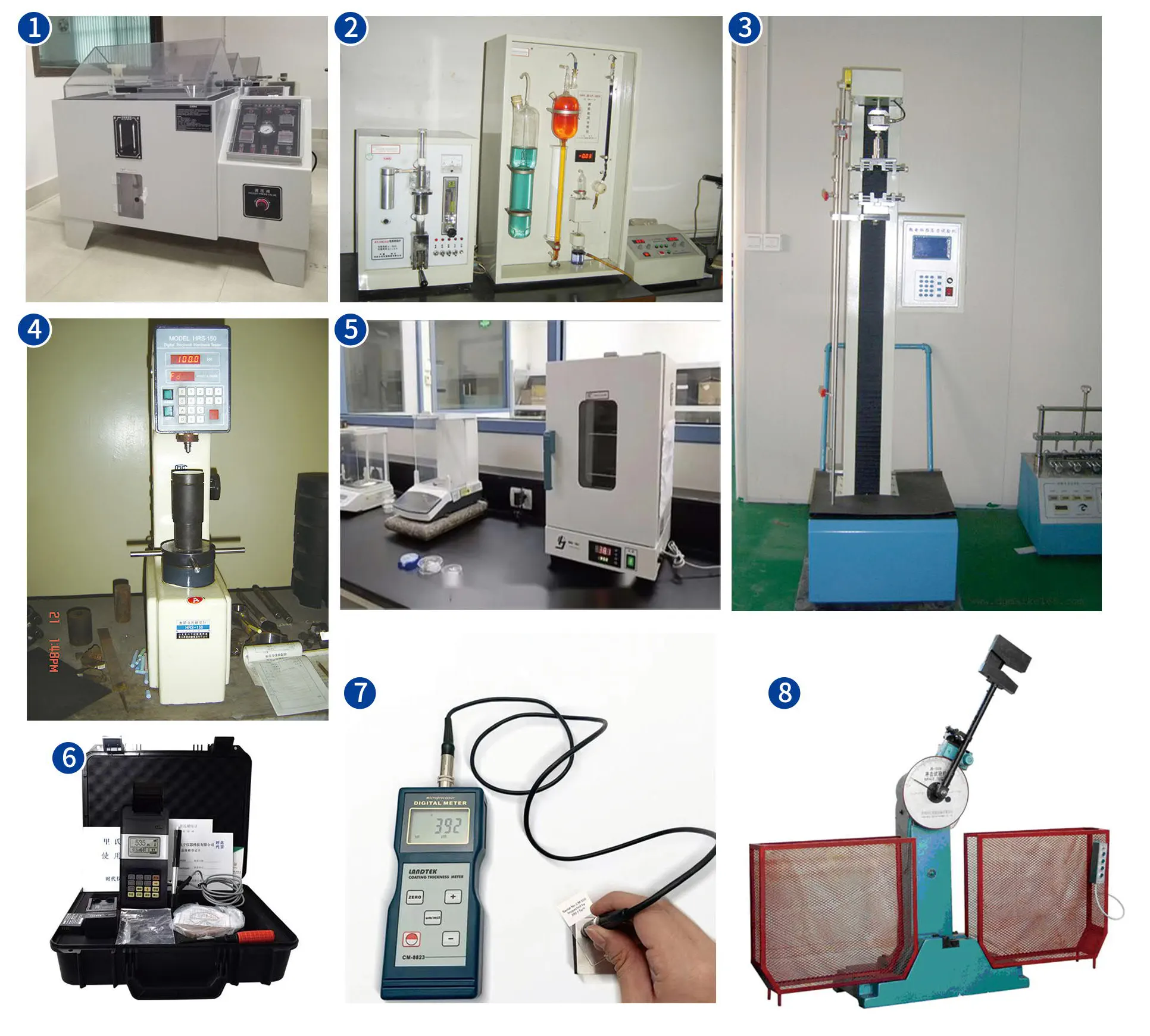
Beständigkeit gegen Salzsprühkorrosion: Verzinnte Bühnenhülsen müssen einen 72- oder 96-stündigen Neutral-Salzsprühtest (NSS) gemäß ISO 9227 bestehen (Erreichen der Bewertung 9/10), um die Bildung von Rost während des Parkens im Freien in feuchter Umgebung zu verhindern.
Ursachenanalyse des Fehlers: Externer Ölaustritt und Zwischenstufen-Bypass
Ölaustritt von außen ist die häufigste Ausfallursache bei Teleskopzylindern von Muldenkippern. Austretendes Öl an den äußeren Dichtungshülsen führt zu Umweltverschmutzung, verringert die Kippgeschwindigkeit und erhöht das Risiko von Pumpenkavitation aufgrund niedriger Ölstände im Reservoir. Um dieses Problem zu beheben, müssen die mechanischen und hydraulischen Ursachen für Dichtungsschäden in mehrstufigen Aktuatoren verstanden werden.
Zwischenstufige Druckspitzen und Dichtungsextrusion
Bei schnellem Kippen unter hoher Last treten Druckspitzen auf, wenn eine bewegliche Stufenhülse ihren mechanischen Anschlagring erreicht und das Fluid die nächste Stufe beschleunigt. Öffnet das Steuerventil abrupt, können die dynamischen Druckspitzen 30 MPa überschreiten und damit die Nenndrücke des Überdruckventils deutlich übersteigen.
Hohe Druckspitzen pressen herkömmliche Polyurethan-Elastomer-Dichtungen in den mikroskopisch kleinen Spalt zwischen der äußeren Hülse und dem inneren Stopfbuchsen-Führungsring. Dieses Phänomen, bekannt als Dichtungsextrusion, führt mit der Zeit zu einem Abrieb des Dichtungsansatzes, wodurch die Dichtungsintegrität beeinträchtigt wird und es bei nachfolgenden Dehnungszyklen zu Ölaustritt kommt.
Elastische Ausdehnung des Stufenrohrs unter Innendruck
Teleskopzylinder verwenden relativ dünnwandige, rohrförmige Zwischenlagen, um das Gesamtgewicht der verschachtelten Zylinder zu minimieren. Unter hohem internem Betriebsdruck (Phyd), fungiert jede rohrförmige Stufe als dünnwandiger Druckbehälter, der einer elastischen radialen Umfangsausdehnung (ΔD) unterliegt.Fass):
Wo Dbedeuten ist der mittlere Hülsendurchmesser, E ist der Elastizitätsmodul von Q345D-Stahl (206 GPa) und tWand Die Wandstärke des Stufenrohrs wird als bezeichnet. Durch die radiale Ausdehnung der äußeren Mutterhülse unter Druck vergrößert sich der Extrusionsspalt hinter der Stopfbuchse. Fehlen dem Dichtungspaket geeignete Antiextrusions-Stützringe, drückt sich der Elastomerring in diesen vergrößerten Spalt, was den Verschleiß beschleunigt und zu einem Flüssigkeitsdurchbruch führt.
Eindringen von abrasiven Feinstaubpartikeln
Beim Entladen von Schüttgut oder Flugasche durch einen Muldenkipper gelangen feine Partikel auf die ausgefahrenen Auflageflächen. Standardmäßige Abstreifdichtungen mit einer Lippe können beim Einfahren der Dichtung das Eindringen dieser Partikel in die Dichtungsmanschette ermöglichen, wodurch die Hauptdichtlippe des U-förmigen Dichtrings beschädigt und Leckagen entstehen.
Exzentrische Biegung & Dichtungsverzerrung
Kippt ein Muldenkipper auf abschüssigem Gelände um, wirkt die Gewichtskraft der Nutzlast außermittig und erzeugt eine seitliche Biegebelastung auf die vollständig ausgefahrenen Führungshülsen. Diese Seitenbelastung komprimiert die Führungsringe auf einer Seite, verformt das Profil der Stopfbuchsendichtung und verursacht vorübergehenden Ölaustritt.
Empfohlene Konfiguration: Fortschrittliche mehrstufige Dichtungsarchitektur
Um externe Ölleckagen zu verhindern und eine lange Lebensdauer mehrstufiger Teleskopzylinder zu gewährleisten, ist eine speziell entwickelte „Mehrstufen-Dichtungsarchitektur“ erforderlich. Moderne Hochleistungs-Teleskopzylinder ersetzen einstufige Dichtungen durch Mehrkomponenten-Dichtungs- und Führungssysteme an jeder Stufenschnittstelle.
Mehrlippige V-Packung / Polyurethan-U-Manschetten-Anordnungen
Die primäre Druckbarriere an jeder Stufenverschraubung besteht aus einer mehrlippigen, gewebeverstärkten V-Packung oder einer speziell entwickelten Polyurethan-(PU-)U-Manschettendichtung mit aktivem Elastomer-Antriebsring. Gewebeverstärkte Elastomer-V-Packungen verfügen über mehrere Dichtlippen, die sich unter hydraulischem Druck anpassen und so die Abdichtung auch bei geringfügiger radialer Ausdehnung oder Oberflächenkratzern des Stufenrohrs gewährleisten.
Integration eines Anti-Extrusions-Stützrings
Um ein Herausdrücken der Dichtung bei Ausdehnung des Stufenrohrs durch Innendruck zu verhindern, wird direkt hinter der primären Dichtlippe ein hochmoduliger Anti-Extrusionsring aus reinem PTFE, Nylon 66 oder Polyetheretherketon (PEEK) installiert. Dieser harte Stützring überbrückt den Spalt bei Druckspitzen bis zu 25 MPa und schützt so den Dichtungsfuß vor Beschädigungen durch Herausdrücken.
- ▸
Hochleistungsfähiger, doppellippiger Metallschaber: Sie ist an der äußersten Dichtungsposition jeder Stufenhülse angebracht. Die äußere Lippe streift getrockneten Schlamm, Eis und Straßenschmutz ab, während eine innere Sekundärlippe einen mikroskopischen Ölfilm zurückhält, um den primären Dichtungsstapel zu schmieren. - ▸
Zentrifugal gegossene Führungsringe aus Bronze und Verbundwerkstoffen: Hochdruckfeste Verschleißbänder aus bronzegefülltem PTFE oder harzimprägniertem Gewebe sind beidseitig am Hauptdichtungspaket angebracht. Diese Führungsbänder absorbieren Seitenkräfte, die durch außermittiges Kippen entstehen, und halten die Stufenhülsen konzentrisch in ihren Mutterrohren. - ▸
Interne mechanische Anschlagringe: An den inneren Enden jeder Stufe sind Anschlagringe aus hochfestem Schmiedestahl angebracht. Diese Ringe stoppen den Stufenausfahrvorgang präzise am Hublimit, verhindern so ein Überfahren der Stufe und verteilen die Stoßkräfte beim Erreichen der maximalen Ausfahrhöhe.
Spezifizierung eines robusten mehrstufiger Teleskop-Hubzylinder Ausgestattet mit dieser Dichtungskonfiguration, hilft dies, Öllecks zu verhindern und die Wartungsstillstandszeiten bei Schwerlasttransporten zu reduzieren.
Feldwartung, Flüssigkeitshygiene und Leckagediagnose
Um den zuverlässigen Betrieb mehrstufiger Teleskopzylinder zu gewährleisten, müssen Fuhrparkbetreiber regelmäßige Wartung der Hydraulikflüssigkeit und systematische Diagnoseverfahren durchführen. Da einfachwirkende Zylinder beim Kippen große Mengen Hydrauliköl umwälzen, kann Staub aus der Luft in den Behälter gelangen, wenn die Entlüftungsfilter vernachlässigt werden.
ISO 4406 Reinheitsziel und Blutungsprotokoll
Das Hydrauliköl in Muldenkippern muss einen Reinheitsgrad von mindestens 18/16/13 gemäß ISO 4406 aufweisen. Verunreinigtes Öl beschleunigt den Verschleiß an den Dichtungen der Hubzylinder und den Steuerventilen. Außerdem muss die in den Hubzylindern eingeschlossene Luft regelmäßig entlüftet werden. Unter Last komprimiert sich die eingeschlossene Luft, was zu ruckartigen Hubbewegungen und einem möglichen Aufschaukeln des Aufbaus beim Kippen führen kann.
Schrittweise Standardarbeitsanweisung zur Diagnose von Stufenleckagen
Wenn während des Betriebs an den äußeren Stufenhülsen Öl austritt, können die Techniker dieses Diagnoseverfahren befolgen, um die Ursache zu ermitteln:
1. Visuelle Inspektion der Bühnenoberfläche
Den Teleskopzylinder bei leerer Mulde vollständig ausfahren und die Sicherheitsstützen sichern. Jede hartverchromte Auflagehülse auf Steinschläge, tiefe, vertikale Kratzer oder Chromabplatzungen prüfen. Kratzer, die tiefer als die Chromschicht reichen, erfordern eine Reparatur oder einen Austausch der Hülse.
2. Dichtheitsprüfung der Zwischenstufendichtung
Reinigen Sie alle Stufendichtungen gründlich. Fahren Sie den Zylinder vollständig ein und fahren Sie ihn anschließend unter hydraulischem Druck langsam aus, während Sie jede Stufenverbindung beobachten. Tritt an einer bestimmten Stufendichtung Öl aus, ist die interne U-Manschettendichtung oder die V-Packung dieser Stufe verschlissen oder herausgedrückt und muss ausgetauscht werden.
Strategische Beschaffung und Gesamtbetriebskosten (TCO)
Für Fuhrparkbetreiber, die Muldenkipper im Schwerlast- und Bergbautransport einsetzen, führen unerwartete Ausfälle der Kippzylinder zu Fahrzeugstillständen und Sicherheitsrisiken auf den Baustellen. Der Kauf kostengünstiger Ersatzzylinder aus Standard-Kohlenstoffstahl oder mit einfachen Lippendichtungen führt häufig zu wiederholten Öllecks, häufigen Dichtungsreparaturen und langfristig erhöhten Betriebskosten.
Flottenmanager und Geräteingenieure können technische Optionen bewerten über Technische Optionen für Hydraulikzylinder mobiler Maschinen Überprüfung von Materialspezifikationen, Druckstufen und Dichtungspaketkonstruktionen. Ausstattung von Muldenkippern mit Hochleistungs- Teleskopierbare hydraulische Hubzylinder für Muldenkipper Die Konstruktion mit Stufen aus niedriglegiertem Q345D-Stahl, Hartchrom-Oberflächenschutz und mehrstufigen Dichtungspaketen gewährleistet eine zuverlässige Kippleistung und niedrigere Gesamtbetriebskosten bei anspruchsvollen Transportanwendungen.
Optimieren Sie die Kippleistung Ihres Muldenkippers
Vermeiden Sie Ölleckagen zwischen den Stufen, verhindern Sie das Herausdrücken der Hülse und gewährleisten Sie zuverlässige Kippleistung auch unter anspruchsvollen Transportbedingungen. Entdecken Sie unsere komplette Serie einfachwirkender, mehrstufiger Teleskop-Hubzylinder Q345D, speziell für Muldenkipper.