ENGINEERING GUIDE · ROD SURFACE TREATMENT · HYDRAULIC LIFT CYLINDERS
Lift Cylinder Rod
Surface Treatments
Chrome · Nikasil · Ceramic
The rod surface treatment is the most critical single determinant of lift cylinder service life in contaminated or corrosive environments. Hard chrome has been the standard for decades — but increasing environmental regulations on hexavalent chromium plating, combined with the availability of superior alternatives for specific applications, has expanded the selection decision into a genuine engineering choice. This guide covers the principal lift cylinder rod surface treatments, their performance characteristics, and the selection criteria that determine which is correct for each application.
Nikasil / HVOF
Ceramic Coating
LIFT CYLINDERS · SURFACE TREATMENT ENGINEERING · JULY 2026
REFERENCE · ROD SURFACE TREATMENT PERFORMANCE COMPARISON
HARD CHROME
650–900 HV
Standard — 25–40 μm thickness, corrosion resistant in non-marine environments
HVOF CARBIDE
1 100–1 400 HV
Superior wear and corrosion — 200–400 μm, marine and mining applications
NIKASIL
500–700 HV
Nickel-silicon carbide — excellent in chemical environments, food grade capable
ELECTROLESS Ni
450–600 HV
Uniform coating on complex geometry, good chemical resistance, not for high abrasion
第 01 节
Why Rod Surface Treatment Determines Cylinder Life
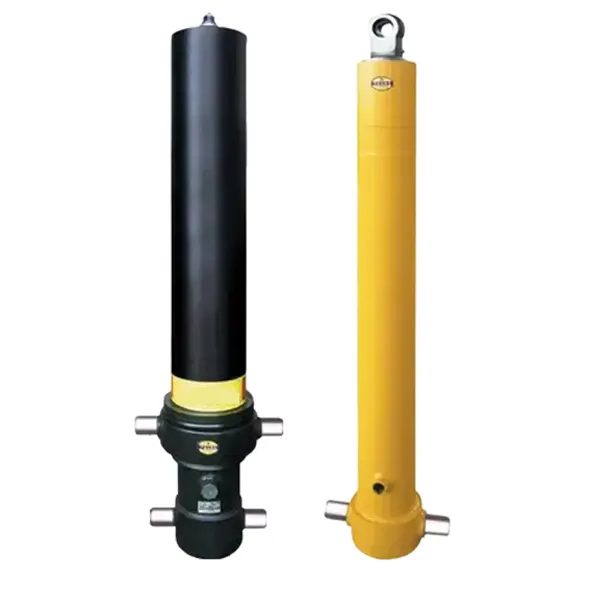
The piston rod of a hydraulic lift cylinder performs under uniquely demanding tribological conditions. The coating selected for each lift cylinder application directly determines how long the rod seal and the lift cylinder itself lasts in that environment. On every lift cylinder extension stroke, the rod surface sweeps through the rod seal at sliding speeds of typically 50–500 mm/s, carrying any contamination present on the rod surface directly across the seal lip. On retraction, the wiper removes contamination from the incoming rod surface — but any contamination that has embedded itself into the coating surface, or any corrosion that has roughened the surface below the seal’s conformability tolerance, will abrade the seal progressively until leakage develops. This surface degradation pathway — contamination embedding into the coating, roughening the interface, and destroying the seal — is the dominant lift cylinder failure mechanism in outdoor mobile equipment applications.
Three surface properties determine the rod coating’s effectiveness:
HARDNESS
The coating must be harder than the abrasive particles that contact it during retraction. Hard chrome at 650–900 HV resists standard silica grit (quartz, 1 100 HV) less effectively than HVOF tungsten carbide (1 100–1 400 HV) — explaining why HVOF-coated rods last significantly longer in silica-contaminated environments. A softer coating embeds abrasive particles and becomes an abrasive surface itself, rapidly destroying the lift cylinder seal.
SURFACE FINISH
The ideal rod surface finish for a hydraulic lift cylinder rod seal is Ra 0.1–0.4 μm with a circumferential lay (polished in the hoop direction, not the axial direction). Too smooth (Ra below 0.05 μm) eliminates the oil-retention micro-pockets that support hydrodynamic lubrication; too rough (Ra above 0.8 μm) prevents the seal lip from conforming to the surface and allows leakage at the high points.
POROSITY
Coating porosity — micro-voids in the coating layer — determines corrosion resistance. Hard chrome has intrinsic micro-cracking that provides some corrosion pathways to the steel substrate; HVOF coatings are denser and less porous. Electroless nickel has near-zero porosity for thin layers, making it the best corrosion barrier for precision surfaces despite its lower hardness.
第 02 节
Hard Chrome — The Industry Standard
Hard chrome electroplating has been the dominant hydraulic cylinder rod surface treatment for over 60 years. Applied to the lift cylinder rod by electrodeposition of hexavalent chromium ions onto the steel substrate — a process that produces a hard, relatively uniform coating at thicknesses of 15–60 μm on hydraulic cylinder rods. Its durability in standard industrial environments has made it the default lift cylinder specification against which all alternatives are measured.
The key performance characteristics of hard chrome on a hydraulic lift cylinder rod:
✓ STRENGTHS
Very hard (650–900 HV), excellent wear resistance in moderate contamination environments; low friction coefficient (0.10–0.15 against steel); excellent bond to steel substrates; achieves the correct surface finish (Ra 0.1–0.4 μm) after standard grinding; widely available worldwide; relatively low cost for standard thicknesses.
✗ LIMITATIONS
Intrinsic micro-cracking creates corrosion pathways — poor performance in saltwater; lower hardness than silica abrasive means progressive embedding in contaminated environments; hexavalent chromium (Cr VI) is a regulated hazardous substance — REACH restrictions are progressively tightening; limited to 60 μm without adhesion risk.
Standard hard chrome is the correct specification for most indoor industrial and temperate-climate mobile equipment cylinders operating with clean mineral hydraulic oil and adequate wiper seals. For applications exposed to saltwater, aggressive abrasives, or requiring food-grade certification, one of the alternative coatings below should be specified. The full 举升缸 range is supplied with hard chrome rod as the standard — alternative treatments are available on specification.
第 03 节
HVOF Tungsten Carbide — Superior Performance
High Velocity Oxygen Fuel (HVOF) thermal spray of tungsten carbide-cobalt chrome (WC-CoCr) is the highest-performance rod surface treatment for demanding lift cylinder applications. The coating is formed by propelling powdered WC-CoCr particles at supersonic velocities into a flame and directing them at the rod surface, where they impact, flatten, and bond to form a dense, ultra-hard coating 200–400 μm thick.
HVOF vs HARD CHROME — KEY PROPERTY COMPARISON
| PROPERTY | HARD CHROME | HVOF WC-CoCr | APPLICATION IMPACT |
|---|---|---|---|
| 硬度 | 650–900 HV | 1 100–1 400 HV | HVOF harder than quartz — does not embed silica particles from soil or rock dust |
| Porosity | 1–2% (cracked) | <1% (dense) | HVOF provides superior corrosion barrier — suitable for splash zone marine use |
| Wear resistance (abrasive) | Baseline 1.0× | 3–8× better | HVOF rods last 3–8× longer in quarry, mining, construction environments |
| Coating thickness | 25–60 μm | 200–400 μm | HVOF provides more total wear reserve before rod replacement is needed |
| Cost (relative) | 1× | 2.5–4× | HVOF justified when rod replacement cost or downtime is high — offshore, mining |
HVOF is the correct specification for rods on lift cylinders operating in quarrying, mining, offshore platform splash zones, and agricultural applications where the rod is continuously exposed to siliceous soil particles. The 3–8× improvement in abrasive wear life typically justifies the 2.5–4× coating cost premium in any application where the rod replacement requires machine disassembly or extended downtime. For offshore lift cylinders, see the 海上液压缸 range which includes HVOF-coated rod as a standard option for marine-grade specifications.
第 04 节
Nikasil and Electroless Nickel Options
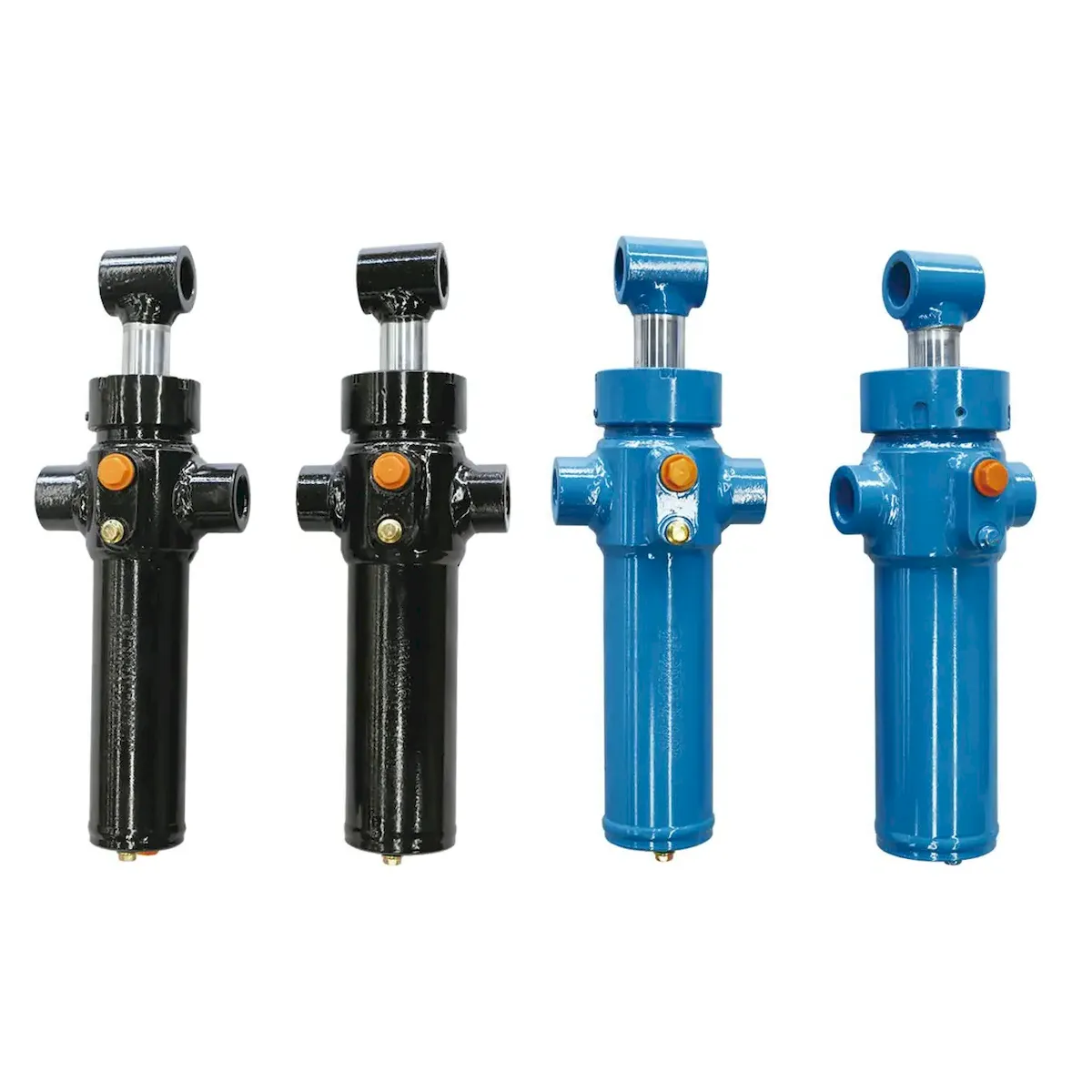
NIKASIL
Electrodeposited nickel matrix with embedded silicon carbide particles
最适合
Chemical processing lift cylinders where the rod is exposed to acidic or alkaline cleaning chemicals; food processing where FDA-listed coating materials are required; pharmaceutical industry where hexavalent chrome is excluded by cleanliness protocols.
LIMITATIONS
Lower hardness than hard chrome (500–700 HV) — not suitable for high-abrasion environments; more expensive than hard chrome; limited availability from plating shops compared to hard chrome.
ELECTROLESS NICKEL
Autocatalytic nickel-phosphorus deposition — no electrical current required
最适合
Cylinders with complex port or gland geometry where hard chrome would achieve non-uniform thickness (EN deposits uniformly regardless of geometry); corrosion protection in moderate environments without the hexavalent chrome concern; food-grade and pharmaceutical applications.
LIMITATIONS
Hardness only 450–600 HV (as-plated); can be increased to 900–1 000 HV by heat treatment at 400°C but this risks dimensional distortion on precision rods; not suitable for high-abrasion or high-sliding-speed applications without heat treatment.
第 05 节
Selection Matrix by Application
| 应用 | RECOMMENDED COATING | THICKNESS | PRIMARY REASON |
|---|---|---|---|
| Standard industrial (indoor) | 硬铬 | 25–35 μm | Cost-effective, adequate for clean mineral oil environment |
| Mobile construction / quarry | HVOF WC-CoCr | 250–300 μm | Silica abrasive resistance — 3–5× longer rod life than chrome |
| Agricultural (soil / fertiliser) | HVOF or chrome + annual wax | 200 μm / 30–40 μm | Silica soil + fertiliser chemical exposure — HVOF preferred for long-season lift cylinder applications |
| Marine atmospheric / deck | Hard chrome + stainless rod | 25–35 μm | Stainless substrate removes corrosion risk even if chrome is penetrated |
| Marine splash zone | HVOF on 316SS rod | 200–300 μm | Dense HVOF + stainless substrate — maximum corrosion + wear resistance |
| Food / pharma processing | Nikasil or EN on 316SS | 20–40 μm | No hexavalent chrome; FDA-listed materials; washdown compatible |
| Chemical process | Electroless nickel heat-treated | 30–60 μm | Near-zero porosity corrosion barrier; chemical resistance; no Cr VI |
All rod coating specifications listed above are available for custom specification when ordering from the lift cylinder product range — specify the required rod treatment at enquiry stage to ensure the correct surface is included in the manufacturing programme.
第 06 节
Rod Surface Inspection and Remaining Life Assessment
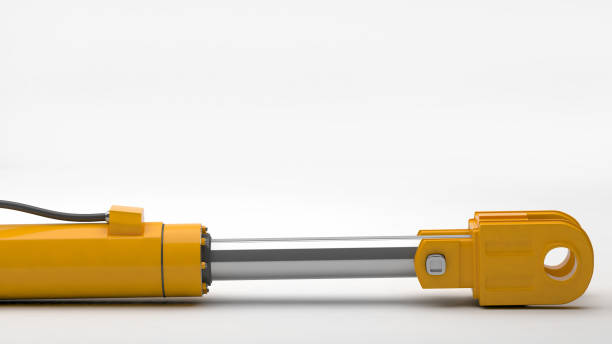
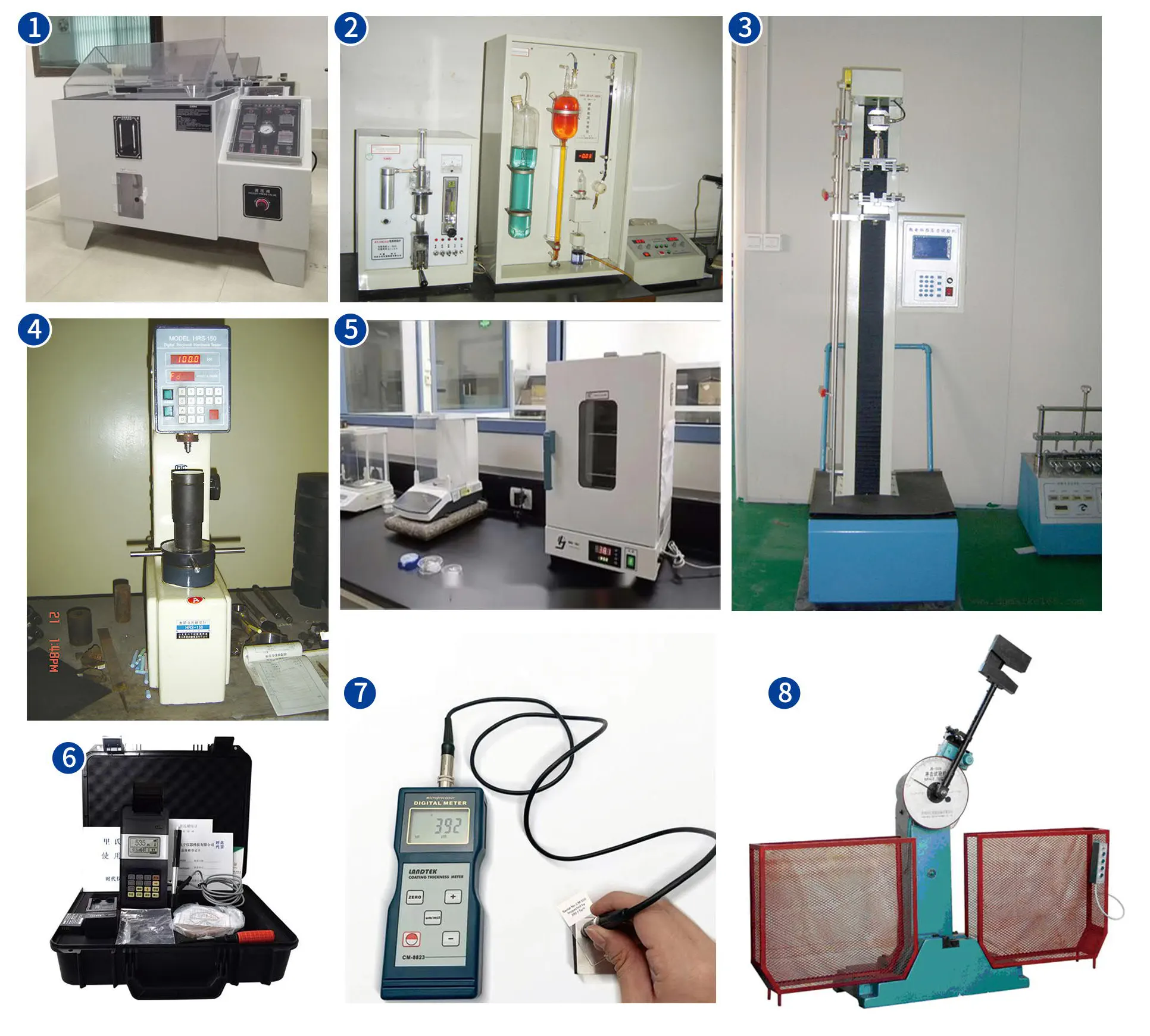
Regular rod surface inspection is the most cost-effective maintenance action for lift cylinders in high-duty or corrosive service. The inspection can be conducted without removing the cylinder from the machine using an eddy-current thickness gauge:
MEASURE
Extend the lift cylinder rod to full stroke. Wipe the rod surface clean. Using a calibrated eddy-current gauge, take readings at five evenly spaced points along the full exposed lift cylinder rod length. Record each reading and compare to the original specification (typically 25–35 μm for hard chrome, 200–300 μm for HVOF). The minimum reading across all five points is the critical value.
ASSESS
Hard chrome lift cylinder rod: above 20 μm remaining — continue in service; 15–20 μm — schedule re-chroming at next planned maintenance; below 15 μm — re-chrome before next season or immediately if corrosion is visible. HVOF: above 100 μm remaining — continue; 50–100 μm — schedule re-coating; below 50 μm — remove for re-coating, excessive wear rate suggests process contamination has changed.
INSPECT
Beyond thickness, visually inspect the rod surface for: pitting (dark spots that penetrate through the coating — immediate replacement trigger); chrome lifting (blistering of the chrome from the substrate — occurs in corrosive environments, immediate replacement); scoring (longitudinal scratches — measure depth with a profilometer: above 0.8 μm Rz is a seal failure risk).
申请常见问题解答
Rod Surface Treatment Questions
Q 01
Can a chrome rod be re-chromed multiple times, or does there come a point where the rod must be replaced?
A lift cylinder hard chrome rod can be re-chromed 3–5 times before the rod diameter falls below the minimum specified dimension, depending on how much material is removed by the grinding and stripping process between each plating cycle. Each re-chrome cycle involves stripping the old chrome, grinding the rod to remove any corrosion or surface defects on the steel substrate, then re-plating and re-grinding to the final diameter. The total material removed per cycle is typically 0.1–0.2 mm in diameter — meaning a rod that starts at the maximum tolerance of the specification can accept 4–5 re-chrome cycles before falling below the minimum dimension. To track this, the rod’s current diameter should be measured and recorded at each re-chrome; when it reaches the minimum drawing dimension, the rod must be scrapped rather than re-coated.
Q 02
Is HVOF coating compatible with the same seal materials as hard chrome?
Yes, the seal material compatibility with lift cylinder seal grades is the same for HVOF and hard chrome — both produce a hard, inert metallic surface that is compatible with NBR, PU, PTFE, and FKM seal materials. The difference in practical seal life is that HVOF’s greater surface hardness and density means that the surface maintains its design Ra 0.1–0.4 μm roughness profile for significantly longer than chrome before wear causes the seal contact surface to roughen. The result is that seals on HVOF-coated lift cylinder rods — typically last longer than seals against chrome rods in the same contaminated environment — the HVOF surface does not develop the abrasive surface micro-texture that chrome acquires as particles begin to embed. The one compatibility point to verify is that the HVOF rod has been ground to the correct surface finish after coating — HVOF as-sprayed has a rougher surface (Ra 2–4 μm) that would destroy any seal; the final grinding step is mandatory.
Q 03
What are the REACH restrictions on hexavalent chromium and how do they affect lift cylinder supply?
EU REACH Regulation (EC) No 1907/2006 Annex XIV has required authorisation for the use of hexavalent chromium (Cr VI) compounds in electroplating since 2017. This means that any EU-based plating operation using chromic acid for hard chrome must have a specific REACH authorisation covering the application — and these authorisations have a defined end date that requires renewal. The practical consequence for lift cylinder supply is that the number of authorised hard chrome plating facilities in the EU has decreased since 2017, and some EU cylinder manufacturers have already transitioned partially or fully to HVOF or trivalent chrome alternatives. For customers purchasing lift cylinders from EU manufacturers, it is worth confirming that the manufacturer holds current REACH authorisation for their chrome plating operation, or that they have transitioned to an alternative that does not require authorisation. For non-EU customers, the restriction does not apply directly, but may affect the supply chain of European-manufactured components in cylinders destined for the EU market.
Q 04
Can a damaged chrome rod be repaired locally on-site without full re-chroming?
Localised on-site chrome repair on a lift cylinder rod is technically possible using brush plating (also called selective plating) — a portable electroplating technique that applies chrome or nickel to a specific area of the rod without removing it from the machine or treating the full rod length. Brush plating can restore corrosion protection to a local area of pitting or minor scoring and is commonly used on large mining and civil engineering lift cylinders where removal for shop plating would be extremely disruptive. The limitations are: brush plating typically achieves 200–300 HV rather than the 650–900 HV of tank hard chrome; the bond between brush-plated nickel and the corroded substrate is weaker than tank plating to a clean substrate; and the repair area will wear faster than the surrounding original chrome. Brush plating is an acceptable temporary measure to extend the lift cylinder’s service life between planned overhauls — it is not a permanent repair equivalent to full re-chroming the lift cylinder rod from the workshop. The treated area should be inspected at the next scheduled maintenance and the lift cylinder sent for full re-chrome if the brush-plated area shows any further deterioration.
LIFT CYLINDER ROD SPECIFICATION SUPPORT
Selecting the Right Rod Coating for Your Application?
Our application team specifies the correct rod surface treatment — hard chrome, HVOF, Nikasil, or electroless nickel — for every 举升缸 based on your environment, cycle frequency, and service life target.