APPLICATION GUIDE · AERIAL WORK VEHICLES · SAFETY-CRITICAL HYDRAULICS
Lift Cylinders for
Aerial Work Vehicles
Application Guide
Aerial work vehicles place the most demanding safety requirements on lift cylinders of any mobile equipment application — every cylinder in the system is directly responsible for preventing platform free-fall while personnel are elevated. This guide covers lift cylinder positions across boom lifts, scissor lifts, and truck-mounted platforms: holding valve integration, redundant circuit design, ANSI/OSHA compliance requirements, and the inspection protocols that keep aerial work vehicle hydraulic systems safe.
Scissor Lift Actuators
Holding Valve Safety
LIFT CYLINDERS · AERIAL PLATFORM ENGINEERING · JULY 2026
SYSTEM REFERENCE · AERIAL WORK VEHICLE LIFT CYLINDER PARAMETERS
PLATFORM HEIGHT
6–56 m
Working height range — scissor lifts to large telescopic boom platforms
BORE RANGE
50–180 mm
Levelling cylinders to main boom lift cylinders for heavy-duty platforms
SİSTEM BASINCI
16–25 MPa
Operating pressure — higher than agricultural applications due to safety margins
SAFETY FACTOR
2:1 min
Burst pressure safety factor per ANSI A92 — critical hydraulic components
BÖLÜM 01
Why Aerial Work Vehicles Demand Safety-Critical Lift Cylinders
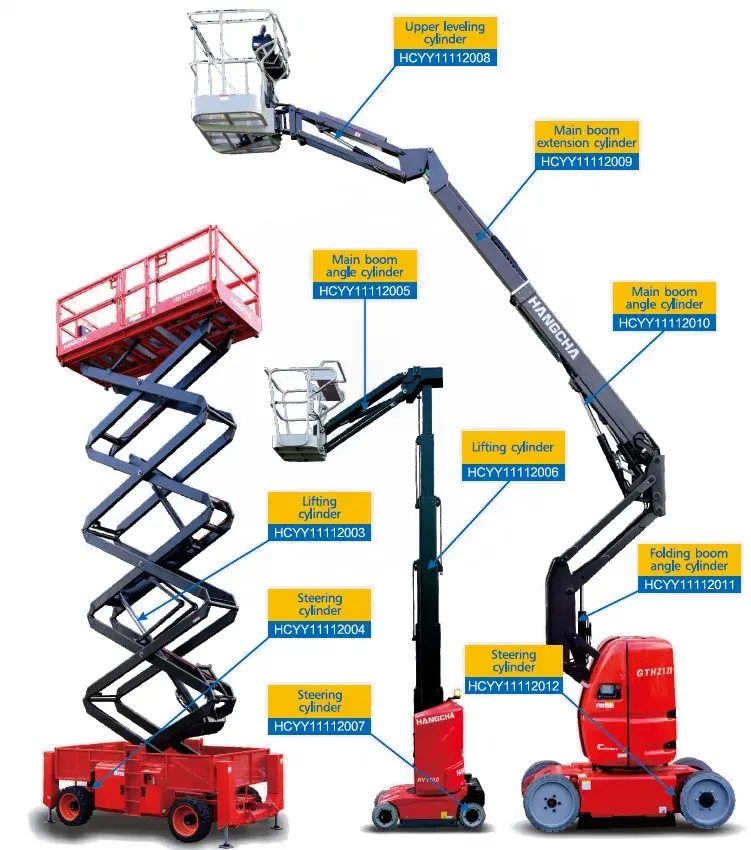
Aerial work vehicles — boom lifts, scissor lifts, truck-mounted platforms and spider lifts — are the only category of mobile equipment where a cylinder failure can directly cause fatal injury to multiple personnel. When a lift cylinder on an excavator fails, the bucket drops to the ground. When a lift cylinder on an aerial work vehicle fails, the platform drops — with personnel standing on it, potentially from 20, 30, or 50 metres above the ground. This fundamental distinction drives every engineering decision in aerial work vehicle cylinder design.
ANSI A92 and EN 280 (the North American and European standards governing aerial work platforms) classify these cylinders as “critical hydraulic components” — defined as components whose failure would result in free fall or uncontrolled rotation of the boom or platform. This classification imposes requirements that do not apply to cylinders in any other mobile equipment application:
2:1 burst safety factor — the cylinder must withstand at least twice the maximum working pressure without catastrophic failure (barrel rupture, end-cap blow-out, rod separation).
Integral holding valve — every lift cylinder that supports the platform against gravity must incorporate a holding valve (counterbalance valve or pilot-operated check valve) that locks the cylinder in position if the supply hose ruptures.
Hose burst protection — a hose failure must not cause uncontrolled boom or platform descent; the holding valve at the cylinder port must close faster than the oil can drain through the ruptured hose.
Traceability and certification — each lift cylinder must carry a unique serial number traceable to the material batch, pressure test certificate, and manufacturing date for the life of the aerial work vehicle.
These requirements make aerial work vehicle lift cylinders fundamentally different from agricultural or construction lift cylinders — even when the bore, stroke, and mounting dimensions appear identical. An agricultural cylinder of the same physical size lacks the holding valve integration, the material traceability, and the burst pressure certification that aerial platform standards mandate. Installing an uncertified cylinder in an aerial work vehicle is both a safety hazard and a regulatory violation under OSHA 29 CFR 1926.453.
BÖLÜM 02
Cylinder Positions and Functions by Platform Type
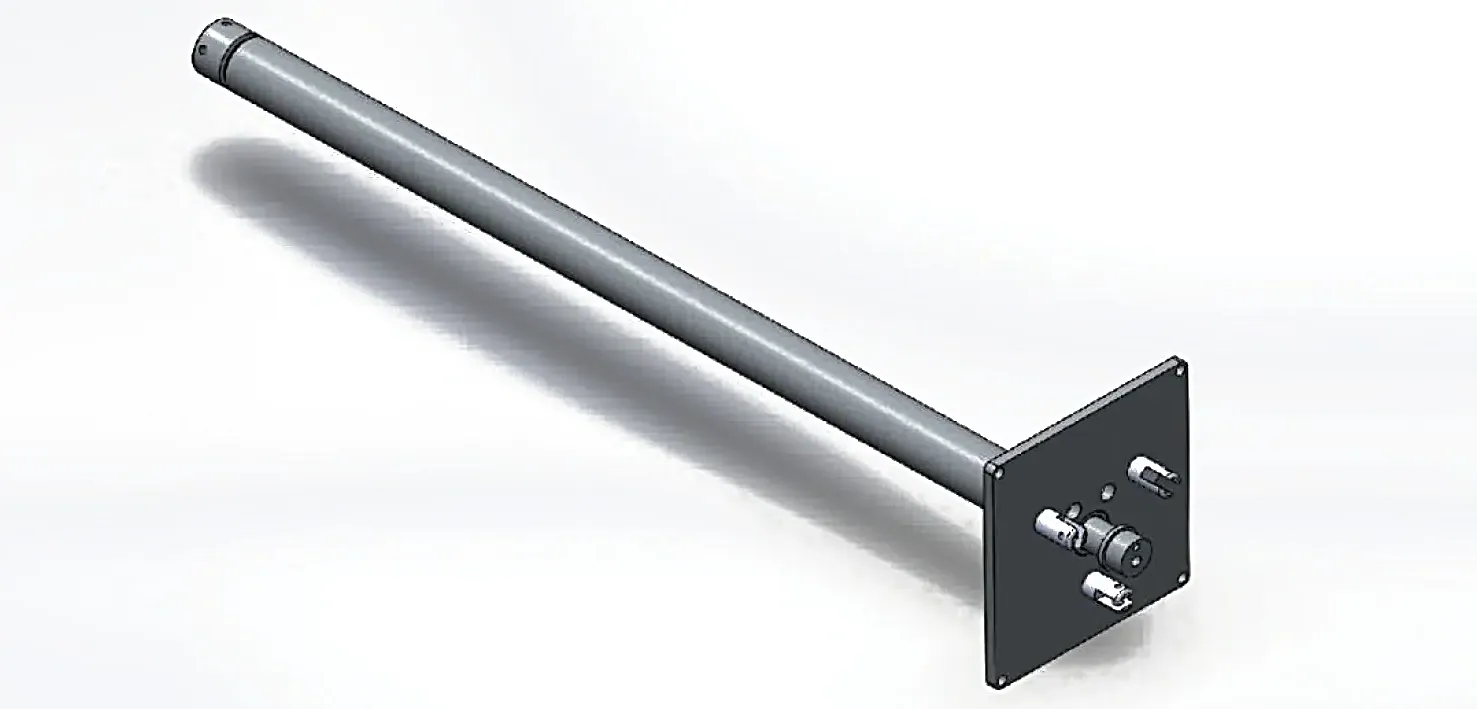
A typical articulating boom lift uses 6–10 cylinders across four functional groups. Each group has different bore, stroke, and holding valve requirements because the load profile and failure consequence differ at each position in the platform structure.
BOOM ELEVATION
■
Raises the boom structure from stowed to working angle
■
Highest force cylinder — supports full boom + platform + personnel weight
■
Holding valve: mandatory — gravity-loaded at all boom angles
■
Typical bore: 100–180 mm
BOOM EXTENSION
■
Telescopes the boom sections to reach working position
■
Multiple stages on telescopic booms — each stage has its own lift cylinder
■
Holding valve: required when boom angle exceeds horizontal
■
Typical bore: 70–120 mm
PLATFORM LEVELLING
■
Keeps the work platform level as boom angle changes
■
Automatic compensation — no operator input required
■
Holding valve: mandatory — personnel safety depends on platform staying level
■
Typical bore: 50–80 mm
OUTRIGGER / STABILISER
■
Extends and locks the stabiliser legs before boom operation
■
Must hold full machine tip-over load on worst-case side
■
Holding valve: mandatory — retraction would cause immediate tip-over
■
Typical bore: 80–140 mm
O HCYY series lift cylinders cover all four functional positions in the aerial work vehicle system — each model includes the correct holding valve configuration for its intended mounting position and the material certification required for ANSI A92 compliance documentation.
BÖLÜM 03
Holding Valves and Safety Redundancy Engineering
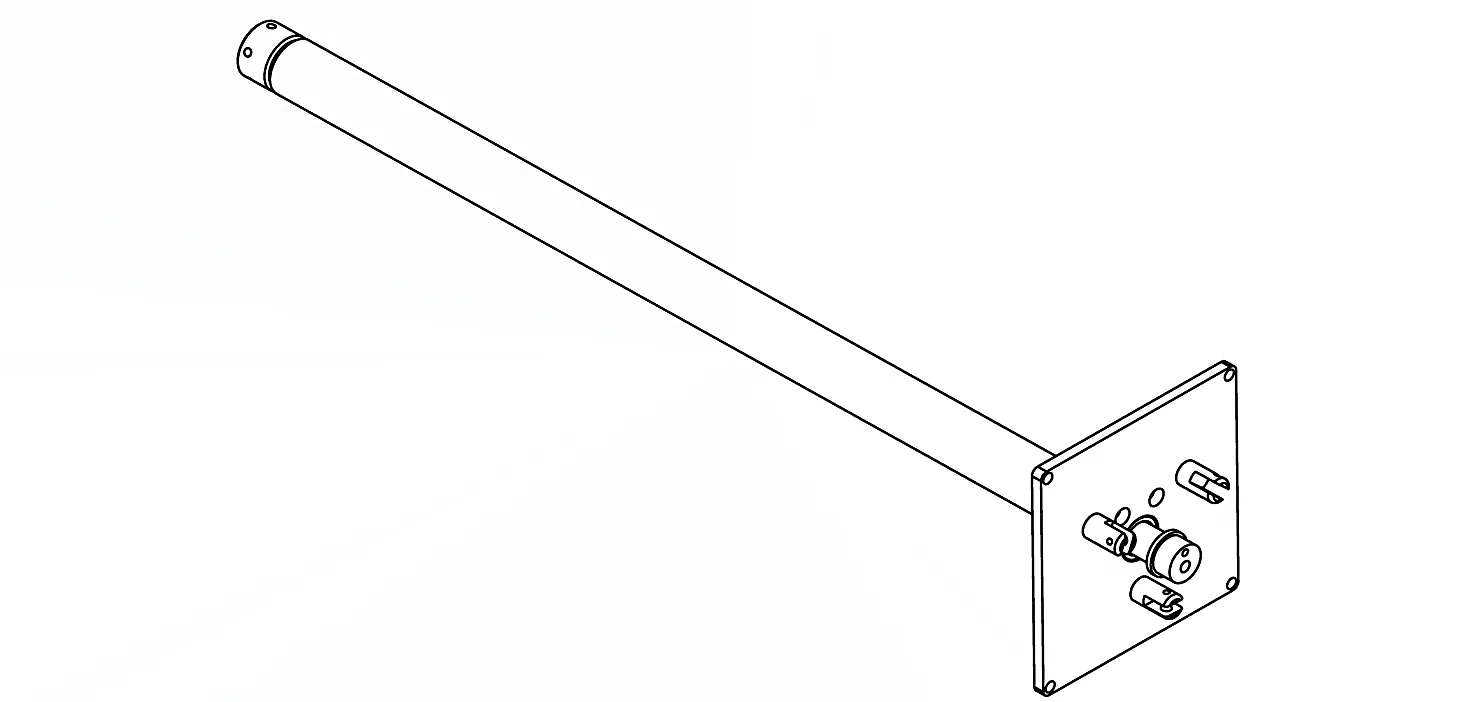
The holding valve is the single most important safety component in an aerial work vehicle hydraulic system. Its function is straightforward: it locks the oil inside the cylinder and prevents the rod from retracting (or extending, depending on the load direction) unless a positive pilot signal commands it to open. If the hydraulic supply hose ruptures, the holding valve closes and the platform remains at its current height — the operator and passengers feel nothing, even though the hydraulic supply is completely lost.
Two types of holding valves are used in aerial work vehicle lift cylinders, each with distinct operating characteristics:
COUNTERBALANCE VALVE (CBV)
▹
Opens proportionally when pilot pressure from the opposing port exceeds a set threshold
▹
Provides smooth, controlled lowering — the platform descends at a rate proportional to operator valve input
▹
Preferred for boom elevation and extension cylinders where smooth motion is required for personnel comfort
▹
Set ratio typically 3:1 to 4.5:1 (pilot pressure to load pressure)
PILOT-OPERATED CHECK VALVE (POCV)
▹
Binary operation: fully closed (locked) or fully open — no proportional control
▹
Provides absolute lock with zero leakage — the platform holds position indefinitely with no drift
▹
Preferred for outrigger and stabiliser lift cylinders where zero creep is critical for machine stability
▹
Lowering motion is less smooth — acceptable for stabilisers but not ideal for boom positioning
Safety note: The holding valve must be mounted directly at the lift cylinder port — not remotely on a manifold connected by hose. A remote-mounted holding valve creates an exposed hose section between the valve and cylinder. If that hose section fails, the holding valve cannot prevent platform descent because it is on the wrong side of the rupture. Integral port mounting eliminates this single point of failure.
BÖLÜM 04
Specifications by Aerial Platform Class
| PLATFORM TYPE | HEIGHT | MAIN BORE | SİLİNDİRLER | PRESSURE |
|---|---|---|---|---|
| Scissor lift (electric) | 6–14 m | Ø50–70 mm | 1–2 | 16–18 MPa |
| Articulating boom lift | 12–26 m | Ø80–120 mm | 6–10 | 20–25 MPa |
| Telescopic boom lift | 18–56 m | Ø100–180 mm | 4–8 | 21–25 MPa |
| Truck-mounted platform | 14–100 m | Ø80–160 mm | 8–16 | 21–25 MPa |
| Spider lift | 12–42 m | Ø63–100 mm | 8–14 | 20–25 MPa |
OEM replacement note: When sourcing replacement cylinders for aerial work vehicles, the replacement unit must match the original in bore, stroke, pin-to-pin distance, holding valve type, and burst pressure rating. The full kaldırma silindiri range includes OEM-equivalent models for the most common boom lift and scissor lift brands, alongside a broader catalogue of aerial work vehicle hydraulic cylinders covering articulating, telescopic, and truck-mounted platform configurations.
BÖLÜM 05
Inspection, Compliance and Maintenance Requirements
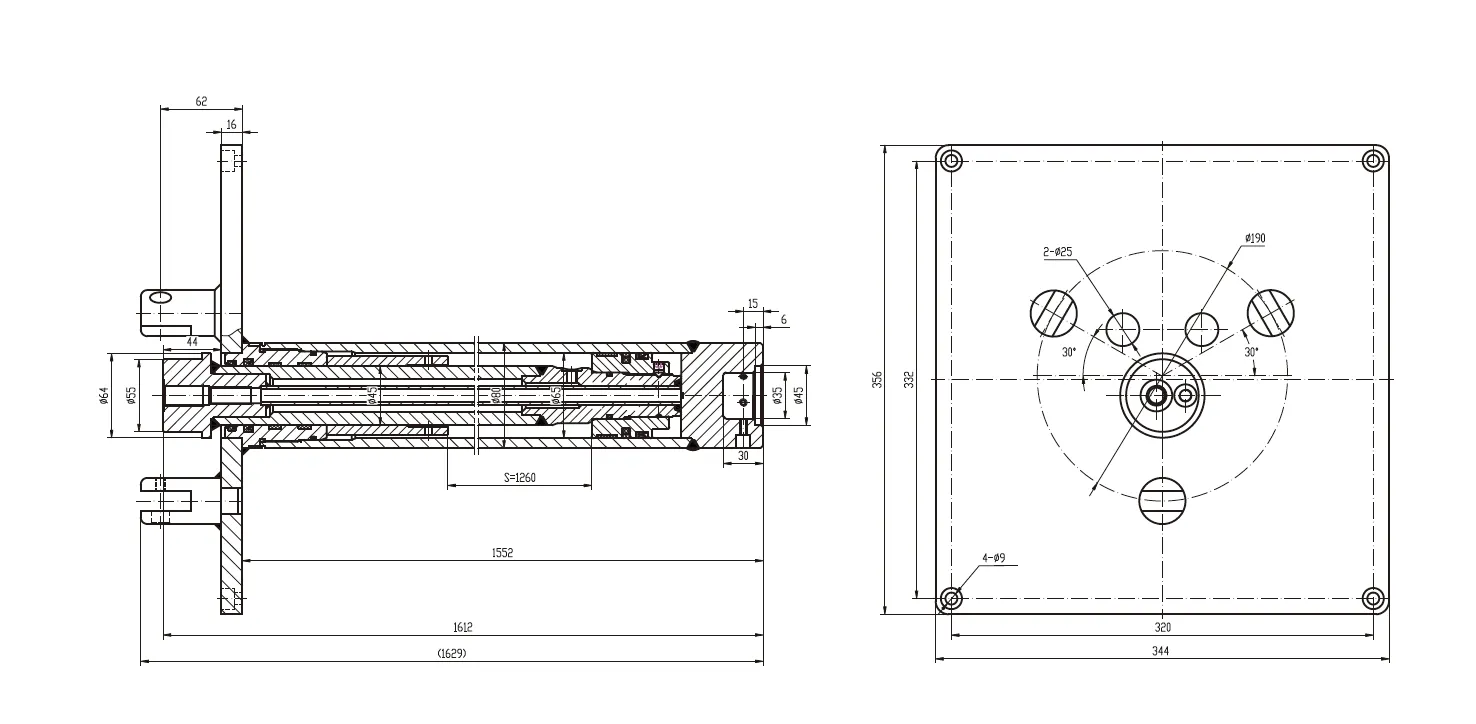
ANSI A92 and OSHA 29 CFR 1926.453 require three inspection tiers for aerial work vehicle hydraulic systems, each with specific lift cylinder inspection items:
TIER 1 — DAILY PRE-USE INSPECTION (OPERATOR)
⊙
Visual check of all lift cylinder rods for scoring, dents, corrosion, or chrome flaking — any visible rod damage requires immediate machine lockout
⊙
Check for oil leaks at rod seals, port connections, and holding valve bodies — any external leakage is a fail condition
⊙
Function test: raise platform to maximum height, release controls, observe for 3 minutes — platform must not descend more than 10 mm (holding valve drift test)
TIER 2 — PERIODIC INSPECTION (QUALIFIED TECHNICIAN · EVERY 3 MONTHS)
⊙
Measure lift cylinder rod run-out (must be < 0.5 mm TIR) — bent rods cause progressive seal failure and eventual holding valve malfunction
⊙
Holding valve function test at rated load — apply full rated platform load, activate emergency stop, verify platform holds position for 10 minutes with zero measurable descent
⊙
Inspect cylinder mounting pins and bushings — wear beyond manufacturer tolerance allows the lift cylinder to pivot under load, creating bending stress on the rod
TIER 3 — ANNUAL COMPREHENSIVE INSPECTION (CERTIFIED INSPECTOR)
⊙
Full hydraulic system pressure test — verify system relief pressure and individual holding valve crack pressures against manufacturer specification
⊙
Internal leakage test — isolate each cylinder and measure oil bypass past the piston seal at rated pressure; replace any cylinder exceeding the manufacturer’s leakage limit
⊙
Documentation: record all lift cylinder serial numbers, holding valve model numbers, and test results in the machine’s annual inspection certificate — required for continued ANSI A92 compliance
BAŞVURU SSS
Aerial Work Vehicle Lift Cylinder Questions
Can I use a standard hydraulic cylinder as a replacement on an aerial work vehicle?
No — and doing so is a regulatory violation. A standard hydraulic cylinder, even if the bore, stroke, and pin dimensions match, lacks the holding valve integration, burst pressure certification, and material traceability that ANSI A92 requires for personnel-carrying aerial work platforms. Installing an uncertified unit creates a single point of failure that could cause platform free-fall. OSHA 29 CFR 1926.453 requires that only replacement parts equivalent to the original manufacturer’s specification are used on aerial lifts. This means the replacement unit must carry the same or higher burst pressure rating, the same holding valve type and setting, and a traceable material certificate — all of which a general-purpose cylinder does not provide.
What happens if a holding valve fails on an aerial work vehicle lift cylinder?
A holding valve failure on a gravity-loaded lift cylinder causes uncontrolled platform descent — the severity depends on which cylinder’s valve fails and the current boom position. If the boom elevation cylinder holding valve fails with the boom at maximum angle, the boom and platform descend uncontrolled until the boom reaches its mechanical stop or the ground. The rate of descent depends on the oil flow rate through the failed valve — a fully open failure produces near free-fall, while a partial failure produces a slow but uncontrollable drift. This is why daily pre-use inspection includes the holding valve drift test (raise to max height, release controls, observe for drift). Any measurable drift that was not present previously indicates holding valve degradation and the machine must be removed from service immediately for valve inspection and replacement.
How long do lift cylinders last on aerial work vehicles before replacement?
Lift cylinder service life on aerial work vehicles is measured in operating hours and cycles rather than calendar years. Typical service intervals: rod seal replacement at 3 000–5 000 operating hours (or when the daily drift test shows measurable holding valve leakage); holding valve overhaul at 5 000–8 000 hours; full cylinder replacement at 10 000–15 000 hours or when bore honing is required due to internal corrosion. Rental fleet machines that operate 1 500–2 000 hours per year may require seal service every 2–3 years and full cylinder replacement at 6–8 years. Owner-operator machines at 500–800 hours per year may run 6–10 years between seal services. The critical factor is not calendar age but the holding valve drift test result — a lift cylinder that passes the holding valve test at 15 000 hours remains safe to operate; a cylinder that fails the test at 2 000 hours must be serviced regardless of age.
What documentation should I receive with a replacement lift cylinder for an aerial work vehicle?
A replacement cylinder for an aerial work vehicle must be supplied with the following documentation to maintain ANSI A92 compliance:
1.
Pressure test certificate — confirming the cylinder has been proof-tested at 1.5× and burst-rated at 2× the maximum working pressure
2.
Material certificate — barrel, rod, and piston material grades with heat treatment records traceable to the material mill
3.
Holding valve specification — valve model, crack pressure setting, and pilot ratio matching the original equipment specification
4.
Dimensional report — bore, stroke, rod diameter, and pin-to-pin distance confirmed against the OEM specification
AERIAL WORK VEHICLE LIFT CYLINDER SUPPORT
Need Certified Lift Cylinders for Aerial Work Platforms?
Our application team provides OEM-equivalent lift cylinder matching for boom lifts, scissor lifts, and truck-mounted platforms — including holding valve specification, burst pressure certification, and material traceability documentation for ANSI A92 compliance.
Editör: Cxm