APPLICATION GUIDE · FORESTRY MACHINERY · HYDRAULIC LIFT CYLINDERS
Forestry Machinery
Hydraulic Lift Cylinders
Harvester · Forwarder · Grapple
Forestry machinery operates in arguably the most contamination-hostile outdoor environment of any mobile equipment category. The combination of abrasive mineral soil, organic tree sap resins, bark particles, pine needle tars, sub-zero winter temperatures, and extreme mechanical shock loads from log impacts creates conditions that standard mobile equipment lift cylinder specifications cannot survive for an acceptable service life. This guide covers the engineering required to specify, maintain, and replace hydraulic cylinders in harvester, forwarder, and grapple loader applications.
Forwarder Crane
Grapple & Delimber
LIFT CYLINDERS · FORESTRY APPLICATION ENGINEERING · JULY 2026
REFERENCE · FORESTRY LIFT CYLINDER OPERATING PARAMETERS
SİSTEM BASINCI
25–35 MPa
Modern cut-to-length harvesters operate at 28–35 MPa — highest pressure of any forestry machine type
TEMPERATURE RANGE
-40°C to +70°C
Scandinavian winter forestry requires cold-start capability at -40°C with standard Arctic-grade hydraulic oil
DÖNGÜ SIKLIĞI
200–500/hour
Harvester head delimber cylinders — highest cycle rate in the machine; feed roller lift cylinders also high duty
ÇUBUK KAPLAMASI
HVOF mandatory
Hard chrome rods fail rapidly in forestry — bark particles and mineral soil abrasion destroy chrome within one season
BÖLÜM 01
Forestry Machine Types and Cylinder Positions
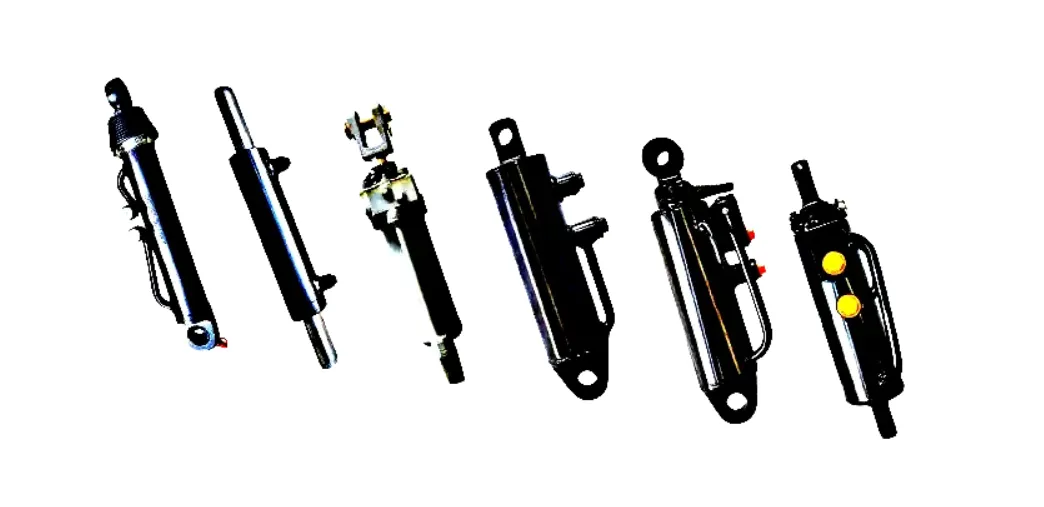
The cut-to-length (CTL) forestry system uses three interconnected machine types, each containing multiple hydraulic cylinder positions that together process a standing tree into standardised log lengths ready for the sawmill:
HARVESTER
The harvester fells, delimbs, and cross-cuts trees in a single continuous operation using a harvester head mounted on a hydraulic boom. The head contains multiple lift cylinders — delimber arm cylinders (4–8 per head), feed roller cylinders, saw chain bar cylinder, and butt plate cylinders. The boom carries the entire head weight (600–1 200 kg) plus the tree being processed, generating very high combined axial and lateral forces in the boom lift cylinders.
FORWARDER
The forwarder collects the cross-cut logs from the strip road using a loader crane with a grapple, stacks them on the load bunk, and transports them to the roadside landing. The loader crane contains 3–5 lift cylinders (inner boom, outer boom, tilt cylinder, and grapple tilt) plus the grapple opening cylinder. Forwarder lift cylinders typically operate at lower cycle rates than harvester head cylinders but carry heavier loads.
GRAPPLE LOADER
A separate machine at the roadside landing to load trucks. Typically a crane-mounted grapple loader with 4–6 cylinders in the boom and extension systems. The truck-loading application exposes the grapple lift cylinders to road dust and diesel exhaust contamination in addition to the forest contamination, and requires lift cylinders rated for the frequent slewing loads generated during rapid truck loading cycles.
BÖLÜM 02
Harvester Head — Delimber and Feed Roller Cylinders
The harvester head is the most cylinder-dense component in the forestry system. A medium-capacity head for trees up to 50 cm diameter may contain 12–16 individual lift cylinders operating simultaneously during tree processing. The delimber arm cylinders and feed roller cylinders are the highest-cycle positions in the entire machine:
DELIMBER
ARM
4–8 double-acting lift cylinders that hold the delimbing knives against the tree trunk during the feed cycle. Each knife carrier is spring-loaded open and hydraulically closed — the lift cylinder maintains constant pressure against the tree surface as the feed rollers advance the tree. Bore: 40–63 mm. Stroke: short (80–200 mm). The delimber arm cylinders accumulate 200–500 full cycles per hour during normal production — 2 000–4 000 cycles per working day. HVOF rod coating and PU seals are mandatory at this cycle rate in the bark-particle environment.
FEED
ROLLER
2–4 double-acting lift cylinders that move the feed rollers to grip and advance the tree trunk through the head. The feed roller cylinder experiences the highest shock loads in the head — particularly when the tree hits a branch stub or knot that momentarily resists the feed force, then suddenly gives way. These impact events generate pressure spikes 3–5× the normal working pressure that must be absorbed by the system’s pressure relief valve without damaging the cylinder end-cap welds. Bore: 50–80 mm. Heavy-duty end-cap weld specification with NDT verification is required for machines working in high-knot-density softwood stands.
SAW BAR /
BUTT PLATE
The saw bar lift cylinder advances the chainsaw bar through the tree during the cross-cut stroke. Very short stroke (60–120 mm), high speed, extremely high pressure at the moment of cut initiation — the saw bar must accelerate rapidly from rest to full cutting speed. The butt plate lift cylinder aligns the cut log end against a measuring stop. Both positions are contaminated with sawdust, chain oil, and bark particles — comprehensive wiper specifications are essential on both lift cylinders.
BÖLÜM 03
Boom and Crane Lift Cylinders — Combined Loading
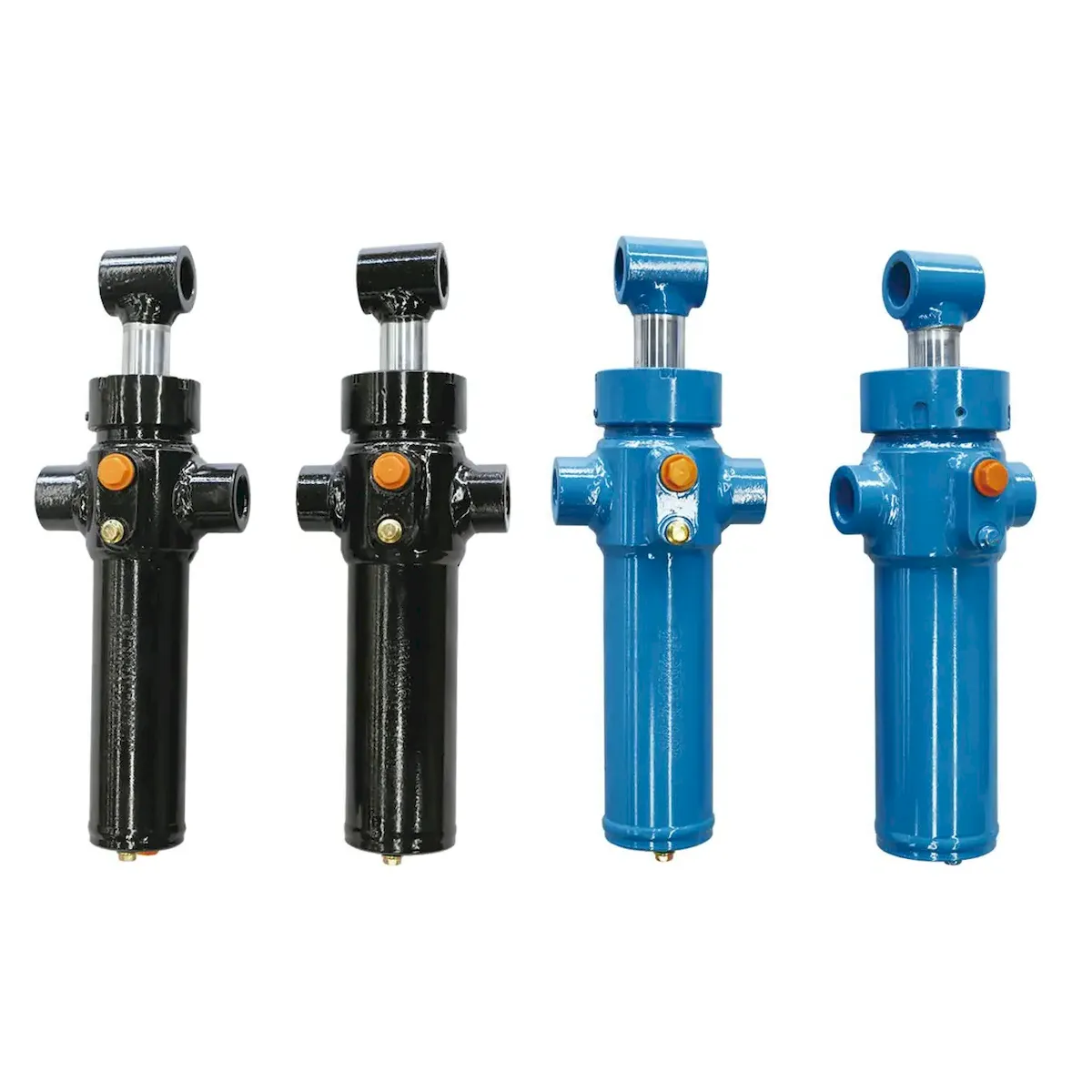
The boom and crane cylinders on harvesters and forwarders operate under a combined loading condition that is more demanding than a pure vertical lift application. The boom extends outward from the machine, and the lift cylinder supporting the boom must carry both the axial compression from the vertical component of the load and the bending moment from the horizontal offset of the head weight from the boom pivot. This combined loading requires specific engineering considerations:
ROD DIAMETER SIZING
The rod must be sized for both column buckling under axial load and bending stress from the side load component. For a typical harvester inner boom lift cylinder with 80 kN axial load and 15 kN side load at 1.2 m rod extension, the combined stress analysis typically requires a rod diameter 20–30% larger than a pure-axial buckling calculation would produce. Use the actual combined force vector — not just the axial component — as the basis for rod sizing.
EYE BORE AND BUSHING
The mounting eye bore and pivot bushing must accommodate the angular movement of the boom cylinder as the boom sweeps through its arc while also carrying the side load from the combined loading. Bronze or maintenance-free PTFE-lined bushings with grease nipples are standard for forestry boom lift cylinders — dry-pinned installations fail rapidly as the boom geometry changes the angle of load application at each position.
COUNTERBALANCE VALVES
Boom cylinders on harvesters and forwarder cranes must have counterbalance valves mounted directly at the cap-end port to prevent boom drop if a supply hose fails. The counterbalance valve must also limit the controlled lowering speed to a safe rate when the boom is loaded with a full tree stem — uncontrolled descent with a 500 kg stem attached would be a life-threatening event for any bystander.
BÖLÜM 04
Grapple and Rotator Cylinder Specification
The grapple on a forwarder crane or log loader uses two or four symmetrically opposed lift cylinders to open and close the grapple tines around a log bundle. The grapple cylinder operates in the most severe contamination zone of any cylinder position in the machine — directly in contact with log surfaces, bark, mud, and forest debris during every grab and release cycle:
GRAPPLE CYLINDER SPECIFICATION REQUIREMENTS
BORE AND STROKE
50–100 mm bore, 150–400 mm stroke depending on grapple size. Grapple for forwarder: 0.35–0.60 m² jaw area; for grapple loader: 0.50–0.90 m².
ROD EXPOSURE
Rod fully exposed to wood, bark, mud, and gravel on every working cycle. HVOF coating with steel scraper wiper mandatory — chrome lasts one season at best in this position.
PRESSURE SPIKES
Grabbing a heavy log bundle causes a pressure spike at the moment of load pickup — the grapple lift cylinder must hold 3–5× normal working pressure momentarily. End-cap weld NDT verification recommended.
ROTATOR INTEGRATION
The hydraulic rotator between the crane tip and grapple uses a separate orbital hydraulic motor — but the grapple tilt cylinder must accommodate the full angular range of the rotator without twisting its supply hoses. Swivel connections are standard.
BÖLÜM 05
Seal, Rod and Fluid Specification for the Forest Environment
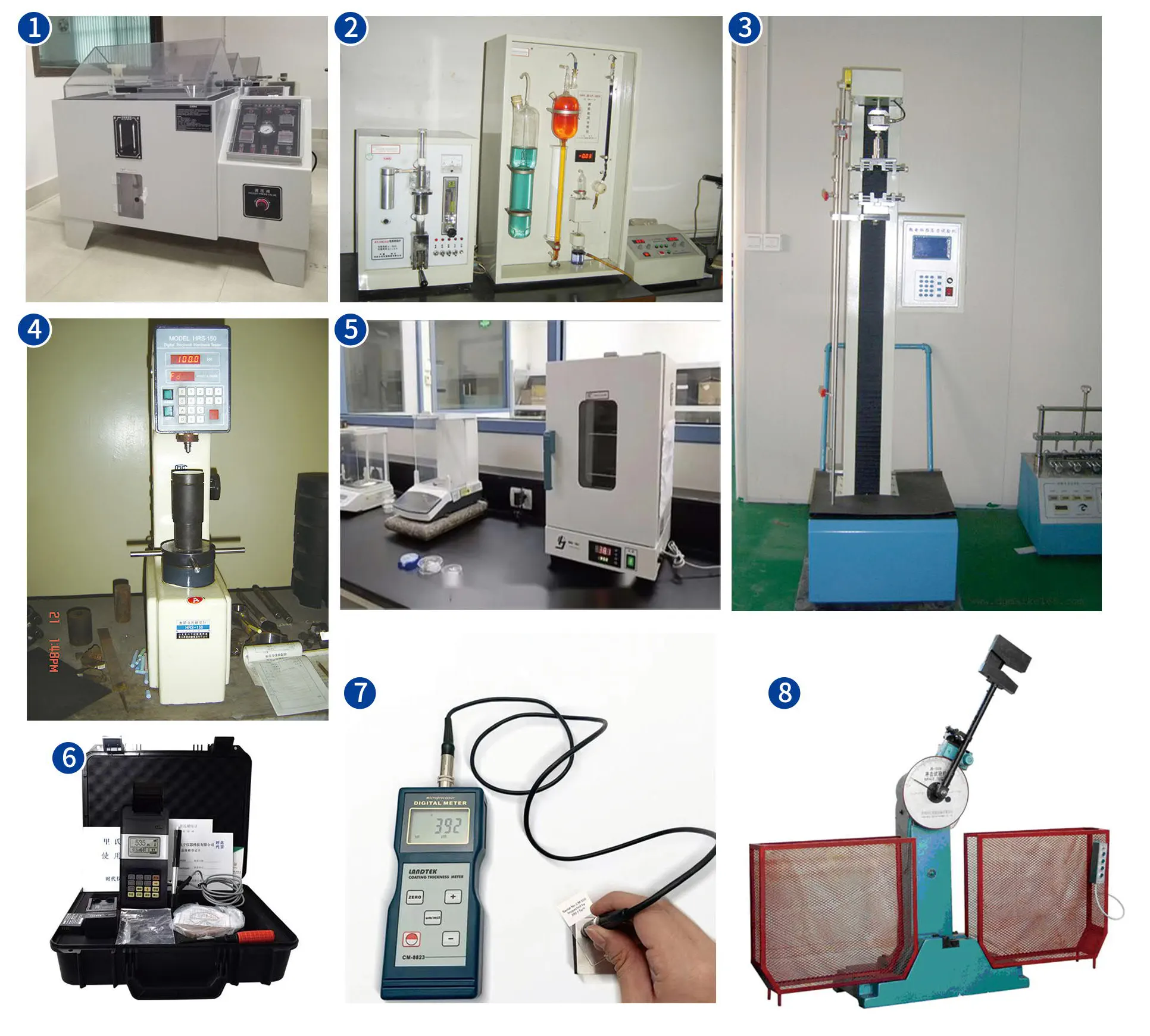
Forestry machinery specification requires a departure from standard mobile equipment grades at every level of the specification hierarchy — rod coating, seal chemistry, wiper design, and hydraulic fluid grade all require upgrading from the standard that works adequately in agricultural or construction applications:
| COMPONENT | STANDARD MOBILE | FORESTRY SPECIFICATION |
|---|---|---|
| Rod coating | Hard chrome 25–35 μm | HVOF WC-CoCr 200–300 μm — chrome fails within one season in forestry |
| Outer wiper | Rubber or PU polymer | Steel scraper + PU secondary — bark and resin particles defeat polymer-only wipers |
| Rod seal | NBR or PU 88 Shore A | PU 92–95 Shore A — higher hardness resists abrasion better in high-bark-particle exposure |
| Hydraulic fluid | ISO 46 mineral oil | Biodegradable ester (HEES) or ISO 46 HV — HEES mandatory in environmentally sensitive forest areas |
| Filtration | 25 μm return filter | 10 μm high-pressure filtration — bark particles and resin agglomerates degrade oil class rapidly |
Environmental note: Most European forestry operations in ecologically protected forests are now required to use biodegradable hydraulic fluid (HEES-type polyol ester) in all machinery. The kaldırma silindiri product range offers EPDM seal options compatible with HEES ester fluids for forestry machinery applications where mineral oil is not permissible. Specify “HEES-compatible” at enquiry to ensure the correct seal chemistry is built into the forestry lift cylinder order. Mobile machinery lift cylinder configurations with HEES compatibility and HVOF rod coating are also available from the mobile machinery hydraulic cylinder range.
BÖLÜM 06
Forestry Lift Cylinder Service and Winter Preparation
Forestry machinery operates year-round in climates with extreme winter conditions. The service programme must account for both the summer season (high contamination, elevated temperature) and the winter season (cold start, reduced lubrication, seal brittleness):
DAILY
Inspect all harvester head lift cylinder rods for oil weeping before first cut. At temperatures below −10°C, run the hydraulic system at low load for a minimum of 10 minutes before starting production — oil temperature must reach at least −5°C before full-pressure operation. Check HEES fluid water content monthly — ester fluids hydrolyse faster in sub-zero temperature cycling. Replace any lift cylinder with a visibly leaking rod seal immediately — oil leakage on frozen ground is a fire risk.
END OF SUMMER
Pre-winter service for Scandinavian/Canadian operators: replace hydraulic oil with winter-grade ISO 32 HV or dedicated Arctic ester. Replace all cylinder seal kits on the harvester head positions as a preventive measure — cold-hardened NBR seals crack at −30°C and should not enter winter season in worn condition. Inspect all HVOF-coated rod surfaces for any delamination — frost-expansion of micro-defects in the coating during freeze-thaw cycles can cause sudden large-area delamination in winter.
ANNUAL
Full HVOF rod thickness measurement on all harvester head cylinders using an eddy-current gauge — HVOF coating at the delimber arm position can wear 30–50 μm per season in high-production hardwood operations. Replace any rod below 100 μm remaining coating. Full seal kit replacement on boom and crane cylinders. Hydraulic oil laboratory analysis for acid number (critical for HEES fluids), water content, and ISO cleanliness class. Replace fluid if acid number exceeds 0.5 mg KOH/g.
BAŞVURU SSS
Forestry Cylinder Questions
Q01
Our harvester head delimber lift cylinders are leaking after only 3–4 weeks of summer operation — is HVOF rod coating really necessary?
Yes — 3–4 week seal life on delimber arm lift cylinders with standard chrome rods is the expected result in high-production summer softwood forestry. The bark particle contamination in a Norwegian or Swedish spruce stand during summer months is extremely abrasive — the bark scales are siliceous, with Mohs hardness of 5–6, well above the hardness of the chrome oxide layer on a hard chrome rod (approximately Mohs 4–5). The result is that the bark particles embed into the chrome surface within a few weeks, effectively converting the rod into a lapping tool that destroys the rod seal on every stroke. HVOF tungsten carbide at Mohs hardness 8–9 is harder than the bark particles and does not embed them — the particles are rejected by the hard, dense coating surface. Forestry OEMs who have switched their delimber lift cylinder specification to HVOF universally report a 4–8× increase in seal change interval, which fully justifies the 2–3× higher rod cost within a single season.
Q02
The regulations in the forests where we operate require biodegradable hydraulic fluid — which type is compatible with standard hydraulic lift cylinder seals?
HEES (synthetic ester) biodegradable fluids are the most commonly specified type for European forestry machinery under regulations such as the German Blue Angel standard and the Nordic Swan ecolabel. HEES fluids are incompatible with standard NBR seals — they cause swelling and softening of NBR elastomers that leads to seal extrusion within weeks of fluid change. The compatible seal materials for lift cylinder HEES operation are: EPDM (excellent — purpose-designed for ester compatibility), PTFE (excellent — chemically inert to all fluid types), and FKM/Viton (good in most HEES formulations, but verify with the specific fluid manufacturer as some ester-FKM combinations show minor swelling). Before converting from mineral oil to HEES, all NBR seals in the system must be replaced with EPDM equivalents. The conversion process: drain mineral oil, flush with a small volume of HEES, drain flush volume, refill with HEES, and monitor closely during the first 50 production hours for any evidence of seal weeping that may indicate incomplete seal replacement.
Q03
We operate in northern Canada at temperatures as low as −40°C in January — what do we need to change about our lift cylinder specification?
For −40°C operation, the standard specification requires changes to both the seal material and the hydraulic fluid. Standard PU seals begin to harden at −30°C and become brittle at −40°C — cold cracking during the first pressurisation of the day can cause immediate rod seal failure. Arctic-rated PU seals with low-temperature plasticisers rated to −50°C are the correct specification for sub-Arctic forestry lift cylinders. Alternatively, EPDM seals have better low-temperature flexibility than PU and maintain seal integrity to −55°C — ideal for the Canadian boreal forest winter season. For the hydraulic fluid: ISO 32 HV with a pour point below −45°C is the minimum specification for −40°C operation. Arctic synthetic hydraulic fluids with pour points below −60°C are available for the most extreme conditions. Even with the correct fluid specification, a 15-minute warm-up period at low engine speed before starting production operation is mandatory at temperatures below −25°C to allow the fluid to reach sufficient fluidity for the lift cylinder seals to function without the risk of dynamic seal damage from viscous fluid drag.
Q04
Can we source replacement harvester head delimber lift cylinders that are interchangeable with original OEM parts but with an upgraded HVOF rod specification?
Yes — aftermarket replacement delimber lift cylinders with HVOF rod coating and upgraded seal specifications are available as direct replacements for all major brands including John Deere, Komatsu Forest, Ponsse, and Logset. The bore, stroke, port positions, and collapsed/extended length are matched to the OEM drawing — the upgrades are internal rather than dimensional changes. When ordering, provide the harvester head model, the cylinder position (delimber arm, feed roller, or saw bar), and whether the machine uses mineral oil or HEES fluid. For machines being converted to HEES at the same time as the lift cylinder replacement, the upgrades should be ordered with EPDM seals and the conversion performed simultaneously to avoid running mismatched seal materials during the transition period.
FORESTRY LIFT CYLINDER SPECIFICATION
Sourcing Lift Cylinders for Forestry Machinery?
Our application team specifies HVOF-coated, HEES-compatible kaldırma silindirleri for harvester heads, forwarder cranes, and grapple loaders — matched to OEM dimensions and upgraded to withstand the forestry environment.
Editör: Cxm