SERVICE GUIDE · MAINTENANCE & INSPECTION · HYDRAULIC LIFT CYLINDERS
Lift Cylinder Maintenance
& Inspection
Complete Service Schedule
A hydraulic lift cylinder that receives no maintenance until it fails will always fail at the worst possible time — under load, mid-shift, in a location where replacement parts are unavailable. Systematic maintenance is not administrative overhead; it is the primary tool for controlling service life, predicting replacement costs, and preventing safety incidents. This guide provides a practical, application-tested maintenance and inspection protocol for lift cylinders across all duty types.
Fluid Analysis
Failure Diagnostics
LIFT CYLINDERS · MAINTENANCE ENGINEERING · JULY 2026
REFERENCE · MAINTENANCE IMPACT ON LIFT CYLINDER SERVICE LIFE
SEAL LIFE (MAINTAINED)
3–8 years
Standard duty, correct oil cleanliness, regular rod wiper maintenance
SEAL LIFE (UNMAINTAINED)
4–18 months
Contaminated oil, failed wiper ignored, no rod cleaning — typical early failure
CONTAMINATION IMPACT
5× wear rate
Contaminated systems accelerate component wear 5× vs clean systems
DOWNTIME COST RATIO
10–30×
Emergency repair vs planned replacement — unscheduled failures cost far more
SEÇÃO 01
Why Maintenance Determines Lift Cylinder Service Life
Studies of hydraulic system failures consistently show that contamination in the hydraulic oil accounts for over 70% of lift cylinder seal and component failures. This single fact explains why maintenance — which is fundamentally about contamination control — has a larger effect on service life than seal material grade, rod chrome thickness, or barrel wall thickness. A premium lift cylinder with no maintenance routine will fail faster than a standard lift cylinder on a systematic service schedule.
The failure-cost relationship is also asymmetric in a way that makes maintenance economics compelling:
PREVENTIVE MAINTENANCE
1×
Cost of planned seal kit replacement and downtime — scheduled during low-production periods.
PLANNED REPAIR (WITH LEAK)
3–5×
Cost once a visible rod seal leak develops — requires cylinder removal and possible rod inspection.
EMERGENCY (FAILURE IN SERVICE)
10–30×
Full cost including machine downtime, urgent parts freight, overtime labour, and possible rod or barrel damage.
The maintenance schedule in this guide is structured in four tiers — daily, weekly, monthly, and annual — with each tier targeting the failure modes that operate on that time horizon. Not every task is relevant to every lift cylinder application; the guide identifies which tasks apply to which duty types so that a site maintenance manager can build a fit-for-purpose schedule rather than applying universal tasks regardless of relevance.
SEÇÃO 02
Daily and Weekly Inspection Checklist
Daily and weekly checks take less than five minutes per lift cylinder and address the failure modes that develop fastest — external contamination ingress and early seal leakage. Catching these early avoids the cascade where a failed wiper destroys the rod seal, and a leaking rod seal is then ignored until it scores the rod, turning a £50 seal kit into a £500 rod re-chrome job.
✦ DAILY CHECKS (before first operation)
Rod surface condition
Visually inspect the exposed rod surface for oil film — a light uniform oil film is normal and desirable. A heavy oil drip or pool beneath the cylinder indicates rod seal failure. Dry, dusty, or grit-encrusted rod surface indicates the wiper is not functioning and contamination is reaching the seal.
Mounting hardware
Check that pin retaining clips, castellated nuts, and flange bolts are all present and fully engaged. Missing or loose mounting hardware allows lateral movement that side-loads the rod and destroys the rod seal within days of the fastener loss.
Rod wipe (high-cycle / outdoor)
On lift cylinders operating in dusty or abrasive environments (agricultural, quarry, construction), manually wipe the extended rod section with a clean lint-free cloth before retraction. This removes grit that the wiper would otherwise drag across the rod seal.
✦ WEEKLY CHECKS (500–2000 cycles or 40 operating hours)
Full-stroke extension inspection
Extend the lift cylinder to full stroke, hold for 30 seconds, and inspect every stage or rod section surface under good lighting. Look for weeping oil at gland seals, stage junctions, and port connections. A static hold test also checks for internal piston seal bypass — any noticeable descent under load within 30 seconds indicates piston seal wear.
Hydraulic reservoir level
Check fluid level through the sight glass or dipstick. A falling reservoir level with no visible external leak on the lift cylinder indicates internal hose leakage elsewhere in the circuit — trace the entire circuit before assuming the cylinder is the source.
Grease pivot pin nipples
Grease all lift cylinder mounting pin grease nipples until fresh grease appears at the pin edge. Dry pivot pins allow fretting corrosion that progressively increases pin clearance — and increased clearance creates angular misalignment that generates side load on the rod, destroying the rod seal geometry.
SEÇÃO 03
Monthly and Quarterly Service Tasks

Monthly and quarterly tasks go beyond visual checks to measure, test, and evaluate the cylinder’s performance against a baseline. These tasks identify wear trends before they cross the threshold into failure — they are the difference between a scheduled seal kit replacement and an emergency repair.
MONTHLY SERVICE TASKS (250 hours / 5 000–8 000 cycles)
ALIGNMENT
CHECK
With the lift cylinder fully retracted, verify that the rod axis is aligned with the bore axis by measuring the gap between the rod and gland entry at four points around the circumference. Any variation greater than 0.5 mm indicates mounting misalignment that is generating an angular side load. Correct by adjusting the mounting bracket or replacing worn pivot bushings.
FILTER
ELEMENT
Check the return line and pressure filter differential pressure indicators. Replace filter elements when the indicator reaches the change point or after every 250 operating hours — whichever occurs first. Do not rely solely on the bypass indicator; a filter element can be loading with fine particles that do not trigger the bypass but are passing through at sub-micron particle sizes that accelerate seal wear.
PIN & BUSH
CLEARANCE
Measure diametric clearance at the lift cylinder mounting pins with feeler gauges. Maximum allowable clearance is typically 0.3–0.5 mm for mobile equipment pins; above this, the dynamic impact loading at each direction change generates significant bending moments on the cylinder rod that fatigue the rod weld and accelerate gland seal wear.
QUARTERLY SERVICE TASKS (500–1000 hours / 15 000–25 000 cycles)
OIL
SAMPLE
Take a mid-circuit hydraulic oil sample — not from the drain plug but from a running system sampling port while the lift cylinder is operating. Send for analysis covering: ISO cleanliness class, viscosity at 40°C, water content (Karl Fischer), iron and chrome particle count (wear metal analysis). The iron and chrome counts reveal rod and bore wear rates; rising counts with no recent seal replacement indicate accelerating wear that will produce a failure within the next 500–1 000 hours.
LOAD HOLD
TEST
For any lift cylinder carrying personnel or supporting suspended loads: perform a formal load hold test. Apply rated load, extend the lift cylinder to 50% of stroke, close all valves, and measure descent over 10 minutes. Acceptable rate depends on cylinder bore and application but as a general rule, descent should not exceed 3 mm/10 minutes from internal piston seal bypass alone. Document the result in the maintenance log to track any degradation trend.
SEÇÃO 04
Annual Overhaul and Rod Measurement
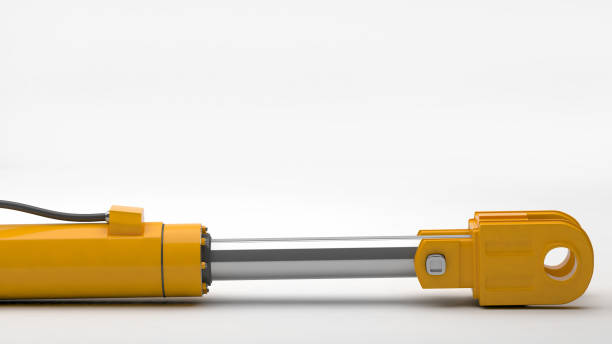
The annual overhaul is the only maintenance interval at which the lift cylinder is disassembled, measured, and reassembled with new seals. For high-cycle applications, this interval may be shortened to 6 months; for light-duty installations, it may be extended to 2–3 years based on the quarterly oil analysis trend. The key measurement tasks during an annual overhaul:
Rod diameter measurement
Measure the rod diameter at five equally spaced points along the chrome section using a precision micrometer. Compare each reading to the original specification. Taper (one end larger than the other) indicates the gland seal is running skewed. Out-of-round (one diameter larger than the perpendicular measurement at the same point) indicates lateral loading. Both conditions require investigation of mounting alignment before the cylinder is returned to service.
Chrome thickness assessment
Use an eddy-current gauge to measure remaining chrome thickness. Original hard chrome on a lift cylinder rod is typically 25–40 μm; minimum serviceable thickness is usually 15 μm. Below 15 μm, the base steel is at risk of corrosion exposure, and the remaining chrome is too thin to support further seal cycles. Schedule re-chroming at the next convenient major downtime window — do not wait until the chrome fails in service.
Bore inspection
With the piston removed, inspect the bore with a torch and bore gauge. The bore surface should be uniformly smooth with the original crosshatch honing pattern visible. Scoring, pitting, or polishing (mirror-finish without crosshatch) indicates excessive piston seal bypass or contamination-driven wear. A bore that has lost its crosshatch cannot hold oil for piston seal lubrication and will destroy replacement seals rapidly.
Complete seal kit replacement
Replace the full seal kit regardless of apparent seal condition — rod seal, wiper seal, piston seal, and all static O-rings. Seals that appear visually intact at the annual overhaul have already accumulated the bulk of their dynamic cycles and will fail well before the next overhaul if returned to service. The cost of a complete seal kit is always less than the cost of an unplanned failure in the following months. Document the seal material specification and installation date in the maintenance record for the lift cylinder.
Parts sourcing: Seal kits for the complete cilindro de elevação range are available by bore size and rod diameter. For mobile equipment lift cylinders where the annual overhaul coincides with a broader machine service, the mobile machinery hydraulic cylinder parts catalogue includes cross-referenced seal kit specifications for all common bore and rod combinations.
SEÇÃO 05
Hydraulic Oil and Contamination Control
Oil analysis is the single most cost-effective maintenance tool for hydraulic lift cylinders — a laboratory test costing £20–50 can reveal contamination trends that, if uncorrected, would result in lift cylinder failures costing 50–100× that amount. The analysis provides four critical parameters:
ISO CLEANLINESS CLASS
Target ISO class 16/14/11 for standard lift cylinder circuits; 15/13/10 for high-cycle or precision applications. Rising particle count between quarterly samples indicates a failing filter or an internal wear source generating debris.
VISCOSITY AT 40°C
Should be within ±10% of the specified grade (e.g. ISO 46 = 46 cSt at 40°C). Low viscosity indicates oil breakdown or diesel/fuel contamination; high viscosity indicates oxidation or incorrect top-up fluid. Either condition accelerates lift cylinder seal wear.
WATER CONTENT
Target below 0.1% by weight (1 000 ppm). Water above 0.2% causes corrosion of chrome rod surfaces, accelerates NBR seal degradation, promotes bacterial growth in the reservoir, and reduces oil film strength by approximately 50%, accelerating all wear surfaces simultaneously.
WEAR METAL ANALYSIS
Iron (from bore and pump), chrome (from rod surface), and copper (from bushings) content in ppm. A steady baseline level is normal; a sudden increase of 50%+ in any element between quarterly samples indicates an accelerating wear event requiring immediate investigation.
SEÇÃO 06
Diagnostic Checklist for Common Symptoms
When a lift cylinder symptom is reported, using a structured diagnostic approach reduces the time to correct diagnosis and avoids the common error of replacing the cylinder when the fault is actually in another part of the hydraulic circuit. Use this symptom→diagnosis matrix as the first step before ordering any parts:
SYMPTOM
Slow lift speed under load — normal at no load
Likely cause: Piston seal bypass — the lift cylinder piston seal is leaking proportionally to load pressure, diverting flow rather than building pressure. Test: Measure rod extension speed at no load (normal) then at 50% load and 100% load — if speed decreases proportionally with load, piston seal is confirmed. Action: Remove lift cylinder and rebuild piston seal kit.
SYMPTOM
Cylinder drifts (descends slowly with no control input)
Likely cause: Either piston seal bypass or a leaking holding valve (counterbalance valve or load-hold check). Test: Isolate the cylinder port from the circuit — if drift stops, the fault is in the holding valve, not the lift cylinder piston seal. If drift continues, the piston seal is the source. Action: Rebuild whichever component the test identifies as the source.
SYMPTOM
External rod seal leak — oil dripping from gland area
Likely cause: Rod seal worn or damaged — usually from abrasion (grit ingress past failed wiper), thermal degradation, or chemical incompatibility with the hydraulic fluid. Test: Inspect the rod surface for scoring or chrome lifting — if the rod surface is damaged, a seal kit alone will not achieve a lasting repair; the rod must be re-chromed first. Action: Replace wiper and rod seal; if rod is damaged, remove lift cylinder for rod repair before seal replacement.
SYMPTOM
Jerky or erratic motion — smooth at slow speeds, jerky at higher speeds
Likely cause: Air in the hydraulic circuit (most common) or stick-slip from a PTFE or over-compressed seal. Test: Cycle the lift cylinder 10 times at low speed without load — if the jerkiness reduces, air is present and being purged. If it persists, the seal is the issue. Action: Bleed the circuit if air is confirmed; replace seal kit if seal stick-slip is identified.
PERGUNTAS FREQUENTES SOBRE O APLICATIVO
Lift Cylinder Maintenance Questions
Q 01
How do I know whether to rebuild or replace a worn lift cylinder?
The rebuild-vs-replace decision for a hydraulic lift cylinder comes down to the condition of the two most expensive-to-restore components: the rod and the barrel bore. If the rod chrome is above 15 μm remaining thickness and shows no deep scoring, and the bore is within the honing specification with no scoring, a seal kit and inspection rebuild is cost-effective. If the rod requires re-chroming, rebuild cost increases but is still typically 40–60% of replacement cost for large-bore cylinders. If the barrel bore requires honing or the cylinder wall shows cracking or distortion from overload, replacement is almost always more economical. Document the cost comparison with actual parts and labour estimates for your application before committing — the economics change significantly with cylinder size and the local cost of machining services.
Q 02
What is the correct procedure for storing a hydraulic lift cylinder that will be out of service for more than six months?
For storage exceeding six months: retract the lift cylinder fully to minimise exposed rod surface; clean the rod with a clean cloth and apply a thin coat of petroleum-based corrosion preventive wax to all exposed metal; plug all hydraulic ports with clean, capped threaded plugs to prevent moisture and debris ingress; store horizontally in a dry, temperature-controlled environment if possible — avoid storage in environments where condensation cycles (day/night temperature swings exceeding 15°C) will cause moisture to accumulate inside the cylinder barrel and reservoir. For extended storage beyond 12 months, drain the internal oil, flush with a clean preservation oil grade (ISO 32 with anti-corrosion additive), refill, and seal. Before returning to service, replace all seals as a precaution — elastomeric seals develop compression set during extended static storage even in the absence of operational wear.
Q 03
Does ambient temperature affect how often a lift cylinder needs maintenance?
Yes — ambient temperature significantly affects both oil degradation rate and seal wear rate. In hot climates (ambient above 35°C), hydraulic oil reaches its oxidation threshold faster; the oil change interval should be reduced by approximately 30% and the quarterly oil sample interval reduced to every two months. NBR seals operating continuously at elevated temperature approach their service life limit faster; upgrade to PTFE or FKM seals if oil temperature at the lift cylinder gland consistently exceeds 80°C. In cold climates, the priority shifts to cold-start procedures — always allow the hydraulic system to reach operating temperature before applying full load to the lift cylinder, and switch to ISO 32 grade hydraulic oil for winter operation. Cold-start cycling under load with high-viscosity oil creates pressure spikes that can split seal lips or extrude them into the clearance gap.
Q 04
Can I use any hydraulic oil to top up a lift cylinder system, or does it have to match the existing oil grade?
The top-up oil must match the existing oil’s ISO viscosity grade and base oil type — mineral to mineral, synthetic to synthetic. Mixing viscosity grades degrades the oil film at operating temperature and creates zones of high and low viscosity that allow metal-to-metal contact in the lift cylinder’s bore and on the rod surface. More critically: mixing oils from different manufacturers with different additive packages can cause additive precipitation — solid particles that form when incompatible additive chemistries react with each other — creating a particle contamination event that damages the lift cylinder seals and all other precision components in the circuit. If you are unsure what oil is currently in the system, drain and refill with a complete fresh charge of the specified grade rather than topping up. The cost of a full oil change is insignificant compared to the cost of a contamination event.
LIFT CYLINDER MAINTENANCE SUPPORT
Need a Custom Maintenance Schedule for Your Application?
Our technical team can provide application-specific maintenance schedules for any lift cylinder in our range — matched to your duty cycle, environment, and fluid specification. Contate-nos with your cylinder specification and application details.
Editor: Cxm