Commercial Turf Equipment Series · Monograph XX
Grasopvangcilinders voor zitmaaiers
Commercial ride-on mowers, out-front rotary mowers, and zero-turn lawn tractors deploy high-capacity hydraulic grass catching systems to collect clippings across sports turf, municipal parks, and golf courses. Operating directly behind high-velocity mower decks, these compact lift actuators are continually enveloped in clouds of organic sap, fine grass fibers, and abrasive quartz field dust. This technical engineering guide examines the structural design, tribology, and anti-abrasion sealing architecture of double-acting welded small-bore grass collector lift cylinders. We analyze high-dump hopper tipping kinematics, 27SiMn alloy steel metallurgy, the mechanics of sap-and-dust seal degradation, hard chrome rod protection, and advanced multi-lip wiper configurations engineered to eliminate internal fluid bypass and cylinder drift.
Wear-Resistant TPU Seals
Dual-Lip Scraper Array
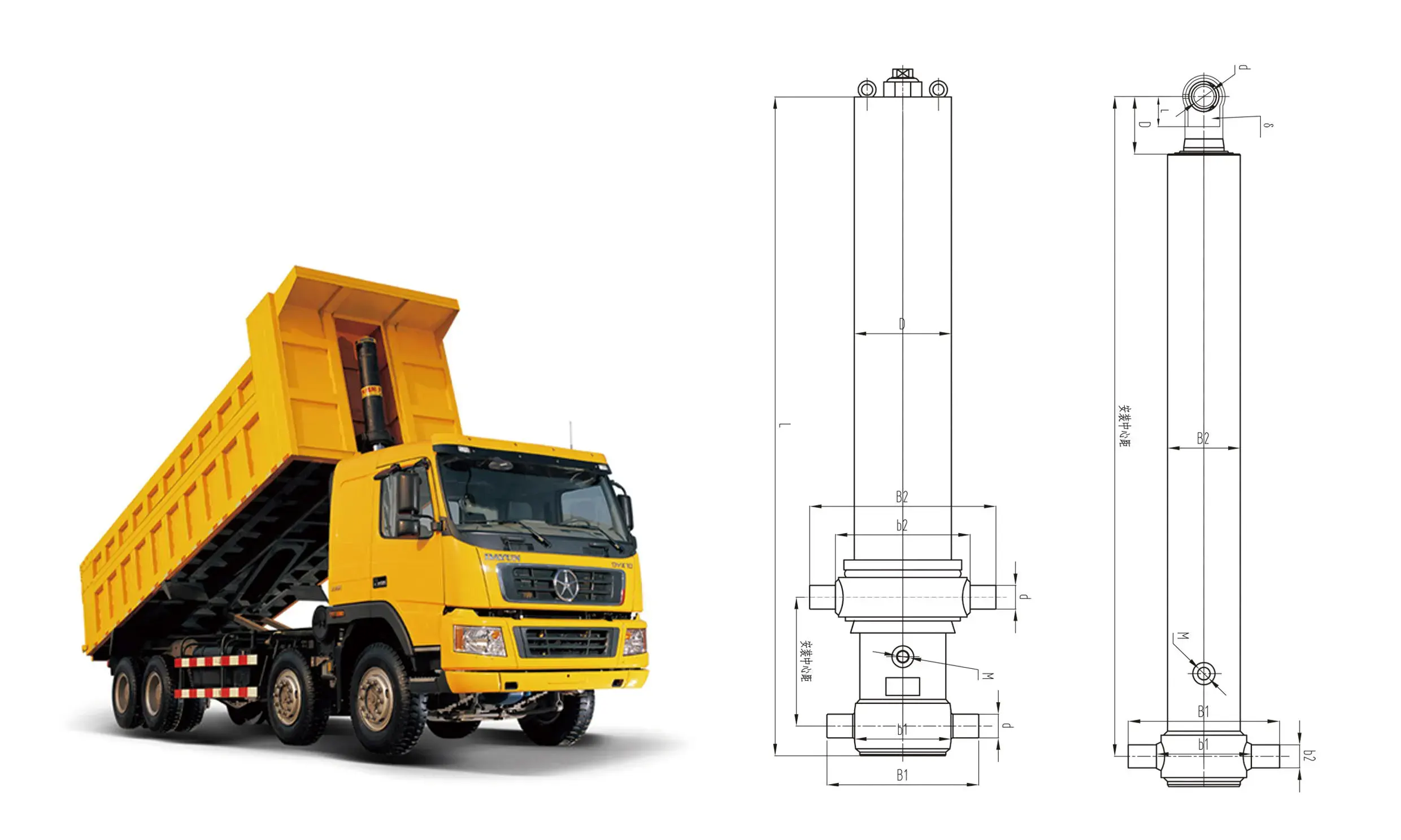
Engineering Specifications Matrix for Mower Grass Collector Cylinders
The following engineering parameters establish the structural, metallurgical, sealing, and operational benchmarks required for compact double-acting welded grass collector lift cylinders deployed in commercial turf care machinery.
| Technische parameter | Commercial Mower Equipment Specification Standard |
|---|---|
| Apparatuurcategorie en toepassing | Turf & Grounds Maintenance Machinery / Ride-On Mowers & Commercial Zero-Turns |
| Subsystem bewegingsprofiel | Grass Collector Hopper Elevation & High-Dump Tipping Circuit / Double-Acting Motion |
| Naam van de hydraulische cilinder | Grass Collector Lift Cylinder Assembly (Compact Welded Piston Type) |
| Werkingsmodus en structuurtype | Double-Acting Small Piston Cylinder (Powered Push Elevation & Forced Retraction) |
| Productie en constructie | Precision Robotic Welded Barrel & Integrated Clevis Ends (AWS D1.1 Compliant) |
| Materiaalsysteemmetallurgie | 27SiMn Seamless High-Strength Alloy Steel Tubing (GB/T 17396 Normalized) |
| Oppervlakteafwerking en galvanisatie | Micro-Cracked Hard Chrome Plating (25–35 μm) / HRC 58–62 Induction Hardened Case |
| Milieuclassificatieklasse | Airborne Grass Dust + Organic Sap Slurry + Fine Silica Sand + High Humidity Exposure |
| Profiel van de arbeidsomstandigheden | High-Cycle Tipping of Wet Grass Collector Boxes (300 to 800 Liters Capacity) |
| Primaire storing beperkt | Abrasive Gland Seal Lip Abrasion, Rod Scoring, & Uncommanded Collector Drift |
| Aanbevolen technische kernpunten | High-Modulus Polyurethane (TPU) Seals + Metal-Cased Dual Scraper Ring Array |
| Nominale werkdruk | 14.0 MPa to 21.0 MPa (140 – 210 Bar) Continuous Working Relief Pressure |
Grass Collector Kinematics and High-Dump Actuation Mechanics
Commercial grounds maintenance contractors rely on high-capacity ride-on lawn mowers equipped with integrated grass collection hoppers. These machines gather hundreds of kilograms of dense grass clippings, leaves, and surface thatch per hour. To discharge collected material directly into high-sided utility trucks, trailers, or waste dumpsters, mowers utilize parallel linkage high-dump grass catchers.
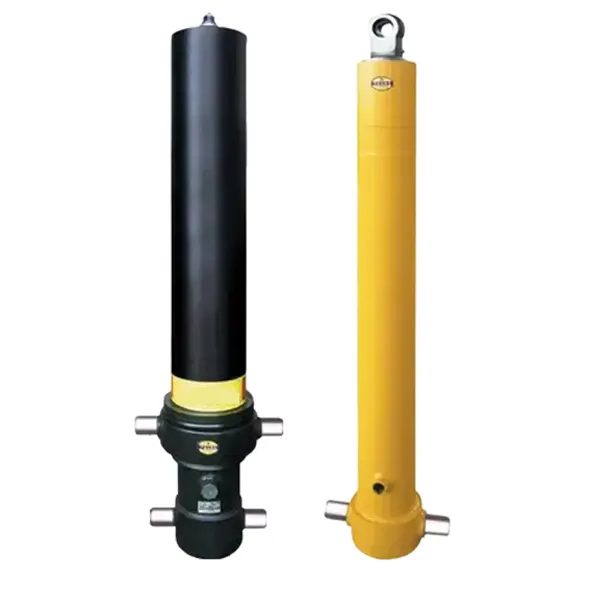
The lifting, elevating, and forward-tipping actions of the grass collector box are executed by paired double-acting hydraulische hefcilinders. Pin-mounted between the mower rear subframe and the collector lift arm linkage, these compact actuators raise collector hoppers (ranging from 400 to 1,200 liters in volume) to discharge heights exceeding 2.0 meters.
Double-Acting Hydraulic Actuation Dynamics
High-dump grass catchers deploy small-bore double-acting piston cylinders (bore sizes typically 40 mm to 65 mm, rod diameters 22 mm to 35 mm). Double-acting operation provides two distinct mechanical advantages over single-acting gravity-return actuators:
- ▸
Positive Breakaway Thrust: Pushing fluid into the cap chamber generates high linear force to unseat wet, compacted grass loads that stick to the hopper walls during initial tipping. - ▸
Powered Forced Retraction: Pushing fluid into the rod-end annulus chamber forces the heavy elevated hopper structure to retract rapidly and lock securely into its stowed transport position against frame stops, overcoming mechanical hinge friction and wind resistance.

Mechanical Force Equations and Payload Shifting
The hydraulic thrust force Ftillen required from the collector lift cylinders varies non-linearly as the lift linkage rotates upward. The maximum force demand occurs at the moment of initial elevation (θ ≈ 0°), when the moment arm distance Lhopper_cg between the wet payload center of gravity and the main lower pivot pin is at its maximum:
Where Whopper and Wgrass are structural and wet clipping weights, Lcyl_pin is the distance from the pivot to the cylinder attachment eye, and α is the acute angle formed between the cylinder axis and the lift arm. When grass is wet, water content increases payload density up to 1,000 kg/m³, placing heavy hydraulic demands on small-bore cylinder chambers.
Root Cause Failure Analysis: Abrasive Seal Wear and Collector Drift
Commercial lawn mowers operate in dusty, harsh environments. The high-speed discharge air generated by mower blades creates an airborne cloud of fine silica dust, dry soil particles, micro-fine organic fibers, and sticky grass sap that envelops the rear cylinder area.
Field teardown analysis shows that Abrasive Seal Lip Wear (Sealing Degradation) is the primary root cause of uncommanded grass collector drift and external fluid weeping in commercial turf machinery.
Mechanics of Sap-and-Silica Abrasive Slurry Formation
When the grass collector cylinder extends to dump a load, its polished hard-chromed piston rod is exposed to airborne plant sap and fine silica dust (quartz sand particles with a hardness of 7 Mohs). Natural plant sap acts as an organic adhesive, binding silica dust particles directly to the extended rod surface.
When the cylinder retracts under double-acting power, standard single-lip rubber wipers flex under the sticky buildup. The sap-and-silica mixture passes under the wiper lip, entering the main gland seal groove where it transforms into an abrasive lapping compound:
Tribological Breakdown and Internal Fluid Bypass Cascade
Trapped silica particles embed into the soft polyurethane U-cup seal lips, initiating a destructive tribological breakdown cascade:
1. Micro-Planing of Seal Lips
Embedded quartz grains act as micro-cutting tools against the sealing contact line, cutting axial micro-grooves across the dynamic primary sealing lip.
2. Chrome Surface Scoring
Hard silica particles trapped in the gland bearing rings score the hard chrome plating of the piston rod, creating fine axial leak paths across the dynamic sealing track.
3. Uncommanded Hopper Sag
Abrasive wear degrades seal pre-load, allowing high-pressure oil to bypass internal piston seals. The elevated grass collector sags or drifts downward during transport, creating a safety hazard for operators.
Structural Metallurgy: 27SiMn High-Strength Alloy Steel
Commercial lawn mower space constraints require small-bore lift cylinders with compact outer dimensions and thin wall profiles. Using low-grade structural carbon steel (such as Q235B or AISI 1020) for small-bore cylinders leads to elastic barrel expansion under pressure spikes, causing internal fluid bypass past piston seals.
Grass collector lift cylinders deploy normalized seamless tubing manufactured from “27SiMn alloy steel” (Silicon-Manganese alloy per GB/T 17396) for the cylinder barrel, paired with high-tensile 40Cr or 42CrMo solid steel for the piston rod.
Chemical Micro-Alloying and Mechanical Performance
27SiMn is a specialized low-alloy structural steel containing Carbon (0.24 – 0.32%), Silicon (1.10 – 1.40%), and Manganese (1.10 – 1.40%). Silicon acts as a solid-solution matrix strengthener, elevating yield strength and elastic limit. Manganese enhances hardenability, ensuring uniform strength across the tube wall.
Following normalizing heat treatment, 27SiMn delivers a yield strength (σS) ≥ 800 MPa and ultimate tensile strength (σB) ≥ 980 MPa—more than triple the yield strength of standard structural carbon steel. High yield strength prevents elastic barrel flexure under 21.0 MPa pressure spikes, maintaining tight internal seal clearances.
Micro-Cracked Hard Chrome Surface Protection
The solid piston rod undergoes medium-frequency induction hardening to achieve a 2.0 mm to 3.5 mm deep hardened outer case at 58 to 62 HRC. This hard surface layer resists indentations from stone debris thrown by mower blades.
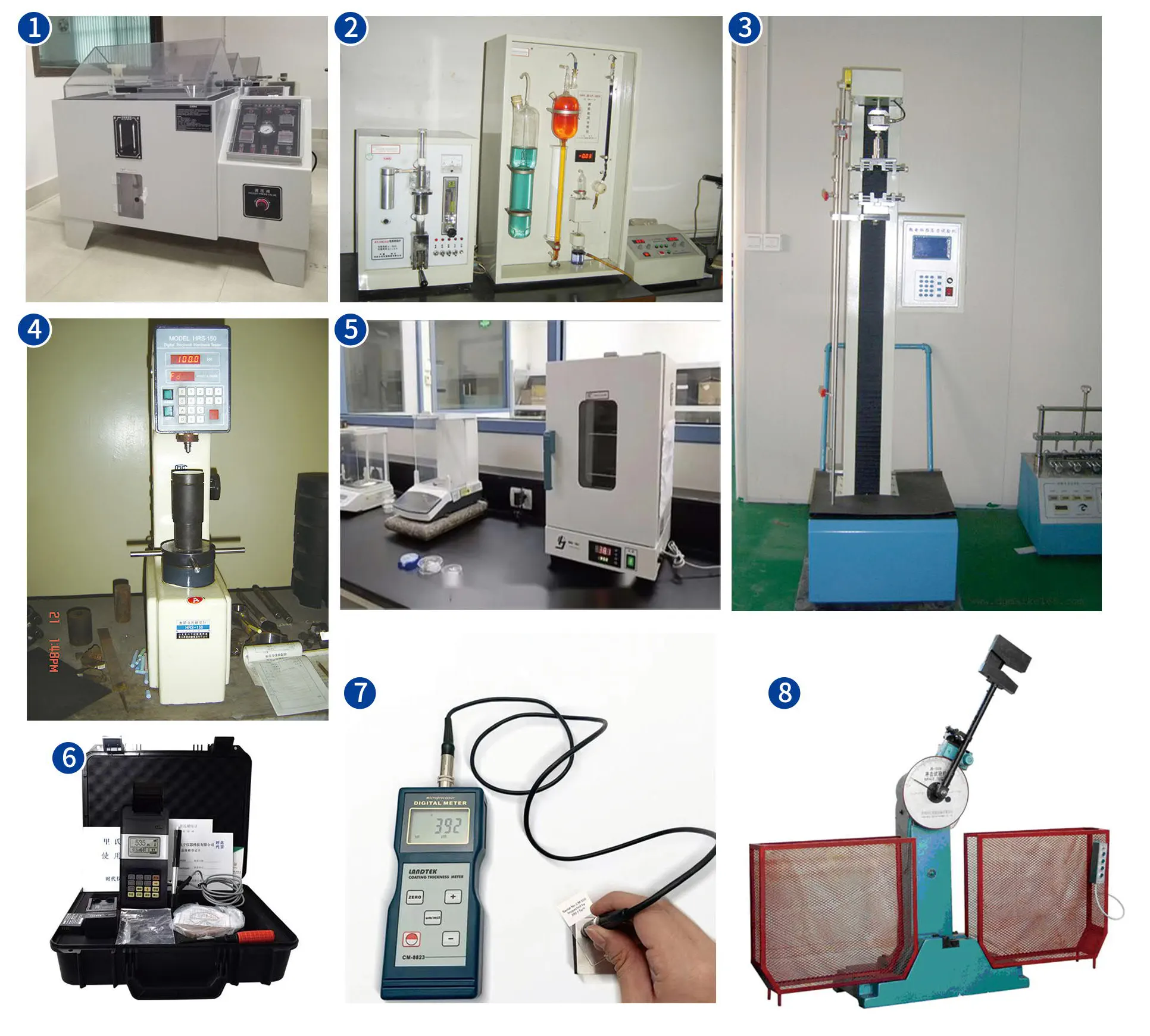
Following hardening, the rod is precision centerless ground to Ra ≤ 0.2 μm and electroplated with a 25 μm to 35 μm thick hard chromium layer featuring a micro-cracked density of 400 to 600 cracks/cm. The micro-cracks retain hydraulic oil via capillary action, maintaining a lubricating oil film across dynamic seal interfaces and passing 96-hour neutral salt spray corrosion testing (ISO 9227 Rating 9/10).
| Staalmateriaalkwaliteit | Vloeigrens (σS) | Treksterkte (σ)B) | Charpy-impactenergie (-20°C) |
|---|---|---|---|
| Q235B (Standaard koolstofstaal) | ≥ 235 MPa | 370 – 500 MPa | ≤ 20 J bij +20°C |
| Q345D (laaggelegeerd staal) | ≥ 345 MPa | 470 – 630 MPa | ≥ 34 J bij -20°C |
| 27SiMn Alloy Steel (Normalized) | ≥ 800 MPa | ≥ 980 MPa | ≥ 39 J bij -20°C |
Recommended Configuration: Anti-Abrasion Sealing and Scraper Package
Eliminating abrasive seal lip wear, gland scoring, and uncommanded grass collector drift requires specifying an engineered “Anti-Abrasion Sealing and Guiding Package”. Modern commercial mower cylinders replace basic single-lip nitrile seals with a multi-component sealing system:
1. Metal-Cased Dual-Lip Polyurethane (TPU) Scraper Ring
Positioned at the outermost gland face, the scraper ring features a rigid steel shell surrounding a high-durometer (95 Shore A) hydrolysis-resistant Polyurethane (TPU) scraping element. The primary outer scraping lip maintains a sharp contact angle against the chrome rod, cutting through dried grass sap, compacted soil crusts, and plant fibers before they reach the gland packing.
A secondary inner lip retains a microscopic oil film to lubricate the dynamic seal pack, preventing dry-friction seal squeal during rapid cycling.
2. High-Modulus Primary U-Cup Seals with Active Elastomer Energizers
The primary pressure barrier inside the gland housing utilizes an engineered TPU U-cup seal equipped with an internal fluorocarbon (FKM) O-ring energizer. The elastomer energizer maintains continuous lip pre-load even under low working pressures or sub-zero ambient temperatures, preventing fluid weeping during winter equipment storage.
- ▸
Virgin PTFE Anti-Extrusion Back-Up Rings: Installed directly behind the primary seal heel. The high-modulus PTFE ring bridges gland clearance gaps under 21.0 MPa pressure spikes, preventing soft seal heel extrusion. - ▸
Bronze-Filled PTFE Wear Guide Bands: Centrifugally cast bronze-filled PTFE guide bands line the gland internal bore. These wear bands absorb side loads caused by asymmetric grass hopper weight, preventing metal-to-metal contact between the rod and gland. - ▸
Extended Gland Bearing Overlap: The gland guide length is extended to Lguide ≥ 1.5 × dhengel, providing stable rod support during high-dump extension.
Het specificeren van een robuuste welded hydraulic lift cylinder engineered with 27SiMn alloy steel and metal-cased dual scrapers eliminates seal wear and prevents uncommanded hopper drift in commercial turf machinery.
Standaardprocedures voor preventief onderhoud, vloeistofhygiëne en diagnose.
To ensure reliable operation throughout mowing seasons, commercial turf mechanics should enforce regular hydraulic inspection procedures.
ISO Cleanliness Target and Daily Washdown SOP
Hydraulic fluid in ride-on mower systems should be maintained to an ISO 4406 cleanliness code of 17/15/12 or cleaner. Following daily mowing operations, operators should wash grass clippings and plant sap off the cylinder rod area using low-pressure water streams before sap dries into a hard crust.
Step-by-Step Diagnostic SOP for Collector Drift
When a grass collector hopper sags or drifts downward during transport, mechanics can execute this diagnostic SOP:
1. Cylinder Mechanical Isolation Test
Elevate the grass collector hopper to full height with a simulated payload, install mechanical safety support props, and shut down the mower engine. Disconnect the return line at the cylinder rod-end port and cap the hose. Apply cap-end hydraulic pressure briefly. If oil drips continuously from the open rod-end port, fluid is bypassing internal piston seals.
2. Rod Scraper & Gland Inspection
Inspect the gland face for packed dry grass fiber or sap buildup. If the wiper lip is rounded, cracked, or embedded with sand grains, replace the scraper assembly and primary U-cup seals to restore sealing performance.
Frequently Asked Questions: Grass Collector Lift Cylinder Engineering
What causes grass collector hopper drift on commercial ride-on lawn mowers?
Grass collector hopper drift on commercial ride-on mowers is caused by internal fluid bypass past damaged cylinder piston seals or dynamic gland seals. Airborne silica dust and sticky grass sap form an abrasive paste on extended piston rods. When the cylinder retracts, this slurry passes basic wiper seals, cutting micro-grooves into primary seal lips. Fluid leaks across damaged seal lips allow elevated hoppers to sag during travel.
How do metal-cased dual-lip TPU scraper rings protect mower hydraulic cylinders?
Metal-cased dual-lip polyurethane (TPU) scraper rings feature a rigid steel cage that maintains uniform contact pressure against the chrome rod. The sharp outer TPU lip cuts through dried grass sap, soil crusts, and plant fibers before they enter the gland housing. Meanwhile, an inner wiper lip retains a microscopic oil film to lubricate dynamic seals, preventing dry-friction seal squeal and abrasive wear.
Why is 27SiMn alloy steel superior to standard carbon steel for small-bore mower lift cylinders?
27SiMn alloy steel provides a yield strength exceeding 800 MPa following normalizing heat treatment—more than triple the yield strength of standard Q235 carbon steel. High yield strength enables small-bore cylinders (40 mm to 65 mm bore) to maintain thin tube wall profiles without undergoing elastic barrel expansion under 21.0 MPa working pressure spikes, ensuring tight internal seal clearances.
How do I test if grass collector drifting is caused by internal cylinder leaks or valve spool wear?
To isolate the leak path, elevate the grass collector hopper, install safety support props, and disconnect the hydraulic return hose at the cylinder rod-end port. Apply cap-end hydraulic pressure briefly. If oil streams out of the open rod-end port, fluid is bypassing internal piston seals. If no oil escapes yet the hopper sags when reconnected, the leak is occurring across worn spool lands inside the main directional control valve block.
Strategische inkoop en totale eigendomskosten
For commercial turf machinery OEMs, grounds maintenance contractors, and mower dealerships, unexpected cylinder failures during peak mowing seasons lead to machine downtime, fluid spillage on manicured turf, and high repair costs. Sourcing low-cost utility cylinders built with standard single-lip rubber wipers or low-grade carbon steel tubes results in repeat seal wear, fluid leaks, and elevated total operating expenses.
Equipment procurement teams can evaluate technical options across commercial turf equipment hydraulic cylinder options to verify material certifications, chrome plating specs, and seal package designs. Equipping commercial mowers with heavy-duty gelaste hydraulische hefcilinders engineered with 27SiMn alloy steel, micro-cracked chrome plating, and metal-cased dual scrapers ensures long-term operational reliability and lower total operating costs across mowing seasons.
Upgrade Your Mower Fleet with Wear-Proof Hydraulic Power
Eliminate abrasive sap-and-sand seal wear, prevent uncommanded grass collector drift, and deliver smooth high-dump tipping performance. Explore our complete series of double-acting, 27SiMn small-bore lift cylinders engineered for commercial ride-on lawn mowers.