Agricultural Tillage Machinery Series · Monograph XIV
Cilindri di sollevamento per benne da roccia per raccoglitori di roccia
Agricultural rock pickers (stone pickers) perform critical seedbed preparation by removing subsurface boulders, field stones, and rock debris that damage expensive seeders, harvesters, and tillage implements. This 2500+ word engineering guide examines the structural mechanics, welding metallurgy, and fatigue mitigation of double-acting welded rock bucket lift cylinders. We analyze high-load stone hopper discharge kinematics, Q345D low-alloy structural steel performance, stress concentration causes behind cylinder base weld cracking, and advanced structural solutions incorporating enlarged forged base flanges, full-penetration robotic welding, and non-destructive flaw testing (NDT).
Full-Penetration Welding
NDT Ultrasonic Inspection
Engineering Specifications Matrix for Rock Picker Lift Cylinders
The following engineering parameters establish the structural, metallurgical, welding, and operational standards required for double-acting welded rock bucket lift cylinders operating on agricultural stone pickers.
| Engineering Parameter | Rock Picker Equipment Specification Standard |
|---|---|
| Equipment Category & Application | Agricultural Tillage & Land Preparation / Mechanical Rock Picker |
| Subsystem Motion Profile | Rock Bucket Elevation & High-Dump Hoist Circuit / Double-Acting Linear Motion |
| Hydraulic Cylinder Name | Double-Acting Rock Bucket Lift Cylinder (Dual Hoist Pair) |
| Action Mode & Structural Type | Double-Acting Piston Cylinder Type (Hydraulic Push Elevate / Powered Pull Stow) |
| Manufacturing Construction | Heavy Welded Barrel with Enlarged Forged Base Flange (AWS D1.1 Compliant) |
| Material System Metallurgy | Q345D Low-Alloy High-Strength Structural Steel (GB/T 1591 / S355J2+N) |
| Surface Finish & Plating | Micro-Cracked Hard Chrome Plating (30–40 μm) / HRC 58–62 Induction Hardened Case |
| Environmental Rating Class | Severe Dynamic Rock Impact + High Soil Dust + Continuous Field Vibration |
| Working Conditions Profile | Lifting Fully Loaded Rock Bucket (3 to 8 Tons) + Off-Center Tipping Shock |
| Primary Failure Mitigated | Cylinder Base Weld Seam Fatigue Cracking & Base Cap Separation |
| Recommended Engineering Keypoints | Enlarged Forged Cap Flange + Multi-Pass Full-Penetration Weld + NDT Testing |
| Nominal Pressure Rating | 21.0 MPa to 28.0 MPa (210 – 280 Bar) Working Hydraulic Relief Pressure |
Rock Picker Kinematics and Bucket Discharge Hydraulics
In modern conservation tillage and land reclamation, field rocks present a constant hazard to high-efficiency agricultural machinery. Mechanical stone pickers—pulled by heavy farm tractors—gather rocks ranging from 50 mm hand-sized stones to massive 800 mm boulders weighing hundreds of kilograms. The machine uses a revolving reel or picking tine rake to lift rocks off the soil surface and deposit them into an onboard structural steel rock hopper or bucket.
Once the rock hopper reaches full capacity—carrying up to 3 to 8 metric tons of dense granite, limestone, or basalt—the operator hauls the machine to the edge of the field or beside a high-sided dump trailer. Elevating and tilting this unyielding, concentrated payload to clear 2.5 to 3.5 meter trailer walls requires immense force provided by paired double-acting hydraulic lift cylinders.
The High-Dump Load Cycle and Dynamic Shock Loading
During the bucket discharge cycle, the lift cylinders extend under full hydraulic system pressure. As the heavy steel bucket pivots upward along its linkage frame, the center of gravity shifts outward. Because stones do not flow like grain or soil, they shift abruptly in large blocks. When a cluster of boulders suddenly tumbles out of the raised bucket lip into a trailer, the sudden loss of mass causes the entire bucket frame to spring upward violently.
This rapid dynamic recoil causes a severe reverse tensile shock wave through the fully extended cylinder assemblies. Hydraulic fluid trapped in the cylinder chambers experiences intense pressure spikes, placing high mechanical stress on the cylinder barrel and its base cap mounting weld.

Double-Acting Force Mechanics and Pressure Equations
Rock bucket lift cylinders use a double-acting design to provide positive power during both bucket elevation and forced lowering into the field working position. The thrust force generated during extension (Fthrust) and the pull force during retraction (Fpull) are governed by the effective chamber areas:
Where Phyd is working hydraulic relief pressure (typically 21.0 to 28.0 MPa), Dbore is inner cylinder bore diameter (100 mm to 160 mm), and drod is piston rod outer diameter (50 mm to 90 mm). The cap end generates the maximum thrust force needed to lift a 6-ton stone payload, while the rod end provides forced retraction to pull the heavy bucket down against mechanical frame stops.
Root Cause Failure Analysis: Cylinder Base Weld Fracture
In agricultural field operations, rock picker lift cylinders experience continuous dynamic cycling under heavy payload conditions. Among all structural failures, Cylinder Base Weld Seam Cracking is the leading cause of field breakdowns and hydraulic fluid loss.
Standard utility hydraulic cylinders manufactured for general light-duty farm machinery often utilize partial-penetration fillet welds to join the flat cap plate directly to the thin cylinder barrel wall. Under stone picker operating conditions, this basic joint design fails prematurely due to combined stress concentration and fatigue propagation.
Stress Concentration and Fatigue Crack Initiation Mechanics
When a rock bucket lift cylinder extends under a full stone load, internal hydraulic pressure expands the cylinder barrel radially while pushing axially against the base cap. The corner junction between the cylindrical barrel wall and the rigid base cap creates a sharp geometry change, resulting in a high stress concentration factor (Kt > 2.5).
The axial stress σaxial acting across the base cap weld interface is expressed as:
If a partial-penetration weld is used, an un-welded root gap remains on the inside corner of the barrel. This internal root gap acts as a sharp pre-existing notch. When dynamic shock loads occur during rock dumping, severe bending stresses concentrate directly at this notch root, initiating micro-cracks that propagate outward through the weld throat over thousands of lift cycles.
Off-Center Load Twisting and Base Cap Separation
In actual field operations, rocks rarely distribute evenly across the stone picker bucket. If a large 500 kg boulder sits in the left corner of the hopper, the lift force requirement becomes asymmetrical, inducing a twisting moment across the lift linkage frame.
This side-bending moment applies a non-uniform tensile stress across the base weld seam. On one side of the cylinder base, axial tensile stress combines with bending stress, exceeding the endurance limit of standard weld metal and causing circumferential weld cracking, oil leakage, or catastrophic base separation under load.
1. Weld Root Notch Propagation
Partial-penetration weld roots leave an internal unfused gap that concentrates tensile stress during pressure spikes, initiating micro-fissures that grow outward through the weld metal.
2. Dynamic Recoil Shock Stress
When boulders suddenly dump out of the bucket, the sudden weight release causes severe bucket recoil, generating reverse tension loads across the cylinder base joint.
3. Base Weld Seam Separation
Fatigue cracks eventually travel through the full thickness of the weld seam, causing sudden pressurized oil blowout and complete detachment of the cylinder base cap.
Recommended Configuration: Flange Engineering, Full Penetration, and NDT
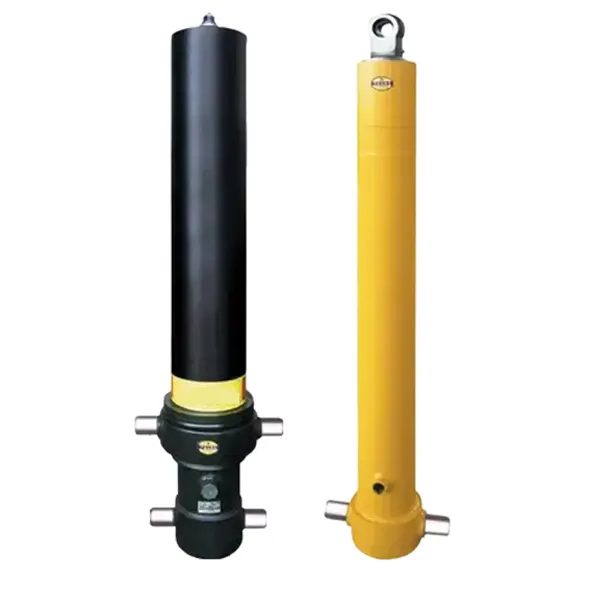
Eliminating base weld cracking on agricultural rock picker lift cylinders requires an engineered structural approach centered around three key configuration requirements: “Enlarged Forged Base Flanges”, “Robotic Full-Penetration Welding”, and “100% Non-Destructive Testing”.
1. Enlarged Forged Base Flange Architecture
Instead of welding a flat end-cap directly to the barrel edge, high-performance rock picker cylinders feature a solid forged Q345D steel base cap with an integrated enlarged flange collar. The enlarged flange extends the outer mounting shoulder diameter and provides a smooth, large-radius machining transition (R ≥ 8.0 mm) between the flat mounting eye and the cylindrical sleeve attachment zone.
This flange design moves the weld seam joint away from the maximum stress concentration region, reducing peak bending stress across the weld seam by over 40% and providing extra metal volume to absorb dynamic shock loads.
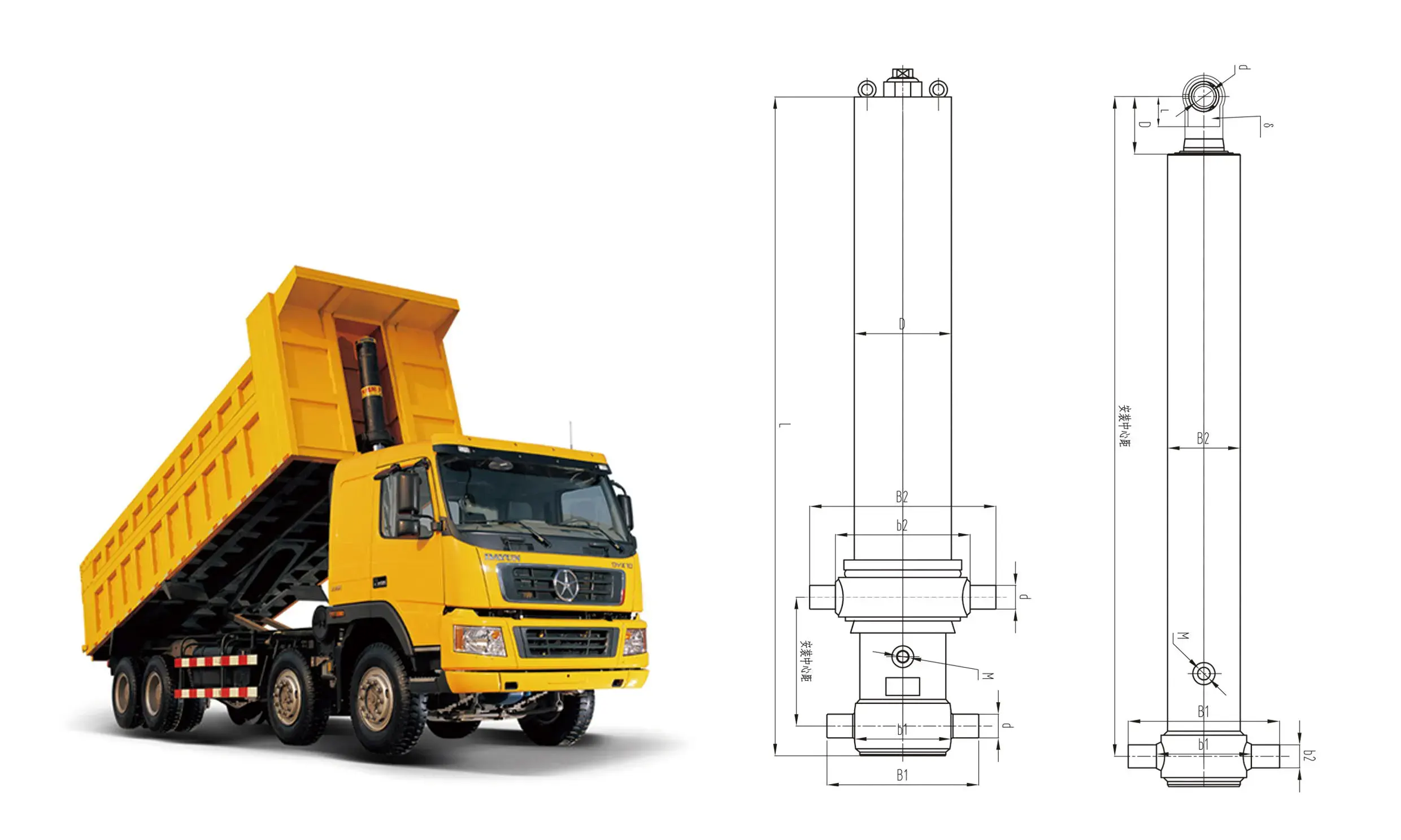
2. Robotic Multi-Pass Full-Penetration Welding
The joint between the seamless barrel tube and the enlarged forged base flange is prepared with a precision J-groove or double-V bevel angle. Welding is performed using multi-pass robotic Metal Active Gas (MAG) pulse welding in accordance with AWS D1.1 and ISO 5817 Level B standards.
The weld process achieves 100% full-penetration fusion through the entire barrel wall thickness (twall), completely fusing the tube inner wall to the forged base collar. Full-penetration welding eliminates unfused root gaps, removing internal stress concentration notches and preventing crack initiation under fatigue loading.
3. 100% Non-Destructive Flaw Testing Protocols
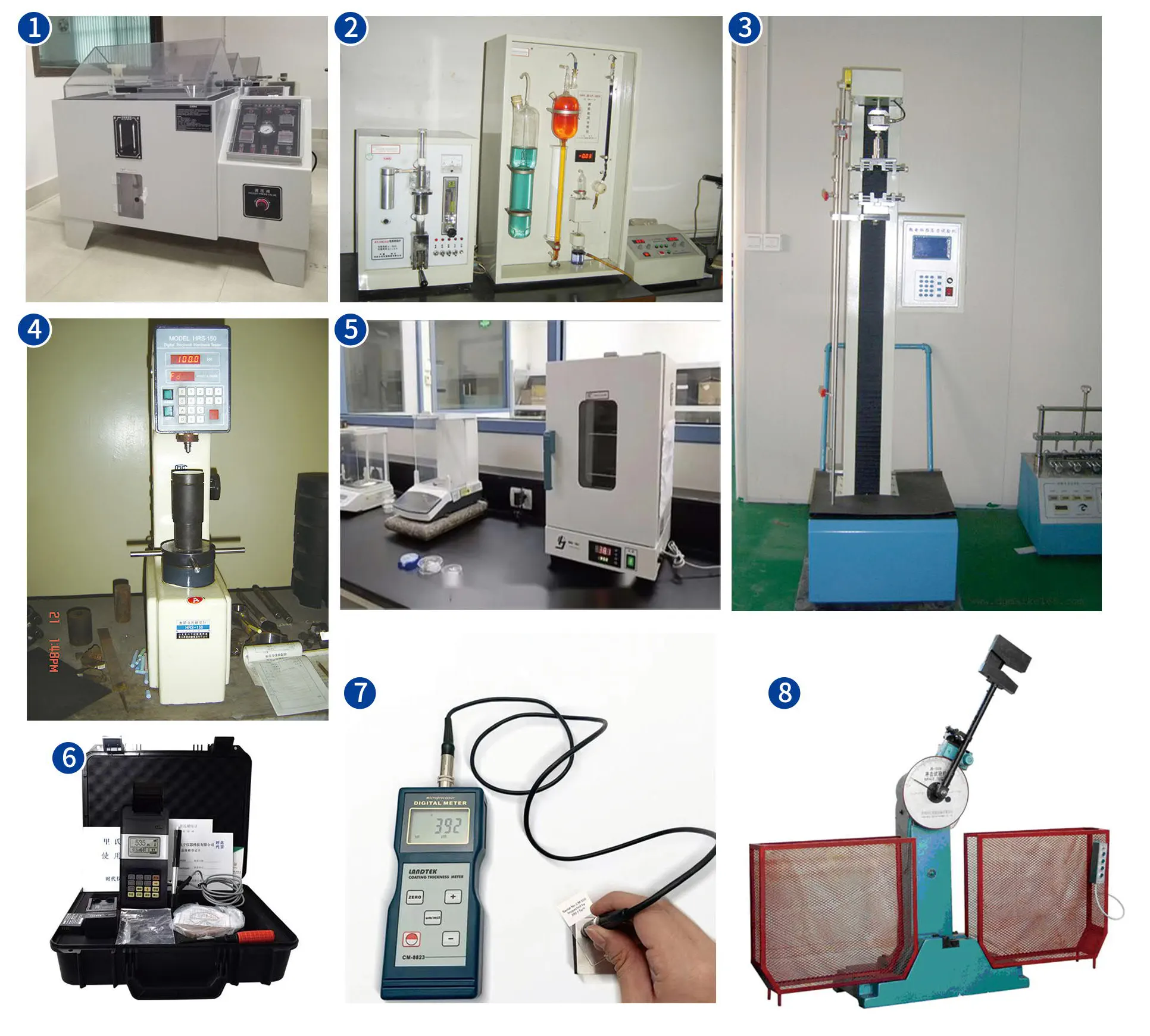
To verify structural integrity before assembly, every welded base flange undergoes rigorous non-destructive flaw inspection:
- ▸
Ultrasonic Testing (UT per ISO 17640 / EN 12680): High-frequency ultrasonic sound waves scan the full volume of the base weld seam to detect subsurface lack-of-fusion, internal porosity, or micro-cracks. - ▸
Magnetic Particle Testing (MT per ISO 17638): Electromagnetic fields and fluorescent magnetic particles inspect the surface and immediate sub-surface zones of the weld toe, ensuring zero surface cracks exist. - ▸
1.5× Hydrostatic Overpressure Proof Testing: Every completed cylinder assembly undergoes proof pressure testing at 150% of rated working pressure (up to 42.0 MPa) for a minimum 10-minute dwell time to verify pressure containment.
Specifying a robust welded hydraulic lift cylinder assembly engineered with an enlarged forged base flange and full-penetration NDT-tested welds prevents base failure and extends operational service life in field preparation machinery.
Structural Metallurgy: Q345D Steel and Surface Tribology
Agricultural stone pickers operate outdoors across varied seasonal temperatures. Standard commercial carbon steels (such as Q235B or AISI 1020) lack the yield strength and low-temperature impact toughness required to withstand severe dynamic shock loads during stone dumping.
Rock bucket lift cylinders deploy Q345D low-alloy high-strength structural steel (conforming to GB/T 1591, equivalent to S355J2+N under EN 10025-3 standards) for seamless barrel tubing, forged base flanges, and rod clevises.
Chemical Micro-Alloying and Sub-Zero Impact Toughness
Q345D utilizes a micro-alloyed chemical composition containing Manganese (1.00 – 1.60%), Silicon (≤ 0.50%), and grain-refining additions of Vanadium, Niobium, and Titanium (≤ 0.15% combined). Carbon content is restricted to ≤ 0.18% to ensure a low carbon equivalent (CEV ≤ 0.42%), delivering good weldability without requiring high pre-heat temperatures.
The “D” quality designation guarantees Charpy V-notch impact energy absorption of ≥ 34 Joules at -20°C testing temperatures. This sub-zero impact resistance prevents brittle weld cracking when operating in early spring or late autumn freezing field conditions.
Hard Chrome Plating and Rod Surface Case Hardening
The solid piston rod—manufactured from Q345D or 42CrMo alloy steel—undergoes medium-frequency induction hardening to achieve a 2.5 mm to 4.0 mm hardened case depth at 58 to 62 HRC. This hard outer case resists surface indentations from airborne gravel and stone impacts during field transport.
Following hardening, the rod is precision ground to Ra ≤ 0.2 μm and electroplated with a 30 μm to 40 μm layer of hard chromium featuring 400 to 600 micro-cracks per linear centimeter. The micro-cracked surface retains hydraulic oil to lubricate rod seals and passes 96-hour neutral salt spray corrosion testing (ISO 9227 Rating 9/10), preventing rust during winter equipment storage.
Preventive Maintenance, Fluid Hygiene, and Diagnostic SOP
To maintain field reliability during peak spring tillage seasons, farm machinery maintenance staff and equipment operators should implement regular hydraulic inspection routines.
ISO Cleanliness Target and Filtration Guidelines
Hydraulic fluid in agricultural rock picker systems should be maintained to an ISO 4406 cleanliness code of 18/16/13 or cleaner. Field soil dust and sand must be prevented from entering the tractor hydraulic coupling lines using clean dust caps and high-efficiency 10-micron filtration.
Step-by-Step Base Weld Inspection Procedure
During pre-season equipment prep, technicians can inspect rock bucket lift cylinders using this procedure:
1. Dye Penetrant Weld Seam Check
Clean oil and field dirt from the cylinder base cap weld toe using solvent. Apply red dye penetrant followed by white developer spray. Any red line appearing along the weld toe indicates micro-fissures or fatigue crack initiation requiring immediate cylinder replacement.
2. Pin Clevis & Spherical Joint Check
Inspect base mounting eye pins and spherical bearings for excessive wear or elongation. Worn pins cause cylinder misalignment during bucket extension, introducing side bending forces across the base weld seam.
Frequently Asked Questions: Rock Picker Lift Cylinder Engineering
What causes cylinder base weld failure on agricultural rock pickers?
Cylinder base weld failure on agricultural rock pickers is caused by combined stress concentration and high dynamic recoil shocks when heavy stone payloads dump out of the elevated bucket. Standard cylinders with partial-penetration welds leave an un-welded internal root notch between the barrel wall and base cap. Dynamic pressure spikes concentrate tensile stress at this notch root, initiating fatigue cracks that propagate outward through the weld throat until the base separates under load.
How does an enlarged forged cap flange prevent base weld seam cracking?
An enlarged forged base flange features an extended outer collar with a smooth, large-radius transition between the mounting eye and the barrel attachment zone. This design shifts the weld seam joint away from the maximum stress concentration area, increasing metal volume at the joint and reducing peak bending stress across the weld by over 40%. This structural reinforcement prevents fatigue crack initiation under dynamic rock dumping shock loads.
Why is 100% Ultrasonic Testing (NDT) essential for rock picker hydraulic cylinders?
Ultrasonic Testing (UT per ISO 17640) uses high-frequency sound waves to scan the internal volume of the base weld seam, identifying subsurface defects such as lack-of-fusion, porosity, or micro-cracks before the cylinder enters service. Because rock picker lift cylinders operate under high pressure near equipment operators, 100% UT inspection ensures complete weld penetration and structural safety, preventing pressurized oil blowout in the field.
Why is Q345D steel preferred over standard carbon steel for rock picker lift cylinders?
Q345D low-alloy steel delivers a yield strength exceeding 345 MPa and guaranteed Charpy V-notch impact energy absorption of ≥ 34 Joules at -20°C testing temperatures. This combination of high yield strength and sub-zero impact resistance prevents structural barrel deformation and brittle weld cracking when dumping heavy stone payloads in cold early spring or late autumn field conditions, outperforming standard Q235 carbon steel.
Strategic Procurement and Total Cost of Ownership
For agricultural machinery OEMs, farm equipment dealers, and land reclamation contractors, unexpected cylinder base failures during short tillage windows cause field downtime and elevated repair costs. Sourcing low-cost utility cylinders manufactured with thin-walled barrels or basic fillet welds often leads to repeated weld cracking, oil spills, and high long-term maintenance expenses.
Equipment procurement managers can evaluate technical options across agricultural machinery hydraulic cylinder options to verify material certifications, welding standards, and NDT inspection reports. Equipping stone pickers with heavy-duty hydraulic lift cylinders engineered with Q345D low-alloy steel, enlarged forged base flanges, and full-penetration NDT-tested welds ensures reliable field operation and lower total operating costs across seasons.
Upgrade Your Agricultural Machinery with Base Weld Reliability
Eliminate base weld cracking, prevent dynamic recoil shock failures, and maintain reliable rock bucket elevation during peak tillage seasons. Explore our complete series of double-acting, Q345D welded lift cylinders engineered for agricultural rock pickers.