Material Handling Engineering Series · Vol VI
The Ultimate Engineering Guide to
Maintaining & Troubleshooting
Forklift Mast Lift Cylinders
Forklifts are the circulatory system of global logistics. When a mast cylinder fails, supply chains halt. This exhaustive technical masterclass dissects the complex kinematics of multi-stage mast elevation, the fluid dynamics of safety parachute valves, advanced elastomer tribology, and provides a rigorous Standard Operating Procedure (SOP) for diagnosing and rebuilding high-pressure material handling actuators.
Velocity Fuses
Diagnostic SOPs
01. The Criticality and Kinematics of Forklift Mast Actuation
In the hyper-competitive landscape of modern warehousing and heavy manufacturing, the industrial forklift serves as the fundamental unit of material transport. While the powertrain dictates mobility, the true value of a forklift is realized entirely through its mast—the vertical steel assembly that hoists, lowers, and tilts payloads routinely exceeding 10,000 lbs. The beating heart of this lifting mechanism is a highly specialized array of हाइड्रोलिक लिफ्ट सिलेंडर.
Unlike standard industrial actuators operating in highly controlled environments, forklift cylinders are subjected to a brutal trifecta of mechanical stressors: extreme continuous duty cycles, violent dynamic shock loads (such as bouncing a heavy load over an uneven dock leveler), and profound spatial constraints that force the engineering of exceptionally slender, yet highly buckling-resistant piston rods. Understanding how these cylinders function requires a deep dive into the specific mast kinematics they drive, primarily categorized into Simplex, Duplex, Triplex, and Quad mast configurations.
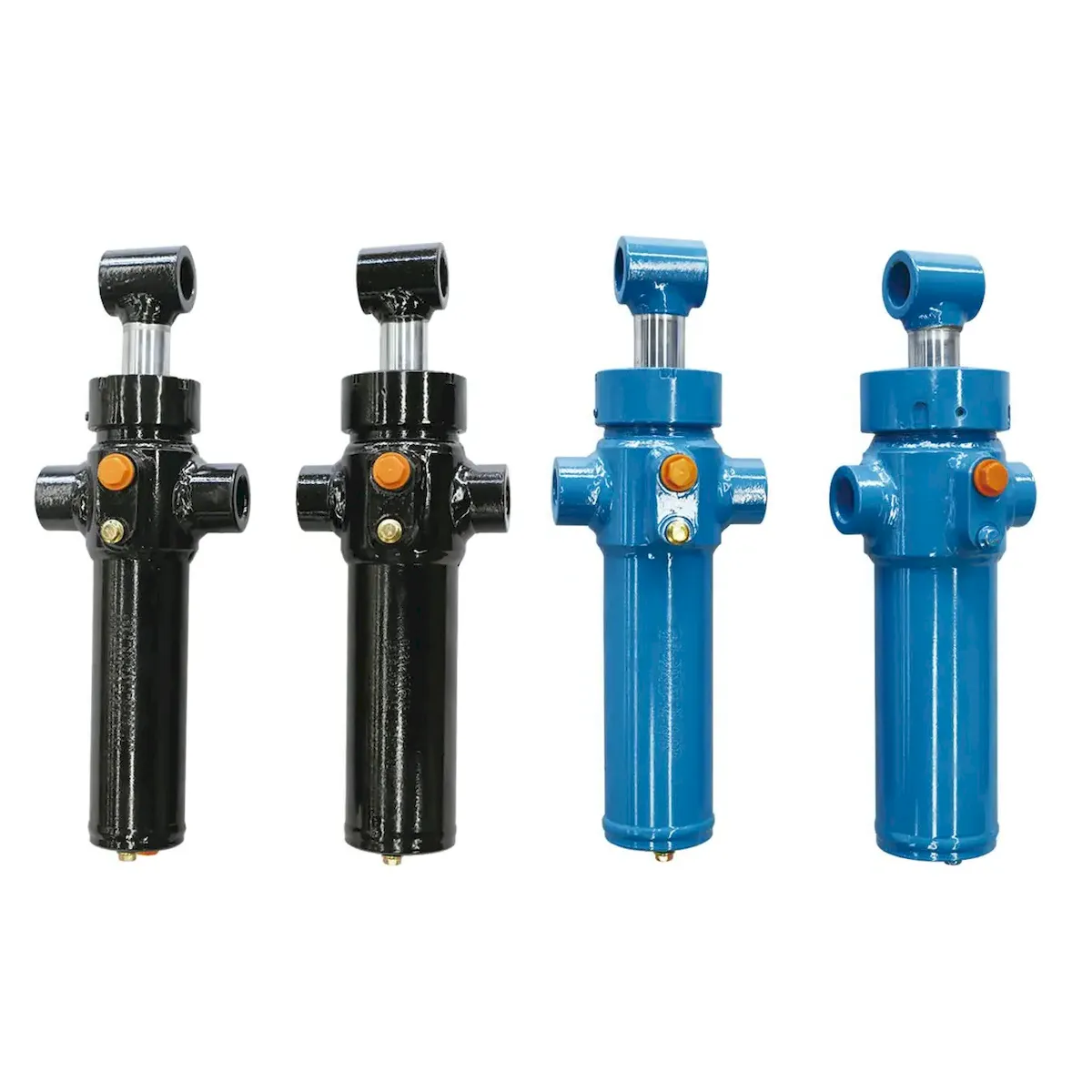
The “Free Lift” Kinematic Phenomenon
One of the most complex engineering requirements in a forklift is the concept of “Free Lift.” In many operational scenarios, such as loading pallets into the back of a standard highway semi-trailer or operating within a shipping container, overhead clearance is strictly limited. If the mast channels were to rise simultaneously with the forks, the mast would violently strike the roof of the trailer before the load could be stacked two-high.
To solve this spatial paradox, engineers designed multi-stage masts (Triplex being the industry standard) utilizing a dual-cylinder architecture:
- ✔️
Primary Free Lift Cylinder: Located in the very center of the mast assembly. When hydraulic fluid is pumped into the lifting circuit, this specific cylinder is engineered to require the lowest breakaway pressure. Therefore, it extends first. Attached via a chain-over-sheave arrangement directly to the carriage, it raises the forks to the top of the inner mast rails without raising the overall height of the mast structure. - ✔️
Secondary Mast Lift Cylinders: Typically located on the outer left and right flanks. Once the central primary cylinder reaches the absolute end of its stroke and hits its mechanical stop, hydraulic pressure in the common rail circuit naturally spikes. This increased pressure overcomes the higher breakaway resistance of the secondary cylinders, causing them to extend and elevate the nested inner mast rails telescopically.
02. Mechanical Architecture and Metallurgical Engineering
The structural integrity of a forklift cylinder relies entirely on its metallurgical composition. Forklift masts are not perfectly rigid; when an operator picks up a 3-ton load and tilts the mast backward, the entire steel channel assembly undergoes torsional twisting and deflection. The lift cylinders, pinned between these moving channels, are subjected to immense lateral shear forces (side-loading).
🔩 Displacement vs. Piston Cylinders
Most modern forklift secondary lift cylinders are “Displacement” (or Plunger) cylinders, meaning they are single-acting and do not have a traditional piston head with internal seals. Instead, the entire rod diameter displaces the fluid. The only sealing occurs at the cylinder gland (head). This design maximizes the rod’s physical thickness relative to the barrel, exponentially increasing its buckling resistance (Euler’s critical load) while operating at full extension.
🛡️ Rod Hardening & Chroming
To survive falling warehouse debris and abrasive pallet splinters, the rods are machined from high-tensile alloys (like 42CrMo4), subjected to medium-frequency induction hardening (achieving HRC 55+), and coated with 30+ microns of hard chrome. This armored shell prevents microscopic dents that would otherwise instantly shred the polyurethane gland seals during retraction.
03. Fluid Dynamics of Safety: The Velocity Fuse
The most catastrophic failure mode in material handling is a ruptured hydraulic hose while a multi-ton payload is suspended 20 feet in the air. Gravity will instantly attempt to force the hydraulic fluid out of the cylinder base, turning the mast into a free-falling guillotine. OSHA and global safety directives mandate that all forklift lift circuits incorporate rupture valves, commonly known as Velocity Fuses or Parachute Valves.
A velocity fuse is a deceptively simple yet brilliant application of Bernoulli’s principle. Threaded directly into the base port of the लिफ्ट सिलेंडर (never in the hose itself), the valve contains a spring-loaded poppet with precision-drilled orifices. During normal lowering, the fluid flows out of the cylinder at a controlled rate (e.g., 20 gallons per minute). The spring tension holds the poppet open against the dynamic pressure of the exiting fluid.

hydraulic cylinders and hydraulic system of a tractor or bulldozer. focus on hydraulic pipes
However, if a hose bursts, the restriction of the control valve is eliminated. The fluid velocity attempts to instantly spike to an uncontrolled rate (e.g., 100 GPM). This massive increase in fluid velocity creates an immense pressure differential across the poppet. The differential force instantly overcomes the spring tension, slamming the poppet shut against its seat and hydraulically locking the cylinder. The payload is safely halted within inches of the rupture. To unlock the valve, the operator or mechanic must apply pump pressure to the extend port, equalizing the pressure and allowing the internal spring to reset the poppet.
04. Advanced Tribology: Seal Configurations and EHL
Forklift operators demand millimeter-perfect positioning. When placing a heavy die onto a CNC machine bed, the mast must lower smoothly without any jerking. This requires a mastery of Elastohydrodynamic Lubrication (EHL) within the cylinder’s sealing architecture.
In older cylinder designs, standard Nitrile (NBR) rubber seals would suffer from the “stick-slip” phenomenon (stiction) at low velocities. The rubber would grip the chrome rod, build up microscopic tension, and then suddenly release, causing the forks to stutter. Modern forklift cylinders utilize advanced composite sealing systems:
💧 The Tri-Part Gland Seal Array
- 1. The Wiper / Scraper Seal: Located at the outermost edge. Machined from ultra-hard Polyurethane (PU), its rigid lip acts as a chisel to aggressively scrape dried shrink-wrap glue, concrete dust, and ice off the rod before it enters the cylinder.
- 2. The Primary Pressure Seal (U-Cup): Situated inboard. Often an energized PTFE (Teflon) step-seal or a loaded Polyurethane U-cup. As hydraulic pressure spikes to 3,000 PSI, the fluid physically forces the lips of the U-cup tighter against the rod, ensuring zero-leakage holding power.
- 3. The Guide Rings (Wear Bands): Made of glass-filled Nylon, Bronze, or Phenolic resin. These absorb the massive lateral side-loads induced by mast deflection, keeping the heavy steel rod perfectly centered and preventing catastrophic metal-to-metal galling against the cylinder head.
05. Standard Operating Procedure (SOP) for Diagnostics
When a forklift exhibits lifting anomalies, maintenance technicians must employ a rigorous deductive diagnostic sequence before arbitrarily tearing down hydraulic components. Time is money in logistics, and misdiagnosis leads to unnecessary downtime.
Symptom 1: Mast “Drift” (Load Slowly Sinking)
Diagnostic Test: Elevate a test load to a safe height, turn off the engine, and leave the control levers in neutral. Measure the descent over 10 minutes. If drift exceeds manufacturer specs (e.g., 2 inches per 10 minutes), you must isolate the cylinder from the control valve.
Isolation: Lower the load, disconnect and cap the hydraulic line at the base of the cylinder (ensuring extreme safety protocols). Re-lift the load manually or with another lift, and observe. If the cylinder still drifts down and forces oil past the cap, the internal piston seals (in double-acting cylinders) or the check valve/velocity fuse is compromised. If it holds perfectly, the main directional control valve spool is severely worn and leaking fluid back to the tank.
Symptom 2: Spongy or Jerky Lifting
Diagnostic Test: If the mast bounces like a pogo stick when stopping, air is trapped in the system (air is compressible, oil is not). This is aerated fluid.
संकल्प: Check the hydraulic reservoir level. If it’s too low, the pump will ingest a vortex of air. If the level is correct, check the suction hose for microscopic vacuum leaks. To purge the trapped air, run the mast fully up and fully down to the mechanical stops 5-10 times without a load, holding the lever over relief for 3 seconds at each extreme end to force the air back to the vented reservoir.
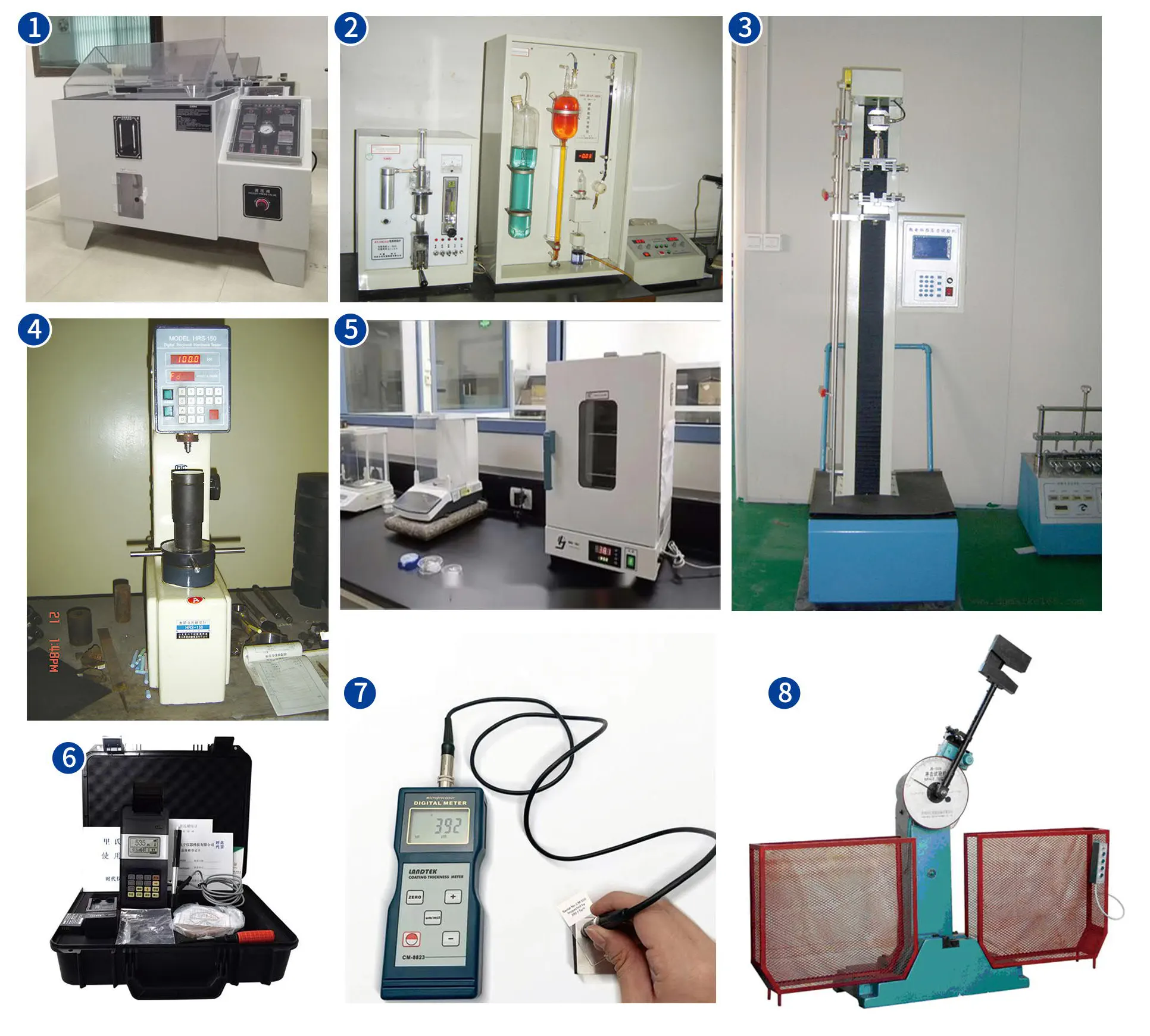
06. Rebuild and Overhaul Protocols
Once a cylinder is deemed defective due to external weeping or internal seal failure, a professional rebuild is required. This is a precision mechanical procedure, not a crude tear-down.
- Depressurization and Safety: Completely lower the mast. Actuate the hydraulic levers multiple times with the engine off to bleed accumulator pressure. Cap all hoses immediately upon removal to prevent environmental dust ingress.
- Gland Removal: Use a specialized adjustable spanner wrench to unscrew the cylinder head (gland). Never use a pipe wrench or hammer/punch, as this will deform the gland and warp the precise housing of the wiper seal.
- Rod Extraction & Inspection: Pull the rod straight out horizontally. Visually inspect the chrome. If there are deep vertical scratches that catch your fingernail, or milky discoloration indicating chrome flaking, installing new seals is futile—they will be shredded immediately. The rod must be re-chromed or replaced.
- Seal Replacement: Remove the old seals using brass or plastic picks (never hardened steel screwdrivers, which will scratch the seal grooves). Ensure the new U-cup seals are installed with the “U” (the open lip) facing the pressure side (the inside of the cylinder).
- Assembly and Torque: Lubricate all new seals and the rod generously with clean hydraulic fluid before insertion. Re-torque the gland and the piston retaining nut to the exact OEM specification. Failure to torque the piston nut correctly will result in it unthreading under shock loads, causing catastrophic internal destruction.
07. ISO 4406 Fluid Cleanliness and Lifecycle Sourcing
Over 80% of all forklift hydraulic failures are directly caused by fluid contamination. Microscopic silicate dust from concrete warehouse floors acts as liquid sandpaper when suspended in hydraulic oil. Fleet managers must enforce rigorous fluid hygiene based on the ISO 4406 Cleanliness Code, targeting a minimum purity level of 18/16/13. This is achieved through strict adherence to fluid change intervals, replacing reservoir breather caps annually (to prevent atmospheric moisture and dust ingress), and utilizing high-efficiency return-line filters.
When a mast cylinder is beyond repair due to a bent rod or deeply scored barrel, fleet managers must secure high-quality replacements rapidly. Sourcing aftermarket forklift hydraulic cylinders from specialized industrial catalogs ensures access to components engineered with upgraded metallurgy and premium Polyurethane seal kits. Intelligent procurement minimizes machine downtime, maximizing the operational ROI of the entire material handling fleet.
Ensure Your Fleet Never Stops Moving
Don’t let seal failure or mast drift compromise your warehouse safety and productivity. Explore our catalog of precision-engineered, rigorous-tested forklift mast lift cylinders built for the punishing demands of continuous material handling.